
Enjoy the benefits of a premium membership!
Upgrade Account
-
TalkBass has been independent since 1998. Add your voice.
Create a free account to reply to discussions, view embedded media, and browse with fewer display ads.
Join free Log in
Want zero display ads or expanded classifieds tools? Compare plans.
You are using an out of date browser. It may not display this or other websites correctly.
You should upgrade or use an alternative browser.
You should upgrade or use an alternative browser.
Will Round Wounds Chew Up A Fretless Neck?
- Thread starter BassNoob1
- Start date
More options
Who Replied?Flatwound strings are usually used with a fretless bass, because roundwound strings tend to wear grooves into unprotected fingerboards, particularly rosewood fingerboards. A fingerboard can only be sanded down a certain amount, and after that point one can't repair the wear. There are some alternatives for those who prefer roundwound strings but still want to play fretless. One approach is to have the fingerboard professionally surface-coated with epoxy, in order to provide a surface hard enough to resist string wear. Another is to get a fretless bass with an ebony fingerboard, as ebony is harder than rosewood and resists wear better.

Ric5
Inactive
- Jan 29, 2008
- 29,772
- 30,452
- Disclosures
- I like 5, 8, 10, and 12 string basses
I use rounds on my fretless ... yes they leave marks ... I live with it.


^ what he said.
sand it down every few years. Only needs a bit taken off. Then some linseed oil, polish it up and off you go again.
BTW, I found they chewed up epoxy just as badly or worse and it's hard to sand back.
sand it down every few years. Only needs a bit taken off. Then some linseed oil, polish it up and off you go again.
BTW, I found they chewed up epoxy just as badly or worse and it's hard to sand back.

- Dec 21, 2007
- 15,230
- 45,091
- Disclosures
- Lark in the Morning Instructional Videos; Audix Microphones
Flatwound strings are usually used with a fretless bass, because roundwound strings tend to wear grooves into unprotected fingerboards, particularly rosewood fingerboards. A fingerboard can only be sanded down a certain amount, and after that point one can't repair the wear. There are some alternatives for those who prefer roundwound strings but still want to play fretless. One approach is to have the fingerboard professionally surface-coated with epoxy, in order to provide a surface hard enough to resist string wear. Another is to get a fretless bass with an ebony fingerboard, as ebony is harder than rosewood and resists wear better.
Flatwound strings are NOT "usually used with" a fretless bass.
Some use them, some don't. Many fretless players prefer the sound of roundwounds. I'm one of them.
Rounds will wear a fingerboard more than flats. Nickle roundwounds will be easier on the fingerboard than stainless steel.
But it still will require maintenance (dressing the fingerboard) every few years - at a cost of about $100. Depending on the strings you use, that's 4 sets of strings. It's really not a big hairy deal.
Really, it's like tires on a car. You're going to have to replace them sometime, and get the car aligned. High performance tires tend to wear faster than "high mileage" tires but (obviously) offer much better handling and performance.
Putting flats on a fretless "to save wear" if that's not the sound you want is like putting low-performance tires on a Porsche "because they wear longer". If you enjoy a fast, good handling car and want to drive your Porsche aggressively, you put on hi-performance tires, and you deal with changing them more often.
If you like the sound of roundwounds, use them. The maintenance (dressing the fingerboard every few years if you use the bass a lot) is really minor.
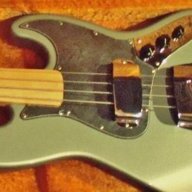
We need some additional info; there is no one answer to your question.
1. What is the fingerboard wood?
2. Is the fingerboard finished or unfinished?
3. What is your playing style? Do you use vibrato, slides, hammer-ons and pull-offs?
Regarding #1 and #2, if you don't know, either tell us what kind of bass it is and the color of the fingerboard and/or post a picture.
I have some fretless basses that can take rounds and some that don't take them nearly as well, so let us know what you've got.
1. What is the fingerboard wood?
2. Is the fingerboard finished or unfinished?
3. What is your playing style? Do you use vibrato, slides, hammer-ons and pull-offs?
Regarding #1 and #2, if you don't know, either tell us what kind of bass it is and the color of the fingerboard and/or post a picture.
I have some fretless basses that can take rounds and some that don't take them nearly as well, so let us know what you've got.

Roy Vogt
Supporting Member
- Sep 20, 2000
- 4,433
- 537
- Disclosures
- Endorsing Artist: Kiesel Basses, Ampeg Amplification, Hotone Ampero II effects
Eventually, but the sound is worth it IMHO. If you're worried you can have a repairman or tech put an epoxy coating on the neck (Jaco used Petit's Poly-Poxy, an epoxy used for boats and marine uses).
I have a Carvin LB76F from 1992 that has an Ebony Board and while it's got a little wear after 18 years I haven't had a problem with it.
Pedulla basses have a nice coating on them. My Modulus fretless has a synthetic Ebonol board that seems pretty bulletproof. So, for that matter do the Squier fretlesses.
If you want the Jaco/Mark Egan sound it's a whole lot easier to get with Roundwounds, IMO.
I have a Carvin LB76F from 1992 that has an Ebony Board and while it's got a little wear after 18 years I haven't had a problem with it.
Pedulla basses have a nice coating on them. My Modulus fretless has a synthetic Ebonol board that seems pretty bulletproof. So, for that matter do the Squier fretlesses.
If you want the Jaco/Mark Egan sound it's a whole lot easier to get with Roundwounds, IMO.

I mainly play fretless with an ebony neck, using flats, and yes even those make a place in the ebony. Rounds do much more serious damage, but like the guy said earlier, think of fretboard repair (just like replacing frets) like an oil change on your drive to work everyday car.
Best fretboard wood for fretless and rouswounds would prob be ebony. Very high grade rosewood would still show wear more readilly I think. But if one developes a light touch for fretting and doesnt grind the strings in while doing bends etc, one could live with the fretboard wear of roundwounds imo. Giving it the light redo mentioned by others every few yrs.
You might concider coated dr strings roundwounds as one option for roundwound sound with strings that would reduce fretless fretbaord wear from roudwounds some.
You might concider coated dr strings roundwounds as one option for roundwound sound with strings that would reduce fretless fretbaord wear from roudwounds some.


- Aug 5, 2005
- 7,243
- 92
- Disclosures
- Endorsing Artist: J.C. Basses
If you have good technique (ie, sliding instead of bending, pressing only as hard as necessary, playing with a lighter touch), then your fretboard will last you a while.
If you're really worried, apply a few thin clear coats of polyurethane annually and run over the freatboard with a radius sanding block and some 400-600 grit.
If you're really worried, apply a few thin clear coats of polyurethane annually and run over the freatboard with a radius sanding block and some 400-600 grit.

Yeah, it's been a while since our regularly scheduled "do roundwounds chew up fretless boards?" thread, and there's nothing new here this time either. Not even the false assertion that "Flatwound strings are usually used with a fretless bass...". That lie has been spouted off here about once a month for at least two years.
And the general consensus remains- use what sounds right and deal with the fingerboard wear just as you do with tires on a car.
John
And the general consensus remains- use what sounds right and deal with the fingerboard wear just as you do with tires on a car.
John

Don't worry about it.
I set up my fretless Jazz Bass with really low action that only takes a very light touch to play and it's fabulous. It's really easy on my hands and gives me a great mwah sound.
That combination - low action and a light touch - keeps my roundwounds from digging into my rosewood fingerboard.
Even if it did make marks, that's part of the guitars mojo so I wouldn't worry about it one little bit. As long as it doesn't affect playability - no big deal.


I set up my fretless Jazz Bass with really low action that only takes a very light touch to play and it's fabulous. It's really easy on my hands and gives me a great mwah sound.
That combination - low action and a light touch - keeps my roundwounds from digging into my rosewood fingerboard.
Even if it did make marks, that's part of the guitars mojo so I wouldn't worry about it one little bit. As long as it doesn't affect playability - no big deal.
Don't worry about it.
I set up my fretless Jazz Bass with really low action that only takes a very light touch to play and it's fabulous. It's really easy on my hands and gives me a great mwah sound.
That combination - low action and a light touch - keeps my roundwounds from digging into my rosewood fingerboard.
Even if it did make marks, that's part of the guitars mojo so I wouldn't worry about it one little bit. As long as it doesn't affect playability - no big deal.
My jazz doesn't really give me mwah. It will, however, give me the sound of angry bear. If I play hard on it, it sounds like I have a really mean overdrive on it. That is what flats and rosewood seem to get you.
This is good news. I want a fretless someday, but I will only play roundwounds. And yes, I slap and I love it, but I only do it appropriately. XD I have a friend that's played bass for many years more than I, but he insists on doing this ultra fast slapping ALL THE TIME...annoying.
5 years of rotos on an ebony fingerboard have left slight markings, nothing that affects playability
- Dec 21, 2007
- 15,230
- 45,091
- Disclosures
- Lark in the Morning Instructional Videos; Audix Microphones
Are the marks just visual or do they actually effect the bass?
Really, think of it like tire wear on a car.
It's just visual for a long time. Eventually it affects the bass (or the car) and requires maintenance. It's not a big deal.


