

Enjoy the benefits of a premium membership!
Upgrade Account
-
TalkBass has been independent since 1998. Add your voice.
Create a free account to reply to discussions, view embedded media, and browse with fewer display ads.
Join free Log in
Want zero display ads or expanded classifieds tools? Compare plans.
You are using an out of date browser. It may not display this or other websites correctly.
You should upgrade or use an alternative browser.
You should upgrade or use an alternative browser.
Winter Build Off 2019- Monster Mash
- Thread starter Englishman
- Start date
More options
Who Replied?
I don't expect that will be satisfactory in the long runI'm considering CA gluing the split and then painting a black stripe.
 !
!
Ugh, that's so crappy. I've done it too, but in my case, I just made a new neck. 


I think you really want about 1/8" of wood under that rod, particularly if it's a DA rod. I think @Jisch 's approach is what I'd try first.I'm considering CA gluing the split and then painting a black stripe.
Alternatively, remove the FB and make a new neck.
I have to agree, from experience, a new neck is the best option. Salvage the fingerboard. I my case it was a set neck so I had to carefully chisel it free from the body and clean up the joint for the new neck. You have a bolt on so no real reason to try to keep the neck.

The more I looked at it, the more it seemed I’d be beating my head against the wall. So...
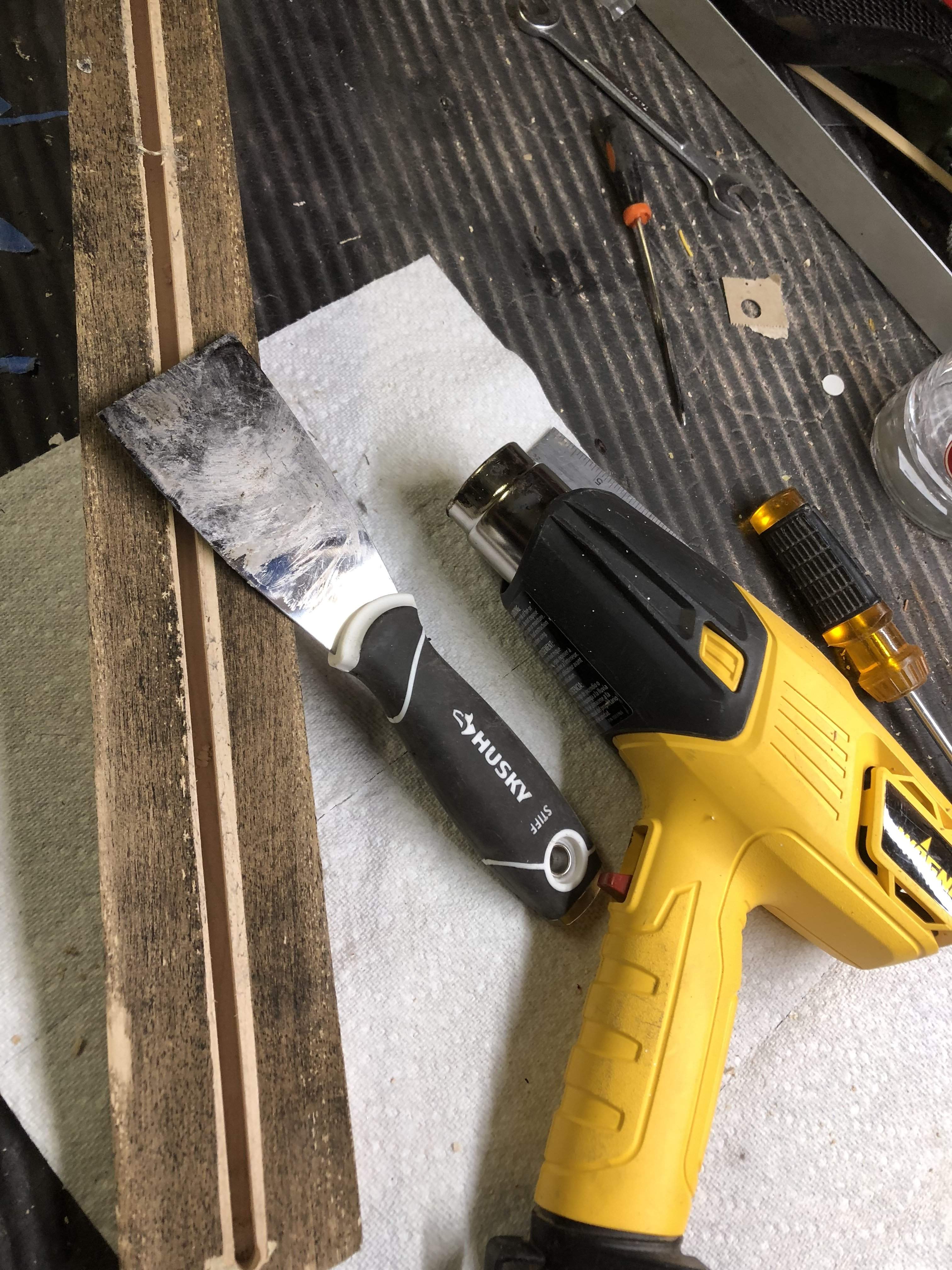

Dang, that sucks. In dread of that, I’ve been leaving around 3/16” under the rod, which may be why my necks feel kinda chunky! I guess 1/8” is the bleeding edge minimum. Sorry for your pain, but you have the skills......
That looks great. It's going to be really nice when you come in second behind @postalflunkie 
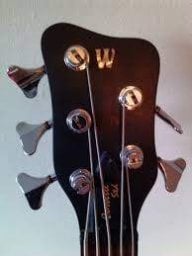
Shots fired! 
Seriously this looks awesome. That finish was a great choice to highlight the carve on the top.
Seriously this looks awesome. That finish was a great choice to highlight the carve on the top.
I don't know if it was intentional but the cherry burst really cements the PRS element of the bass too (IMHO)

YES! What he saidI don't know if it was intentional but the cherry burst really cements the PRS element of the bass too (IMHO)
View attachment 3302668

An influence for sureI don't know if it was intentional but the cherry burst really cements the PRS element of the bass too (IMHO)
View attachment 3302668

I think you mean thirdThat looks great. It's going to be really nice when you come in second behind @postalflunkie
I'd be happy with anything over 22nd place.
As you stumble on to why I'm doing 3 builds
Agreed.Seriously, that burst is beautiful. drool
The nicely blotchy poplar back with more Tru Oil.
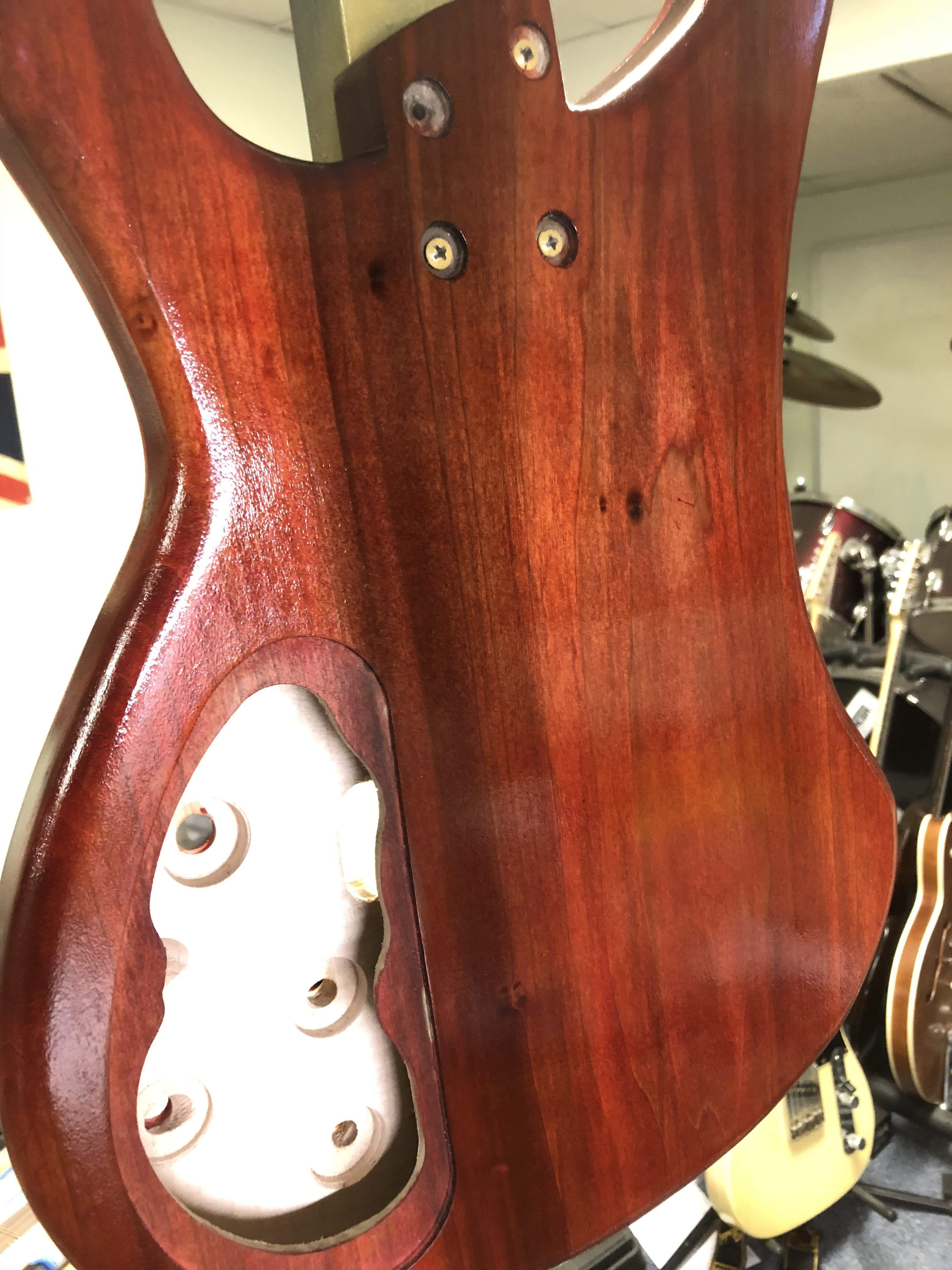
Do you have to level-sand or otherwise buff-out the tru-oil at intervals? It almost looks like a light orange-peel or grain raising. I've been torturing people for advice on Tru-Oil, probably a month out from doing it myself.
I will usually sand with 400 after every 3-4 coats during early stages then switch to 600 once I'm close to done. It doesn't orange peel per se, but I would sand down that body to make it flat.
It's not hard to get a perfectly flat finish with Tru Oil. Do the wet sand thing after 3-4 coats then build up to 15 or so coats dry sanding every 3-4 coats. Once I have built up 15 coats I sand with 600 and look for my next "best coat". Invariably I'll get a perfect coat and find a dry spot or a drip. So usually it's coat 17 or 18 before I'm done. And all those numbers of coats are rough guesses. I will apply multiple coats during the day, because I'm impatient. Obviously you can't sand a dry but not hard coat, but you can apply another coat of Tru Oil to it. I'll try to do my sanding in the morning after it's had time to dry overnight.
If you're looking for a super glossy finish - let the final coat sit for a week or so and buff it with a sponge pad in your drill using anti-swirl.
I'm by no means an expert, but let me know if you need any more info.
It's not hard to get a perfectly flat finish with Tru Oil. Do the wet sand thing after 3-4 coats then build up to 15 or so coats dry sanding every 3-4 coats. Once I have built up 15 coats I sand with 600 and look for my next "best coat". Invariably I'll get a perfect coat and find a dry spot or a drip. So usually it's coat 17 or 18 before I'm done. And all those numbers of coats are rough guesses. I will apply multiple coats during the day, because I'm impatient. Obviously you can't sand a dry but not hard coat, but you can apply another coat of Tru Oil to it. I'll try to do my sanding in the morning after it's had time to dry overnight.
If you're looking for a super glossy finish - let the final coat sit for a week or so and buff it with a sponge pad in your drill using anti-swirl.
I'm by no means an expert, but let me know if you need any more info.


