
Enjoy the benefits of a premium membership!
Upgrade Account
-
TalkBass has been independent since 1998. Add your voice.
Create a free account to reply to discussions, view embedded media, and browse with fewer display ads.
Join free Log in
Want zero display ads or expanded classifieds tools? Compare plans.
You are using an out of date browser. It may not display this or other websites correctly.
You should upgrade or use an alternative browser.
You should upgrade or use an alternative browser.
Winter Build Off 2020 - Get Ready
- Thread starter Scoops
- Start date
More options
Who Replied?
what are some of you guys doing for body chunks? I suspect in a bolt-on application you need a fairly sizable piece, right? Are there some minimum dimensions you look for in this case? Or do you just go with something that you can bookmatch because less width is cheaper?
I've never built with a one piece body blank or a bolt on neck, which means I can use pretty small chunks of wood for bodies. For a typical body I'm usually only using boards 5" or so wide and 18 - 22" long. Pretty small in the grand scheme. The curly and birdseye maple in my first two basses were actially offcut scraps from a commercial woodworking shop.
Neck lams are such narrow pieces of wood, it's pretty easy to pick them out of the scrap pile. That pile of wood is all trimmings from breaking down rough lumber for other projects. I keep anything longer than about two feet and more than 3/4" or so in at least one dimension because that's about the point it becomes useful in a neck. My last several instruments were all completely scrap wood for the necks.
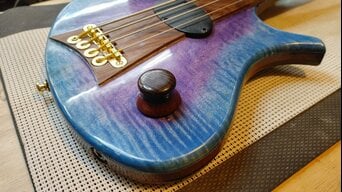
For this build, my body wood is actually in the very edge of the photo. I'm taking the whole "airspace" theme to a pretty extreme degree, this isn't going to be anything like any other instrument I've built before.

[QUOTE="dwizum, post: 23387447, member: 336060"... For a typical body I'm usually only using boards 5" or so wide and 18 - 22" long. Pretty small in the grand scheme. ...[/QUOTE]
Wow, that's reassuring for sure. Seems like the best I can find at my little local woodworking store is chunks anywhere from 5" wide up to about 7, maybe 8" if you get lucky. Otherwise you're buying a massive slab that's like 24" wide by 8 feet long and 2" thick. At current board foot pricing, that's way too much!
Wow, that's reassuring for sure. Seems like the best I can find at my little local woodworking store is chunks anywhere from 5" wide up to about 7, maybe 8" if you get lucky. Otherwise you're buying a massive slab that's like 24" wide by 8 feet long and 2" thick. At current board foot pricing, that's way too much!

One of my local places has a "buck a pound" bin of offcuts, and I check it weekly. Every time I find maple or walnut, I pat myself on the back for another 3 dollar neck. 
Most of the places local to me look at instrument-sized pieces of wood as "offcuts" or "too small to sell". I was talking to one of the guys who was throwing stuff in the "shorts pile" and he picked up an 18" long 1x8 S4S sapele piece and threw it back saying "useless" with a bit of a harumph. I picked it up for less than a buck and resawed it into a nice bookmatched top set.
Once you have a solid design and you know what dimensions of raw wood you need, you can start looking at all sorts of sources. Most of what we need is pretty small comparatively speaking
Most of the places local to me look at instrument-sized pieces of wood as "offcuts" or "too small to sell". I was talking to one of the guys who was throwing stuff in the "shorts pile" and he picked up an 18" long 1x8 S4S sapele piece and threw it back saying "useless" with a bit of a harumph. I picked it up for less than a buck and resawed it into a nice bookmatched top set.
Once you have a solid design and you know what dimensions of raw wood you need, you can start looking at all sorts of sources. Most of what we need is pretty small comparatively speaking

Im passing the couple hours I've had making a guitar/bass stand. Granted I'm using most of the same templates I did last time.
Now that there's been a statement that its ok to make jigs, I'm off to the shop!

Beautiful as usual....I got this far on a tele for my nephew who is graduating from dental school.
I'll put it on the back burner until the build off bass is ready for finishing
View attachment 3630401
Curious... are we allowed to build molds, templates and jigs before the start of the the build-off? That is the point of the long notice - right?
Yes, as long as you're not doing anything with the actual bass stuff you can make any tools you need.
Now that there's been a statement that its ok to make jigs, I'm off to the shop!
I'm putting this here as a reminder for next year to spell this out in the early invite

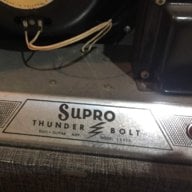
"Air Space"!! I'm looking forward to seeing an F-104 inspired original...


Alright, I'm going to throw my hat into the ring.
I have not built an instrument since I was in high school. Furthermore, I am a self-employed woodworker by trade and I will have to build this project in between paying work.
So I have decided to start with something simple (in comparison to many of the builds here).
I have always wanted a Fender Precision AE but they were never available lefthanded. I have a Warmoth maple/maple fretless neck and most of the needed hardware. I will not be able to acquire all the wood until the first of January so I think taking on a body build will best suit my situation and make it possible to have a chance of completing the project in the allotted time.
Fender AE;
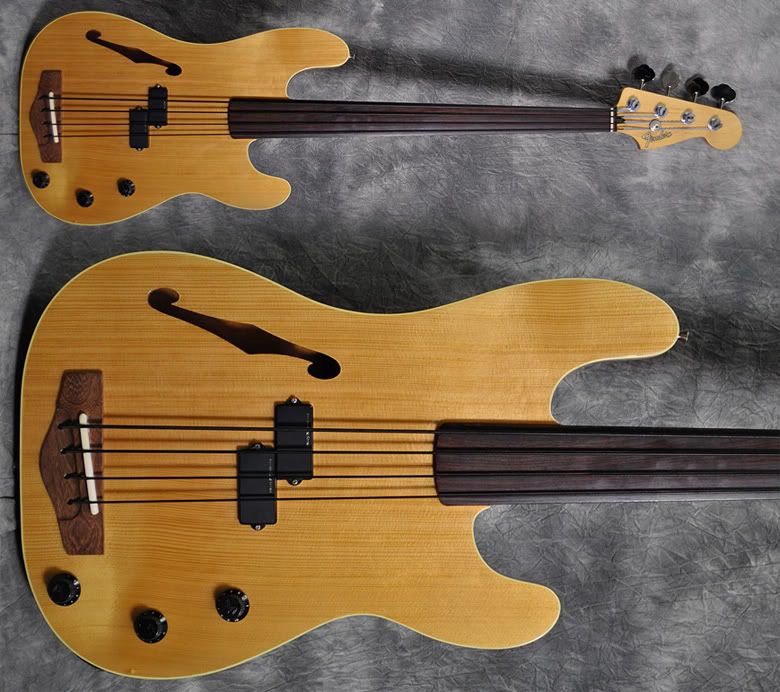
I have not built an instrument since I was in high school. Furthermore, I am a self-employed woodworker by trade and I will have to build this project in between paying work.
So I have decided to start with something simple (in comparison to many of the builds here).
I have always wanted a Fender Precision AE but they were never available lefthanded. I have a Warmoth maple/maple fretless neck and most of the needed hardware. I will not be able to acquire all the wood until the first of January so I think taking on a body build will best suit my situation and make it possible to have a chance of completing the project in the allotted time.
Fender AE;


 I quit!
One question I've always had for everyone that seems to get amazingly smooth curved edges is how they do it? I'm referring to the outer side edges. Even my templates leave something to be desired on their curves. I always end up smoothing it out with my belt sander, but it's never as good as a production piece. Granted I'm a failed perfectionist hahaha!
Is it just patience and sanding it smooth till there's no oddities/bumps/low spots? I think in all my builds I've been too rushed and not taken enough time to sand the curves right.
Is it just patience and sanding it smooth till there's no oddities/bumps/low spots? I think in all my builds I've been too rushed and not taken enough time to sand the curves right.
but they were never available lefthanded
That's basically the sentence that started me off building instruments in the first place! Glad to see another lefty around.
I quit!
I'd like to take that as a compliment but I think you're over-estimating both my skills and this particular project!
I've used a pattern bit on the router table, but after dealing with some nasty tear out i found this robo sander. I use it on the drill press.
Robo Sander 2" X 2" W/50 grit sleeve | Klingspor's Woodworking Shop
Robo Sander 2" X 2" W/50 grit sleeve | Klingspor's Woodworking Shop
Last edited:
Is it just patience and sanding it smooth till there's no oddities/bumps/low spots?
It's probably a combination of a lot of things -
- Get the template dead-on perfect before you use it. It's a lot easier to sand bumps out of 1/4" mdf than 1.5" hardwood
- Rough saw close enough to the line that your router has very little work to do. This is probably the most important. Small cuts are easier to control, will have less tear out, less burn, less chance of the bit wobbling or trying to run away. A smaller cut takes less pressure to keep the bearing against the pattern so you can concentrate on keeping the router firmly against the face of the work versus trying to push it through wood.
- Use a broad router base so it's stable. Hold the router in a way that lets you keep good pressure against the face of the body, and turn the router so the handles keep their orientation relative to the body curves so you can maintain this pressure against the body (hard to explain, easy to do)
- If you're cutting highly figured wood or wood that tears easily, learn to do a climb cut without losing control of the router. Much less tear out.
- carefully choose the angles you photograph from before posting on Talkbass such as to emphasize the most perfect part of the body after you're done.

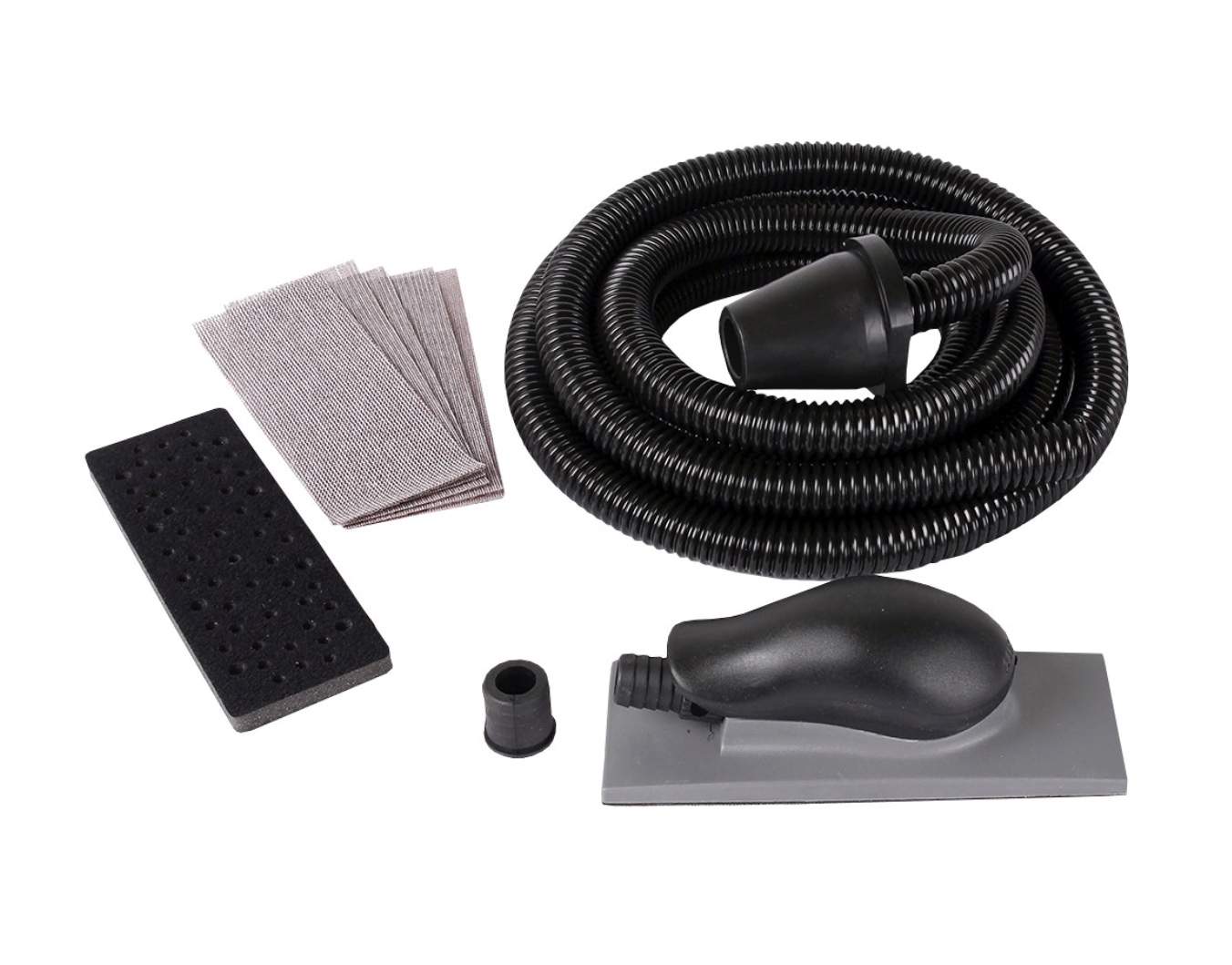
I like to use a large disc sander to smooth out the outside curves. When hand sanding the curves I use Mirka sanding caul. It has vacuum outlet so with Abranet there's almost no dust flying around. I tend to have slightly wavy curves with oscillating drum sander so I finish with hand sanding.
I forgot to say the old wisdom; 90% of bass building is sanding.


