

Enjoy the benefits of a premium membership!
Upgrade Account
-
TalkBass has been independent since 1998. Add your voice.
Create a free account to reply to discussions, view embedded media, and browse with fewer display ads.
Join free Log in
Want zero display ads or expanded classifieds tools? Compare plans.
You are using an out of date browser. It may not display this or other websites correctly.
You should upgrade or use an alternative browser.
You should upgrade or use an alternative browser.
Winter Build Off 2023 - Acoustic/Electric Short Scale 5 String
- Thread starter mapleglo
- Start date
More options
Who Replied?
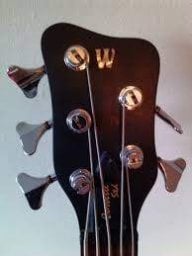
I don't think this bridge is going to work.

Even without the bridge block, the action is pretty high, and the strings keep popping off the saddles. It's pretty clear I'll have to shim the neck, no matter what bridge I use. It also appears I may have to shift the tail piece over toward the treble side a tad. And there's still a little bit of a back bow to the neck. Of course, the good news is that the strings fit. And the whole shebang hasn't collapsed. Yet.
Even without the bridge block, the action is pretty high, and the strings keep popping off the saddles. It's pretty clear I'll have to shim the neck, no matter what bridge I use. It also appears I may have to shift the tail piece over toward the treble side a tad. And there's still a little bit of a back bow to the neck. Of course, the good news is that the strings fit. And the whole shebang hasn't collapsed. Yet.
I think you're gonna need to bring the tailpiece much closer to the bridge to increase break angle. Or I wonder if a retainer right behind the bridge could keep the strings low until they pass over the saddles, increasing break angle?
The neck is bolted on right? So shims can help make the saddle height travel appropriate.
The neck is bolted on right? So shims can help make the saddle height travel appropriate.
I think you're gonna need to bring the tailpiece much closer to the bridge to increase break angle. The neck is bolted on right? So shims can help make the saddle height travel appropriate.
Yup, that's one option.
Crap, you responded too fastYup, that's one option.

I just edited the post to include:
Or I wonder if a retainer right behind the bridge could keep the strings low until they pass over the saddles, increasing break angle?
I started working on a new bridge/tailpiece today. First, I took a close look at my existing Ovation 5 string bass.
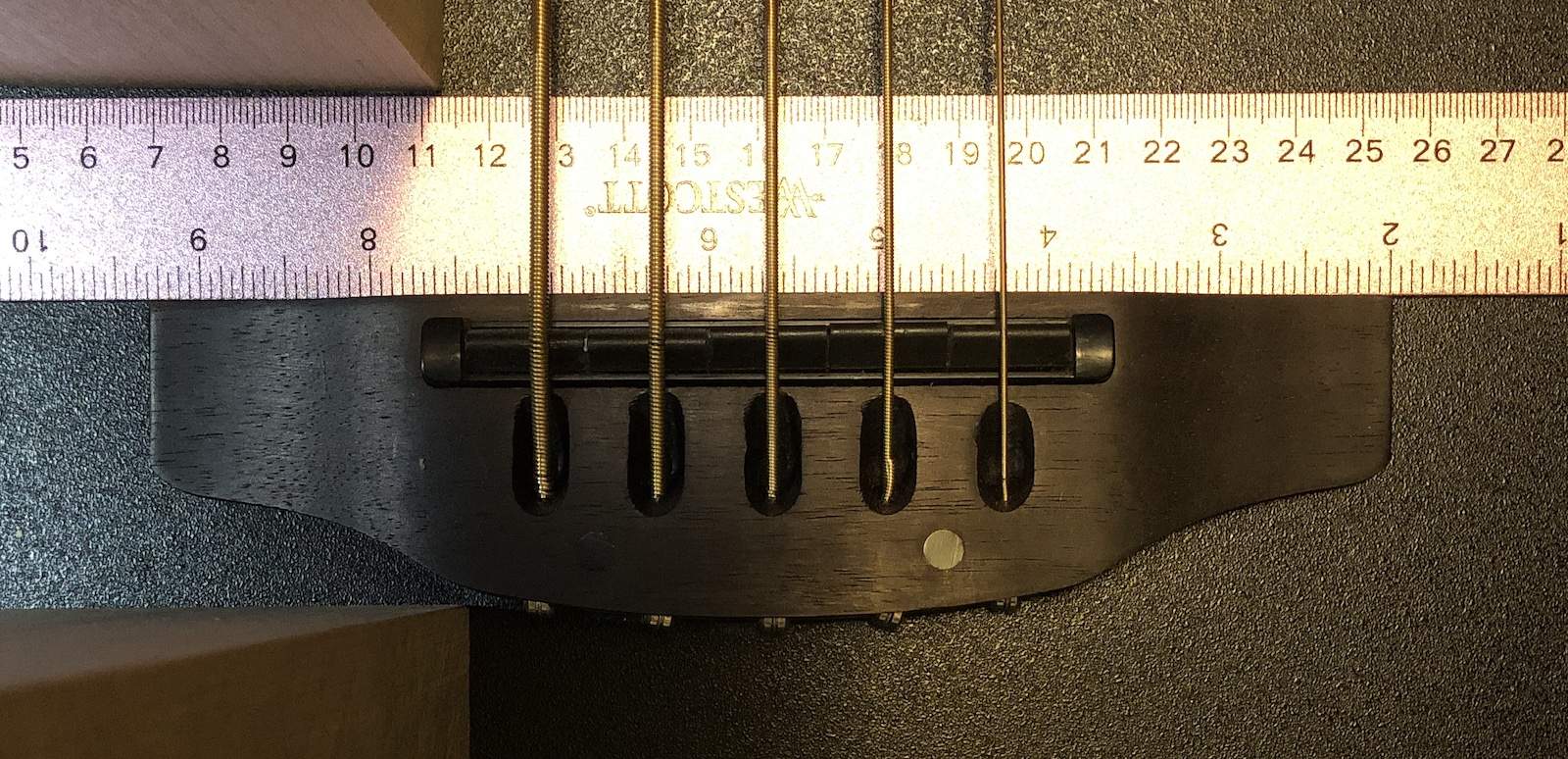
I made a template in the computer.
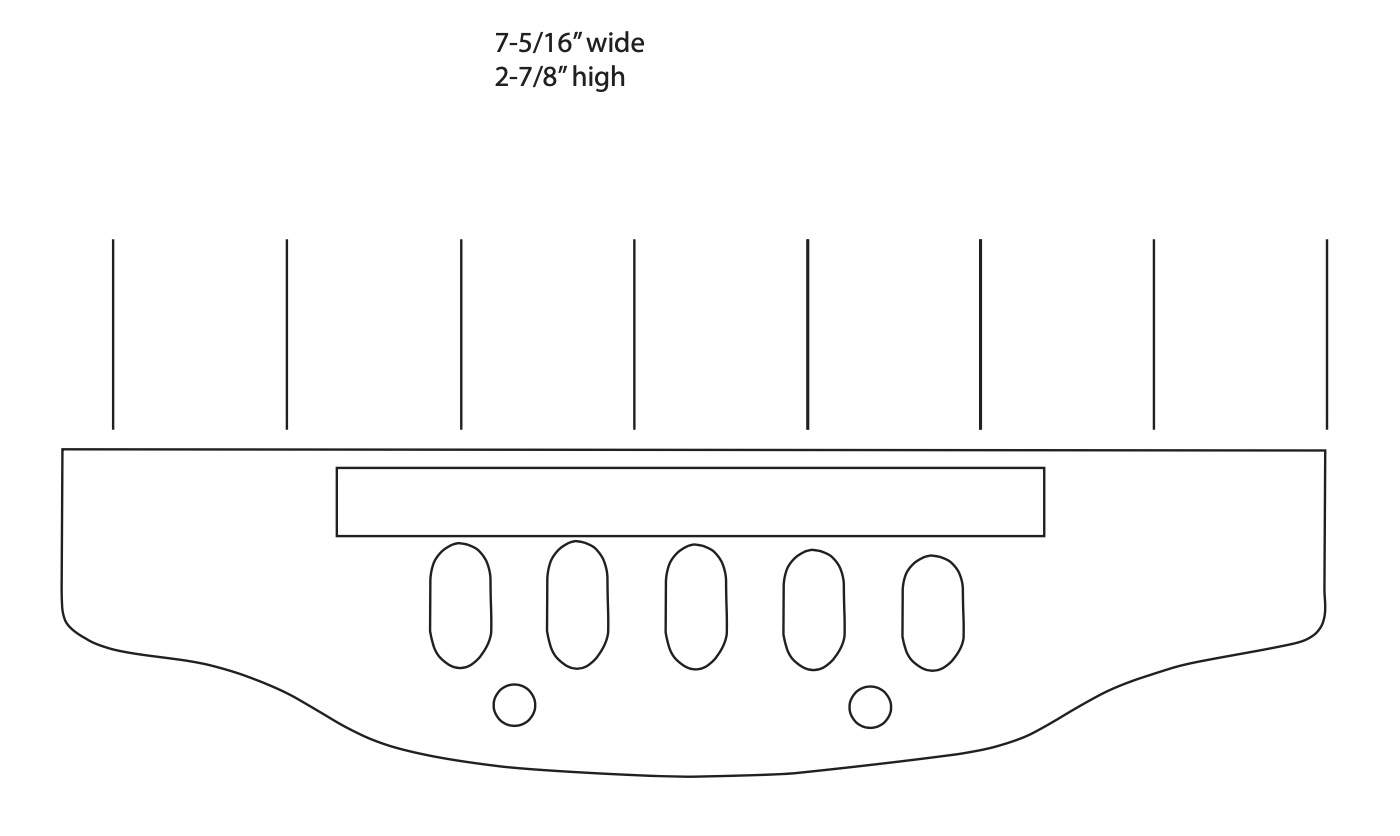
Then I started cutting, drilling, and routing.
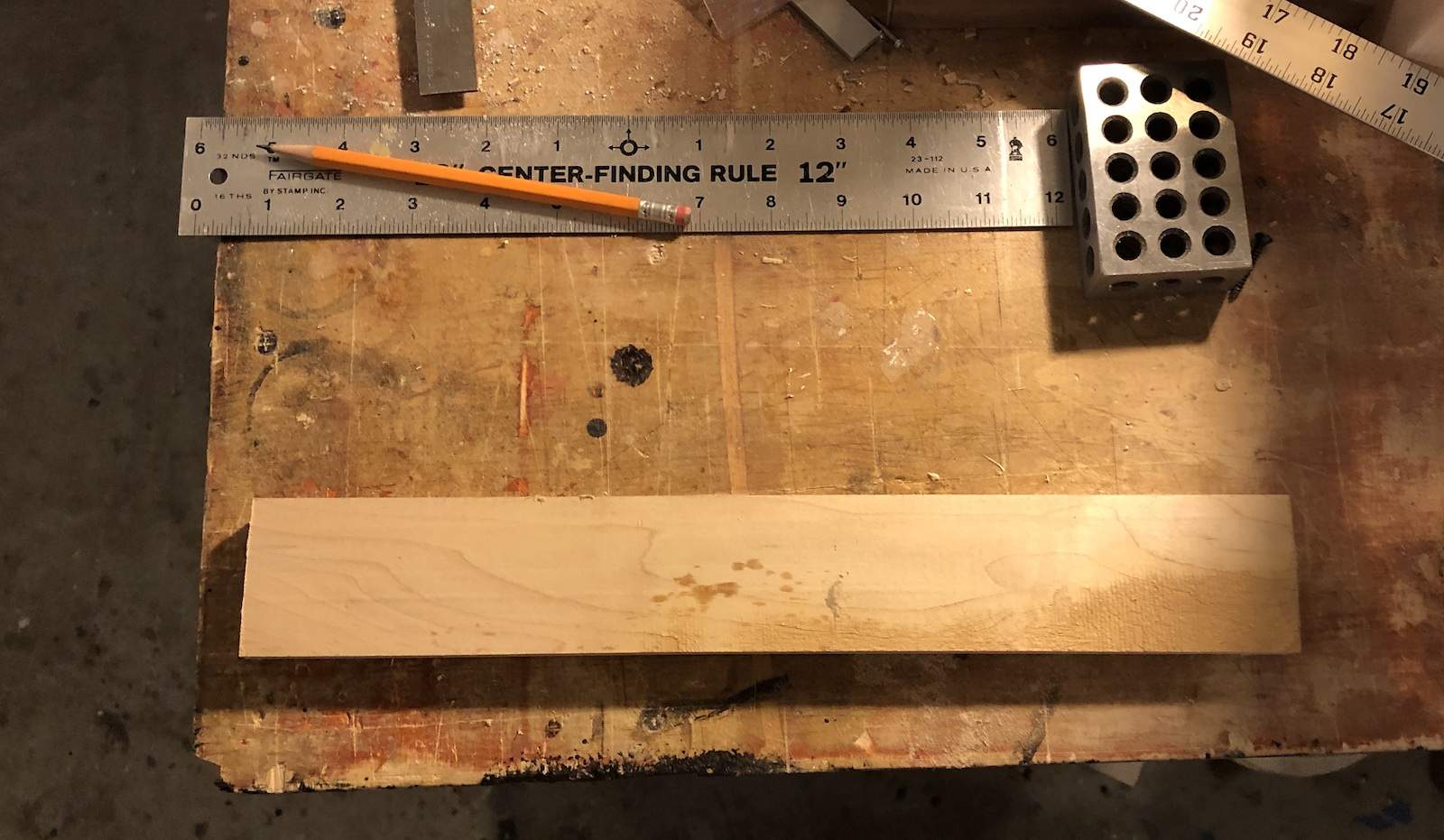
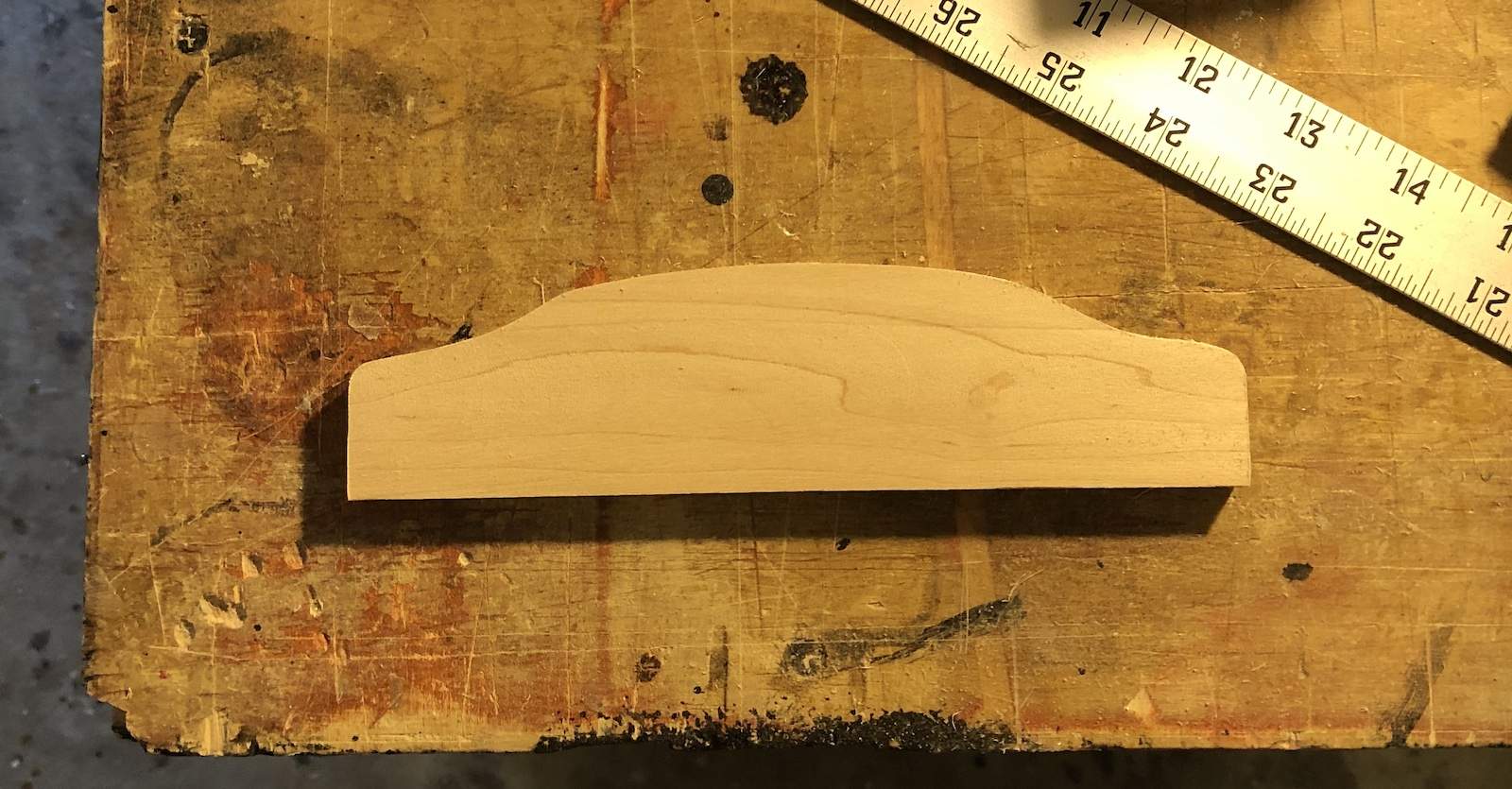
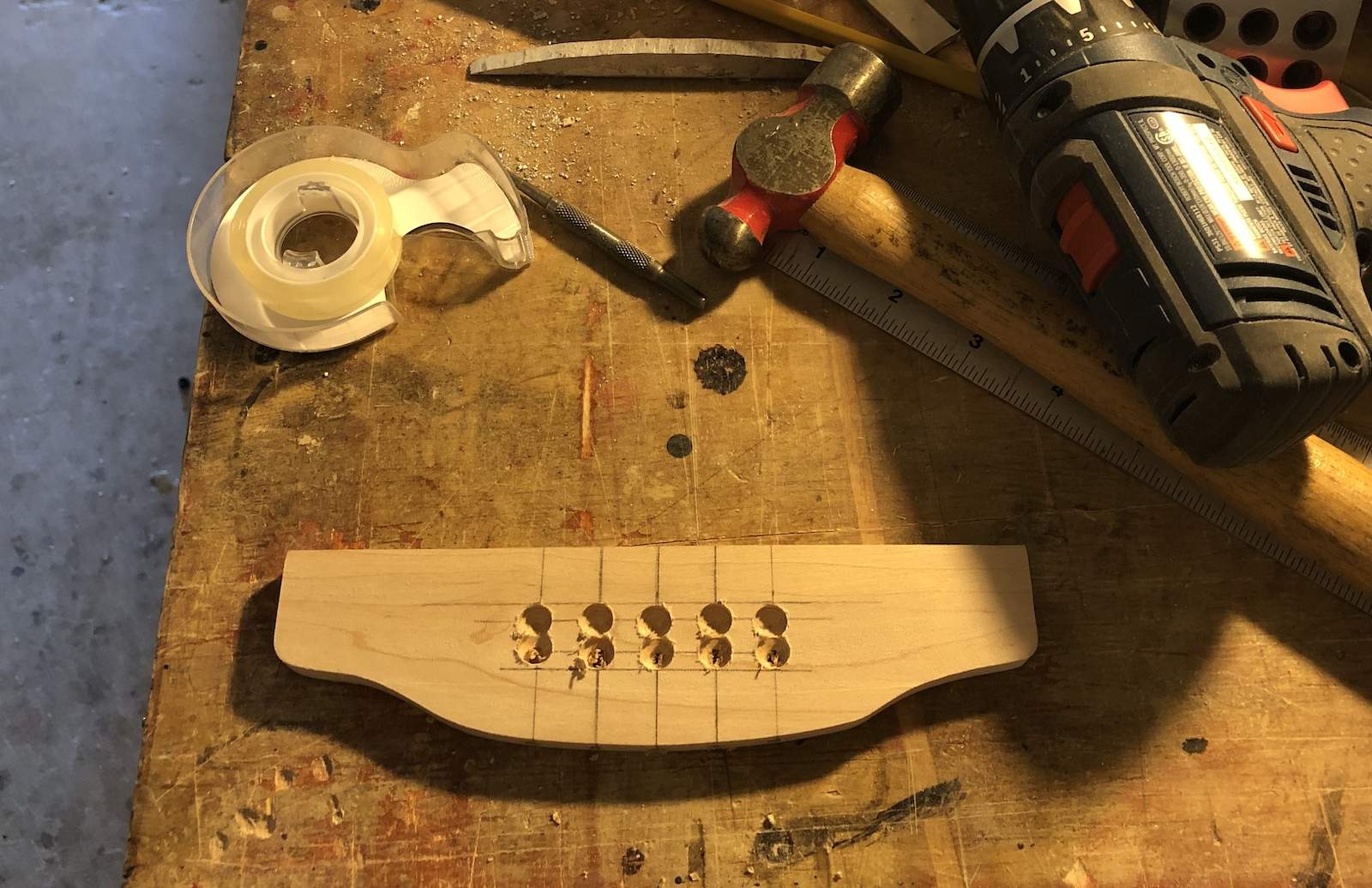
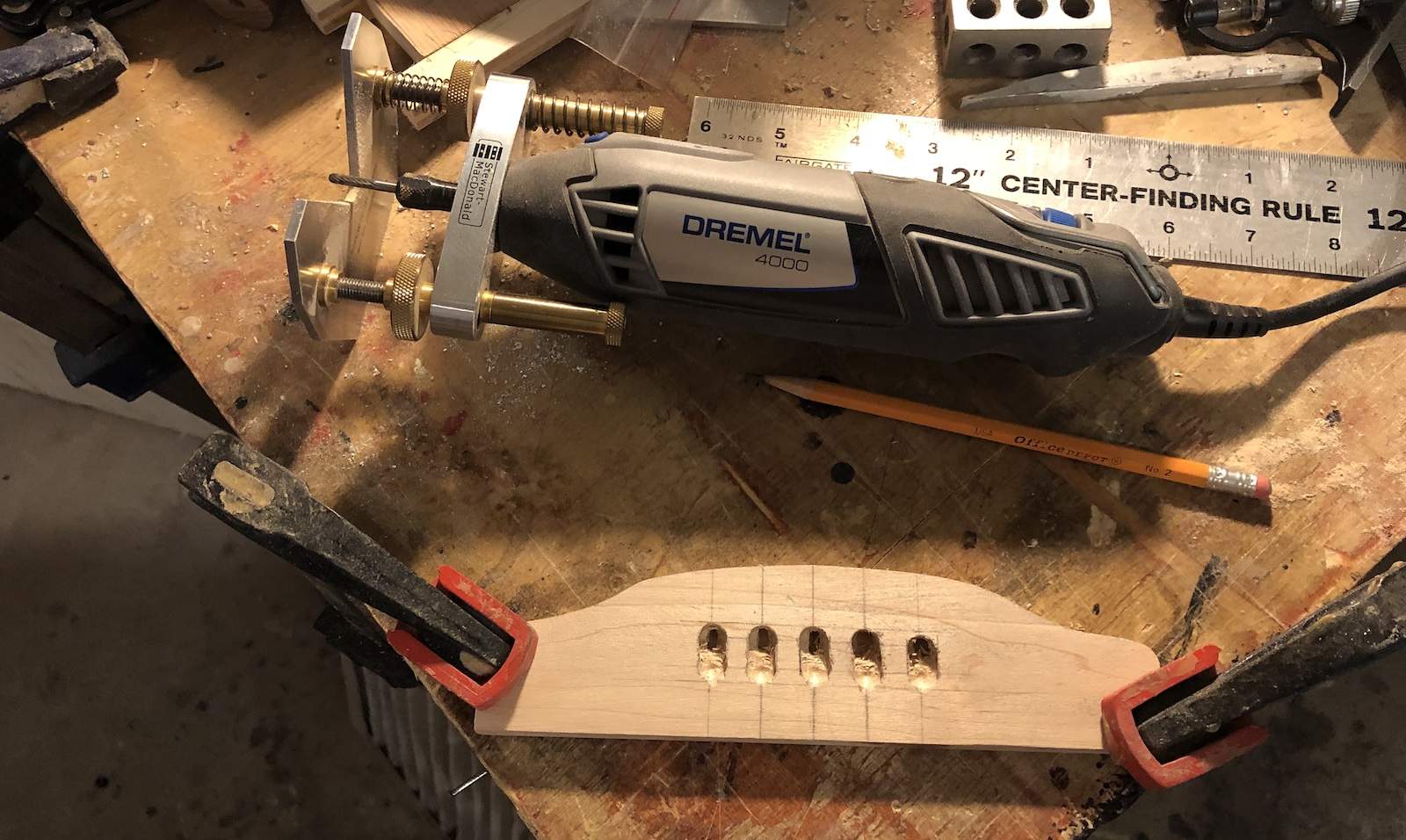
Now I need to make some lunch. I'll probably epoxy the bridge down since I already spread epoxy on the top. I haven't decided if I'll taper the height of the bridge toward each end, like the Ovation. Plenty of time to think about that. I guess I'll be using those short scale strings I bought after all.
I made a template in the computer.
Then I started cutting, drilling, and routing.
Now I need to make some lunch. I'll probably epoxy the bridge down since I already spread epoxy on the top. I haven't decided if I'll taper the height of the bridge toward each end, like the Ovation. Plenty of time to think about that. I guess I'll be using those short scale strings I bought after all.

I'm thinking the final bridge may look something like this:
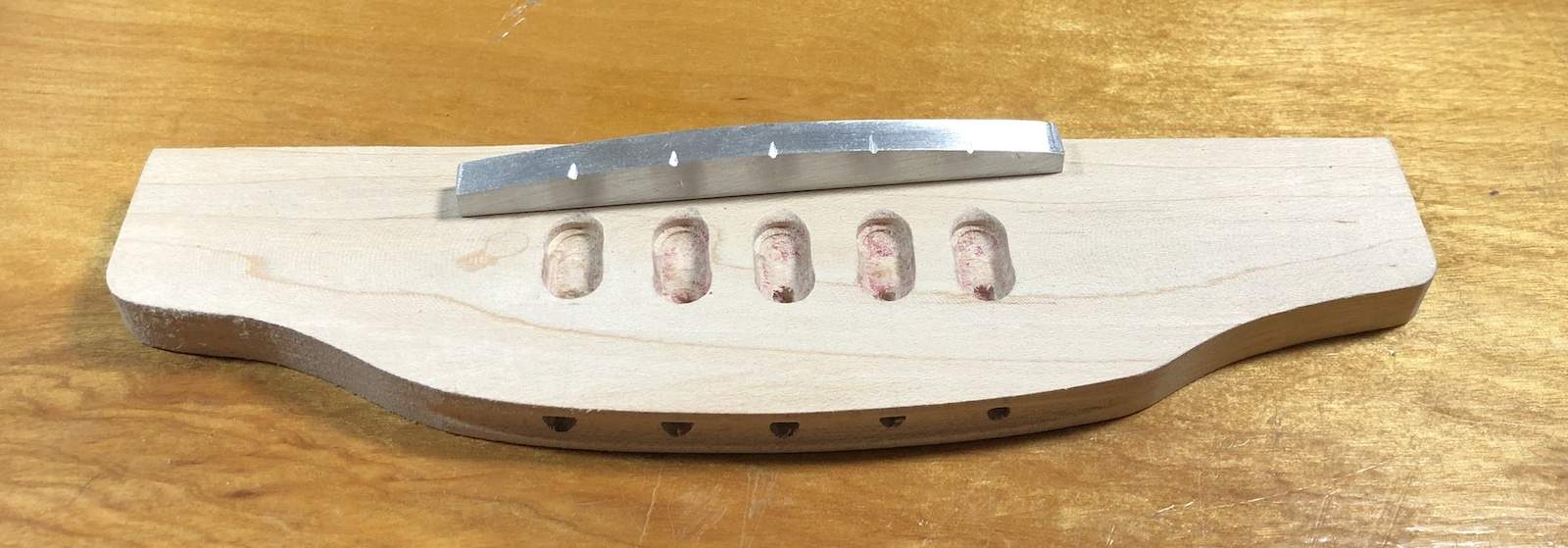
The saddle will be a little recessed into the front of the bridge.
The saddle will be a little recessed into the front of the bridge.
So I made a template for the saddle rout.
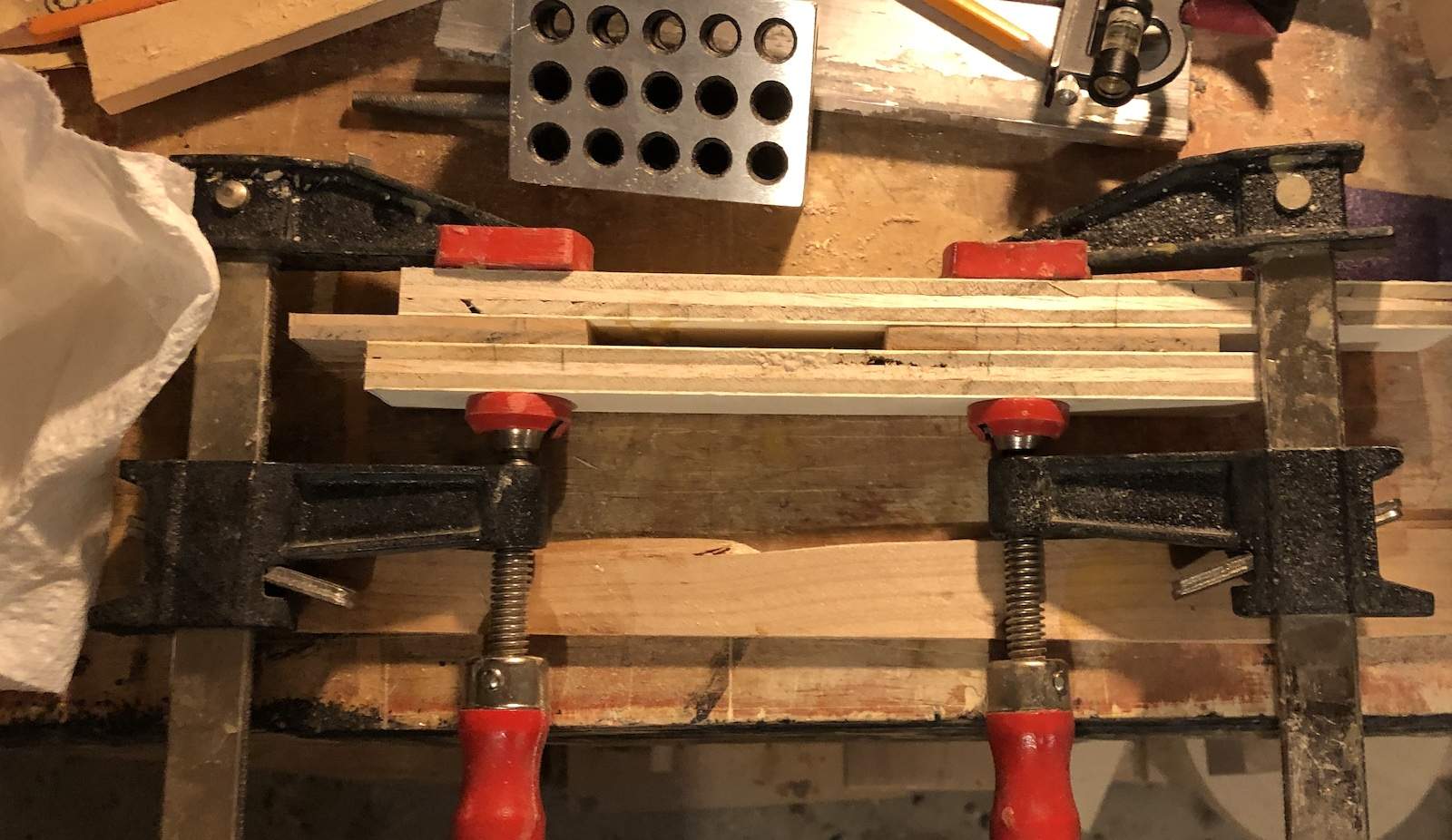
And promptly screwed up the bridge by routing the saddle rout on the wrong side.
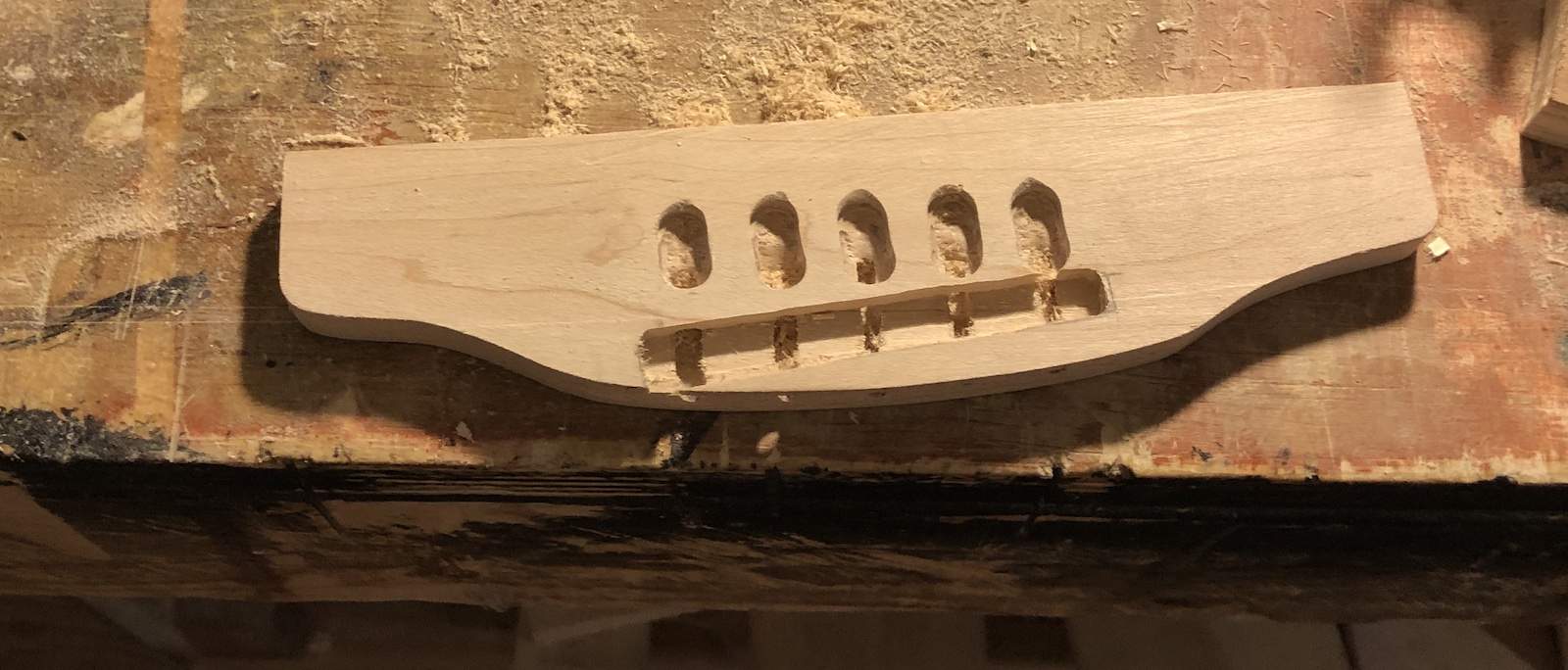
Well, the template was screwed up anyway - it was not level, so the rout came out too wide. Looks like I'm batting 1000 for these bridges. Guess I'll start on another...
And promptly screwed up the bridge by routing the saddle rout on the wrong side.
Well, the template was screwed up anyway - it was not level, so the rout came out too wide. Looks like I'm batting 1000 for these bridges. Guess I'll start on another...
So I made a template for the saddle rout.
View attachment 4957410
And promptly screwed up the bridge by routing the saddle rout on the wrong side.
View attachment 4957411
Well, the template was screwed up anyway - it was not level, so the rout came out too wide. Looks like I'm batting 1000 for these bridges. Guess I'll start on another...
You got this! I liked your post out of sympathy, btw.


Hey Nexy;
It's looking good! You are in the middle of some serious R & D, breaking into new engineering territory. That almost always involves making things over a few times as you figure it out. Don't get discouraged by that. You are improving the design with each version.
A technical suggestion: This new bridge has the tailpiece integrated into it, so all of the tension load of the strings will be taken by the bridge, which will be glued down in the middle of the top. This loading will change the way the top flexes and moves. The tension will try to roll the bridge forward, which will flex the top in an S shape. Your previous design with the tailpiece at the back didn't do that; the string motion would just move the bridge up and down vertically. A straight fundamental drum-head motion.
Forcing the top to flex in an S shape will increase the high frequency sound and decrease the low frequency sound. Potentially by quite a bit. Do you want to do that, since this is a bass?
My suggestion is to add one or two metal straps from your new bridge back to the back edge of the shell, where you had the previous tailpiece attached. That will put the heavy tension load back at the rim of the shell, and prevent the bridge from rolling and distorting the top. That's the principle behind trapeze tailpieces: Move the string anchors up closer to the bridge, but pass the tension load back to the rim of the body. All to free up the motion of the top and allow it to vibrate at lower frequencies.
It's looking good! You are in the middle of some serious R & D, breaking into new engineering territory. That almost always involves making things over a few times as you figure it out. Don't get discouraged by that. You are improving the design with each version.
A technical suggestion: This new bridge has the tailpiece integrated into it, so all of the tension load of the strings will be taken by the bridge, which will be glued down in the middle of the top. This loading will change the way the top flexes and moves. The tension will try to roll the bridge forward, which will flex the top in an S shape. Your previous design with the tailpiece at the back didn't do that; the string motion would just move the bridge up and down vertically. A straight fundamental drum-head motion.
Forcing the top to flex in an S shape will increase the high frequency sound and decrease the low frequency sound. Potentially by quite a bit. Do you want to do that, since this is a bass?
My suggestion is to add one or two metal straps from your new bridge back to the back edge of the shell, where you had the previous tailpiece attached. That will put the heavy tension load back at the rim of the shell, and prevent the bridge from rolling and distorting the top. That's the principle behind trapeze tailpieces: Move the string anchors up closer to the bridge, but pass the tension load back to the rim of the body. All to free up the motion of the top and allow it to vibrate at lower frequencies.
Hey Nexy;
It's looking good! You are in the middle of some serious R & D, breaking into new engineering territory. That almost always involves making things over a few times as you figure it out. Don't get discouraged by that. You are improving the design with each version.
A technical suggestion: This new bridge has the tailpiece integrated into it, so all of the tension load of the strings will be taken by the bridge, which will be glued down in the middle of the top. This loading will change the way the top flexes and moves. The tension will try to roll the bridge forward, which will flex the top in an S shape. Your previous design with the tailpiece at the back didn't do that; the string motion would just move the bridge up and down vertically. A straight fundamental drum-head motion.
Forcing the top to flex in an S shape will increase the high frequency sound and decrease the low frequency sound. Potentially by quite a bit. Do you want to do that, since this is a bass?
My suggestion is to add one or two metal straps from your new bridge back to the back edge of the shell, where you had the previous tailpiece attached. That will put the heavy tension load back at the rim of the shell, and prevent the bridge from rolling and distorting the top. That's the principle behind trapeze tailpieces: Move the string anchors up closer to the bridge, but pass the tension load back to the rim of the body. All to free up the motion of the top and allow it to vibrate at lower frequencies.
That's an interesting analysis, Bruce, thanks! I have two Ovation acoustic/electric basses, both of which have a similar bridge design, and they sound pretty good. But I have been concerned about the bridge flexing the top, and maybe even pulling off due to the string tension. The metal strap idea is a good one, and I will definitely consider it.
In fact, maybe I should make this bridge/tailpiece out of aluminum, and screw it to an aluminum sheet, folded over the back edge of the shell.
I'm done for the day in the shop having reached my time and endurance limit, so I have time to think about all these options.
That's an interesting analysis, Bruce, thanks! I have two Ovation acoustic/electric basses, both of which have a similar bridge design, and they sound pretty good. But I have been concerned about the bridge flexing the top, and maybe even pulling off due to the string tension. The metal strap idea is a good one, and I will definitely consider it.
In fact, maybe I should make this bridge/tailpiece out of aluminum, and screw it to an aluminum sheet, folded over the back edge of the shell.
I'm done for the day in the shop having reached my time and endurance limit, so I have time to think about all these options.
I have one Ovation bass, the model with the single round sound hole in the center. In my opinion, it has too much high end and not enough bottom end for the size of the body. And I think the bridge design is a big part of the problem. A trapeze-style tailpiece brace might improve it.
Could the tailpiece stay where it is and still be the string-stop, while the strings thread through the bridge and over the saddle?Hey Nexy;
It's looking good! You are in the middle of some serious R & D, breaking into new engineering territory. That almost always involves making things over a few times as you figure it out. Don't get discouraged by that. You are improving the design with each version.
A technical suggestion: This new bridge has the tailpiece integrated into it, so all of the tension load of the strings will be taken by the bridge, which will be glued down in the middle of the top. This loading will change the way the top flexes and moves. The tension will try to roll the bridge forward, which will flex the top in an S shape. Your previous design with the tailpiece at the back didn't do that; the string motion would just move the bridge up and down vertically. A straight fundamental drum-head motion.
Forcing the top to flex in an S shape will increase the high frequency sound and decrease the low frequency sound. Potentially by quite a bit. Do you want to do that, since this is a bass?
My suggestion is to add one or two metal straps from your new bridge back to the back edge of the shell, where you had the previous tailpiece attached. That will put the heavy tension load back at the rim of the shell, and prevent the bridge from rolling and distorting the top. That's the principle behind trapeze tailpieces: Move the string anchors up closer to the bridge, but pass the tension load back to the rim of the body. All to free up the motion of the top and allow it to vibrate at lower frequencies.
Could the tailpiece stay where it is and still be the string-stop, while the strings thread through the bridge and over the saddle?
Yes, that's the idea of a trapeze-style tailpiece. The anchor points of the strings are up close to the bridge, or even part of the bridge, but the tension load is passed back to the back edge of the body by the rods or a plate.
Another approach to this is to make the bridge from wood, similar to your current one, but make it longer. Still glued down to the top, but extended back almost to the back edge of the body. Figure out some nice shape. Put the string anchor points wherever you like. A larger footprint bridge will have more surface area for strength, and it will force the top to vibrate more in the low frequency mode.
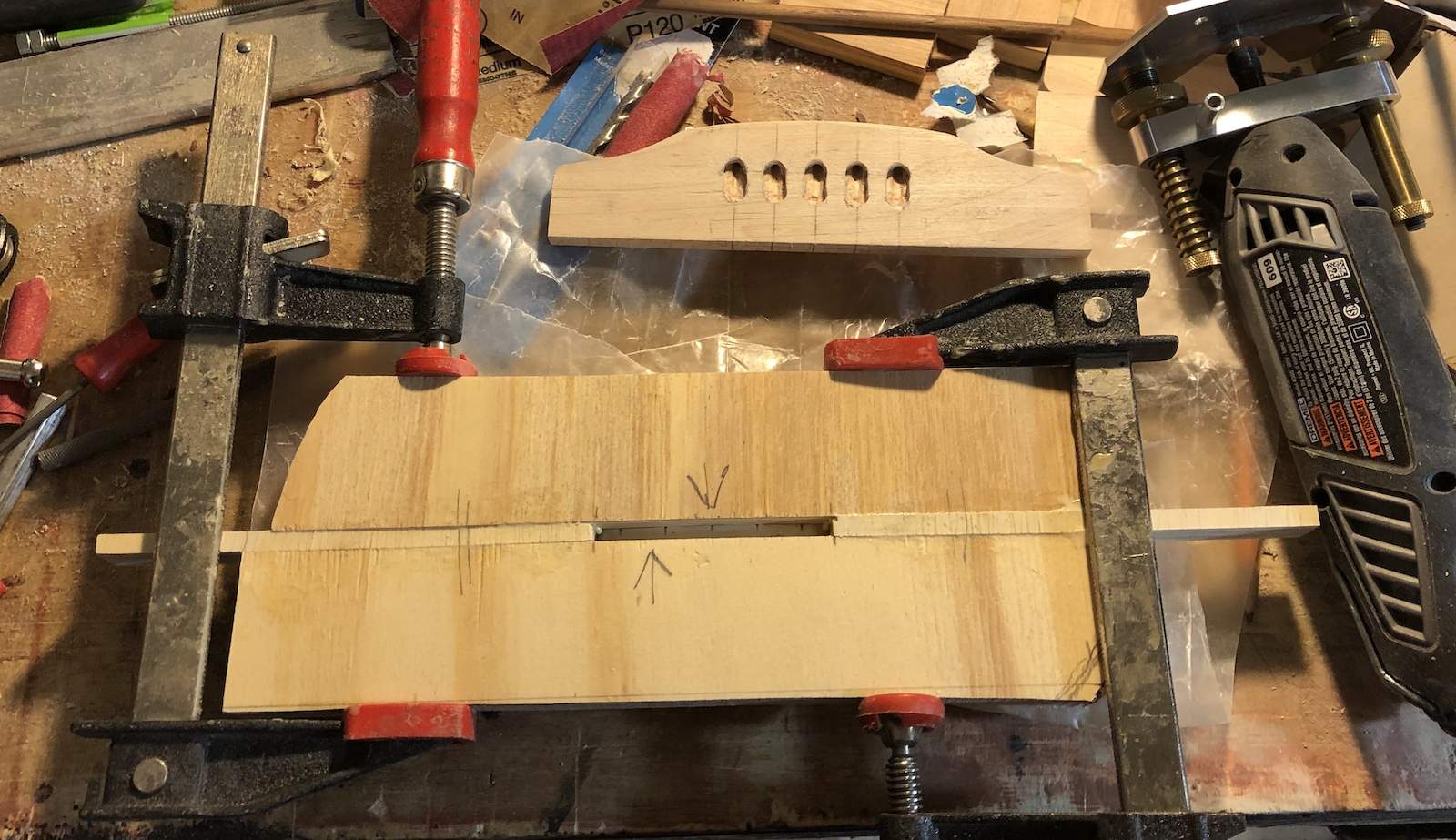
So the new bridge is pretty much done. After we grabbed some lunch, I worked on it a bit more and made the template for the saddle.
Both of my Ovation basses, which feature the multiple sound holes like I made on this one, sound pretty good to me. But I'm still thinking about some kind of trapeze-style tailpiece. I'll sleep on it tonight.
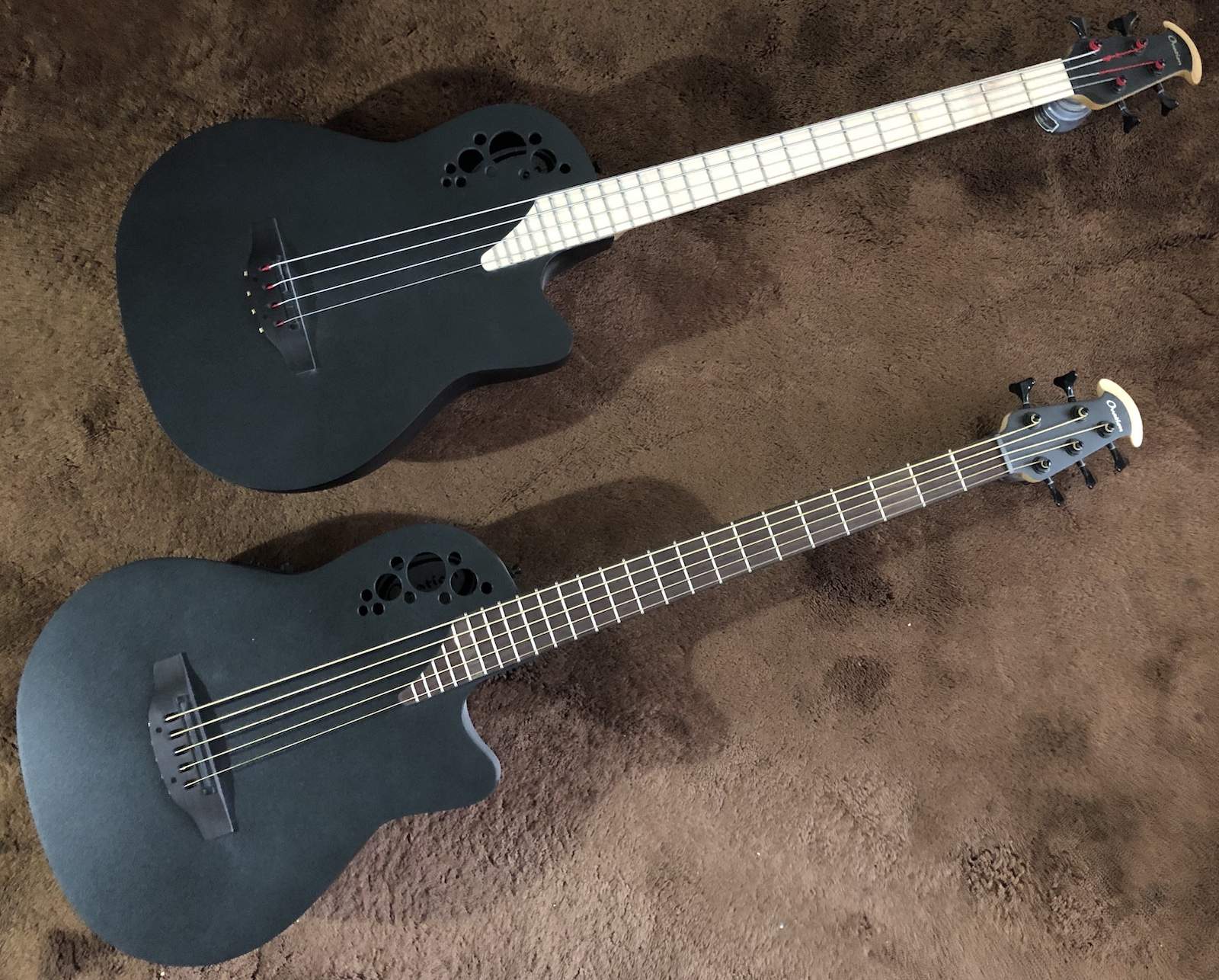
Both of my Ovation basses, which feature the multiple sound holes like I made on this one, sound pretty good to me. But I'm still thinking about some kind of trapeze-style tailpiece. I'll sleep on it tonight.
Latest posts
-

-

-

-
Do the new Rickenbacker 4003s sound like the 4001s from the '70s?
- Latest: Asllan Pizzatto
