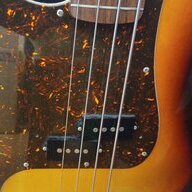
Yeah. Like that.
I’ve never tried one though. it looks like it would be a lot of work to make a board like that.
I’ve never tried one though. it looks like it would be a lot of work to make a board like that.

TalkBass has been independent since 1998. Add your voice.
Create a free account to reply to discussions, view embedded media, and browse with fewer display ads.
Join free Log in
Want zero display ads or expanded classifieds tools? Compare plans.
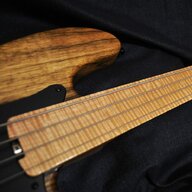
Yeah. Like that.
I’ve never tried one though. it looks like it would be a lot of work to make a board like that.
Has anyone tried using wood for frets? Had an odd idea to use ebony frets today. Probably silly but fun to consider

I haven't built anything yet but I am all about the local sustainable woods. I don't remember what else I wanted to say.

The laminates used for plywood sometimes have wild, highly exaggerated patterns and I kind of wish there was a way to get just sheets of contrasty laminate.
View attachment 5242380
Lignum Vitae would last....for a while. I can't think of any harder wood offhand. But... Why?I saw a lad on YouTube making frets out of glass the other day if that's of any interest.
I should look harder, what I've found so far has usually been hardwood or exotic veneer, not cheap grainy pine.Well, that's what veneers are for. That stretched-out grain pattern is the result of those layers of wood being peeled off of the circumference of the log as it rotates. That's how veneers are made.
If you want that grain pattern on a wood blank, just buy a sheet of plain-back veneer and glue it onto the blank.
I'm curious. What about using torrified and non -torrefied wood together? Would that count as a sufficiently weird wood choice? Like using them to offset each other's strengths and weaknesses by eg making a 5-piece neck with maple but torrefied/ non torrified/ torrified etc?

I'm curious. What about using torrified and non -torrefied wood together? Would that count as a sufficiently weird wood choice? Like using them to offset each other's strengths and weaknesses by eg making a 5-piece neck with maple but torrefied/ non torrified/ torrified etc?
People make necks with laminates of entirely different species of wood all the time without apparent issue. I guess the question is, are the propertied of torrefied maple more different from untreated maple than, say, walnut or wenge?I’m no expert but I’d be worried about the materials drying out at different rates and then shifting. But I’m sure someone can talk about it better…
People make necks with laminates of entirely different species of wood all the time without apparent issue. I guess the question is, are the propertied of torrefied maple more different from untreated maple than, say, walnut or wenge?
I'm curious. What about using torrified and non -torrefied wood together? Would that count as a sufficiently weird wood choice? Like using them to offset each other's strengths and weaknesses by eg making a 5-piece neck with maple but torrefied/ non torrified/ torrified etc?
sure I know that, but wouldn’t the vastly different amounts of moisture content be a possible issue?
I might be wrong… I have a habit of over analysis

It might, but it's also inextricably part of a system of components and designs that interact. What's the construction methodology used? What is the bridge and mounting? What's the pickup/signal path? All of these contribute to the final tone.I have this very unique bass I call "Albatross"'. Fretless 5, ebony board, maple neck. Swamp ash body.
Very thick eye walnut top.
Extremely heavy. Bolt on.
With tapes it growls unlike any other bass I've ever owned.
I have to think that centimeter of walnut makes a difference.

It's not so much the absolute moisture content that matters, but more about whether it is at equilibrium when it is assembled, in which case it should be stable over time.