
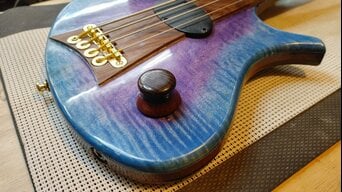
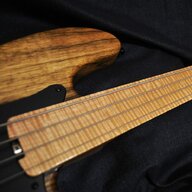
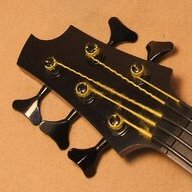
not really a "wood choice" but these guys are rocking the alternative construction options:
Klos Guitars Apollo Bass guitars
Klos Guitars Apollo Bass guitars

TalkBass has been independent since 1998. Add your voice.
Create a free account to reply to discussions, view embedded media, and browse with fewer display ads.
Join free Log in
Want zero display ads or expanded classifieds tools? Compare plans.
Maybe it's just me, but rapeseed oil scares me....peanut oil turns faster than canola/rapeseed oil does...


I'm mostly disappointed in you because you said you would forever refer to it as padookie....
They had a cart that was full of padauk at one point (missed it last time) and had 5 pieces left on it.
...

I mean, that's what it's called in English and iirc most of the Latin languages. Wikipedia says: "The term 'rape' derives from the Latin word for turnip, rapa or rapum, cognate with the Greek word rhapys." The connotations aren't awesome but our ancestors have been calling it "rapeseed" for a few centuries now and that's what it's stuck with.Maybe it's just me, but rapeseed oil scares me.

Before, I didn't have any, didn't think I'd find any, was jealous of the folks who had it, so I was making fun of it.I'm mostly disappointed in you because you said you would forever refer to it as padookie.

"Canola" is more or less a marketing term coined for the major oil-producing cultivars to take the edge off.

I'll see if I can get a piece out of this.Here's an idle thought: Would tree roots make good fingerboard wood? Assume for the sake of argument that it might be possible to find a piece straight and wide enough to work. (I know that in this real world it's extremely unlikely.)
After the Nth time running over a particular tree root with the lawn mower, I got to wondering whether tree roots might have useful material properties distinct from trunk wood.

The grain patterns are different. So the wood may be different from the above ground wood.Here's an idle thought: Would tree roots make good fingerboard wood? Assume for the sake of argument that it might be possible to find a piece straight and wide enough to work. (I know that in this real world it's extremely unlikely.)
After the Nth time running over a particular tree root with the lawn mower, I got to wondering whether tree roots might have useful material properties distinct from trunk wood.


IIRC @rudy4444 has used a similar finish on his necks?@Beej what do you think of this video?
Think it might work with an amber oil such as tung oil? I suppose you'd have to pick a particular oil that is ok with heat to melt down wax into it. Also, that guys breadboard butter has been used by one of the guys in the Short Scale club here on TB, and he says it works great. It's inexpensive compared to some finishes.
I’ve started planning my next build.
It will be acoustic, so tone wood counts
The wood I have for the top is spruce from Pennsylvania and the neck, back and sides will be American sycamore. As far as the fingerboard goes, I am undecided. Likely some form of hard maple, but I am open to suggestions. I need a thick long board for this concept and Ebony would be great, but it’s expensive and hard to find at the dimensions I would like, bloodwood is also a possibility and will age to a nice dark brown. I’d really like to try Osage orange or persimmon if anyone knows of a good source for a straight, 1” x 4” x 36” or so or 25mm x 100x 1000 give or take a few mm for the civilized among us.