• TalkBass has been independent since 1998. Add your voice.
    Create a free account to reply to discussions, view embedded media, and browse with fewer display ads.
    Join freeLog in
    Want zero display ads or expanded classifieds tools? Compare plans.

Wood choices and considerations

I stopped at Rockler yesterday to check out their stock and hopefully stock up for a few more builds. Unfortunately, they didn't have a great selection and I left with 2 maple boards and a poplar board.
They had a large quantity of walnut and cherry, but none of it looked good. The walnut didn't have any appealing color or grain and the cherry seemed to have a lot of imperfections.
They had a small amount of Peruvian walnut and I really liked the dark color, but all the boards were warped, knotted and had chunks missing.
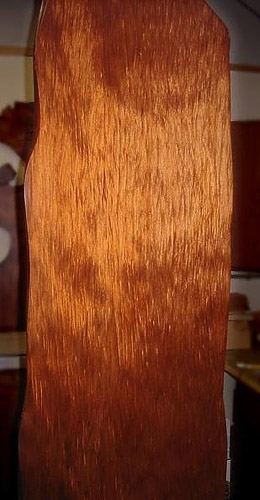
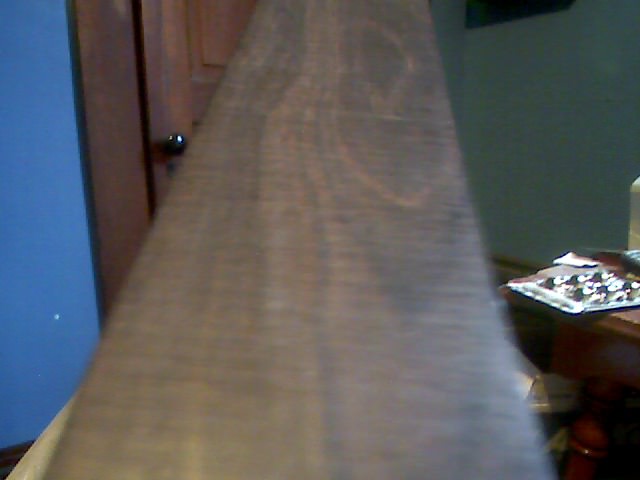
They had about 3-4 pieces of Kiaat (Muninga) so I looked it up. I read that it is very stable wood, very light for it's strength and not a wood that gets imported often, so it's rare to see. First thing I thought was I should grab a piece or 2. Actually, Id like a lot of it. A wood that's as light as poplar, but hard, stable and looks like black walnut? Yes please.
Unfortunately, every piece had grain runout and knots. The nicest piece with no knots had the worst runout.
I'd love to use this stuff for body cores and neck lams, but the runout made me think it's not great for a neck. Even lams.
Anyone work with it or have thoughts on the runout?
They had 2 smaller wenge boards, but at $28 p/bf, one was $80 and the other $100. I still want some in my stock. I love wenge. But I would rather buy a huge board for $150+ and have enough to make 2 basses, rather than $100 and have to choose between a few finger boards or 1 set of body wings.
They had a few pieces of canary wood. The grain was straight, multi colored and beautiful. To the touch, it felt very oily. Almost waxy. It was heavy and dense like wenge, but smooth. A quick search and I got equal results of, it's oily/it's not oily.
I like dark woods with straight grain (non busy appearance) for fingerboards, but maybe I can get wild and try the canary wood for a FB. Maybe a top or 2 or even some neck lams.
Anyone know just how oily it is and how it behaves when glued to other woods?
Anyway, I was disappointed in their selection. When I was in there a year ago, they had tons of purple heart, wenge, leopard wood, zebrawood, etc. I should've stocked up then. This time they had mostly domestic stuff and the quality wasn't great. I asked if they would be getting a shipment in of wenge, purple heart, etc any time soon, but they didn't know. I'm currently checking out the link from the first page to find other wood suppliers within an hour of me.
 
They had about 3-4 pieces of Kiaat (Muninga) so I looked it up. I read that it is very stable wood, very light for it's strength and not a wood that gets imported often, so it's rare to see. First thing I thought was I should grab a piece or 2. Actually, Id like a lot of it. A wood that's as light as poplar, but hard, stable and looks like black walnut? Yes please.
Unfortunately, every piece had grain runout and knots. The nicest piece with no knots had the worst runout.
I'd love to use this stuff for body cores and neck lams, but the runout made me think it's not great for a neck. Even lams.
Anyone work with it or have thoughts on the runout?
Fingerboards maybe?

Regarding the walnut, was any worth making into stringers? Sometimes the boring looking stuff has nice straight grain. :thumbsup:
 
  • Like
Reactions: RichterScale
Fingerboards maybe?

Regarding the walnut, was any worth making into stringers? Sometimes the boring looking stuff has nice straight grain. :thumbsup:
They had a lot and I didn't go through it. I mostly went through the cherry and a few others and when I got to the walnut, I was already in there for a half hour and the wife was waiting in the vehicle.
I really liked the Peruvian walnut. The grain didn't stand out, but it was very dark. Too bad they only had a few crappy pieces.
 
  • Like
Reactions: Beej
Ancient Kauri for Body, and Neck. Whitebait Figure. Rubio Monocoat® Finish. Kauri is super expensive, and is the worlds oldest workable wood. Some has been cardon dated 50,000 years old. Can also be very 3 dimensional when moved around. It looks alive. There is also flame Kauri, and other figures. Whitebait is the most sought after.

For Woodworkers – ancientwood.com

white_bait_example_4.jpg


African Blackwood fretboard.

African Blackwood is a true Rosewood from Africa. Dalbergiia species.

Its harder, and heavier then Ebony, is oily like Rosewood, and has no pores like Ebony. Its everything Ebony ishes it was. Its nickname is Turning Wood of Kings, and is the true Ebony spoken of in the bible. Its also been found in the Pyramids.

Its a tie for the heaviest wood with Lignum Vitae. All the best Winwoods are made from ABW, and is also extremely stable, and mostly unaffected by temperatures.

mWfGqyI.jpg
 
  • Like
Reactions: mrperkolator
Ancient Kauri for Body, and Neck. Whitebait Figure. Rubio Monocoat® Finish. Kauri is super expensive, and is the worlds oldest workable wood. Some has been cardon dated 50,000 years old. Can also be very 3 dimensional when moved around. It looks alive. There is also flame Kauri, and other figures. Whitebait is the most sought after.

For Woodworkers – ancientwood.com

white_bait_example_4.jpg


African Blackwood fretboard.

African Blackwood is a true Rosewood from Africa. Dalbergiia species.

Its harder, and heavier then Ebony, is oily like Rosewood, and has no pores like Ebony. Its everything Ebony ishes it was. Its nickname is Turning Wood of Kings, and is the true Ebony spoken of in the bible. Its also been found in the Pyramids.

Its a tie for the heaviest wood with Lignum Vitae. All the best Winwoods are made from ABW, and is also extremely stable, and mostly unaffected by temperatures.

mWfGqyI.jpg
I had a large african blackwood board that made for several fingerboards. It only cost me about 150 but was worth a lot more than than in fingerboards. Beautiful stuff :thumbsup:

Heavy stuff too, but now that some of the previously lesser known aussie woods have been better cataloged, we have some heavier woods than the old Lignum Vitae identified. I'm sad to say it's not even in the top 5 anymore. :D
 
  • Like
Reactions: RichterScale
Ancient Wood has it, but like you said it is very very expensive. Probably cost prohibitive.

Langcaster Guitars made guitars from it, but Joh Lang got really sick, and had to shut down.


[Invalid or Expired Link Removed][Invalid or Expired Link Removed]
 
Last edited:
  • Like
Reactions: mrperkolator
I stopped at Rockler yesterday to check out their stock and hopefully stock up for a few more builds. Unfortunately, they didn't have a great selection and I left with 2 maple boards and a poplar board.
They had a large quantity of walnut and cherry, but none of it looked good. The walnut didn't have any appealing color or grain and the cherry seemed to have a lot of imperfections.
They had a small amount of Peruvian walnut and I really liked the dark color, but all the boards were warped, knotted and had chunks missing.
They had about 3-4 pieces of Kiaat (Muninga) so I looked it up. I read that it is very stable wood, very light for it's strength and not a wood that gets imported often, so it's rare to see. First thing I thought was I should grab a piece or 2. Actually, Id like a lot of it. A wood that's as light as poplar, but hard, stable and looks like black walnut? Yes please.
Unfortunately, every piece had grain runout and knots. The nicest piece with no knots had the worst runout.
I'd love to use this stuff for body cores and neck lams, but the runout made me think it's not great for a neck. Even lams.
Anyone work with it or have thoughts on the runout?
They had 2 smaller wenge boards, but at $28 p/bf, one was $80 and the other $100. I still want some in my stock. I love wenge. But I would rather buy a huge board for $150+ and have enough to make 2 basses, rather than $100 and have to choose between a few finger boards or 1 set of body wings.
They had a few pieces of canary wood. The grain was straight, multi colored and beautiful. To the touch, it felt very oily. Almost waxy. It was heavy and dense like wenge, but smooth. A quick search and I got equal results of, it's oily/it's not oily.
I like dark woods with straight grain (non busy appearance) for fingerboards, but maybe I can get wild and try the canary wood for a FB. Maybe a top or 2 or even some neck lams.
Anyone know just how oily it is and how it behaves when glued to other woods?
Anyway, I was disappointed in their selection. When I was in there a year ago, they had tons of purple heart, wenge, leopard wood, zebrawood, etc. I should've stocked up then. This time they had mostly domestic stuff and the quality wasn't great. I asked if they would be getting a shipment in of wenge, purple heart, etc any time soon, but they didn't know. I'm currently checking out the link from the first page to find other wood suppliers within an hour of me.



So far Canarywood seems to stick to Lahti and black poplar veneer just fine with Titebond. Can’t see the veneer in this pic but it’s there… really.

792DE198-96AE-4242-BCFF-F9F38F9D1051.jpeg
 
Thanks.
Has that piece faded or lost any color since you got it?


I don’t think so. It’s got finish on it now so it looks a little different. If you look at my last post in the knob turning thread one knob is walnut and maple or something, the other two in that picture are offcuts from that body. The pieces were sitting in the garage for a few weeks after I cut out the body and before I turned them. In fact, the picture of the blanks are all offcuts from this body.
 
Olive oil does go rancid and IME is unpleasant at that point. :D I used it to coat some cutting boards that I made in the summer to give away in the winter holiday season and by the time winter rolled around they smelled nasty and had to be stripped and refinished. Not like really horrible, but a less-than-appealing smell for sure. Some guy at a hobby booth had told me he coated his boards in olive oil so that's where I got the idea, but nevah again... :vomit:
 
Olive oil does go rancid and IME is unpleasant at that point. :D I used it to coat some cutting boards that I made in the summer to give away in the winter holiday season and by the time winter rolled around they smelled nasty and had to be stripped and refinished. Not like really horrible, but a less-than-appealing smell for sure. Some guy at a hobby booth had told me he coated his boards in olive oil so that's where I got the idea, but nevah again... :vomit:

Do you think it would have a different reaction if it was clarified of impurities? (I've moved from practical to theoretical with this question)

I'm fairly certain somebody came up with the idea as a prank.

Well....not a prank, but it wasn't what anyone would consider a great source. I knew asking that it wasn't an ideal solution either way. More of a curiosity.
 
  • Like
Reactions: Beej