
Please review if you are getting so worked up about someone else's post that you start to become insulting in reply. Thank you!

TalkBass has been independent since 1998. Add your voice.
Create a free account to reply to discussions, view embedded media, and browse with fewer display ads.
Join free Log in
Want zero display ads or expanded classifieds tools? Compare plans.
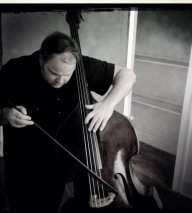
Only thing I can offer that you may not have heard about is Terry Plumeri's recent album, "Blue and Green." I feel that this disc may be the most significant recorded milestone for jazz bass since the Evans trio "Sunday at the Village Vanguard" (IMHO, of course...).
There are very few jazz bassists who do much more than use the bass as a pitch drum...since that's its role in the jazz rhythm section, that's usually fine. When they solo, however, some bassists just bang the pitch drum faster.

What? Do you think it is 1950 or something? Any post-Mingus bassist of note does more than that. Plumeri is a great player, but Michael Moore and several others (Ever hear Rabbath's "Bassball" lp from the 70s?) beat him to the punch with the same concept - clean beautiful arco solos in a jazz context - great idea, just not a new one by any stretch.
 .).
.).
Damon,
Thanks for the thoughtful response. No, I don't think we are in the '50's
I like your references and agree with their relevance. I have heard "Bassball" and enjoyed it. I have seen/heard Michael Moore solo arco, and enjoyed it. Both great players, no doubt.
But I would amend my agreement with a few points of fact. As far as who did what, when:
Terry's arco jazz solo playing is the centerpiece (and the intro) of the powerful, anti-war bass/vocal; duet, "Business Goes on as Usual" from Roberta Flack's hugely popular pop/jazz album, "Chapter Two", from 1970.
Terry's first solo album, with ALL arco jazz bass solos, came out in 1971 ("He Who Lives in Many Places", with Herbie Hancock, John Abercrombie, and the equally amazing drummer/percussionist, Michael Smith).
His second (ALL arco jazz solo album) came out in 1978 ("Ongoing" now re-issued as "Water Garden", again with Abercrombie, Smith, and pianist Marc Copland).
I would also add my opinion here, which is that Rabbath is a monster bassist, but not a jazz player. Moore is a monster jazz bassist, but his arco work lacks the dynamic-and-articulation finesse, freedom, and fluidity of Plumeri's (which preceded it). Renaud Garcia Fons is a wonderfully adept player, but he is not playing what I think of as jazz (improvising in swinging eighths, over changes). He is simply doing something else (as impressive as his technique may be). Tony Falanga is doing wonderful arco stuff with Ornette Coleman, but he isn't soloing over changes, with eighths, either.
To play arco jazz, with all the dynamics, inflections, and freedom of a horn is something that I have only heard Terry do (and I have heard a lot of jazz bass
So, I am trying to say that while "Blue and Green" came out just last year, Plumeri developed his whole concept before Moore and Rabbath made their respective arco jazz bass contributions.
I agree that most of the great jazz bass soloists are doing much, much more in their solos than "pitch drumming." What I said, and maintain, was that only a few bassist get to that point of melodic fluidity. Not meant as a judgment, but an observation from years of listening, playing, and watching.
The point of the article that started all of this, was that "jazz bass solos have ruined jazz." While I don't happen to agree with that, I am trying to discuss one aspect of what I think makes some jazz bass solos challenging to listen too.
Best,
Eric
Well, there are also tons of jazz and free jazz bassists who just don't or won't play standards who do great things with arco, and have been since the 1960s.
Invalid Link Removed
in case others were also wondering who terry plumeri was.
sounds good to me!
Apart from the players' abilities - I hate tunes like this.
I don't know. Spell it out for me.hmm... well we all know what opinions are like.
Tell me you're kidding.But this one was so inflamatory I couldn't stay quiet.
Meaning...?As a side note, I hear snatches of Lonnie's Lament in so many composers works, from Brahms' piano quintet in F minor, to the opening theme of Stravinsky's Rite of Spring.
hmm... well we all know what opinions are like. But this one was so inflamatory I couldn't stay quiet.
What do you mean by "modal tunes"? Does it accurately describe these players interpretation of this tune?
Or does it describe your perception of these players interpretation this tune?
If a modal tune were played in a deserted forest and Don didn't hear it, would he still hate it? Only Don knows.If you hate modal tunes, do you also by extension hate the entire canon of western classical music, indian classical music etc...?
What? Do you think it is 1950 or something? Any post-Mingus bassist of note does more than that. Plumeri is a great player, but Michael Moore and several others (Ever hear Rabbath's "Bassball" lp from the 70s?) beat him to the punch with the same concept - clean beautiful arco solos in a jazz context - great idea, just not a new one by any stretch.
In what way is this opinion so inflammatory?
Or, instead of interpreting a simple statement as an epistemological dissertation subject, it could simply mean that he hates modal tunes.
That would be quite a stretch of logic, wouldn't it?
 And also that the label modal jazz is meaningless, because depending on the player, alot of music that is called modal has enough harmonic movement to obliterate the term.

Apart from the players' abilities - I hate tunes like this.


