• TalkBass has been independent since 1998. Add your voice.
    Create a free account to reply to discussions, view embedded media, and browse with fewer display ads.
    Join freeLog in
    Want zero display ads or expanded classifieds tools? Compare plans.

Zoom B3 As Preamp

Status
Not open for further replies.
Easy Reach

When thinking traditional bass preamp/poweramp arrangement, I envision both components mounted in a rack box. That reality is becoming less popular in the advent of smaller, more-lightweight gear and the fact that less rack gear is being manufactured/purchased.
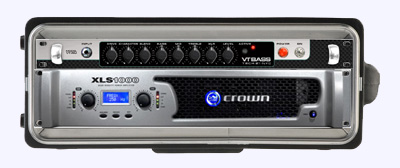
vt_crown.jpg


One of the nice features of having the rack box off of the floor, most likely on a speaker cabinet, is that all controls are easily accessible should they need adjustment, with the most popular adjustment being to volume level. That easy reach is still possible should your preamp section exist on the floor in form of a B3 or MS-60B.

When looking to power speakers, I prefer traditional stand-alone power amps for transparent, powerful, and reliable signal reproduction, without the undesired extras found on typical instrument combo/head amplifiers. Under that option, the power amp's attenuator knob/s can be leveraged as an easy-reach volume control.

Should only a combo/head amplifier be available, the use of its POWER AMP IN jack is the next best alternative, provided that one is comfortable controlling volume with the preamp section, be it on the floor or elsewhere. Most power POWER AMP IN jacks bypass all front panel knobs, including VOLUME and other circuitry like XLR out that may also exist on the combo/head amplifier. Should one need the same amp to provide VOLUME and/or XLR out, use of the amp's EFFECT RETURN may be a better solution. Should one's amp have neither of those two jacks, use of the front panel INPUT may be the only option.

Cheers!
 
Easy Reach...Most power POWER AMP IN jacks bypass all front panel knobs, including VOLUME and other circuitry like XLR out that may also exist on the combo/head amplifier. Should one need the same amp to provide VOLUME and/or XLR out, use of the amp's EFFECT RETURN may be a better solution...

True, with the caveat that real POWER AMP IN jacks are becoming less common.

The last insert points on both the G-K MB500/800 and Genz Benz Streamliner 600/900, are before the master volume control.

These amp heads are compact, reliable, and offer highly transparent power sections that give you the convenience of a cab-top volume control in a package that is lighter and more compact than any rack-mount power amp. Sadly, they're quite a bit more expensive, though...
 
Moving In Stereo

You may have noticed that both the B3 and MS-60B feature LEFT and RIGHT 1/4" output jacks. If you are like me, you are using the LEFT (MONO) jack to feed your rig's power amp. For those curious as to what the RIGHT output is for, I promise to hold back all sarcasm as I attempt to answer that question :D

Although most of the effect box models are monophonic, there are some that produce stereo output such as certain reverbs, delays, modulations, and others that utilize panning/imaging.

One popular use of the twin outputs is for the capturing and preservation of these stereo effects when recording.

Another now less-popular use harkens back to the late 80's where stereo guitar rigs were all the rage. One could send the LEFT signal to a cabinet stage left and send the other to cabinet stage right. Remember after all, it was the decade of excess, LOL!

Cheers!

phoebe.jpg
 
Moving In Stereo

You may have noticed that both the B3 and MS-60B feature LEFT and RIGHT 1/4" output jacks. If you are like me, you are using the LEFT (MONO) jack to feed your rig's power amp. For those curious as to what the RIGHT output is for, I promise to hold back all sarcasm as I attempt to answer that question :D

Although most of the effect box models are monophonic, there are some that produce stereo output such as certain reverbs, delays, modulations, and others that utilize panning/imaging.

One popular use of the twin outputs is for the capturing and preservation of these stereo effects when recording.

Another now less-popular use harkens back to the late 80's where stereo guitar rigs were all the rage. One could send the LEFT signal to a cabinet stage left and send the other to cabinet stage right. Remember after all, it was the decade of excess, LOL!

Cheers!

phoebe.jpg

My favorite scene from a movie, right there!

"Doesn't anybody knock!"
 
So I'm thinking of selling off my beloved Ampeg mini stack and going with a Mackie SRM450 v2 instead. I used one of the v1's years ago with a Roland VBass set up. It sounded great but was way too complicated for what I was doing at the time. Now with my B3/60b set up, I think the time is right to try it again. Very portable and versatile, and will kill the gigs I do!

J!
 
i have been researching the purchase of a B3 over the last while and wanted to say well done to Charlie and the others who have contributed to the wealth of information found here.

I have also looked at the MS-60B, and I understand that it has less features, amp sims,, no looper, drum sounds, and effects. It seems though that they haven't just omitted some effects, the 60B seems to have effects the B3 doesn't have. One of the weaknesses of the B3 I have read about is the octaver, yet the 60B has an octaver called Bass Pitch (in the synth category) that gets a wonderful review in this YT clip: start watching around the 14minute mark.

For those here that have both - are there any other areas they feel the 60B outshines the B3? aside of course the fact that you can have 4 effects on simultaneously.

Thanks.
 
So I'm thinking of selling off my beloved Ampeg mini stack and going with a Mackie SRM450 v2 instead. I used one of the v1's years ago with a Roland VBass set up. It sounded great but was way too complicated for what I was doing at the time. Now with my B3/60b set up, I think the time is right to try it again. Very portable and versatile, and will kill the gigs I do!

J!

I previously posted a few times on how good the B3 sounds with powered, full-range speakers, and I think you will not be disappointed.

I have read quite a few "not too nice things" about the SRM450 v2's, but in all fairness, I have had no hands-on experience with them.

In the same price point, I myself have been looking into these, but have not taken the plunge yet:

Invalid Link Removed

Invalid Link Removed

Please keep us posted!
 
i have been researching the purchase of a B3 over the last while and wanted to say well done to Charlie and the others who have contributed to the wealth of information found here.

I have also looked at the MS-60B, and I understand that it has less features, amp sims,, no looper, drum sounds, and effects. It seems though that they haven't just omitted some effects, the 60B seems to have effects the B3 doesn't have. One of the weaknesses of the B3 I have read about is the octaver, yet the 60B has an octaver called Bass Pitch (in the synth category) that gets a wonderful review in this YT clip: start watching around the 14minute mark.

For those here that have both - are there any other areas they feel the 60B outshines the B3? aside of course the fact that you can have 4 effects on simultaneously.

Thanks.


Thanks!

Aside from the 4th effect ability, the major advantage the MS-60B has over the B3 is its stomp-like size that is very solidly built, even more so than the B3.

IMHO, if you are looking to add to an existing pedal board, the MS-60B is the better choice. If you are looking to replace a pedal board and retain the feel of separate stomps, the B3 is the better choice.

Cheers!
 
I previously posted a few times on how good the B3 sounds with powered, full-range speakers, and I think you will not be disappointed.

I have read quite a few "not too nice things" about the SRM450 v2's, but in all fairness, I have had no hands-on experience with them.

In the same price point, I myself have been looking into these, but have not taken the plunge yet:

Invalid Link Removed

Invalid Link Removed

Please keep us posted!

CharlieC, any chance you can point me to some of these "not too nice things" about the SMR series? I'd like this to be a "last for awhile" purchase and want to make an informed decision. My first thought was Mackie as I have always had good luck with their stuff, but I am not locked to them at all.

J!
 
CharlieC, any chance you can point me to some of these "not too nice things" about the SMR series? I'd like this to be a "last for awhile" purchase and want to make an informed decision. My first thought was Mackie as I have always had good luck with their stuff, but I am not locked to them at all.

J!

The SRM450 v1's were game-changing speakers with rock-solid performance and reliability, and they each weighed a ton.

The v2's remove the weight and unfortunately the weight was replaced by reliability complaints based on more than a few User Reviews found on sites where sold.

The deal-breaker for me, is that there are newer, more powerful products out there now that can do more for less. Should your budget allow, QSC's more-expensive K-Series would be my choice for "last awhile."

Cheers!
 
When I looked to find a powered wedge to run with my pedal board only, (and IEM) I trialed the SRM450, JBL Eon, and the Yamaha MSR400.

I went with the Yamaha. This cab is front ported and I felt it more faithfully reproduced the bottom end. Not to say the Mackie cabs aren't good though...

I'm sure in the USA you have far more options than we do in Oz... :D

Just thought I'd put another option out there.
 
Thanks!

Aside from the 4th effect ability, the major advantage the MS-60B has over the B3 is its stomp-like size that is very solidly built, even more so than the B3.

IMHO, if you are looking to add to an existing pedal board, the MS-60B is the better choice. If you are looking to replace a pedal board and retain the feel of separate stomps, the B3 is the better choice.

Cheers!

Thanks for you thoughts Charlie.
 
Great thread Charlie.

I just got my B3 last week, and let me tall ya,...this thing is sweet. It does erythin.(just about)
I've been playin with it for days, and still havent even made it through all the preset patches...let alone make my own.

So, I gotta ask, how long did y'all wait to take it live to a gig?

Was it the day you got it?..6 months later?
I will eventually use it live, but theres just soooo much this can do, I want to get a really good handle on it, before goin live.

Thoughts?

Thanks in advance gang.
(and yes, I did eventually buy one based mainly on this thread.)
Maybe I shouldnt have posted this here, but hey.


T.
 
Great thread Charlie.

I just got my B3 last week, and let me tall ya,...this thing is sweet. It does erythin.(just about)
I've been playin with it for days, and still havent even made it through all the preset patches...let alone make my own.

So, I gotta ask, how long did y'all wait to take it live to a gig?

Was it the day you got it?..6 months later?
I will eventually use it live, but theres just soooo much this can do, I want to get a really good handle on it, before goin live.

Thoughts?

Thanks in advance gang.
(and yes, I did eventually buy one based mainly on this thread.)
Maybe I shouldnt have posted this here, but hey.


T.

Thanks!

I was so stoked by the quality of the B3's amplifier models, I used it for gigging once I worked-out the "MIX" parameter settings for my local rig and FOH. That was the main sticking point for me.

:bassist:
 
One of the weaknesses of the B3 I have read about is the octaver, yet the 60B has an octaver called Bass Pitch (in the synth category) that gets a wonderful review in this YT clip: start watching around the 14minute mark.


I think the B3 and the 60B both have the same three "octave" units. In both case two of the units are actually pitch shifters that will shift in increments of a half step up to +/- 12 half steps plus 24 half steps. On the B3 they are called Octave, PitchSHFT, and MonoPitch on the 60B they are called Ba Octave, PitchSHFT, and Ba Pitch. They may have improved the algorithm used for the last two but if so I would imagine the B3 will get the upgrades in a future release of the code. I haven't done an exhaustive comparison but I don't think the 60B has anything the B3 doesn't when it comes to the available "effects units".

Ken
 
I think the B3 and the 60B both have the same three "octave" units. In both case two of the units are actually pitch shifters that will shift in increments of a half step up to +/- 12 half steps plus 24 half steps. On the B3 they are called Octave, PitchSHFT, and MonoPitch on the 60B they are called Ba Octave, PitchSHFT, and Ba Pitch. They may have improved the algorithm used for the last two but if so I would imagine the B3 will get the upgrades in a future release of the code. I haven't done an exhaustive comparison but I don't think the 60B has anything the B3 doesn't when it comes to the available "effects units".

Ken

Hi Ken,

I would have expected they would be the same also, but considering they are named differently, and the description of the Bass Pitch says it is specifically designed to play notes in the bass freq range, it raised doubts.

Just trying to investigate both products thoroughly so I make an informed choice.

Charlie,
my hope is that i could replace a complete board with a B3, I used a Boss ME50B for many years successfully, and i have no doubt the B3 is far superior. Part of me still wants to incorporate my VT Bass into what ever I do as I love it's tone shaping qualities, and the way it introduces mild grit.

Cheers
 
Status
Not open for further replies.