(meaning a millimeter)
mil = 1/1000 of an inch. That's some seriously low action!

Ah, yes! The UK and the USA: two great countries separated by a common language, and in this case, measurement systems.
As a young man, I used to obsess over the numbers. Now, I make sure I have a good setup. After all these years, I hold the string at the first fret and last fret, and estimate the relief by tapping the string in the middle, and then tweak the truss rod accordingly. I then cut the nut to just before buzzing by feel and sight, and then set the action to just high enough that it does not buzz, depending on how much I "dig in." Then I set the intonation by ear using various frettings, open strings and harmonics to split the differences that using just the 12th fret octave harmonic can't temper.
By the way: if you don't have a feeler gauge to set relief, and have not done it enough to know what it looks like when a bright light is used to see the gap between the string and the fret, use plain guitar strings. If a 10 thou e string fits, it's usually too much relief; if an 8 thou octave g string (from a 12-string) barely does not fit, then it's probably right there.
Finally, irrespective of "spec" string height, there will usually be one low or high fret, and the end action at the bridge saddle height screws will almost invariably need to be a tad higher.
Epilogue: as above, most guitar "rulers" have not only metric and imperial fractions, but decimal inch increments as well. Every player's gig bag should have one. Measure something all three ways so we all know that 1/64 inch, or .4 millimeter, or .15 inches, is about the same (not getting into ridiculous decimal extensions).






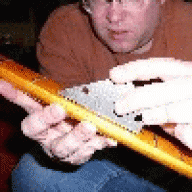
 ) higher or lower than the others, and I'd rather just play it at 5/64 than go to the trouble of leveling frets (if it's not bad to start with).