Also- big difference between Leo fender and someone like aged horse, and joe blow who thinks he's more educated on the subject because he's read a bunch of topics on a forum. Agreed- you don't have to have been a boxer to commentate on boxing. You don't have to be a race car driver to build an engine. But if I want to know what it feels like to drive a race car in the Indy 500 I'm not going to place a bunch of merit with my neighbor just because he has a Porsche

Enjoy the benefits of a premium membership!
Upgrade Account
-
TalkBass has been independent since 1998. Add your voice.
Create a free account to reply to discussions, view embedded media, and browse with fewer display ads.
Join free Log in
Want zero display ads or expanded classifieds tools? Compare plans.
You are using an out of date browser. It may not display this or other websites correctly.
You should upgrade or use an alternative browser.
You should upgrade or use an alternative browser.
4x10 vs. 1x15 Cabs
- Thread starter RaunchMister
- Start date
- Status
- Not open for further replies.
More options
Who Replied?Yeah, daily.Ever talked to those guys first hand - both the science guys and the players?

Imma get a cabanut wif 8 36" speakers for de lowz an sum 1 ich tweaterz for de hize an rawk like FiELDy. 36" speekurz issa bigust so dey rawk hardst an moov are.

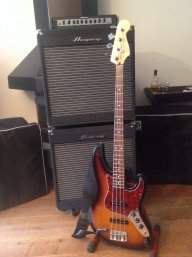
Okay, 140 + posts and nobody is really answering the original question (with reasonable respect IMO):Just like to start a discussion about 4x10 Vs. 1x15 cabinets, 95% of the bands I see playing in a small venue are using a 4x10 cab of some sort. Im just wondering why people dont want that extra fatty low end. So yeah just like to hear some of your thoughts thanks.
So, I wil try: The choice of a certain cabinet has to do with personal taste and possible budget limitations.
Some bassplayers (like myself) don't want the superlows.
I have played over quite a lot of different cabs, regarding brand, size, speakersize and ported vs sealed etc etc.
They all sound different. So if one is looking for a cab, one should focus on tone, quality, loudness and impedance and forget about all the mumbo jumbo. Even if some of it is true.
IMHO and with all respect to different views on this matter.

A single 15", all else being equal or as similar as possible, moves a little bit more air than a 2x10". A 4x10" moves almost twice as much air.
How much low end a cab has, like everything else about its voice, depends on the design of the specific driver(s) used, as well as the details of the cab design (sealed vs. ported, and if ported, the port tuning, etc.). Some 4x10 cabs have more low end than many 15" cabs. Some have less. Otherwise a bass 4x10 and a guitar 4x10 would sound exactly the same.
As for it being just your opinion... well, you could hold the opinion that the world is flat. But you would be incorrect.
Yep. I can't stand the 410HLF for precisely that reason. Uncontrollably amounts of low end, and not enough mid.
Meanwhile, while my giant 2x15 is certainly no slouch in the lows department, it doesn't go as low as the 410HLF, and has far stronger mids.
In fact, Ampeg makes two models of 4x10 in the same series of cabs, and they sound completely different. Just goes to show that it really depends on the specific drivers you use, and how you design the box you put them in.
I don't "think" it. I know it.
For an example of how it depends on the design of both the specific model of driver and the cab it's mounted in... which do you think goes lower... the open-back guitar combo with a 15" driver in it that my guitarist used to use? Or an Ampeg SVT-410HLF bass cab?
You are trolling. You know damn well that said high frequency response is due to the incorporation of tweeters.
That's because of the beaming characteristics of drivers that large, not the frequency response. There are also trade-offs in driver design. The better you make the high frequency response of a specific driver, the more you lose in another area of the spectrum, probably lows.
Additionally, a 15" tweeter would be an ice-pick overkill. It doesn't take a whole lot of energy to reproduce high frequencies at volumes our ears can pick up well. It's not a matter of a 15" being unable to do so, but rather it being way more driver than is needed for the job, as well as having dispersion issues at said frequency ranges.
We tend to use big speakers when making subwoofers because low frequencies don't come with the same dispersion issues in large drivers that high frequencies do (since lows are, if sufficiently low enough, omnidirectional, a 15" or 18" driver's beaming of the upper mids and highs doesn't matter if all you're pumping through it is lows). While smaller drivers certainly can put out a lot of low end (just look at headphones, or Phil Jones cabs), there's no reason not to simply use one big cone and one big magnet, as it's a more efficient use of resources (no sense making a bunch of little speaker assemblies, with all their magnets and voice coils and cones, when you can just use one).
You could make a good subwoofer using small speakers, but it would be more complicated than it needed to be, for no benefit, as you'd need multiple small drivers to push the same amount of air (one difference based on speaker size is that, all else being equal, one larger driver will be louder than one smaller driver).
Yep. Can't stand it, but it is the lowest cab I've played, too. And I play mainly 15" cabs.
I doubt that, given that this is a blatant troll thread.
A 15" tweeter would be, as mentioned, complete overkill, making it not worth the ice-pick effect its beaming characteristics would cause.
I explained above why we use larger drivers for subs and tiny drivers for tweeters.
One disadvantage a single large driver has over a single small one is that it will beam mids and highs at a lower frequency than the tinier one. It seems counter-intuitive, but large drivers have narrower dispersion in highs and upper mids than smaller ones, which disperse them more widely off-axis.
We use big drivers for subwoofers because at those frequency ranges, their beaming characteristics aren't going to come into play, so their crappy dispersion doesn't matter, and it is simpler and therefore more cost-effective to wire up one big driver than a bunch of smaller ones (since you would need a bunch of smaller ones to get the same total air displacement and thus achieve the same volume).
We use small drivers for tweeters because they disperse highs most widely, and their relative disadvantage in displacement compared to large drivers doesn't matter, as you don't need a whole lot to make high frequencies clearly audible.
The drivers in any decent headphones demonstrate that smaller drivers can produce low end, just as if you were to stand directly in front of my 2x15 cab while I play with my bridge pickup solo'd, bright switch engaged, and highs turned all the way up, you could observe that those 15" drivers can produce more than enough high end to make the experience physically painful.
Indeed. The graph demonstrates dispersion/beaming, not frequency response. They are two completely separate things.
You are the one who needs to reread how drivers work.
What you posted demonstrates speaker dispersion/beaming, not frequency response.
You're the one who's either trolling or needs to read more carefully.
If you stick a tweeter in a 2x15 cab, it will also go up pretty high. The cabs you are referencing appear to be ones with tweeters. 10" cabs without them don't go up much, if any higher, than 15" cabs. without tweeters.
Not if you mic it. And yes, it's still going through the PA anyway, but the PA is designed to be relatively flat and transparent, whereas musical instrument cabs generally are not. Different cabs are voiced differently.
Just ask any guitarist if his/her cab should be mic'd or if it's fine to go DI off the head.
ya, I probably should have said enclosure instead of driver...my bad. ie the 410 enclosures generally can get a bit brighter tone (even if it is due to the horns in them) than the 15's do......wait i though i said that 7 or 8 pages ago....i dont have an axe to grind as to which cab is better suited to anyone. is what it is. you need to get out of the house more, or less or chill out on the coffee in your diet....post some data that supports your thoughts....hell, email some speaker designers. Probably a bunch of gray areas is my hunch...but thats just speculation lol.

Okay, 140 + posts and nobody is really answering the original question (with reasonable respect IMO):
So, I wil try: The choice of a certain cabinet has to do with personal taste and possible budget limitations.
Some bassplayers (like myself) don't want the superlows.
I have played over quite a lot of different cabs, regarding brand, size, speakersize and ported vs sealed etc etc.
They all sound different. So if one is looking for a cab, one should focus on tone, quality, loudness and impedance and forget about all the mumbo jumbo. Even if some of it is true.
IMHO and with all respect to different views on this matter.
Respectfully, I think we have. We don't add a 15 because, with the right 410, or non-15 equipped rig, you can still get incredible low end.
I like extra fatty low end with my mid focused Eden 410xlt.
My options are my Aguilar db212, and Eden 210xst, both have better low end response and a flatter mid response than the 410. I don't see a need for 15s with that setup as it's capable of getting more low end than I'd ever want.


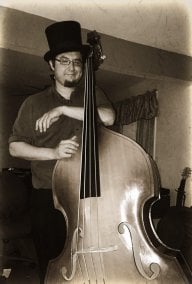
You guys did see the DJ coffin on the top of those 18's, right?
I can't imagine they'd be worth much for bass guitar. You don't get much below 32 Hz, and that's where those hit hardest
I can't imagine they'd be worth much for bass guitar. You don't get much below 32 Hz, and that's where those hit hardest

This just in:
The OP in his need to quantify the information given him, was CRUSHED when a 4x10 AND a 2x15 Cabinet overturned and toppled on top of him as he was attempting to measure the diameter of the speaker cones.
Now he'll NEVER know!
The OP in his need to quantify the information given him, was CRUSHED when a 4x10 AND a 2x15 Cabinet overturned and toppled on top of him as he was attempting to measure the diameter of the speaker cones.
Now he'll NEVER know!
Look at Bose 802s, lots of dinky speakers that collaborate to produce low frequencies greater than the capability of the individual drivers. I don't like what I sound like on a 15", and for me, 10" speakers work well. I have a big 4 x 10 and a smaller 2 x 10 combo - and they sound similar, but one is just louder and a little bit deeper.Just curios as to how you think a 4"10 cab can go lower then a 15"?

All naked speakers have a given curve response (dB at a given distance at a given frequency). Usually, very low in the lows, going up in the mid lows, being more or less regular towards the mid highs, then going low again in the higher frequencies. Usually, bigger speakers are not very gifted at highs mainly because they are not able to move their cone fast enough to make all the excursions needed for 5Khz, 10Khz, 20Khz and so on. For this, one needs a lighter cone, hence a smaller one. On the other side of the spectrum, the lower the frequency, the more air volume to move needed to maintain the same level of dB. To move more air, one need bigger moving surface to push it, and this can be achieved many ways, with bigger speakers, or several smaller ones. Now don't forget each speaker has a different response curve, as I said at the beginning of my post.
That's why usually a cab adds a tweeter, to compensate for the lower level of the high frequency of the main speaker. Now, how to compensate for the lower level of the lows? Well, that's the cabinet construction that can do something there. One can build closed cabinet, or ported one (open with a port, a hole with a tube of a given length and diameter. These port parameters, together with the volume of the cabinet let you compute the frequency resonance that is reinforced by this bass reflex/ported cabinet construction. One can even reinforce lower frequencies with another type of construction, named quarter wavelength line cabinet, but these tends to be very big. They nonetheless offer a smoother reinforcement curve of the lows that the bass reflex construction.
This, just to let you understand that frequency response of a cabinet is NOT only a function of the speakers size and number, but also the volume of the cabinet itself, and its construction type (closed, bass reflex or transmission line / 1/4 wavelength).
I'm out.
That's why usually a cab adds a tweeter, to compensate for the lower level of the high frequency of the main speaker. Now, how to compensate for the lower level of the lows? Well, that's the cabinet construction that can do something there. One can build closed cabinet, or ported one (open with a port, a hole with a tube of a given length and diameter. These port parameters, together with the volume of the cabinet let you compute the frequency resonance that is reinforced by this bass reflex/ported cabinet construction. One can even reinforce lower frequencies with another type of construction, named quarter wavelength line cabinet, but these tends to be very big. They nonetheless offer a smoother reinforcement curve of the lows that the bass reflex construction.
This, just to let you understand that frequency response of a cabinet is NOT only a function of the speakers size and number, but also the volume of the cabinet itself, and its construction type (closed, bass reflex or transmission line / 1/4 wavelength).
I'm out.

Obviously a lot of people need to say a lot of words to prove their valuable points about the potential superiority of. 4 x 10
My little comment above about size matters was a joke
I tried to qualify my comments by using examples of different usage
We can all think and use what we want and it is good to hear other peoples views based on experience
But the flaming in this thread makes me realise how tedious and boring this discussion has become
I mean fair dinkum, if a person is so hung up on a 4 x 10 because they think it's better, then good luck to you
Go ahead use all the 4 x 10s you can get your hands on
For me , my support for the 15 is simply based on owning and using one .... Not for any other reason than the thing sounded good with my p
Does that mean all 15's are good or better , no, it just means I have one cab of several and the thing gets a run when I feel like using it...
Rossa
My little comment above about size matters was a joke
I tried to qualify my comments by using examples of different usage
We can all think and use what we want and it is good to hear other peoples views based on experience
But the flaming in this thread makes me realise how tedious and boring this discussion has become
I mean fair dinkum, if a person is so hung up on a 4 x 10 because they think it's better, then good luck to you
Go ahead use all the 4 x 10s you can get your hands on
For me , my support for the 15 is simply based on owning and using one .... Not for any other reason than the thing sounded good with my p
Does that mean all 15's are good or better , no, it just means I have one cab of several and the thing gets a run when I feel like using it...
Rossa

Maybe these guys, too.You got that right, check out the work of Mr Theile and Mr Small, then get back to us.

I tend to prefer the 2x15" cabs I've heard over the 4x10" cabs I've heard.Well a 15 is bigger than a ten and there is the 'saying size matters... '
I don't use my sealed Marshall cab with an ev 15 much these days but I do know that in the right room it can certainly bring out the best in a p bass....
I accept it does come down to cab design and specs , but I just can't get into the 4 x 10 sound ... But that's just me ...
Mind you I have also heard some crappy 15's along the way too. ... Lol
Rossa
However, there is not a single "sound" of either. Ampeg, for example, makes two different 4x10 cabs. One has almost uncontrollable amounts of low end, but is a bit weak in the mids, to my ears. The other 4x10 they make is voiced much more like their traditional 8x10... with a gradual low-end roll-off, and a big bump in the low mids. I vastly prefer this model.
Each speaker design is going to be a bit different, and changing the dimensions of the cabinet will vastly change the sound.
I use a 2x15 cab, mainly, and sometimes, for smaller gigs, a 1x15 cab.
My guitarist, in one of the bands I've been in, was also using a 1x15 cab. His didn't sound anything like mine, because his 15" driver was designed for guitar use, whereas mine was designed for bass use, and additionally, his cab was a shallow, open-back guitar cab, and my cab is a somewhat deep, ported bass cab.
Similarly, my bass cab doesn't sound much like a 1x15" PA main, either (partly because it doesn't have a tweeter, and partly because, unlike a PA main, it's designed to sound good with a signal from a bass amp, not to reproduce whatever is put into it as transparently as possible, which is a design goal in PA cabs).
You know that the laws of physics still apply to speaker cabs, right?Sounds like I hit a nerve. I never said people's opinion's aren't valid, I said that maybe they're taking themselves a bit too seriously. And yes, when I listen to a guy consistently post about his superior gear, talk about how it will blow every other manufacturers gear out of the water, all of the technical ins and outs of speaker and box technology, argue back and forth with everyone about how much better his box is, I would expect him to at least be able to play, and not sound horrible when doing so. When I hear/see that said guy plays about as well as my 7 year old I tend to put his future comments in the "uh, sure buddy" box. But then again, my favorite commentators in sports are typically ex pros, like George Foreman, John Elway, etc, not Bob Costas. Sounds like you're after a scientists insights, I'm after a musicians. I like bouncing ideas and concepts with real players in the real world, which there are a ton of here. There are also a few loud guys here who I question whether they've even played a real stage, ever been in a real studio, and who sit and antagonize people behind their keyboards and say the same thing over and over and over and over. Kind of like a little league coach who yells at little kids, knows every stat in baseball, knows every in and out of the game, acts like he played college ball, but in reality never made it to pony league and is trying to live out some childhood fantasy of playing pro ball. Taking himself too seriously, but man does he understand physics. Blah blah blah. Only thing speaker size tells you is the size of the speaker. Where have I heard that 1,000 times? Blah blah blah. funny stuff....
Yep. I like Ampeg's SVT-410HE far more than their SVT-410HLF. Those sub lows aren't really useful to me, whereas I need my mids.Owned it for a couple of months and got rid of it for the same reason. Replaced it with an SWR Goliath Sr. and my problems were solved. Nice punchy low-mids.
It really depends on the speaker cab and the specific drivers used.The tone is completely different between a 10 and a 15. If anyone tells you that you won't be able to tell the difference, they probably do not have the ability to tell (lack of experience) or are ignorant. What I find is a 15 is much more organic sounding. Very natural, tons of low end support and buttery mid range and highs.
10's are a bit more in your face. Much more clear even with a ton of low end from your head, the notation is very clear, can be described as punchy, but overall the best way to describe it is "clear." Less organic in my humble opinion.
I combine both 4x10 and 1x15 and I was not satisfied with using the same head for both. Instead I got the same head for both and I use the EQ differently. It works wonders.
An Ampeg 810 produces a very "organic" tone, to my ears, with solid upper bass and low mids, which is the kind of low end I need. A different tone to my Sunn 2x15, certainly, but still very natural sounding. An Ampeg 410HLF produces a tone quite different from either, with far more low end than either in the sub-bass region, and not a tone I find pleasing or especially natural sounding, though what sounds pleasing, natural, and organic to someone's ear is very subjective.
My 2000S cab is far more "clear" sounding than the Ashdown 2x10 I used to use in conjunction with my 1x15 (which is why I sold the Ashdown after getting the 2000S cab).
These two statements are mutually exclusive.This is off track a little.....but i find the above comment more than a little bit out of line! I'm one of the 40% who believe the earth isn't more than 10,000 years old and my thought processes are fine! And that is based on the Bible and not a bunch of scientific smoke and mirrors.
As this post is semi entertaining with all the math and such. This kind of goes along with the same thinking, even with what all the numbers say I have owned approximately 25 cabs and tried an additional 25 or so with all sorts of drivers and many of the same manufacture and in most case but not all I find 15s sound deeper, feel deeper and rattle the windows more than 10s. Sorry the numbers don't prove it out but that's how my ears hear it.
You can believe the world is flat, too, and that the sun orbits the earth, and you'd be just as factually incorrect. The great thing about science is that it works whether or not you believe in it.
Aged Horse, IIRC, designs bass gear.Also- big difference between Leo fender and someone like aged horse, and joe blow who thinks he's more educated on the subject because he's read a bunch of topics on a forum. Agreed- you don't have to have been a boxer to commentate on boxing. You don't have to be a race car driver to build an engine. But if I want to know what it feels like to drive a race car in the Indy 500 I'm not going to place a bunch of merit with my neighbor just because he has a Porsche
Some 15" cabs have tweeters. Notably, ones from Mesa Boogie, which is not exactly an obscure brand. I prefer to turn tweeters off on cabs that have them, because they generally don't sound that great to me with overdrive, which I often use. There is, however, nothing stopping anyone from putting a tweeter in a single 15" or 2x15" cab.ya, I probably should have said enclosure instead of driver...my bad. ie the 410 enclosures generally can get a bit brighter tone (even if it is due to the horns in them) than the 15's do......wait i though i said that 7 or 8 pages ago....i dont have an axe to grind as to which cab is better suited to anyone. is what it is. you need to get out of the house more, or less or chill out on the coffee in your diet....post some data that supports your thoughts....hell, email some speaker designers. Probably a bunch of gray areas is my hunch...but thats just speculation lol.
I'm not sure why you felt the need to engage in personal attacks. Also, your assumption that I haven't conversed with speaker designers is... telling.
ya, prob true, my appologies to you, maybe youre just passionate. No assumption there, just a suggestion that you post data to support your statements. Im open minded to looking at reversing my ideas on anything in life when there is data to support the opposite of the idea. some of the 15's do have horns and tweeters, agreed. In general though. 410 enclosures seem to favor a brighter tone. dosnt mean they dont go lower, dosnt mean that 15's cant get a bright tone too. I think as well people have a tendency to take what they like and view it as "good" and therefore what everyone else should play on or through. My setup would prob drive people nuts, it works for me and the projects I choose to be involved with. I choose a tone and equipment that supports that tone. Interesting about turning off the tweeters in the 15. I play with overdrive some of the time but its only through one of the cabs. I use two separate amps, two separate cabs. The overdrive hits the 1028h. It can get a bit over the top at times as well.
yes, I'm big on physics and yes, I know it applies to everything around me- my point was that knowing physics doesn't mean your tone reflects it as unfortunately a lot more goes into ones tone and pocket than their speakers. I've studied as much as I have the attention for with regards to bass rigs. I've gigged a thousand rigs I suppose, and recorded on a whole bunch too. I still learn something new everyday so I tend to keep a really open mind.I tend to prefer the 2x15" cabs I've heard over the 4x10" cabs I've heard.
However, there is not a single "sound" of either. Ampeg, for example, makes two different 4x10 cabs. One has almost uncontrollable amounts of low end, but is a bit weak in the mids, to my ears. The other 4x10 they make is voiced much more like their traditional 8x10... with a gradual low-end roll-off, and a big bump in the low mids. I vastly prefer this model.
Each speaker design is going to be a bit different, and changing the dimensions of the cabinet will vastly change the sound.
I use a 2x15 cab, mainly, and sometimes, for smaller gigs, a 1x15 cab.
My guitarist, in one of the bands I've been in, was also using a 1x15 cab. His didn't sound anything like mine, because his 15" driver was designed for guitar use, whereas mine was designed for bass use, and additionally, his cab was a shallow, open-back guitar cab, and my cab is a somewhat deep, ported bass cab.
Similarly, my bass cab doesn't sound much like a 1x15" PA main, either (partly because it doesn't have a tweeter, and partly because, unlike a PA main, it's designed to sound good with a signal from a bass amp, not to reproduce whatever is put into it as transparently as possible, which is a design goal in PA cabs).
You know that the laws of physics still apply to speaker cabs, right?
Yep. I like Ampeg's SVT-410HE far more than their SVT-410HLF. Those sub lows aren't really useful to me, whereas I need my mids.
It really depends on the speaker cab and the specific drivers used.
An Ampeg 810 produces a very "organic" tone, to my ears, with solid upper bass and low mids, which is the kind of low end I need. A different tone to my Sunn 2x15, certainly, but still very natural sounding. An Ampeg 410HLF produces a tone quite different from either, with far more low end than either in the sub-bass region, and not a tone I find pleasing or especially natural sounding, though what sounds pleasing, natural, and organic to someone's ear is very subjective.
My 2000S cab is far more "clear" sounding than the Ashdown 2x10 I used to use in conjunction with my 1x15 (which is why I sold the Ashdown after getting the 2000S cab).
These two statements are mutually exclusive.
You can believe the world is flat, too, and that the sun orbits the earth, and you'd be just as factually incorrect. The great thing about science is that it works whether or not you believe in it.
Aged Horse, IIRC, designs bass gear.
Some 15" cabs have tweeters. Notably, ones from Mesa Boogie, which is not exactly an obscure brand. I prefer to turn tweeters off on cabs that have them, because they generally don't sound that great to me with overdrive, which I often use. There is, however, nothing stopping anyone from putting a tweeter in a single 15" or 2x15" cab.
I'm not sure why you felt the need to engage in personal attacks. Also, your assumption that I haven't conversed with speaker designers is... telling.
Also- I was replying via phone- my sentence about Aged Horse wasn't written very well- I meant to say that I listen to and respect fellas such as Aged Horse and Leo Fender, not necessarily Joe Blow hards. I respect the hell out of my local teacher who plays circles around me and most I've ever heard, even though I don't necessarily agree with every opinion he has regarding gear. I can definitely learn things from guys who just started and are super passionate about bass as well. BUT- when I see and listen to a self professed expert, and then cringe at their playing I tend to make a mental note. That is all. Oh yeah, I'm looking for more speaker surface area to handle larger gigs- for me I'm looking for 2 boxes so that will mean either 210s, 212s, or 115s. I'll play them all until I find boxes that sound how I need them too. I also like small boobies, big boobies, and really big boobies- I don't judge by the size, more by the feel.....
I think marketing plays a part in this.ya, prob true, my appologies to you, maybe youre just passionate. No assumption there, just a suggestion that you post data to support your statements. Im open minded to looking at reversing my ideas on anything in life when there is data to support the opposite of the idea. some of the 15's do have horns and tweeters, agreed. In general though. 410 enclosures seem to favor a brighter tone. dosnt mean they dont go lower, dosnt mean that 15's cant get a bright tone too. I think as well people have a tendency to take what they like and view it as "good" and therefore what everyone else should play on or through. My setup would prob drive people nuts, it works for me and the projects I choose to be involved with. I choose a tone and equipment that supports that tone. Interesting about turning off the tweeters in the 15. I play with overdrive some of the time but its only through one of the cabs. I use two separate amps, two separate cabs. The overdrive hits the 1028h. It can get a bit over the top at times as well.
Partly due to how things were back in the 50s, 60s, and 70s, people have come to expect certain things from certain sizes of driver, in bass cabs ("punch" from 10"s, "fatness"/"warmth" from 15"s, something else from 12"s) despite that speaker designers can design just about any size driver to have any number of different characteristics, so, when designing a new 8x10, for example, a company would probably instruct the people designing its cabs to basically give people what they expect to hear from an 8x10, or some variation on that that's still pretty similar. Same with a 2x15. Though it's quite possible to make a punchy, mid-focused 2x15 without that much bottom (Mesa did so with the Diesel 215), some companies might still design a 2x15 to sound like what people expect such cabs to sound like. It's possible that oftentimes, due to a company's expected market for a 2x15, they will choose not to include a tweeter in the design, despite including one on their 8x10 and 4x10 models.
Mesa, notably, has tweeters on their current series of 2x15 cabs, even though their older ones did not have them.
My own cabs do not have tweeters, as I play with overdrive (in varying amounts; sometimes it's just a slight bit of grit, sometimes it's more obvious) basically all the time.
My setup can probably drive some people nuts, as the big rig has the ability to be very, very loud (the Sunn 2000S cab is a very, very efficient 2x15), as well as necessitating a mic if the soundperson wants to put it through the PA. But oh well, it's not really much harder to work around than a typical guitar rig.

There is a reason that some professional players use 2x18 cabs like showed in my picture
Isn't that Mike Gordon's rig? That's not just a bunch of speaker cabs daisy-chained together. IIRC, it was designed by someone with an actual audio engineer background and there is a lot going on as far as cross-overs and such. Its design philosophy probably has more in common with a PA system than a traditional bass rig. Point being: That's not what the average touring bass player is using. I'm going to go out on a limb and say that the majority of national bass players have an 810e on stage with them.
Honestly, I can't even think of a commercial off-the-shelf company that makes a 1x18 bass cab, except Carvin and SWR...and I don't believe either company makes 18-loaded cabs anymore.
Somewhere, I think Bill Fitzmaurice is wincing for some reason he can't explain.
P.s. With that said, I do agree that 10s and 15s have different sounds. By different sounds, I don't mean frequency responses, but 15s do react differently than 10s. I even hear that signature character in the fEarful cabs.
Last edited:
- Status
- Not open for further replies.


