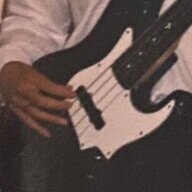
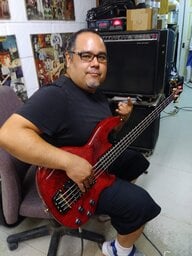
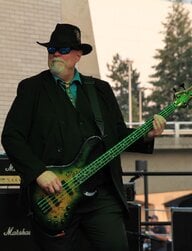
Pretty much every J bass I've picked up is just as quiet as any P Bass. Even if you favor one pickup over the other, the noise floor is typically still less egregious than the guy next to you with a single coil tele pushing an AC30 hard. Most bass players don't push the gain stages of amps, and in my experience as a producer it's never been an issue what bass a guy comes in with.
Meh. I think most producers that chase minutia are hacks, tbh. If I can't hear an issue in the mix, I don't sweat it. Once the drums come in they really overpower any guitar hum that might be in the mix. The primary goal as a producer is to get a great performance out of the talent, and if you ice them for 20-40 minutes chasing some phantoms no one is going to hear in the finished product, you're defeating your own purpose.
Little to none, I imagine.
Again, probably little to none.
I think what made the P more prevalent is that it has historically been cheaper than the J. Working professionals of all trades and disciplines typically tend to favor the bang/buck equation for tools and equipment. I don't think it was until the 90s that the large majority of producers started to laud the fact that you can EQ a P Bass to fit into most mixes. This is by benefit of the fact that the Ps give you a lot of mids, so no matter what you have to cut to make room from keys, brass, sax, whatever, there was still plenty of mids to sit the bass in the mix wherever you want. I think from there, a lot of us retconned the history to assume that producers in the 60s felt the same way, but I doubt they did. Most producers in the 60s were still wrapping their heads around how to mix in stereo, I doubt they cared about how one instrument sounded.