• TalkBass has been independent since 1998. Add your voice.
    Create a free account to reply to discussions, view embedded media, and browse with fewer display ads.
    Join freeLog in
    Want zero display ads or expanded classifieds tools? Compare plans.

A Thought About P Basses in the Studio

faulknersj

Supporting Member
Apr 4, 2008
5,437
5,898
Scottsdale Az
Something I was wondering about...

After the invention of the electric bass in 1950's (P Bass) and the Jazz Bass in 1960, it is no secret that P Basses became the standard for studio recordings and while plenty of Jazz basses made their way onto albums in the 60's & 70's, there is one aspect of the P-Bass pertaining specifically to studio recordings that I don't think I have ever heard discussed.

Conversations typically center around how a P Bass sits in the mix, however, anyone who has worked with a producer in a studio environment has to wonder if there may have been an additional reason to prefer a P in a studio environment, especially in the 60's and 70's.

Anyone who has played a J bass with single coil pickups knows what happens if the blend of the pups isn't even, or if your fingers aren't making contact with the strings and acting as a ground...60 cycle hum. Now shielding can mitigate this to great effect, and I am not sure when cats first started to shield their basses, but shielding isn't 100% full proof.

Back to producers; in my experience, no detail is too damn small for them to care about! They live in a world of minutia and microscopic sonic details...

Which brings me to my point.

To what degree did the much quieter split P pickup play a role in the P Bass being so heavily utilized in the recording studio world of the 1960's and 70's? And to what degree did getting everyones ears used to that sound early on influence it as a preference for all these years?

It seems the same aversion to 60 cycle hum could have been a factor in live performances as well no?
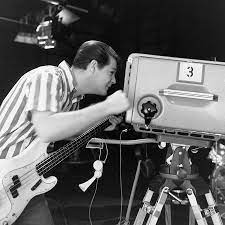
upload_2024-2-13_14-24-55.jpeg
 
It may just come down to the fact that most hit pop music, regardless of the name of artist on the record, was done by a small collection of regionally dispersed players called studio musicians. The 'group' may record the b-sides but most professional studio musicians laid down the tracks for the hits, minus recognizable vocals. With few exceptions has any group or artist wrested total control over their creations until they really proved their worth through first, selling lotsa records.

This has been the way in the recording industry since its creation. Time is money and the studio executives and producers- pros just went with just works.

A few studio musicians just use common tools. It was their creative talent that made those phones ring.

I wonder if drummers on their forums obsess upon a certain kind of Slingerland, Rogers, or Ludwig snare drum because of a particular collection of recordings?
 
It may just come down to the fact that most hit pop music, regardless of the name of artist on the record, was done by a small collection of regionally dispersed players called studio musicians. The 'group' may record the b-sides but most professional studio musicians laid down the tracks for the hits, minus recognizable vocals. With few exceptions has any group or artist wrested total control over their creations until they really proved their worth through first, selling lotsa records.

Is this something that was more prevalent in a certain period or maybe genre(s)?

I'm more into rock/punk/metal and so many of those bands can talk about recording their first albums and sitting in the studio, etc. So I'm more curious than anything.

Related, how did that work for the bands? So a session artist records the bass line for example. Is it what the band wrote, or does the bass player now need to learn the song they made, but a new way because that's what the people know? (I do know that some longer running acts do wind up relearning songs they made on prior albums because they haven't played them in a while, so I suppose it's not that foreign a concept.)
 
  • Like
Reactions: faulknersj
Something I was wondering about...

After the invention of the electric bass in 1950's (P Bass) and the Jazz Bass in 1960, it is no secret that P Basses became the standard for studio recordings

In the United States perhaps, but elsewhere? I wouldn't bet on that. We know John Paul Jones and Herbie Flowers played Js as session musicians in the UK, and that's because they played on music that became well known in North America. Information about what they were playing anyplace else is lacking. And that was the case with session musicians. Bassists in bands played all sorts of stuff, like the Gibson and Epiphone semi hollows that were popular with UK bands circa 1964.
 
To what degree did the much quieter split P pickup play a role in the P Bass being so heavily utilized in the recording studio world of the 1960's and 70's? And to what degree did getting everyones ears used to that sound early on influence it as a preference for all these years?
I'm not sure there's a definitive answer, but there is one thing I know about people; by and large, the human brain craves "familiarity" and "repetition". It seeks out what it recognizes and finds comfort in those similarities.

Personally, I suspect that is why mega-hits from a generation or two ago just don't land with much younger brains. It isn't familiar enough to a broad swath of them...save, perhaps, by those who's curiosity and/or musical instincts bypasses those deeply ingrained, knee-jerk reactions.

For example, I could tell a kid how The Beatles changed the face, and understanding, of pop-rock with <insert early Beatles song here>, but they probably wouldn't take my word for it over that of some similarly-aged internet influencer. It kinda sucks, but that's just the way it usually works out. :bored:
 
Is this something that was more prevalent in a certain period or maybe genre(s)?

I'm more into rock/punk/metal and so many of those bands can talk about recording their first albums and sitting in the studio, etc. So I'm more curious than anything.

Related, how did that work for the bands? So a session artist records the bass line for example. Is it what the band wrote, or does the bass player now need to learn the song they made, but a new way because that's what the people know? (I do know that some longer running acts do wind up relearning songs they made on prior albums because they haven't played them in a while, so I suppose it's not that foreign a concept.)
I'd say if the band sold lotsa records from the creativity of studio cats enhancing a band's original ideas, one can easily wager the band is gonna replicate the studio's creativity live as best as they can. It's what the fans remember and want to hear.
From the Wrecking Crew, to Stax & Volt, I think the Muscle Shoals guy used a Jazz Bass, Motown, those were just the trusty tools.
That bass line in Billy Idol's White Wedding sounds like a P bass, as does Our Lips Are Sealed/We Got the Beat by the Go-Go's (to name just a few). It's just a tone that seems to work regardless of genre. Uncanny, and recognizable but what's even more remarkable, not tiresome either. Ditto the Strat or Tele tones with just a smidge of distortion. Old gear, definitely old tech, but keeps bearing fruit through playing styles morphing.

It's kinda cool.
 
The P was the first bass to really define what a great electric bass sounded like.
Producers and engineers often times looked for a guaranteed good fit that was also quite popular and in demand at the time.
In other words; people loved it loved it; why go looking for trouble...
Think how many hit records were not recorded with a Tele, Strat, Les Paul, or 335. Not nearly as many that were and there were plenty of other decent brands.
 
I've wondered this too. I'm sure at times it was an issue - the hum. And quite likely it informed what bass some people used right outta the gate--"just grab the P, it'll be quiet!". But that said, when you think of all the famous Jazz Bass session players who played on tons of hit records--David Hood, Herbie Flowers, Joe Osborn, Jerry Jemmott, etc etc- I mean, how did they get away with it? I don't think they were all diming their pickups all the time (Joe Osborn famously used just the front). Maybe people just dealt with it like they did noisy guitars: minimize it as best you can, and make a great track. I sure don't hear hum when I listen to David Hood or Joe Osborn playing on all those famous tracks. Maybe in an isolated track you would, but in the final mix it can be a non-issue.
 
Last edited:
Something I was wondering about...

After the invention of the electric bass in 1950's (P Bass) and the Jazz Bass in 1960, it is no secret that P Basses became the standard for studio recordings and while plenty of Jazz basses made their way onto albums in the 60's & 70's, there is one aspect of the P-Bass pertaining specifically to studio recordings that I don't think I have ever heard discussed.

Conversations typically center around how a P Bass sits in the mix, however, anyone who has worked with a producer in a studio environment has to wonder if there may have been an additional reason to prefer a P in a studio environment, especially in the 60's and 70's.

Anyone who has played a J bass with single coil pickups knows what happens if the blend of the pups isn't even, or if your fingers aren't making contact with the strings and acting as a ground...60 cycle hum. Now shielding can mitigate this to great effect, and I am not sure when cats first started to shield their basses, but shielding isn't 100% full proof.

Back to producers; in my experience, no detail is too damn small for them to care about! They live in a world of minutia and microscopic sonic details...

Which brings me to my point.

To what degree did the much quieter split P pickup play a role in the P Bass being so heavily utilized in the recording studio world of the 1960's and 70's? And to what degree did getting everyones ears used to that sound early on influence it as a preference for all these years?

It seems the same aversion to 60 cycle hum could have been a factor in live performances as well no?


View attachment 5351180
I wouldn't think the 60's were as critical as musicians were starting to be in the 70's and onwards.

For a start, in the 60's there were a lot of musicians making mistakes on recordings which were still released.

A couple of examples being, the bass playing on Born to be Wild and The lemon Song, where in both examples, the turnaround was missed and quickly caught up. I am sure members here could name others.

By the 70's these mistakes were recorded over as bands took longer to make records taking weeks instead of hours.
 
Last edited:
Something I was wondering about...

After the invention of the electric bass in 1950's (P Bass) and the Jazz Bass in 1960, it is no secret that P Basses became the standard for studio recordings and while plenty of Jazz basses made their way onto albums in the 60's & 70's, there is one aspect of the P-Bass pertaining specifically to studio recordings that I don't think I have ever heard discussed.

Conversations typically center around how a P Bass sits in the mix, however, anyone who has worked with a producer in a studio environment has to wonder if there may have been an additional reason to prefer a P in a studio environment, especially in the 60's and 70's.

Anyone who has played a J bass with single coil pickups knows what happens if the blend of the pups isn't even, or if your fingers aren't making contact with the strings and acting as a ground...60 cycle hum. Now shielding can mitigate this to great effect, and I am not sure when cats first started to shield their basses, but shielding isn't 100% full proof.

Back to producers; in my experience, no detail is too damn small for them to care about! They live in a world of minutia and microscopic sonic details...

Which brings me to my point.

To what degree did the much quieter split P pickup play a role in the P Bass being so heavily utilized in the recording studio world of the 1960's and 70's? And to what degree did getting everyones ears used to that sound early on influence it as a preference for all these years?

It seems the same aversion to 60 cycle hum could have been a factor in live performances as well no?
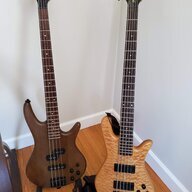
View attachment 5351180

For a minute I thaught you were going to mention something else I have never seen on here, that being the common use of a P for studio work and the P being a dismal live bass that drops out of the mix, being lost within the frequencies around it. This kept me away from Fenders for decades and now I have 6.
The turnaround for me was Thin Lizzy live where I was at that concert in '78 and Lynott was mixed louder both live and on record and Gary Moore who being a Lynott fan and friend, turned the P bass up on his records as well.
I also noted with the years that a P bass sounds clearer and more pronounced in outdoor events than indoors where is can boom or get muddy or just dissappear in the mix.
 
  • Like
Reactions: faulknersj
Anyone who has played a J bass with single coil pickups knows what happens if the blend of the pups isn't even, or if your fingers aren't making contact with the strings and acting as a ground...60 cycle hum. Now shielding can mitigate this to great effect, and I am not sure when cats first started to shield their basses, but shielding isn't 100% full proof.

Pretty much every J bass I've picked up is just as quiet as any P Bass. Even if you favor one pickup over the other, the noise floor is typically still less egregious than the guy next to you with a single coil tele pushing an AC30 hard. Most bass players don't push the gain stages of amps, and in my experience as a producer it's never been an issue what bass a guy comes in with.

Back to producers; in my experience, no detail is too damn small for them to care about! They live in a world of minutia and microscopic sonic details...

Meh. I think most producers that chase minutia are hacks, tbh. If I can't hear an issue in the mix, I don't sweat it. Once the drums come in they really overpower any guitar hum that might be in the mix. The primary goal as a producer is to get a great performance out of the talent, and if you ice them for 20-40 minutes chasing some phantoms no one is going to hear in the finished product, you're defeating your own purpose.

To what degree did the much quieter split P pickup play a role in the P Bass being so heavily utilized in the recording studio world of the 1960's and 70's?

Little to none, I imagine.

And to what degree did getting everyones ears used to that sound early on influence it as a preference for all these years?

Again, probably little to none.

It seems the same aversion to 60 cycle hum could have been a factor in live performances as well no?

I think what made the P more prevalent is that it has historically been cheaper than the J. Working professionals of all trades and disciplines typically tend to favor the bang/buck equation for tools and equipment. I don't think it was until the 90s that the large majority of producers started to laud the fact that you can EQ a P Bass to fit into most mixes. This is by benefit of the fact that the Ps give you a lot of mids, so no matter what you have to cut to make room from keys, brass, sax, whatever, there was still plenty of mids to sit the bass in the mix wherever you want. I think from there, a lot of us retconned the history to assume that producers in the 60s felt the same way, but I doubt they did. Most producers in the 60s were still wrapping their heads around how to mix in stereo, I doubt they cared about how one instrument sounded.
 
I wonder if drummers on their forums obsess upon a certain kind of Slingerland, Rogers, or Ludwig snare drum because of a particular collection of recordings?

Yes. Yes they do. I know a number of drummers who own many snare drums for just this sort of reason, and multiple full kits as well.

BBB
 
P-Basses did hum - they didn't hum for the same reason as a Jazz bass running on one pickup, but there are definitely stories out there of studio guys having to turn one way or the other to cancel out whatever ambient noise their basses picked up - especially before Fender began shielding the pick guard.
Having a P-Bass was not a guarantee there wouldn't be noise.

In the American musician's unions, it was originally not "electric bass" but "Fender Bass" and since the P came first, and change is hard for many artists and producers, it stuck.

When the Jazz Bass came out, many studios didn't see the point when they already owned a P-Bass.

I've asked around Toronto, Montreal, and NYC and got a funny answer: Apparently, inexperienced players often dime both pickups on a two-pickup bass, which can thin out the midrange "meat" of the bass tone. Rather than spending time to convince a bass player to run their neck pickup solo or just work with them, it's easier to just hand them a bass and say "use this" as a kind of teaching moment. Basically, if your bass, and the way you prefer to run it provides any kind of impediment to a usable tone, it's far faster for them to make you play another bass than to spend any time with you to help you get a tone they need out of YOUR bass. They're just too busy working with everyone else (usually the drummer). Bass players should always be the easiest going musician in the studio.

When I'm in the studio, I rarely use the bridge pickup on my Yamahas or my Spectors. I've never had a single complaint. But I do own a P with flats and a P with rounds just in case someone hears with their eyes.
 
Yes. Yes they do. I know a number of drummers who own many snare drums for just this sort of reason, and multiple full kits as well.

BBB
Oh God yes. I have done sessions where 8-9 different snares were tried out for a particular tune, and that was only part of the dude's collection. I know hobbyists drummers with snares in the double digits.
 
I'll throw something else into the convo here: I have played P's mostly for ages live and recording--the "sit in the mix" thing is obviously a known quantity. However...I've been digging on my Jazz lately, and I'm finding that, the both pickups dimed setting is actually the "tightest" most focused sound, and is the most even throughout the range of the instrument and dare I say, the most consistently "sit in the mix" setting. Doesn't sound like a P of course--it's like one giant humbucker spread out across the strings as opposed to one in a narrower configuration--but I wonder if Leo intended that was the "ground zero" setting for the Jazz. Then any fiddling you want to do with pickup volumes is cool, but secondary to the main tone of the bass, and if you wanna go there, deal with the potential hum (like he may have with a Strat...)
 
P-Basses did hum - they didn't hum for the same reason as a Jazz bass running on one pickup, but there are definitely stories out there of studio guys having to turn one way or the other to cancel out whatever ambient noise their basses picked up - especially before Fender began shielding the pick guard.

You do know (maybe not) that the first 6 years they were produced, Precisions had a single coil (hummed like crazy) pickup - right? If there are stories of early Precisions humming, that would be the cause.
 
  • Like
Reactions: faulknersj

Latest posts