• TalkBass has been independent since 1998. Add your voice.
    Create a free account to reply to discussions, view embedded media, and browse with fewer display ads.
    Join freeLog in
    Want zero display ads or expanded classifieds tools? Compare plans.

active > passive

The a/p switch is there so that if your battery dies while you are playing you can still play in the passive mode until you can change out the battery.
Not so that you can have the best of both worlds.
If it was only active,you wouldn’t be able to play.

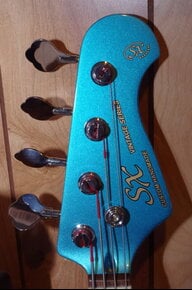
Unless, like the Sires, you have a passive tone control, making it behave exactly like a passive bass when you go into passive mode.
 
The a/p switch is there so that if your battery dies while you are playing you can still play in the passive mode until you can change out the battery.
Not so that you can have the best of both worlds.
But why not have the best of both worlds? A well designed A/P setup will give you both.
 
Well then.The a/p circuit on the seven that I had wasn’t well designed.
The EQ didn’t function in the passive mode.
That's a poor design IMO. All of the basses I have converted to be active are also fully functional in passive mode including passive tone control. I really don't understand why all aren't designed this way. If the idea of switching to passive mode is as an emergency when the battery dies unexpectedly, why not ensure that the player still has access to tone control? And if there is value in running the bass in passive mode for its own sake, why no tone control? Really?
 
  • Like
Reactions: Watchootognbout
hi top guys, i am lurking for a very long time, and now i will post something.
i do not understand why to go for a passive bass today if you can have active and bypass to passive if that is better at the time. not so much more expensive and gives you something back. it seems the correct thing to do for a bass today. why passive??

I really like my active basses! but... there's nothing's more scary than when your bass starts to malfunction for no apparent reason! and then you realize "dead Battery!" it'll turn you off (no pun intended). it makes you think/feel that tiny bit of chaos, this bass ( active) is unreliable, "I can't trust" this bass"! Now I see why some have a switch that cuts the circuit out/off, so the bass can still function if the battery is dead or weak. I love the tonal versatility of the active bass, but I hate the terror of that "***" moment of malfunction! also the inconvinience of having to have a cache of spare 9v batteries around. just in case!
I like what Phil Mcknight says about active electronics, "its the A1 steak sauce of tone, it can make almost any bass sound/taste good:D". if you like the tone of it great. if not go passive.I like my actives tone, don't like the supposed hassle(carrying spare batteries), o in most cases i like the reliability of my "Trusty" passive bass:smug:.: )
it's Kind of like a PTSD nightmare, once it happens to you at a gig! that "oh noo!, oh noo!" feeling:eek::drool::drool:, even though, it's a simple solution. You'll never want to experience it again!! and like most, chuck the active bass for scarring you that much:woot::crying::vomit:.
 
That's a poor design IMO. All of the basses I have converted to be active are also fully functional in passive mode including passive tone control. I really don't understand why all aren't designed this way. If the idea of switching to passive mode is as an emergency when the battery dies unexpectedly, why not ensure that the player still has access to tone control? And if there is value in running the bass in passive mode for its own sake, why no tone control? Really?
One would guess that you are supposed to use A pedal EQ or the amps EQ until you can get a new battery.
 
any eq before the DI to FOH should not be adjusted mid-performance. its a big no no. tape those knobs down if necessary.

I use the controls on my NS Radius to get two different sounds when I can't bring a DB to a doubling gig because of space constraints.

The primary BG sound is the mag pickups mixed with the bridge piezo 50/50 and all EQ flat. To get a sound like a DB, I dial out the mag pickups so it's piezo only, boost the bass slightly, roll down the treble full CCW and pluck up over the fingerboard. The soundman will just have to live with that, I'm sorry.
 
I use both passive and active, depending on the gig. Every Jan 1 I replace all the batteries in my active basses (just like my smoke detectors). That way, they go don’t go dead on me at an inconvenient time. I use up the rest of the battery life in non critical things. I also carry spare batteries in my gig bag. I’ve never had a battery go dead at a gig, but I’ve given out dozens of batteries over the years to the guitar players in my band who do have them go dead at gigs. I usually bring a passive bass as a backup to every gig, but have never had to use my backup. Sometimes being professional means being prepared, and making sure your gear is reliable.
 
  • Like
Reactions: RoketRdr
I prefer active basses (play them 75% of the time) yet understand the necessary, tool-type nature of passive instruments. A passive P or J bass with flats has that classic tone if you are chasing it. My 80s cover band is best served with a passive 4 string P/J type bass and any active 5 string.

The 9V battery excuse is poor planning. I liken it to ignoring the fuel gauge on the car and only refueling when one runs out of gas, making a non issue an emergency.
My basses that draw the most juice can still get about a year's use out of a 9V and the more efficient preamps can go 2 or 3 years. I change the batteries on all my main players every January and mark the date on the battery with a sharpie. I have never found a battery below 8.5 volts when changed out yearly. The instruments that don't get played as often gets the battery checked before being taken out to play. If it's under 8.5V, it gets changed.
Also, the active basses are gigged with pedalboards, IEMs, etc... so packing an extra 9V battery is just part and parcel with all the cables, power supplies, AA batteries and such that's already in the accessory bag. Plus, I like to put a piece of gaff tape on the terminals and store an old battery in the case of the bass. Worst case scenario, you have a slightly weak, but working battery. 100% of the time this battery is used by a bandmate that doesn't prep for the gig!
 
Last edited:
  • Like
Reactions: RoketRdr
I really like my active basses! but... there's nothing's more scary than when your bass starts to malfunction for no apparent reason! and then you realize "dead Battery!" it'll turn you off (no pun intended). it makes you think/feel that tiny bit of chaos, this bass ( active) is unreliable, "I can't trust" this bass"! Now I see why some have a switch that cuts the circuit out/off, so the bass can still function if the battery is dead or weak. I love the tonal versatility of the active bass, but I hate the terror of that "***" moment of malfunction! also the inconvinience of having to have a cache of spare 9v batteries around. just in case!
I like what Phil Mcknight says about active electronics, "its the A1 steak sauce of tone, it can make almost any bass sound/taste good:D". if you like the tone of it great. if not go passive.I like my actives tone, don't like the supposed hassle(carrying spare batteries), o in most cases i like the reliability of my "Trusty" passive bass:smug:.: )
it's Kind of like a PTSD nightmare, once it happens to you at a gig! that "oh noo!, oh noo!" feeling:eek::drool::drool:, even though, it's a simple solution. You'll never want to experience it again!! and like most, chuck the active bass for scarring you that much:woot::crying::vomit:.

I change my batteries out on January 1 and July 4. I've never had a battery crap out on me. There are a few folks here that only change them once a year and don't have any issues. I suspect you just got a bad battery and I'm sure I may have at one time as well. But changing them out every 6 months has worked fine for me.
 
  • Like
Reactions: bigtone23
I used to be more in love with active basses than I am now. When I started playing with a good sound guy, I found that all I was doing was using my electronics to fight with FOH. "Oh yeah? cut my high mids will you?! Take some of THIS! *cranks pot*" I still have active basses, but I basically treat them like they're passives. 12 o'clock across the board. The only time I really mess with it is when I'm quickly popping in or out of a tune with a distinct and memorable bass sound and need to quickly roll of highs or scoop the mids or something for that one song. I can't imagine futzing with them for the entire gig like I see some guys do, but more power to them, I'm not going to tell another bass player how to get their sound.
 
I prefer active electronics to be an adjunct to the way a bass sounds passively. For me, the reason to use a bass with active circuitry is to have more tone shaping at my fingertips, as opposed to having to go to the amp or an EQ/preamp pedal to make adjustments. Also, I think active electronics are useful when you are sending your signal to a front of house system and you need to make adjustments pre-DI to make the bass sound work better in the room. There are situations where I've felt that the front of house engineer doesn't have the same idea of how the bass should sound (i.e. excessively pumping the low end), and onboard active tone controls can be a tool to help remedy that, at least somewhat.

What some people define as an active sound (i.e. hyped top end, pointy mids, sub-low bass, separately or in various combinations) doesn't get it for me at all. I can see some validity in it if you need a Fieldy-type sound to cut through a pack of scooped metal guitars, but otherwise I don't think it's very musical. If you walk around the NAMM show you'll hear a bunch of people making basses sound like typewriters (if anybody remembers those), which is a good illustration of what I'm talking about.
 
All the Basses I have owned have always had passive pick ups. Rickenbacker 4003 Stereo and Fender J Am Pro both passive. I was actually going to add a Fender Am Pro 5 string J Bass BUT I made the fortunate mistake of trying the Fender Ultra Bass before acquiring the 5 er. WOWee KaZowee!!! The passive pickups in the Ultra blew the Am Pro pickups away for tone and output. Incredible difference ... then if you want to you throw that switch into Active mode and that is another world waiting to be explored. This Ultra J Bass plays like a dream and sounds incredible so ba bye Am Pro J Bass and hello Active/Passive Pick Up Fender Ultra J Bass. Even if I never use the active mode I’ve got a way better Bass and at the very least have more options.
 
The problem with continually unplugging your bass to save the battery on a bass with a barrel-type jack, is that this type of jack wears out too soon as it is, not even counting the additional wear of plugging and unplugging.
I do not like barrel jacks.
Just my $.01.
Never heard of a jack wearing out & have never experienced any jack problem. Possibly the cable jack could be a suspicious culprit. Guess that is why it maybe in best interest to upgrade a lower quality female jack to a quality Switchcraft, made in the USA, product. My '61 P bass ( tort & flats) has been played hard through out the years and I have had no problems with the jack. Go figure. . .
 
I have determined that I get no benefit from active electronics if the switch stays in passive mode all the time. And with that being the case, I now just have extra knobs that are more in the way than they are useful since they're permanently disabled.

Thus, the passive bass.
 
  • Like
Reactions: TrustRod
RECHARGEABLE BATTERIES!
When I got my Sire V7 I had never had an active before and only played in passive mode for a long time. I tried active mode --- but my batteries died quickly (9V are moderately expensive, and the Sire uses 2 of them) --- until I realized that had to leave it unplugged. Now I use rechargeables - (this setup: https://is.gd/JFhjpk ) and just make sure I have an extra charged pair with me.