You know about Keith's latest band OFF! ?You just saved me a couple hours!
I love Keith Morris!

TalkBass has been independent since 1998. Add your voice.
Create a free account to reply to discussions, view embedded media, and browse with fewer display ads.
Join free Log in
Want zero display ads or expanded classifieds tools? Compare plans.
You know about Keith's latest band OFF! ?You just saved me a couple hours!
I love Keith Morris!


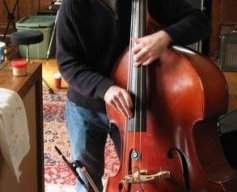
I doubt anyone would be interested (nor should you be!), but I’m being interviewed later today for a live stream thing, mostly slap upright bass related
mark (can i call you mark?),
i loved everything about that.
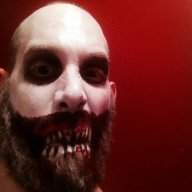

Gonna comment on the live aspect later when I have time... Just wanted to show you the new pedal I have for the mono board...
View attachment 4304305
If you only have one tape machine it'll be difficult to do the full-on Frippertronics thing. That technique was based on a pair of tape decks: The supply reel was on the left-hand deck, which was in record mode; the takeup reel was on the right hand deck, which was in playback mode...but which was also being fed back into deck #1.
If this Panasonic deck you just got has separate record and playback heads you can do some rudimentary looping, especially if you combine it with a simple mixer. Depending on the length of your tape loop you'll either need a vertical pole, like a straight mic stand, to wrap the tape around and provide tension; or, if it's a short enough loop, stand the deck up vertically at the edge of a table and just suspend a plastic takeup reel at the bottom apex of the loop. You'll need the mixer to combine your instrument's signal with the output of the deck so both are going into the record input, and you'll need to adjust the levels judiciously to make sure you don't just get caturwalling feedback. (Or, so that you know precisely how to get caturwalling feedback when desired.) And you'll want to cover up the erase head with electrical tape, or (preferably) thin masking tape so that your loops provide semi-infinite iterations.
That means a lot coming from you, truly. Thank you!
Killing flats.besides getting to witness your intelligence, generosity of spirit and well-considered insight, it gave me a window into music and people that were part of a pretty big blind spot for me and an entre into a crazy technique.
after watching some of those guys (your boy joe fick, for one), i was trying to figure out how to do an analog on ebass (that’s either gonna take a while or be unsuccessful).
btw, i have a friend who does some serious doctoring with bee’s wax and vaseline (really! i’ve done it) to new flatwounds to get them less lively, might be worth an experiment with the rotos (iirc, that’s what you guys were talking about?).
anyway, i got a lot out of it.
Thinking about "polyrhythms" today and realizing that I'm probably thinking more about polymeters, Andrew does a decent job of spelling out the differences with a minimal number of screen-fives.
besides getting to witness your intelligence, generosity of spirit and well-considered insight, it gave me a window into music and people that were part of a pretty big blind spot for me and an entre into a crazy technique.
after watching some of those guys (your boy joe fick, for one), i was trying to figure out how to do an analog on ebass (that’s either gonna take a while or be unsuccessful).
btw, i have a friend who does some serious doctoring with bee’s wax and vaseline (really! i’ve done it) to new flatwounds to get them less lively, might be worth an experiment with the rotos (iirc, that’s what you guys were talking about?).
anyway, i got a lot out of it.
Killing flats.
Eucerine cream, the thick paste.
Kills em dead.
Odorless, non toxic, won't damage anything and wipes away clean on the fingerboard etc....

@dukeorock ...watching your interview now...this is wonderful. Thank you for sharing!!
+1 on Eucerin. I have to use it all the time because of my hands, and if I play an instrument for “just a minute” without the gloves, the strings go dead.
Looking forward to watching the @dukeorock interview that’s all the craze on here. Just gotta find a moment alone to sit and listen.
I’m mixing a record right now and am reminded that my hated for ProTools is legion. How is the “industry standard” the most inelegantly designed and also the most crash prone DAW?
Also, I know this is a hardware-biased thread, but has anyone messed around with alternatives to “amp sims” in software? Been playing with Decapitator and cutting highs and lows. Pretty interesting. My wife recently said “you love Decapitator, don’t you?” Also, I picked up the Neunaber Wet plug-in, and am really liking it.
Thinking about "polyrhythms" today and realizing that I'm probably thinking more about polymeters, Andrew does a decent job of spelling out the differences with a minimal number of screen-fives. What's worth sharing is the clever stunts at the end of his video for making clips in the DAW, particularly Ableton Live (video link below should jump right to the timestamp).
I hate all DAWS equally.I normally work in Logic but this came in ProTools, and it would be a hassle to port it.

Want to post this before I forget - it's related to tape delay - one of my favorite Soft Machine releases is the NDR Jazz Workshop from 1973 - in addition to the beautiful white Bass VI, the playing is phenomenal, and there are a couple of cool stories attached. For example, one of the opening acts was Linda Hoyle, who was in Affinity. It was supposed to be her comeback, but audience members were yelling - apparently it negatively affected the performance because it seemed they didn't like the music - in fact, she left the music business again - but they were actually yelling about the PA mix?!!
Hugh Hopper also performed 1983 (and this is where the story becomes relevant) - I can't find the liner notes online, so I typed them out:
Hopper's "1983" set was a daring experiment to say the least. The most impressive part of the performance involved several tape recorders, resting on two scaffolding towers and holding long, variable-speed loops totally about 50 yards. As for the actual performance, while Jenkins, Ratledge, and Babbington were amplified normally, Marshall's drums and Hopper's lead lines were put through a tape-delay system which replicated their interplay a split-second later at varying speeds. Wrote the NME's Roy Carr, "as Hugh launched into the menacing fuzz bass theme with the band following on, a strange blend of sub-aqua whaling moans and percussive white noise built up, as one set of Revoxes recorded and played back the bass, the other Marshall's drumming." The impressive finale consisted of letting the tapes complete the piece by themselves... Unfortunately, as noted by Hopper when the present release was first discussed, it appears that "1983" as preserved on tape is incomplete, the mix focusing on Hopper's and Marshall's contributions at the expense of pretty much everything else...
And maybe the best part:
Although no footage survives of that set, thanks to the great quality of the video, one can actually see the loops shimmering on the scaffolding to the left of Karl Jenkins.
Not sure you can see it in the trailer, but you can see the scaffolding for sure. I know most people seem to prefer the Hugh Hopper years, and I get it, but this is definitely one of my favorite Soft Machine performances.

I hate all DAWS equally.
I don't discriminate.
But I've been on Live for the past 15 years.
Way too lazy to learn another one and too cheap to get the latest version, I still run Live 8.
For me its the ultimate creativity killer.
But it's absolutely essential in today's music, so I use it for more technical stuff like mixing or editing complex structures etc......
.
I'm a stubborn holdout. I never use a DAW. I guess it limits me but so what, I ain't no "professional" and that's fine with me.
How do you multitrack, then? A Zoom? 2 inch tape? Tascam Portastudio 424?.
I'm a stubborn holdout. I never use a DAW. I guess it limits me but so what, I ain't no "professional" and that's fine with me.
Time to break out the Subharmonicon…
Hate is a strong word for a CanadianI hate all DAWS equally.
I don't discriminate.
But I've been on Live for the past 15 years.
Way too lazy to learn another one and too cheap to get the latest version, I still run Live 8.
For me its the ultimate creativity killer.
But it's absolutely essential in today's music, so I use it for more technical stuff like mixing or editing complex structures etc......