• TalkBass has been independent since 1998. Add your voice.
    Create a free account to reply to discussions, view embedded media, and browse with fewer display ads.
    Join freeLog in
    Want zero display ads or expanded classifieds tools? Compare plans.

Amp Guts Photos - Official Thread - Lets see those pics

Should we also add Bass Guts to this thread too?

  • Yes, Allow Bass guts, afterall Guts is Guts

    Votes: 223 28.7%
  • No way! Keep 'em seperate

    Votes: 553 71.3%

  • Total voters
    776
Somebody stole your frets? Oh the horrors... hope you didn't discover this right before going on stage ;)

The first time I used it on stage was TV appearance. I had taken both a fretted one and the fretless but grabbed the fretless when we went on. I had to concentrate but all went very well and there's a Youtube video to prove it. LOL
 
Last edited:
Tung-Sol reissue 7027A’s are good tubes with better plate and screen dissipation. An option worth considering and where I would start. It is better to use the specified tube rather than trying to drop the plate and screen voltages to satisify the 6L6GC's.

Tung-Sol 7027A Audio Tubes - www.thetubestore.com

The PI balance and signal quality should be checked with a scope and a signal generator. Often PI’s are not perfect, a PI can be a source of distortion. Some imbalance provides grit if that’s what you are looking for. Check the PI component tolerances. Ampeg was always tweaking their designs. Who wants warranty returns. Sometimes they would exceed the maximum PI plate voltage. Lowering it helped increase the tube service life. Other tweeks were adding small caps to tame oscillations. As was mentioned by Andy. It may not be crossover distortion. A spectrum analyzer can help here to see if the distortion is a a high frequency artifact.

Attached is a schematic with reference voltages. Note that the references are with a 117VAC power line voltage. Read the voltage at the wall. If it's higher, the power supply nodes will be higher. 505VDC on the screens is not bad with a 7027A.


Installed a JBL K151 replacement speaker and this thing is alive and well. It gets tubed up with Tung-Sol 7581"A" or JJ 6L6GC. Both sound good....

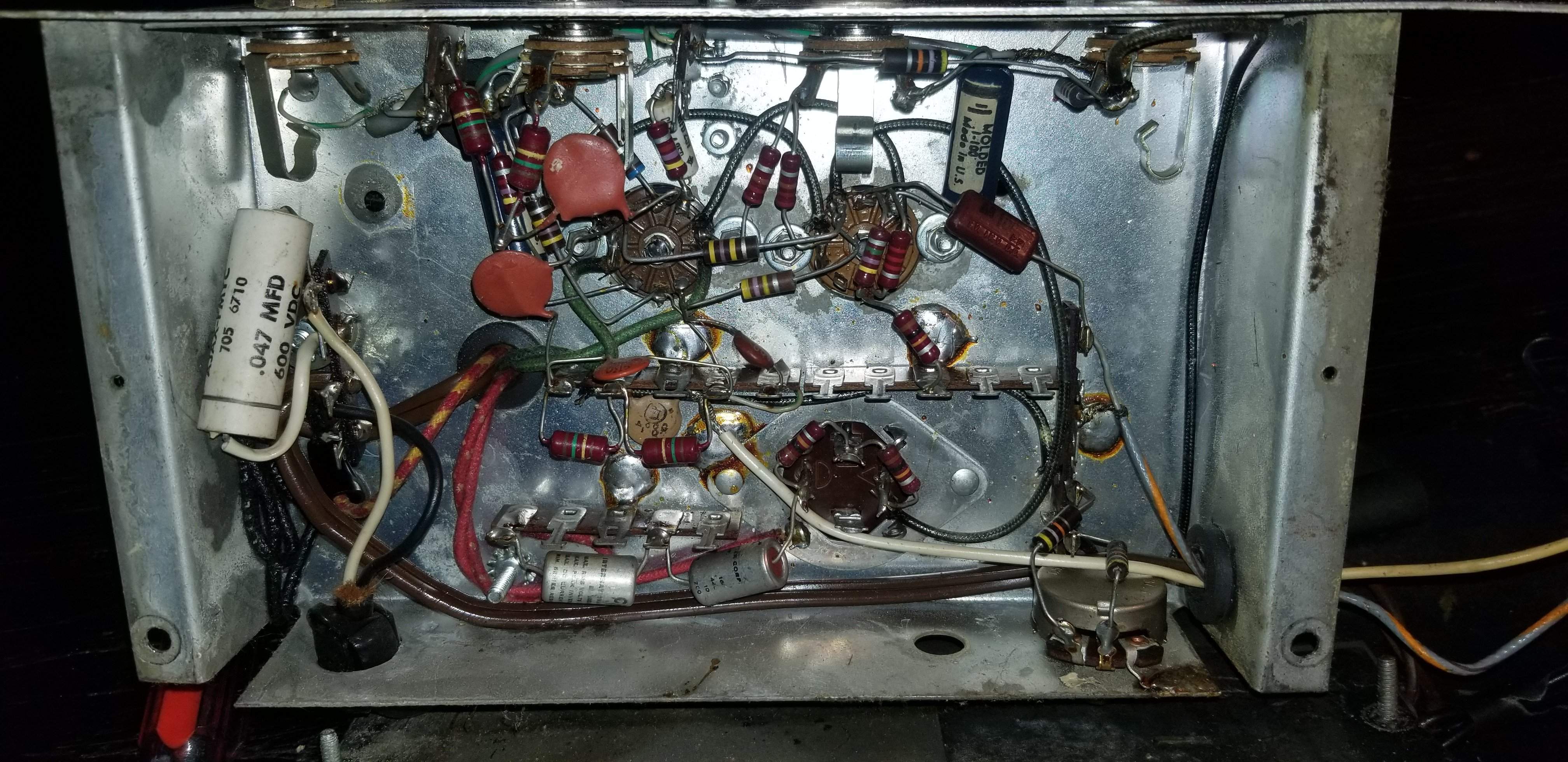
Upcoming elective surgery:
*3-prong plug so I don't have to shun nearby grounded electronics/objects. Remove "death cap" at far PSU-side of board & rewire ground switch.
*Radial bias cap replacement with axial cap. Removal of that big .047 death cap leaves some space to get the bias cap a little farther away from the hot 1K tubular power resistor. Even a extra 1/2" seems like a win.
*4-pole speaker cable end likely to be replaced by a black Neutrik connector I have (NC4FX-B)
*Add 1 UF5408 in series to each AC leg leading to the rectifier socket.
*Filter caps seem to work well, and the amp produces sound for about 15+ seconds after shut-off, so I suspect they're not terribly leaky, BUT...I want to be able to swap in a SS rectifier, so 600V caps for the screen node & preamp nodes are in order. If an 82uF cap goes in that first filter position with a tube rectifier in place, some impedance will be needed between that and the rectifier. If not, the amp will have to be SS-rectified only.

Sincere thanks to those above what helped the troubleshooting. I value this mighty dinosaur as a plaything, as a slice of history, and as a weathered example of clever engineering. I also just like things that are certain shades of blue.
 
EBMM Audiophile HD-500 v2.
 

Attachments

  • DSC_2235.jpg
    DSC_2235.jpg
    1.5 MB · Views: 120
How about some old oil-can delay units?

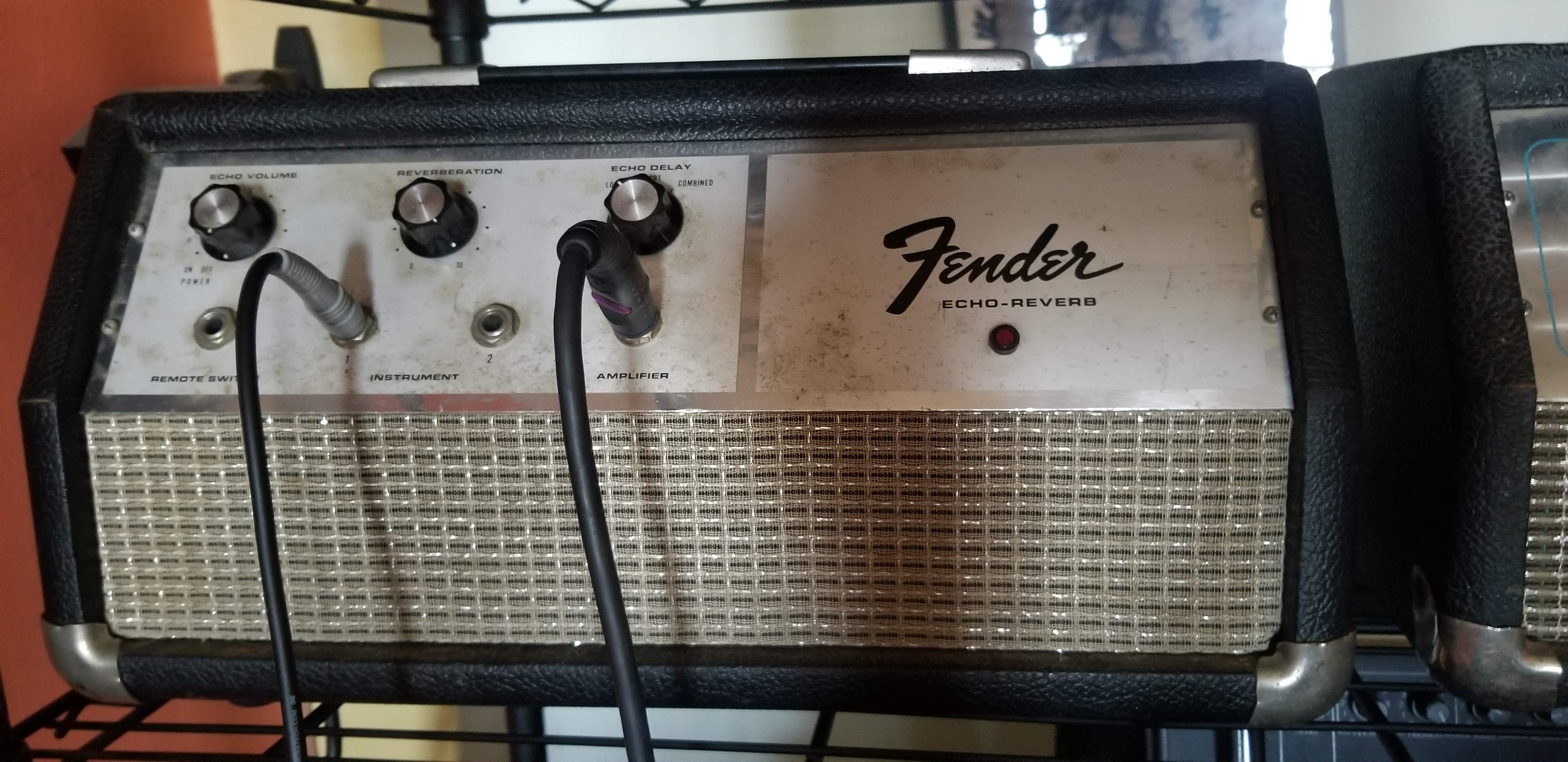
Fender Echo Reverb

Made by Tel Ray (of Morley fame), these unique units use a rotating oil-coated aluminum disc as the write media for delay-type effects. The "reverberation" control folds the delayed signal back into the first stage using the 7199 pentode cathode as an input. The effected signal is read by a cathode follower. A 1-tube circuit. This was also sold by Tel-Ray as the "Adineko 1001"

Got this one in "project" condition: in dire need of a recap, although thankfully the oil can still had some of the magic juice. One of the rubber write/read heads had adhered to the disc, and had to be wiped off the disc with some alcohol.
The "short" delay level is way weaker than the "long", so unless it's a quirk of the (varying) write trimpots, the "short" write head may need a scraping/cleaning. The gunk on the disc left a "click" artifact with every revolution until it was cleaned off. If that "gunk" used to be the write surface for the "Short" head, that might explain the weaker slapback delay.

Even so, with a fresh JJ can cap and a gentle cleaning of the disc, it's running quite nicely with the old oil. I also replaced the old rectifiers with a single UF4007 just 'cause. I eventually got bottle of the magic juice (LB-65 oil) for the eventual can disassembly/head service, but for now it's running with old oil that's been minimally diluted with mineral oil.

Ye olde folid-ftate diodef
Trimpots for the "short" and "long" write head level. There's a diode clipper before these to limit the write signal.
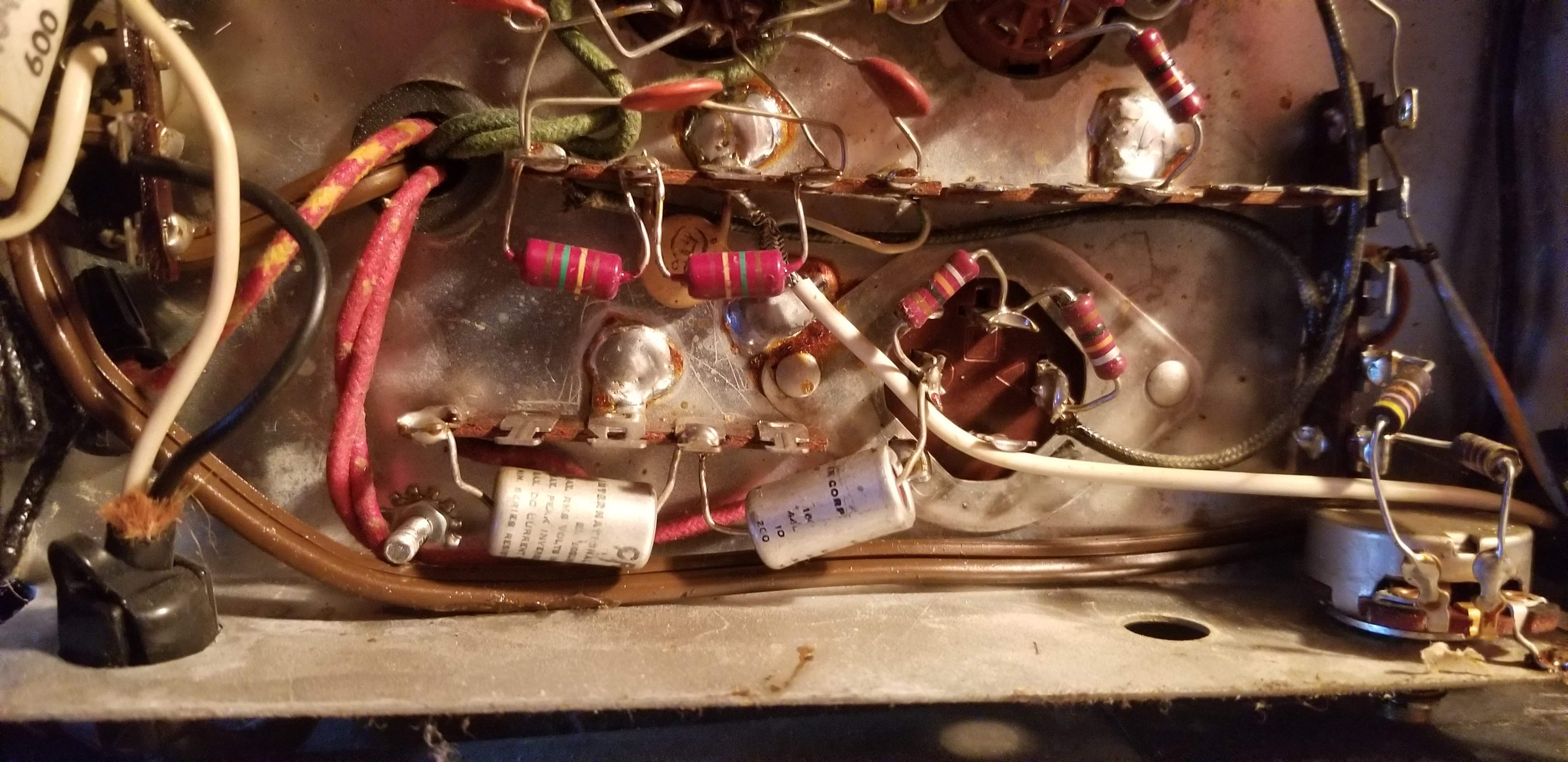
The stock guts
Recapped...I rotated all but one of the JJ can terminals to avoid a short to chassis...what's the dielectric constant of sea-level air at 80% relative humidity?


Rear chassis with the fresh cap.
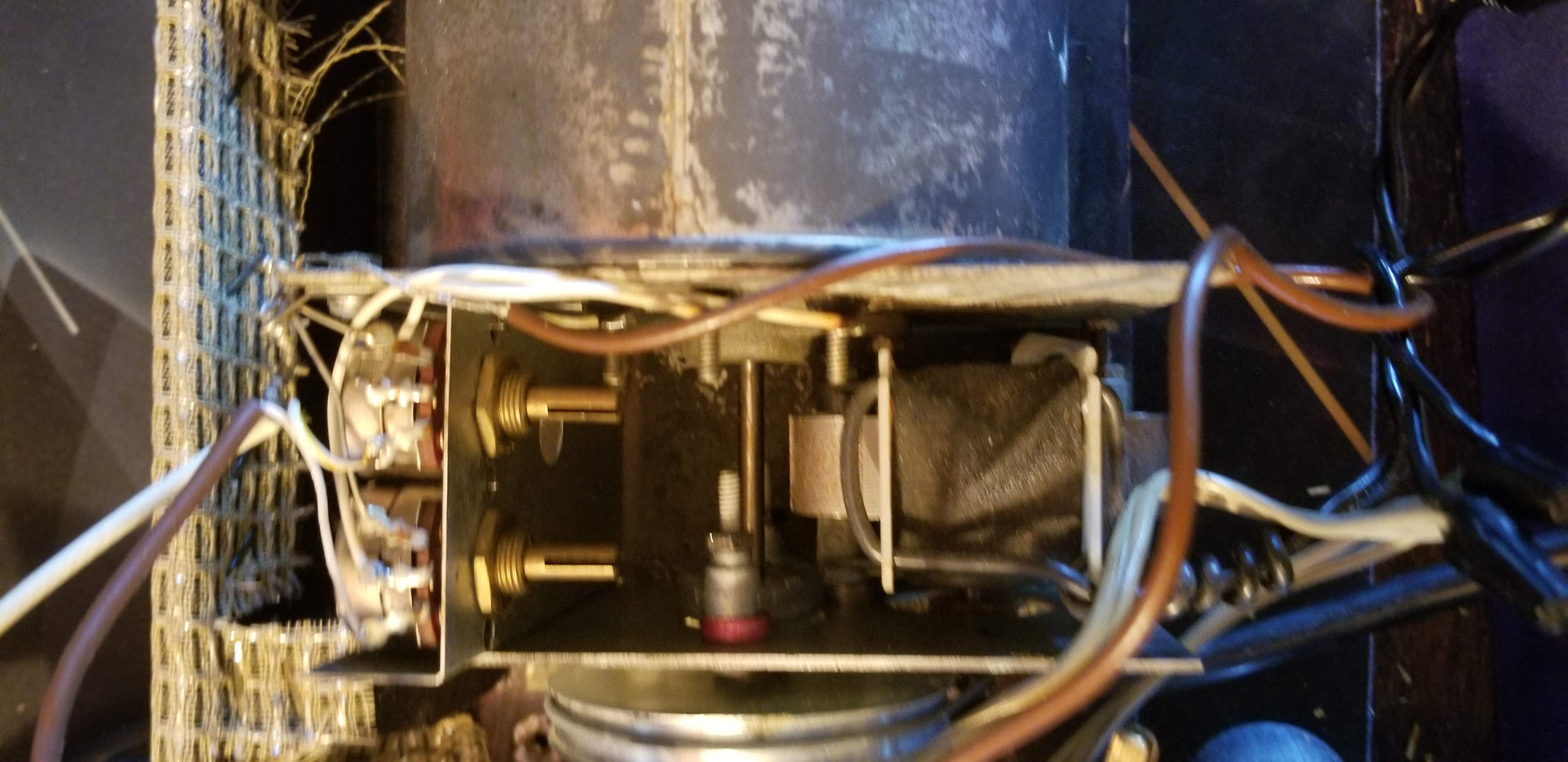
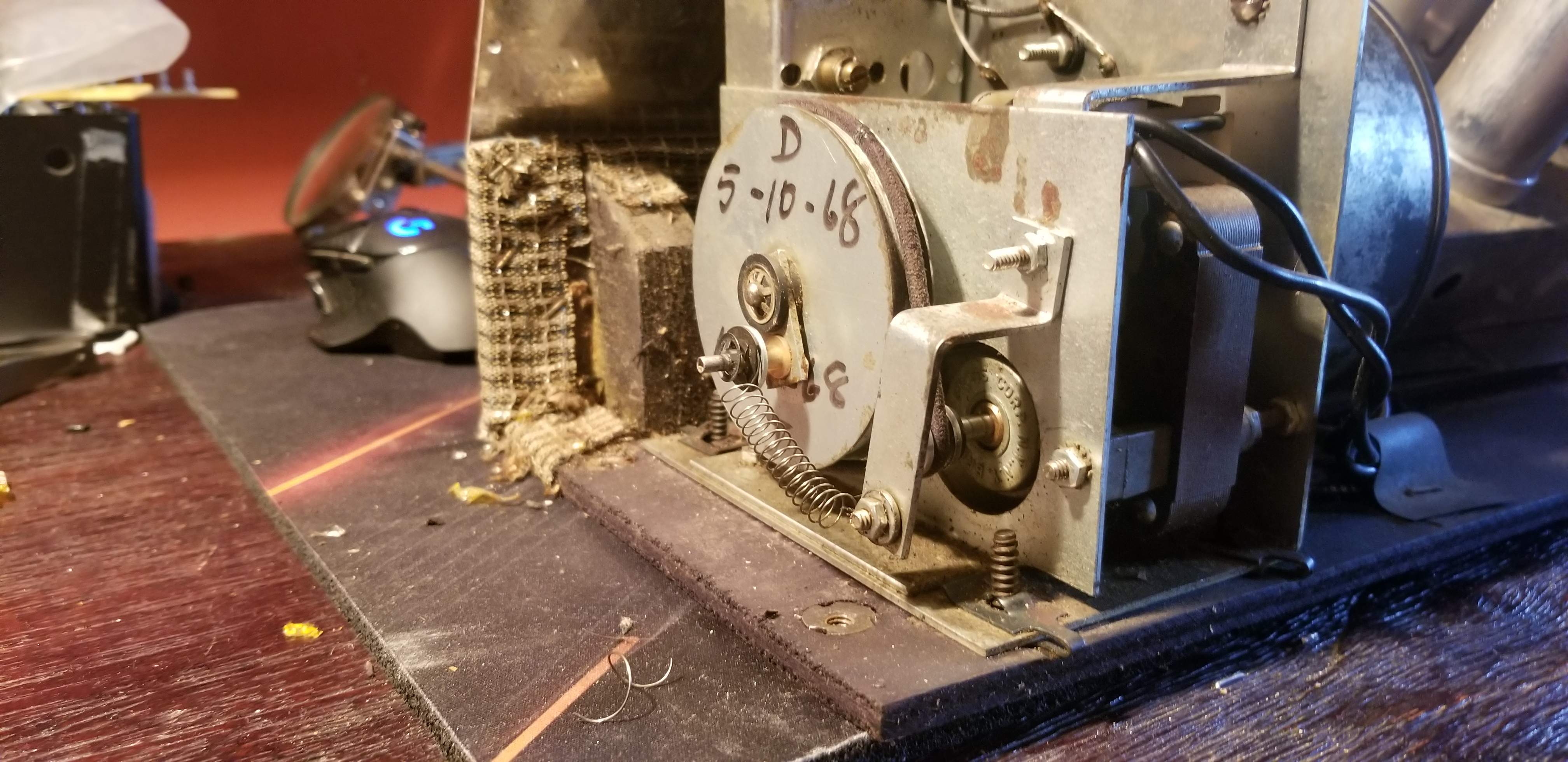
Motor flywheel and belt. This pure "echo" unit lacks the spring assembly that modulates the warble of its "organ tone"/"Dimension IV" cousins.

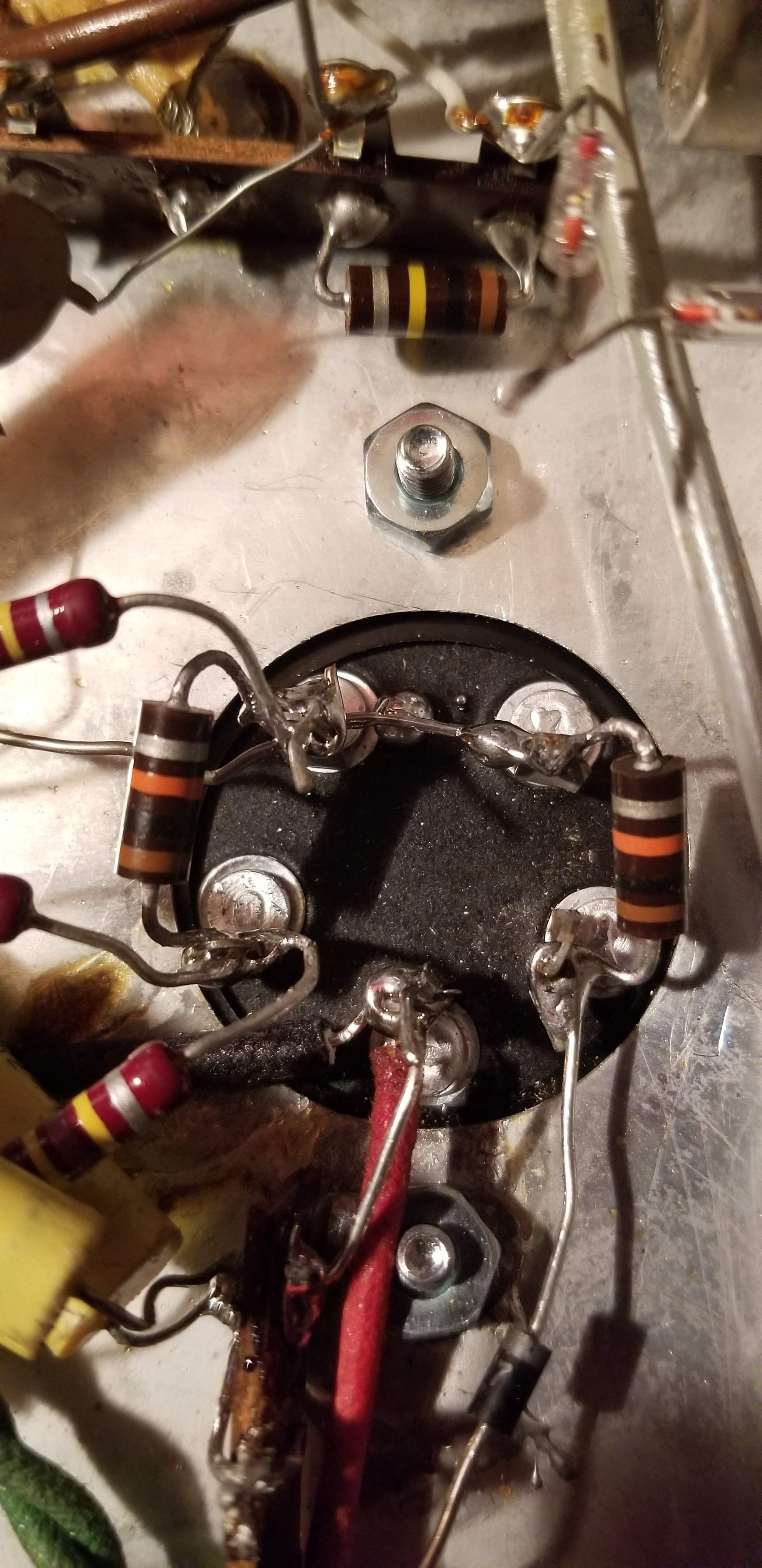
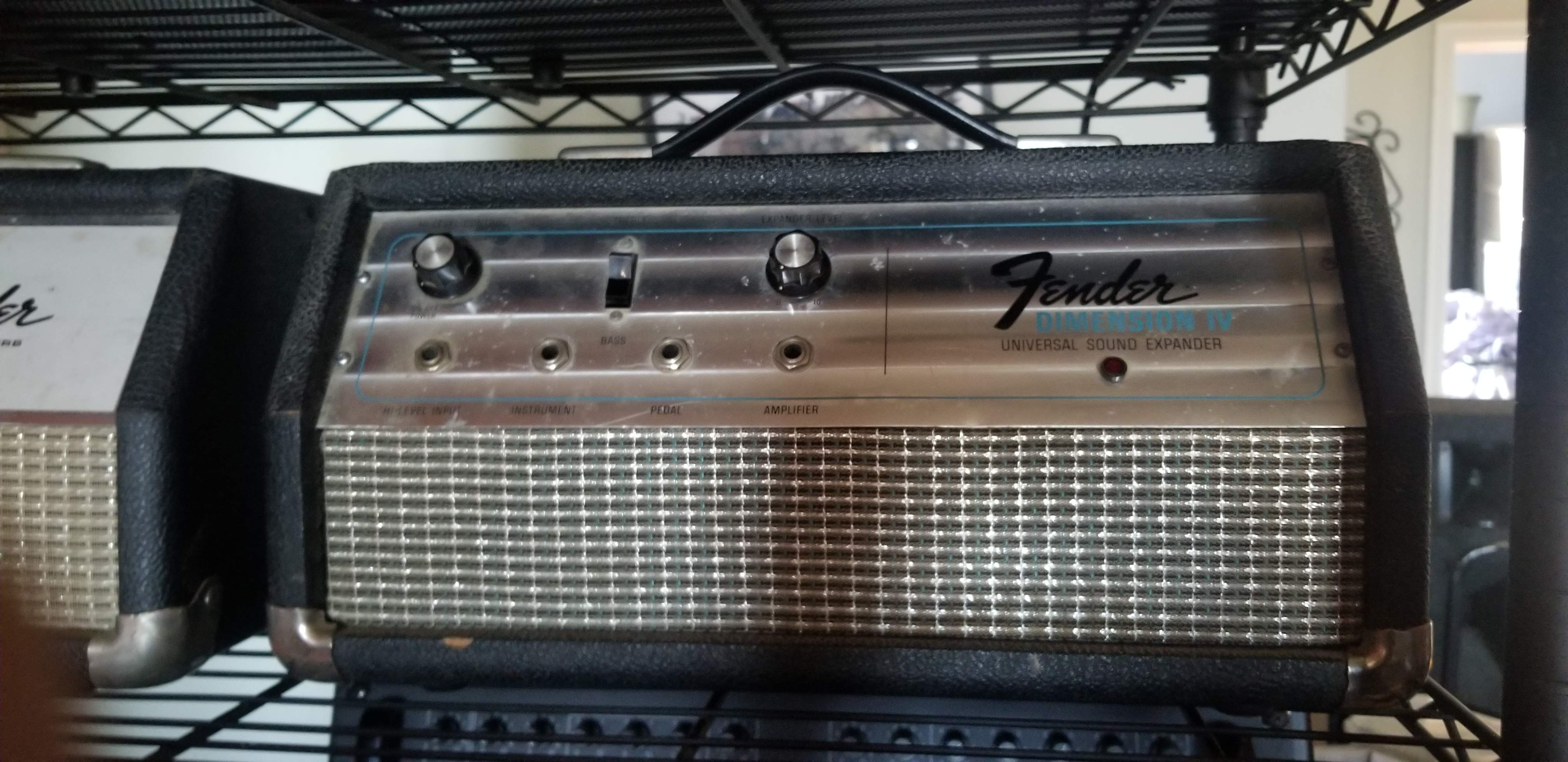
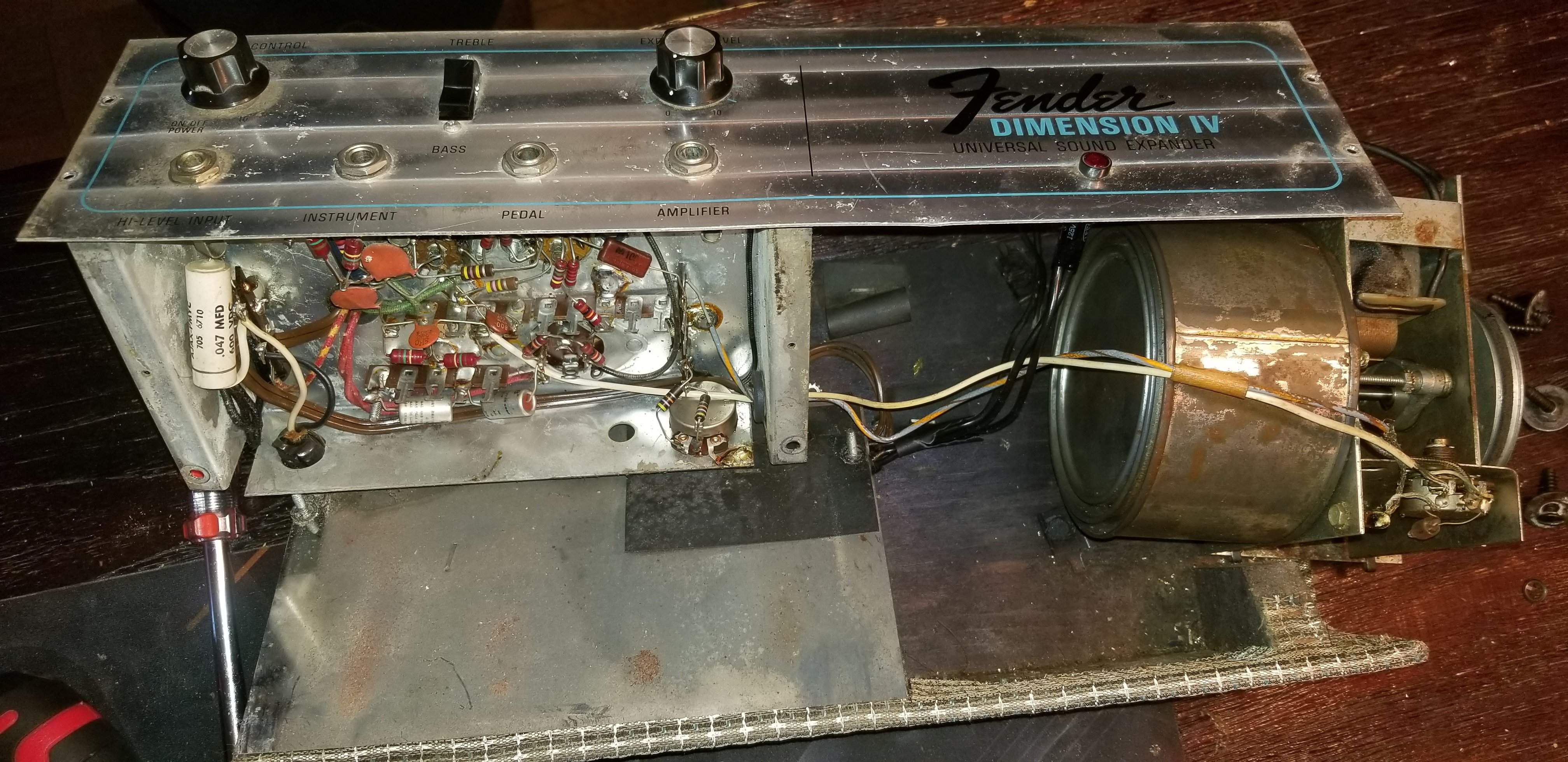
Which brings us to the 2-tube Dimension IV "Universal Sound Expander" by Fender, also sold directly by Tel-Ray as the "Super Organ Tone". Their "Deluxe Organ Tone" is similar, with extra controls.


Flying-Spaghetti FTW

Motor assembly for the Dimension IV. Note the spring-warbulator. The "Variable Delay" and Morley EVO/RWV oilcan unis includes Rube Goldberg-esque mechanical lever assembly to vary the tension on that spring, and by association, the rotational whatnot of the spinny physics gadgets. This one does not do that.


This one arrived with a bone-dry oilcan and a streak on the disc from melting rubber. Waiting for the can cap and magic juice to arrive, I cleaned the disc. Thankfully, it appears undamaged under that, with the magic iridescent luster. I put some mineral oil in the can to prevent further damage until it gets disassembled and recapped.

The disc in these oilcans is aluminum anodized in a particular manner. I dunno the exact physics of the thin-film anodized coating as an insulator or the capacitor formed by the oil layer, so let's just call it magic. The viscosity seems to affect the effect.


Anyway, the UPS guy just dropped off the JJ cans (and 10A filament transformer for an upcoming 1650W build), so kthxbai.

The Echo Reverb (I) is the same, minus the "bright" switch and the two bright bypass capacitors on the two trimpots.
Fender_Echo_Reverb_II.gif


The Super Organ Tone resembles this schematic, minus a few controls. Suppose I'll have to trace out the circuit in my unit.
Tel-Ray_Deluxe_Organ_Tone.gif


[edit:] almost forgot to add: If I have seen far, it's because I have stood upon the shoulders of giants.
Screenshot_20200814-100752_Firefox.jpg
 
Last edited: