• TalkBass has been independent since 1998. Add your voice.
    Create a free account to reply to discussions, view embedded media, and browse with fewer display ads.
    Join freeLog in
    Want zero display ads or expanded classifieds tools? Compare plans.

Amps with built-in / baked-in HPF

I could be way off, but I would guess most amps (especially most modern class D amps) have some kind of HPF action going on.

Not having any kind of filtering going on would probably be the exception, not the rule. The only example I see cited regularly as an example that does not have one is whatever SWR amp (can remember the model).
Excluding pre-amps, power amps, and the like of course.
 
Here's something I was curious about....if hypothetically you're using a Mesa Boogie WD800 with the built in HPF and also an Fdeck HPF, what exactly is being filtered?

Depending on where you have the Fdeck in your chain, it might have some benefit. Like a Fdek first in your chain, right after your bass, might improve the tracking on your octave pedal, and then later down the chain if another pedal generates some crazy low stuff that the HPF on the amp could take care of it.

Or a Fdek before the amp might take care of the signal that you are sending to the FOH if you are using the DI in "pre" mode. I'm guessing the built in HPF on most amps is not included in the DI signal unless you go "post"

But a bit of a redundancy in many cases.
 
Here's something I was curious about....if hypothetically you're using a Mesa Boogie WD800 with the built in HPF and also an Fdeck HPF, what exactly is being filtered?

Like all EQ, it will "stack." Two HPF's will give you more attenuation of the low frequencies compared to just one HPF.

For example, if you turned up the treble on your EQ pedal, and also turned up the treble on your amp head, you would get a LOT of treble.
 
I remember talking about the SWR HPF years ago with some guys who saw the very first Steve Rabe Bass amps.
Apparently, at the demo of those very early amps, the speakers leaped forward quite violently and Rabe was working on a custom speaker that could take that kind of abuse.

He might have also had issues with the stability of his power supply during those otherwise useless transients.

In the end, he realized that passing anything below 20Hz through to the cabinet at high power was pretty much futile, and possibly dangerous for the product's sale.

I think some people even incorrectly attributed it to very, very low damping on those early designs.

People who "tap" the strings while playing were making the cabinets scream in anguish.

So the HPF was put in to stop all of that. It had nothing to do with the sound of the rig.

Someone closer to SWR could probably comment.

I could be way off, but I would guess most amps (especially most modern class D amps) have some kind of HPF action going on.

Not having any kind of filtering going on would probably be the exception, not the rule. The only example I see cited regularly as an example that does not have one is whatever SWR amp (can remember the model).
Excluding pre-amps, power amps, and the like of course.
 
  • Like
Reactions: chupacerveza
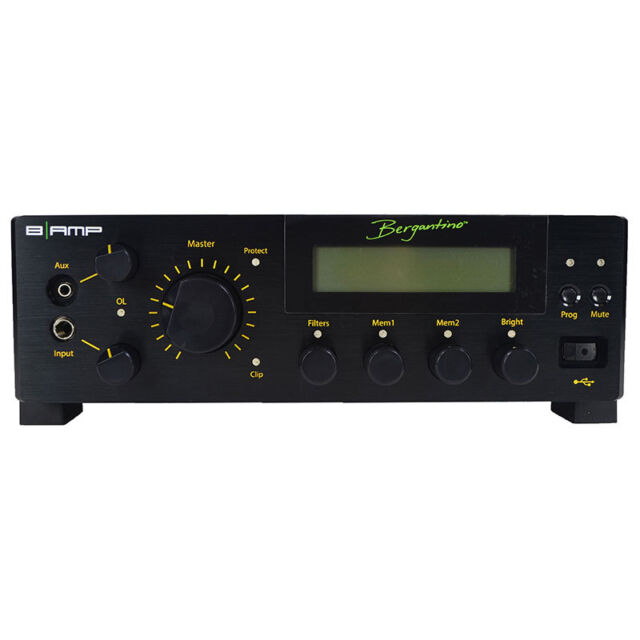
s-l640.jpg


Berg B|Amp

variable programmable setting in 2 Hz steps. Very useful.
 
Like all EQ, it will "stack." Two HPF's will give you more attenuation of the low frequencies compared to just one HPF.

For example, if you turned up the treble on your EQ pedal, and also turned up the treble on your amp head, you would get a LOT of treble.
Regarding this from Agedhorse : " Any time hp filters are cascaded, and the corner frequency is within say 1/2 octave of each other, the effective corner frequency will increase. How much depends on the slope and alignment of the filters. "
 
The Genz Shuttles have one, what about ShuttleMaxs and Streamliner? I was always thinking one at 30 Hz but don’t know the slope, or even if this is, in general, the case. Specifically ShuttleMax 9.2 and Streamliner 900. Thanks. Hopefully @agedhorse will chime in when his time in the penalty box is over. If he comes back at all.:crying:
 
Depending on where you have the Fdeck in your chain, it might have some benefit. Like a Fdek first in your chain, right after your bass, might improve the tracking on your octave pedal, and then later down the chain if another pedal generates some crazy low stuff that the HPF on the amp could take care of it.

Or a Fdek before the amp might take care of the signal that you are sending to the FOH if you are using the DI in "pre" mode. I'm guessing the built in HPF on most amps is not included in the DI signal unless you go "post"

But a bit of a redundancy in many cases.
This is a great question! Does the HPF condition the “Pre” DI send on Genz Benz amps?
 
  • Like
Reactions: chupacerveza
The Genz Shuttles have one, what about ShuttleMaxs and Streamliner? I was always thinking one at 30 Hz but don’t know the slope, or even if this is, in general, the case. Specifically ShuttleMax 9.2 and Streamliner 900. Thanks. Hopefully @agedhorse will chime in when his time in the penalty box is over. If he comes back at all.:crying:
All the amps that Agedhorse has designed for Genz Benz have built in HPF.
 
This is a great question! Does the HPF condition the “Pre” DI send on Genz Benz amps?

I hate to say one way or the other, cuz I don't really know. If I had to make an educated guess, I would guess no.

Streamliner... "This signal comes directly from the Tube buffered input stage to the Direct Output."
The Shuttle 9 manual doesn't even say that much, so I might assume it's like a direct pass thru thing.

I think the idea of many "pre" direct outputs is that is just like what is coming from your bass - a clean signal with no processing.

Maybe @hasbeen might know? Not sure how active he is on here. Might have to wait for the horse to get out of the stall.
 
  • Like
Reactions: chupacerveza
If someone is making an actual reference list that might end up in a Wiki or something, it might be nice to separate out amps that have a user adjustable HPF/LPF built in (berg, mesa) and amps that have them integrated into the amp without actually advertising it (guessing the second list would be pretty extensive).