
• TalkBass has been independent since 1998. Add your voice.
    Create a free account to reply to discussions, view embedded media, and browse with fewer display ads.
    Join freeLog in
    Want zero display ads or expanded classifieds tools? Compare plans.

Analyzing Neck Dive

I never heard of “Witness point” either, and always wondered why it seemed to take my bass intonation a while to “settle in” after string changes. It’s possible to learn a few things on TB. I suspect that most players who discount neck dive as an actual issue have never played a really well balanced bass, it’s an eye opener. Playing well is work enough, I don’t need to fight gravity too.
 
I never heard of “Witness point” either, and always wondered why it seemed to take my bass intonation a while to “settle in” after string changes. It’s possible to learn a few things on TB. I suspect that most players who discount neck dive as an actual issue have never played a really well balanced bass, it’s an eye opener. Playing well is work enough, I don’t need to fight gravity too.

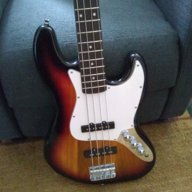
THIS!

Couldn't have said it better. :thumbsup:
 
To me, there is neck dive, and then there is neck sag. Neck dive is just that, the headstock makes a break for the floor. Neck sag is where the neck settles down an inch or so. Sag doesn't bother me. Dive is a problem

This. I have a P Style that neck dives like crazy. A better strap mitigates it a little, but it's pretty bad. Many inexpensive basses have very light bodies and thick, heavy necks. Neck dive is to be expected from them.
 
  • Like
Reactions: Anthony Fury
For about the umpteenth time I've posted this now... If you have a bass you like the looks/sound /playability of but don't like the neck dive, it's a relatively easy fix provided you have a method for relocating the front strap attachment point nearer the 12th fret. Ric5 offers a simple (but crude and unattractive) method for relocating the front strap attachment point farther forward to improve balance, this is a better one (see photos). I have a friend with a plasma cutter making these for me now and I had him make some for me recently. I have a few extras I'd part with if anyone is interested, PM me for more info.
View attachment 3725928 View attachment 3725929 View attachment 3725930 View attachment 3725931
I had a similar idea, but I was thinking of using the existing two top neck screws, and a straight bar running parallel in back of the neck, somewhat out of sight, yet clear of the fretting hand, with a regular strap button on it.
Do you think your buddy could make something like that?
 
Neo-leather strap.. With Flat piece of lead wrapped in cloth tape. Secured the strap.. No mod need for the bass..
If I set my bass on a stool, say, to answer the phone, it will fall on the floor, neck first.
I have a roll of half dollars in the control cavity already, with no apparent affect.
Not only is it neck heavy, but the overall center of gravity of the thing puts the first fret about three feet away from my left hip.
I don't want to mention what bass I have, out of respect.
 
The only issues I have had with neck balance are on an aluminum-neck Kramer guitar - I suspect the basses may have that issue, tho' I don't know. I found an old-fashioned strap (search for "Fender Standard Vintage Leather Guitar Strap") with the sliding pad helps, as I don't want to alter the now-vintage and discontinued axe. It may help to get it set, and then put some double-stick tape on the belt and inside the pad.

 
Only bass I have that is really a neck diver is a German Warwick Infinity SE. It is a set neck with a chambered body. And the Infamous Warwick bass ball bat neck. A good strap tends to tame it some, but still need to pay attention. Shame, and it is a killer bass. And was pricey in its day.

But neck is a real heavy item. I think I was told Warwick used a metal channel in its neck surrounding the truss. Shame as Spector uses carbon fiber inserts. But maybe I ought to try moving that bottom strap button to see if it helps. Just need to make sure as to not put a screw into the chambering.
upload_2020-2-29_21-6-38.png


upload_2020-2-29_21-7-19.png
 
  • Like
Reactions: ChrisBowsman
Those strings look sweet on that!
Set of Coated DR Peacock Blue and a set of DR Hot Pink ones. Don't think DR is still making them. And pretty much went to Neons or Black Beauties.

They've been changed to the Red, White, and Blue DRs. Did that to do a political gig at an outdoor event arena for the 2016 election. Works nice on "American Band". But hey, got to eat lunch and hang with some heroes from the Benghazi attack and Lee Greenwood. It was cool. God Bless the USA.
 
My worst bass ever for neck dive was my Kramer DMZ5000 fretless, which I regret selling. It sounded and played wonderful except for the balance issue. This was due to two features. First, it was made during a period when basses with long necks and tiny little bodies were sexy -- all of them had balance problems. Second, the metal neck of course.

Today, I can just hang a bass from the upper strap button and get a sense of the balance. Another factor is how the body contacts your body, because that contact point becomes a fulcrum. But I think the location of the strap button relative to the center of gravity is the main issue.

Is it important? Depends on your technical approach. For my own playing, I find it important that I'm not using my left hand to hold my bass up against gravity, so I can have a relatively light grip on the neck.
 
neck dive isn't caused by the player.

i owned a schecter that had neck dive with absolutely everyone who strapped it on, at least 10 people, all of whom played bass or guitar. holding the neck up with my fretting hand slowed my playing. i was happy to sell it.

my husband had a gibson victory bass. i'm 5'3" and chubby; he's 6' 7" and was thin at the time. they're legendary for neck dive, and this one was no exception. they bought it at sam ash, and the guy who sealed the deal is about 5' 10", and - no surprise here - the neck dove toward the floor as soon as he put it on.
 
There are at least 3 design features that I look for and that can give me a decent idea of whether a bass will have neck dive issues:
  • How long is the upper horn? If it's in line with the 12th fret (or longer), it has better odds that it will balance better when hanging on a strap.
  • The bridge placement. If it's in the middle or has a large space to the end of the body, the neck will likely stick out longer when played on a strap and as a result will have more leverage and more opportunity to go south.
  • A large headstock and/or heavy tuners. I think this likely gets multiplied if the body is unusually light.

I have basses that I never noticed had neck dive issues until I got a perfectly balanced bass. Then you can tell going back that you end up supporting it with your fretting hand and/or pushing down on the body to compensate.
 
Last edited:
  • Like
Reactions: Anthony Fury

Latest posts