

Enjoy the benefits of a premium membership!
Upgrade Account
-
TalkBass has been independent since 1998. Add your voice.
Create a free account to reply to discussions, view embedded media, and browse with fewer display ads.
Join free Log in
Want zero display ads or expanded classifieds tools? Compare plans.
You are using an out of date browser. It may not display this or other websites correctly.
You should upgrade or use an alternative browser.
You should upgrade or use an alternative browser.
Analyzing Neck Dive
- Thread starter Acoustic356
- Start date
More options
Who Replied?
Teeth are fine. It relieved about 75% of the dive. I wear my basses high, so 75% is pretty much enough.How did it go? Pix? Still have your teeth?
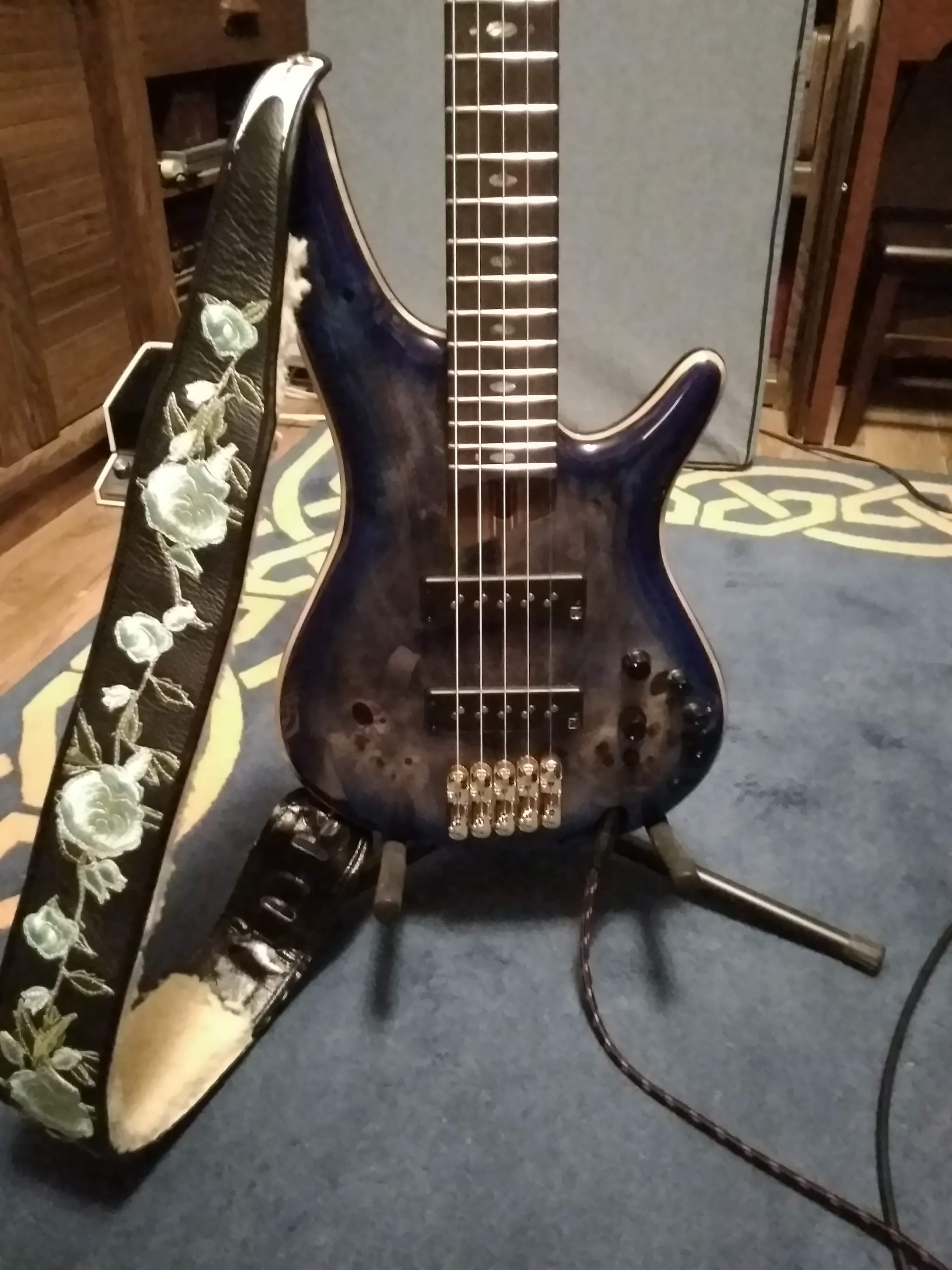
B.

I rummaged in the parts box until I came up with a flattish screw with the appropriate thread diameter and plugged it with that. Pretty much blends with the finish.Nice work, and nice bass. Did you have to plug the hole where the button originally was?
B.

Did that on one of my Thunderbirds, definitely helped.I went ahead, gritted my teeth, and moved the end strap pin about midway up the lower bout.
B.

On Thunderbirds, I drape the strap over the lower bout which locks the bass to my body. Works great, but bass players come up and tell me my strap is screwed up on the break.Did that on one of my Thunderbirds, definitely helped.
If anyone is interested, I found someone with a computerized plasma cutter to make me some strap hook copies and I had a few extra made that I'd part with. PM me for info if interested.

I don’t think it is a thing. Use a decent strap and hang at a reasonable height. Problem solved.
Perhaps sometimes, but it depends...
My Jazz5, pictured in the avatar had a neck dive issue. So, yeah, it's a thing. It was exacerbated by the overall weight, 10 pounds 8 oz (4.76 Kilos). And yes, I bought a very nice strap, which helped. But it pulled on my shoulder more than was comfortable for longer gigs, even though I would be seated much of the time. So while some of the ingenious devices to change the balance point would in fact work, I wanted to lighten this bass overall as well.
The 18mm headstock holes produced a challenge to find ultralite tuners that would fit. For reasons that I won't get into at this time, I went with Hipshot Ultralite (USA) tuners. They shaved a full 6 ounces (170gm) off the headstock. While not a lot of weight overall, I could immediately feel that the strap was no longer torquing on my shoulder. But even more importantly, the overall effect was evident in my first gig. What I hadn't realized was the amount of energy I was putting into keeping the instrument level and balanced. As soon as I took those 6 oz off, I could get up and down the neck so much more effortlessly, which translated directly into musicality and creativity... So yeah... neck dive is a thing.
Another solution that would help with neck dive and distribute weight better for heay instruments is a double strap. There are several designs and makes, but here is one: https://www.amazon.com/Gruv-Gear-DuoStrap-Signature-Ergonomic/dp/B008XG2WQS
As an Amazon Associate, TalkBass may receive commissions from qualifying purchases made via links on this site.

another advantage of Ric5 's and EdO. 's neck dive 'cures' is that by modding the ax this way you shift the the whole instrument to the right (if you're a righty) thus making the lower notes easier to reach...which helps some of us with (L) shoulder/arm issues. so: you eliminate/reduce the dive + shorten the reach to the first position stops.
i used the button extenders on all of my gigging axes for over a year to help a rotator cuff issue heal a bit (which interfered with my playing) even though neck dive was not an issue.
i used the button extenders on all of my gigging axes for over a year to help a rotator cuff issue heal a bit (which interfered with my playing) even though neck dive was not an issue.
Exactly.another advantage of Ric5 's and EdO. 's neck dive 'cures' is that by modding the ax this way you shift the the whole instrument to the right (if you're a righty) thus making the lower notes easier to reach...which helps some of us with (L) shoulder/arm issues. so: you eliminate/reduce the dive + shorten the reach to the first position stops.
i used the button extenders on all of my gigging axes for over a year to help a rotator cuff issue heal a bit (which interfered with my playing) even though neck dive was not an issue.


