• TalkBass has been independent since 1998. Add your voice.
    Create a free account to reply to discussions, view embedded media, and browse with fewer display ads.
    Join freeLog in
    Want zero display ads or expanded classifieds tools? Compare plans.
Another nail in the Tonewood Coffin?

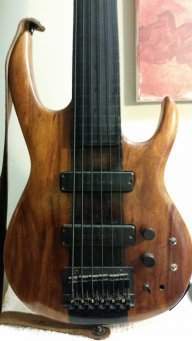
I maintain it’s the pine pitch in the knots, the so-called Tone Goo, it’s sticky, flammable, and tuneful. Kubicki bases have what amounts to a plywood neck, sound pretty Tone-ey to me.

Hey Alex;

How about changing the title to: Another cool example of experiments with the wood structure of a bass body.

We Luthiers should not be fanning the flames of the Tonewood!!! arguments. Those folks are trying to convince each other that we Luthiers are idiots or frauds. Please don't help them.

We should be trying to explain how the engineering and practice works; how the wood frame of a bass can change the tone, and how those changes are the sum of a whole list of factors. And why claiming that a particular wood causes a particular tone doesn't work consistently.

I enjoy the humor too, but let's try to let the Tonewood!!! debates fade away into history, not keep them burning.
 
I hear you @Bruce Johnson , I just find these debates funny, I’ll lay off it for the sake of Greater Luthiery. For The record, I haven’t seen any fraudulent Luthiers on TB, just a handful of extremely knowledgeable and dedicated Craftsmen (like yourself) who are generous enough to provide advice to amateurs like myself.
 
Last edited:
I don't know what is with the tonewood witchunt.

MOST of your "tone" is from scale length, strings, pickups and pre amp, but EVERYTHING else flavors the signal.

Body wood in my experience does less to alter sound compared to the fretboard and neck, but everything matters, even the finish (even if a trivial amount).
 
1783897008556.gif
 
I hear you @Bruce Johnson , I just find these debates funny, I’ll lay off it for the sake of Greater Luthiery. For The record, I haven’t seen any fraudulent Luthiers on TB, just a handful of extremely knowledgeable and dedicated Craftsmen (like yourself) who are generous enough to provide advice to amateurs like myself.
I say argue tonewood all ya want. I'd even say the more "press" it gets the higher the prices are going to go on basses with fancy woods.
Even if someone was able to prove without doubt tomorrow that alder, ash, mahogany, wenge, and purpleheart all sound identical in a solid body, people would still pay for the wood that makes them feel something.
They’re not buying physics — they’re buying meaning.

Look at what's happened in the effects pedal markets - the super-cheap knock-off clones haven't driven DOWN the prices of "the real thing", they've actually driven them up. Cheap plywood basses, were they ever to become a thing, would only cause the prices of all non-plywood basses to go higher, not lower.

Logic has nothing to do with how basses are priced. They're art. They're an identity signal. They're a bolster for self-image. It's marketing, pure and simple. There's a practical upper limit to the actual value of an electric bass. Beyond that limit folks are payin' for whatever holds additional subjective value for them (and I say more power to 'em): the name on the headstock, the wood, the mystique, the mythology. It's about one thing - what they believe, full stop. Someone who's willing to pay 5-figures for someone else's take on a Fender Jazz isn't buying it because it's actually 5 times better - they're not buying it because they need a 5-figure Jazz, they're buying it because they want a 5-figure Jazz.

Not that there's anything wrong with that.
 
I say argue tonewood all ya want. I'd even say the more "press" it gets the higher the prices are going to go on basses with fancy woods.
Even if someone was able to prove without doubt tomorrow that alder, ash, mahogany, wenge, and purpleheart all sound identical in a solid body, people would still pay for the wood that makes them feel something.
They’re not buying physics — they’re buying meaning.

Look at what's happened in the effects pedal markets - the super-cheap knock-off clones haven't driven DOWN the prices of "the real thing", they've actually driven them up. Cheap plywood basses, were they ever to become a thing, would only cause the prices of all non-plywood basses to go higher, not lower.

Logic has nothing to do with how basses are priced. They're art. They're an identity signal. They're a bolster for self-image. It's marketing, pure and simple. There's a practical upper limit to the actual value of an electric bass. Beyond that limit folks are payin' for whatever holds additional subjective value for them (and I say more power to 'em): the name on the headstock, the wood, the mystique, the mythology. It's about one thing - what they believe, full stop. Someone who's willing to pay 5-figures for someone else's take on a Fender Jazz isn't buying it because it's actually 5 times better - they're not buying it because they need a 5-figure Jazz, they're buying it because they want a 5-figure Jazz.

Not that there's anything wrong with that.
Interesting thought. Yes, it's like buying art. Value is in the eye of the beholder. I guess if you feel the bass makes you play or sound better it's worth more than one that doesn't give you that feeling. I think there are some basses that you connect with better than others, but that's not determined by their price tag.

I think the manner in which the bass is made also has more to do with the price than the playing characteristics. Hand made, or limited runs, are certainly going to cost more than mass production runs. Custom will cost more than that, unless from a bass that is limited run, already has a following and is in high demand.

Woods can be very expensive. I know a builder who got enough rare black maple to make exactly 4 basses, and no more was available.

Then there are woods which can no longer be harvested, but a small supply exists through estates, and demolitions.

Does any of that translate into being a better playing or better sounding bass? If you think it does, then it does, for you.