

Enjoy the benefits of a premium membership!
Upgrade Account
-
TalkBass has been independent since 1998. Add your voice.
Create a free account to reply to discussions, view embedded media, and browse with fewer display ads.
Join free Log in
Want zero display ads or expanded classifieds tools? Compare plans.
You are using an out of date browser. It may not display this or other websites correctly.
You should upgrade or use an alternative browser.
You should upgrade or use an alternative browser.
Any DIY pedal builders on TB? Strut your stuff!
- Thread starter SubHuman
- Start date
More options
Who Replied?

DeadEnd FX Subarashi gated germanium fuzz. This is a best-in-class germ fuzz that I've regretted not buying a decade ago when they were still available.
GE transistors are NOS RCA 2N398's received as a gift from a friend's late father's television repair parts stash. Gains and leakage measurements were near the recommended limits, but it was easy to bias and sounds great! Enclosure was painted alternating red and yellow lines using thread and brushes overtop graph paper guidelines.
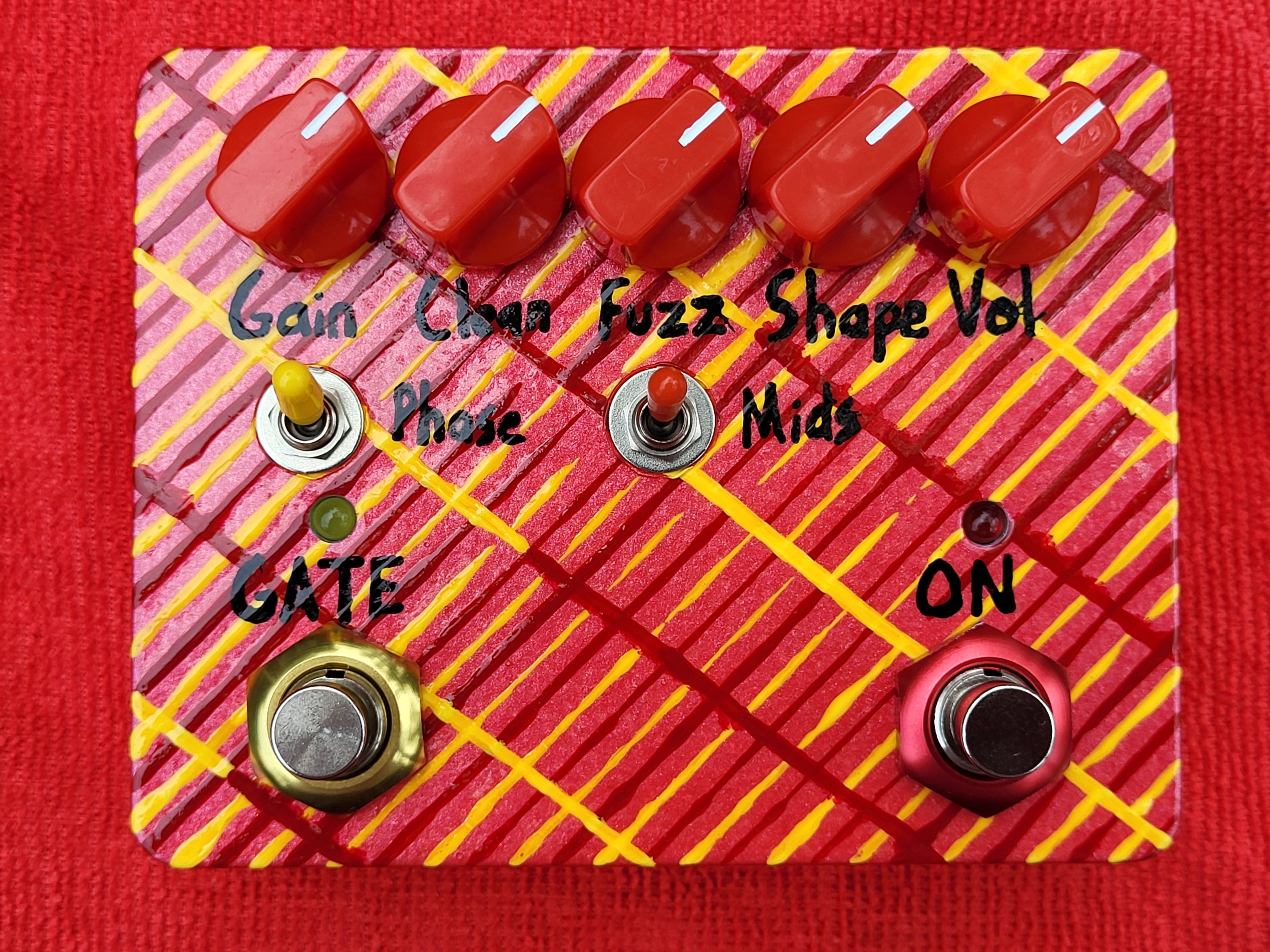
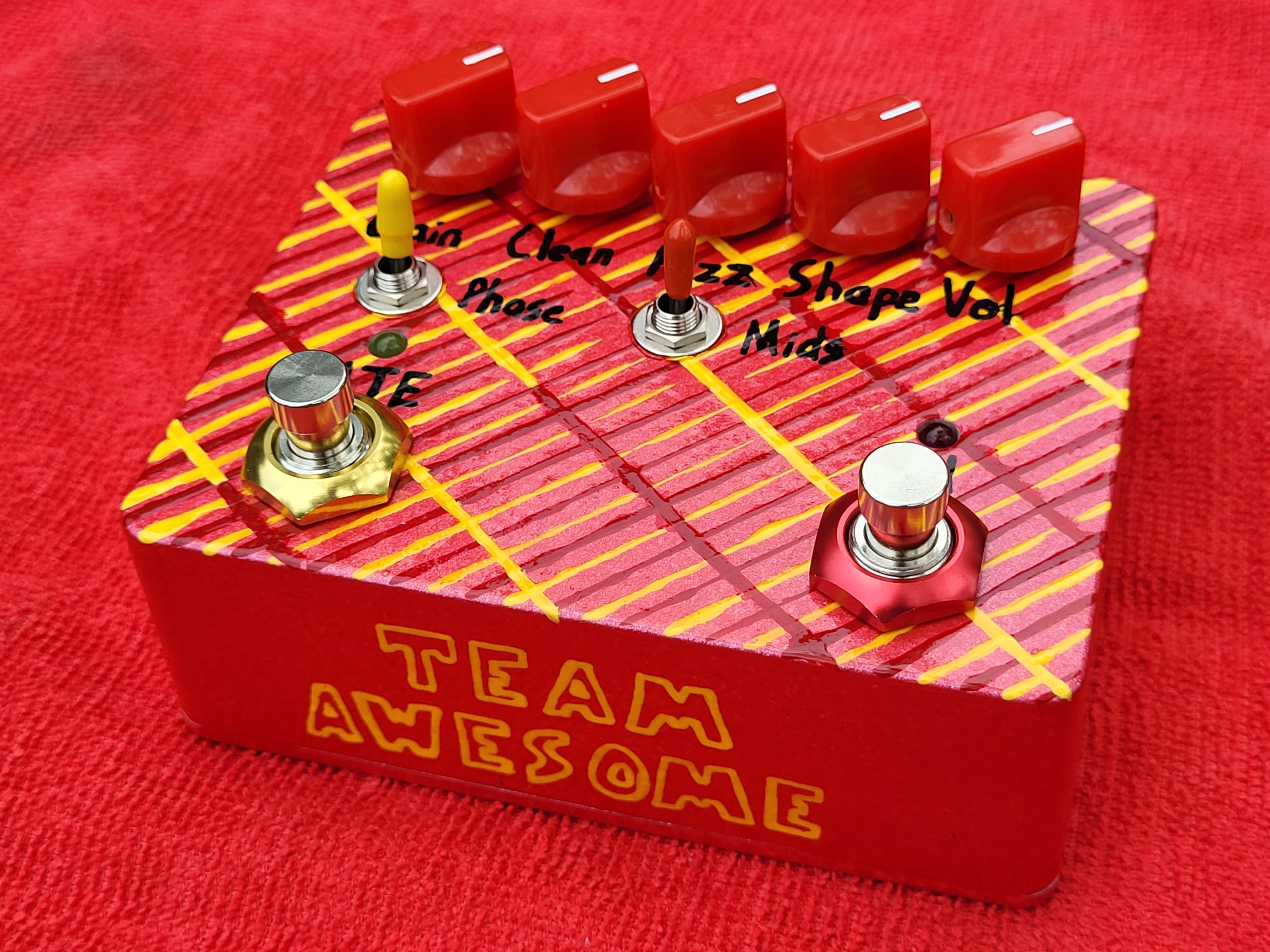
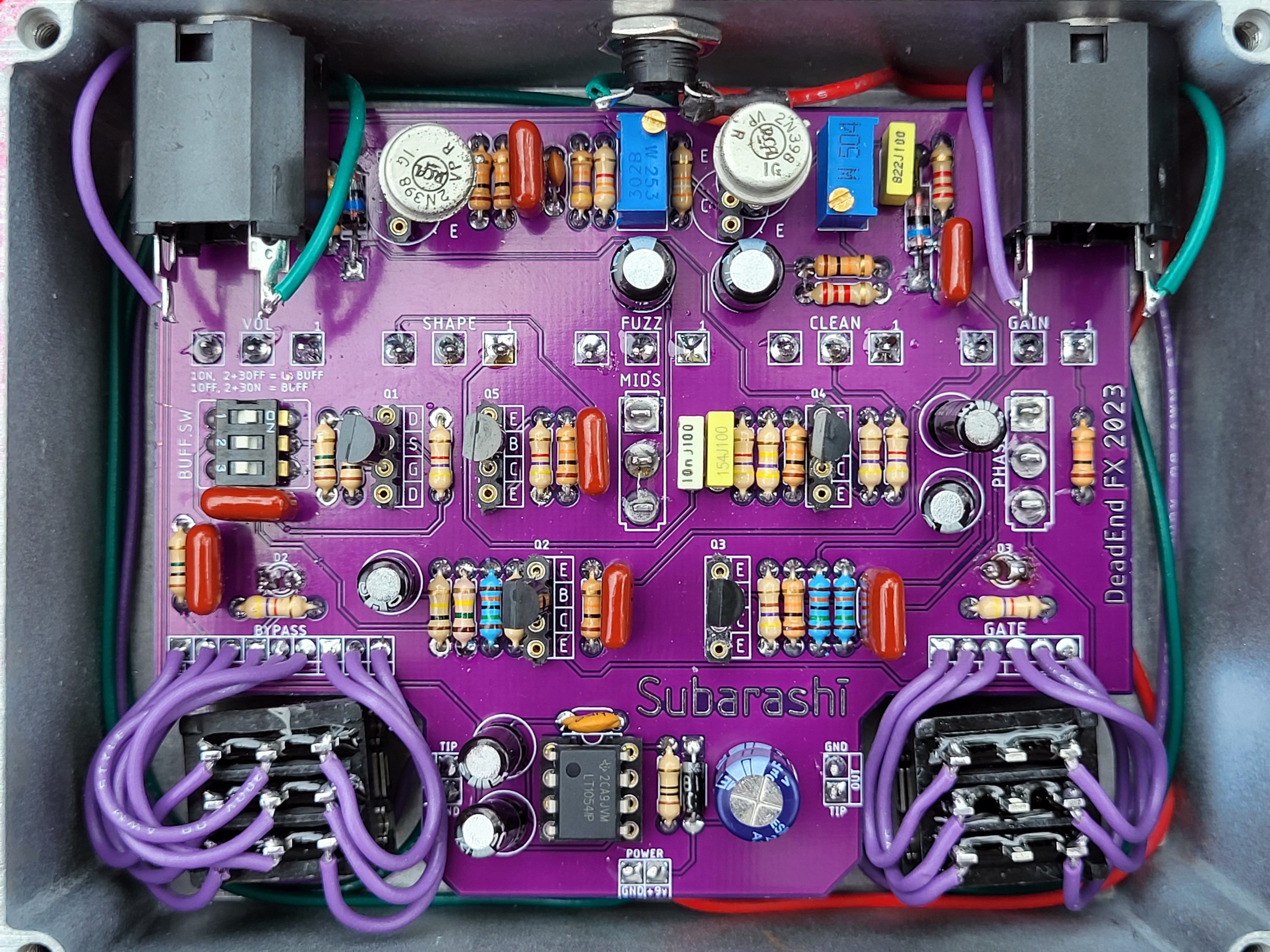
GE transistors are NOS RCA 2N398's received as a gift from a friend's late father's television repair parts stash. Gains and leakage measurements were near the recommended limits, but it was easy to bias and sounds great! Enclosure was painted alternating red and yellow lines using thread and brushes overtop graph paper guidelines.


Aion’s lumitron / Mutron iii
Added…
the “Moog” mod you see (thanks @johnk_10 for the tip) which does something I can’t put my finger on, mu setting is precise, moo setting feels more organic?
The decay knob - borrowed from the meatball using a spare A250k pot and 1k8 resistor - goes from so fast there’s no envelope to slooow - in high pass I can even get something that feels like a auto swell! I need to sort out where the “stock” resistance is as a starting point - but I have no idea why every mutron doesn’t have this mod- it opens up the range of sounds massively.
Bugs - there seems to be crackle noise on the ground in up mode - which is bleeding in via the volume pot - goes away if volume is at full - need to experiment !

Passinwind
I know nothing.
- Dec 3, 2003
- 23,079
- 46,050
- Disclosures
- Designer/Toaster Tech @ Passinwind Electronics
Passinwind
I know nothing.
- Dec 3, 2003
- 23,079
- 46,050
- Disclosures
- Designer/Toaster Tech @ Passinwind Electronics
Today I will be adding a fixed HPF to the pedal in post # 2524. An internal trimpot might make its way into there eventually too.
And then I've just completed a battery powered version of my always on 6 knob EQ pedal variant, which I really like so far:
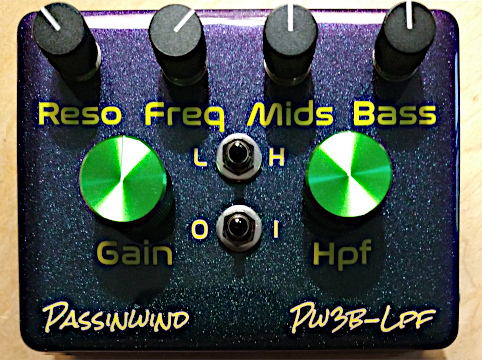
And then I've just completed a battery powered version of my always on 6 knob EQ pedal variant, which I really like so far:

Not sure I I’ve added this here - an Aion Lumitron - Mutron iii clone with added decay knob and “Moog” filter.
I have a source audio C4 on the board and while it sounds great struggled to find a setup workflow to love it.
I accidentally bought the OC10 on eBay and for octaver it is so much more musical than the C4.
So how is an analogue filter? Different but not the step change thr oc10 was. It feels less synthetic and more part of my basses tone - and easier to dial in as less options - but the cost is repeatability and the number of options on the C4 - in a mix probably can’t tell one from another
I have a source audio C4 on the board and while it sounds great struggled to find a setup workflow to love it.
I accidentally bought the OC10 on eBay and for octaver it is so much more musical than the C4.
So how is an analogue filter? Different but not the step change thr oc10 was. It feels less synthetic and more part of my basses tone - and easier to dial in as less options - but the cost is repeatability and the number of options on the C4 - in a mix probably can’t tell one from another
Attachments

I expect there will be another Ictineo/Submarine clone/build, very soon, given that the schematic is floating about in the Inter-ethers now.
Give as good as you get.
Props and respect to those in the DIY community that selflessly share their knowledge.
Give as good as you get.
Props and respect to those in the DIY community that selflessly share their knowledge.
AhemI expect there will be another Ictineo/Submarine clone/build, very soon, given that the schematic is floating about in the Inter-ethers now.
Give as good as you get.
Props and respect to those in the DIY community that selflessly share their knowledge.
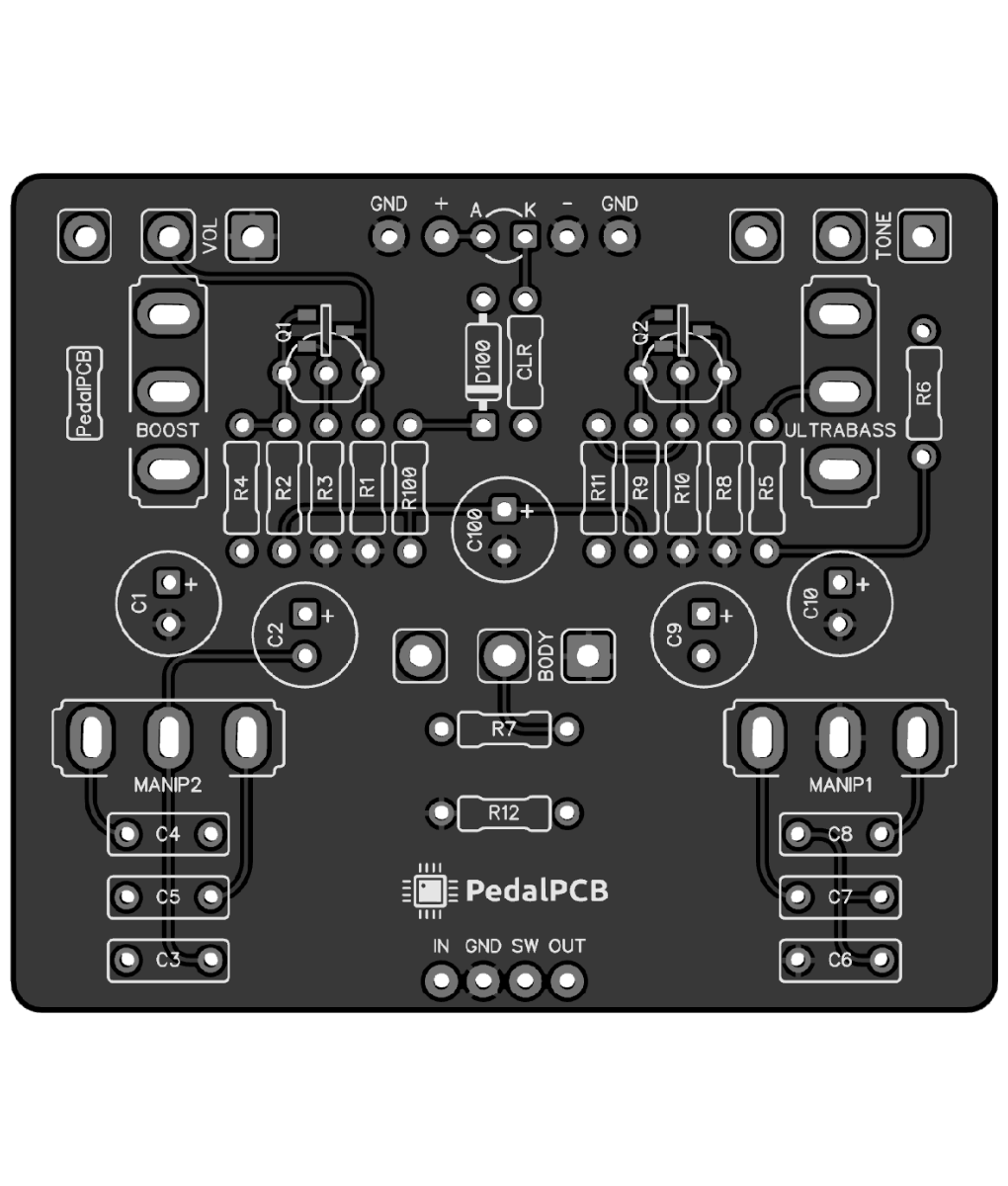
Drebbel Bass Preamp/EQ - PedalPCB.com
Compare to Southampton Pedals Ictineo Preamp/EQ
 www.pedalpcb.com
Or
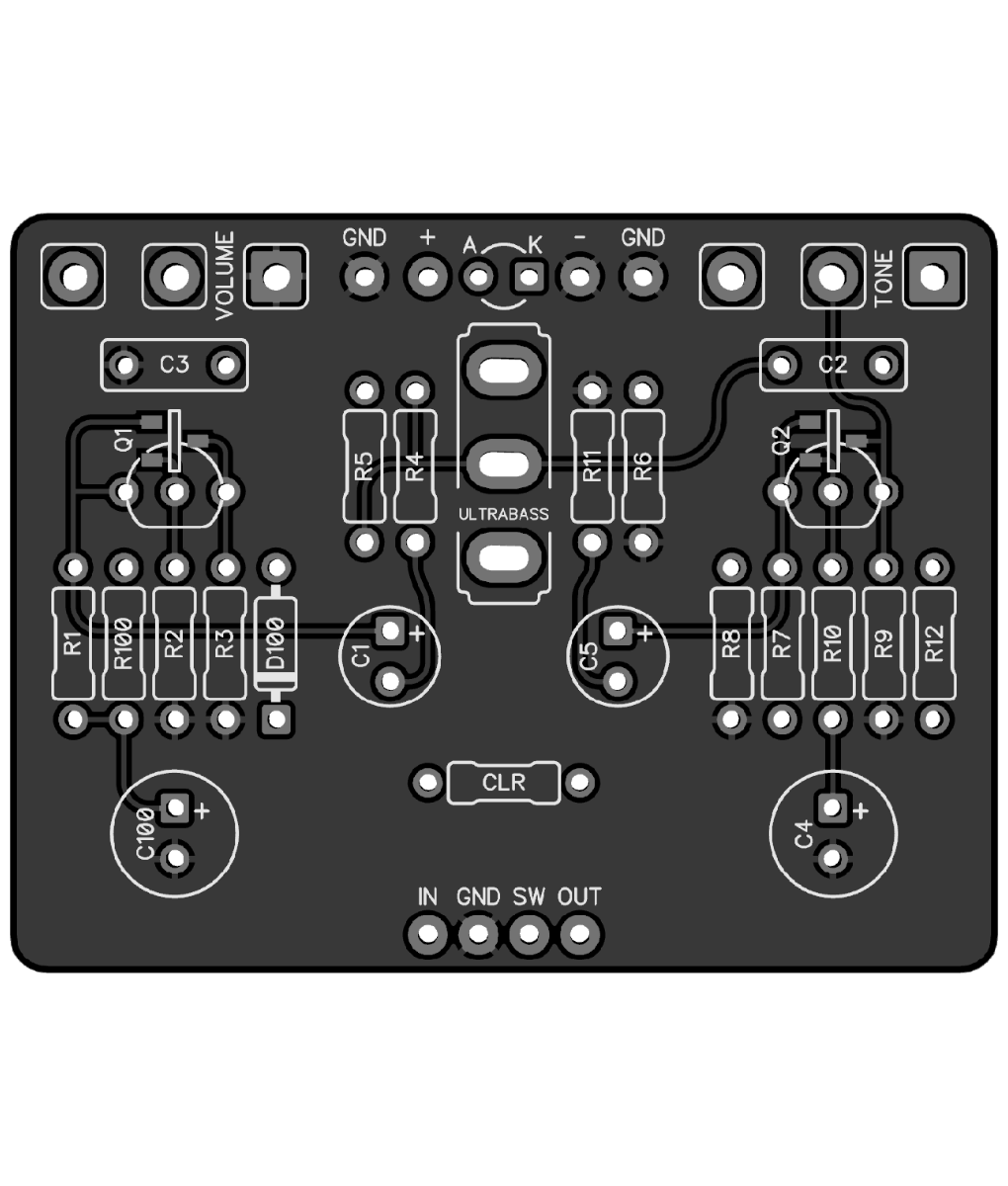
Submersible Preamp - PedalPCB.com
Compare to ElectroniX / Zeibek Submarine Bass Guitar Preamp
www.pedalpcb.com
Thanks Luke, I've got both those PCBs already.Ahem
Drebbel Bass Preamp/EQ - PedalPCB.com
Compare to Southampton Pedals Ictineo Preamp/EQ
Or
Submersible Preamp - PedalPCB.com
Compare to ElectroniX / Zeibek Submarine Bass Guitar Preamp
Plus I've got two original Ictineos as well.
I've supported PedalPCB by purchasing those PCBs you mention, and many other PCBs, just as I've supported several other PCB suppliers who provide us DIYers with schematics — I don't just show up solely asking for handouts without contributing something in return.
There are others with far more knowledge and ability than my own on any of these forums mentioned, but I still try to share what I can. I'm not as active on this forum as I used to be, but I've contributed in the past and will continue to do so here, over at PedalPCB, Madbean, if/when I can.
I appreciate people, such as @Passinwind, for whom I have a great deal of respect, who readily share their wealth of knowledge!
oh - I may have completely misunderstood your post then!Thanks Luke, I've got both those PCBs already.
Plus I've got two original Ictineos as well.
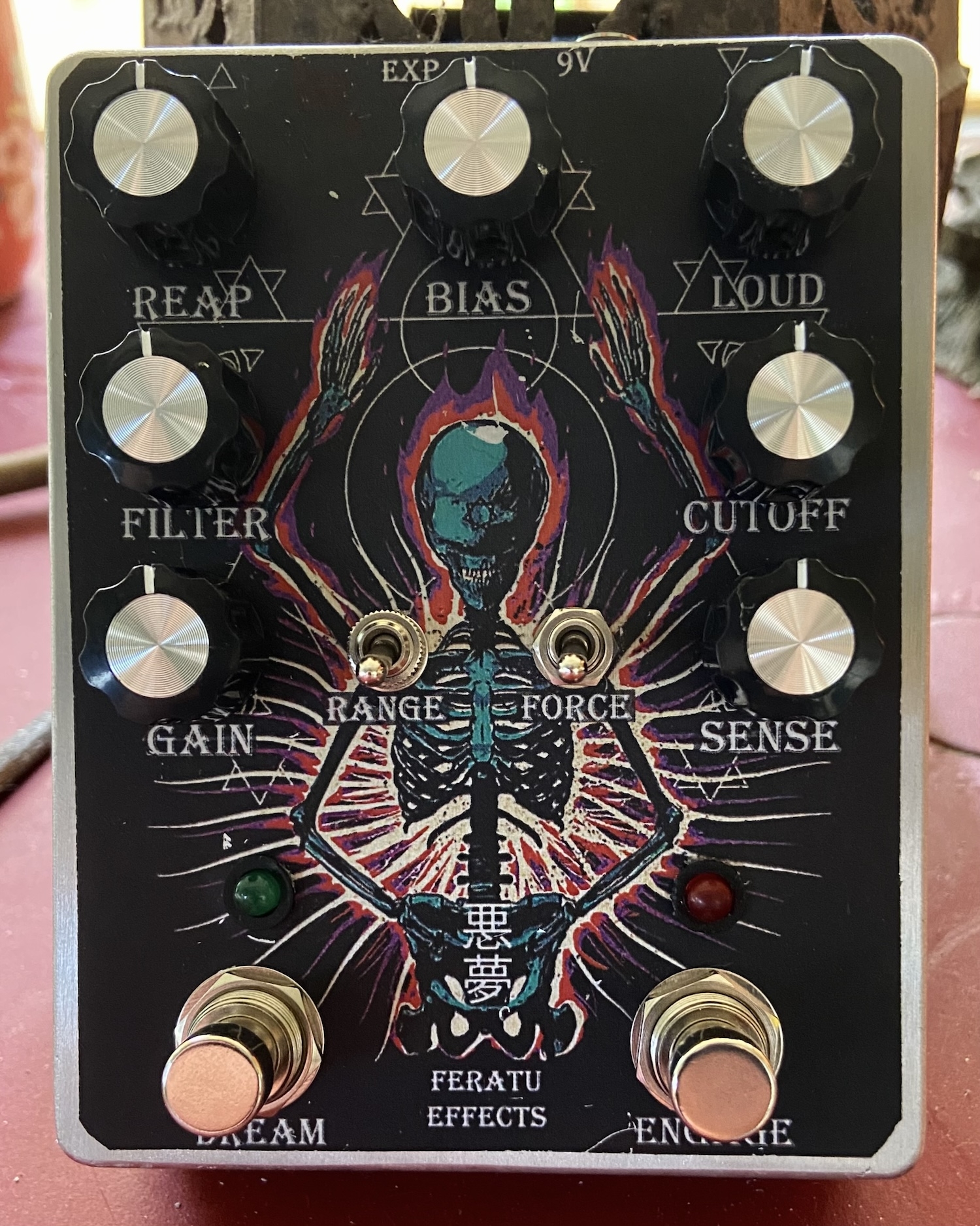
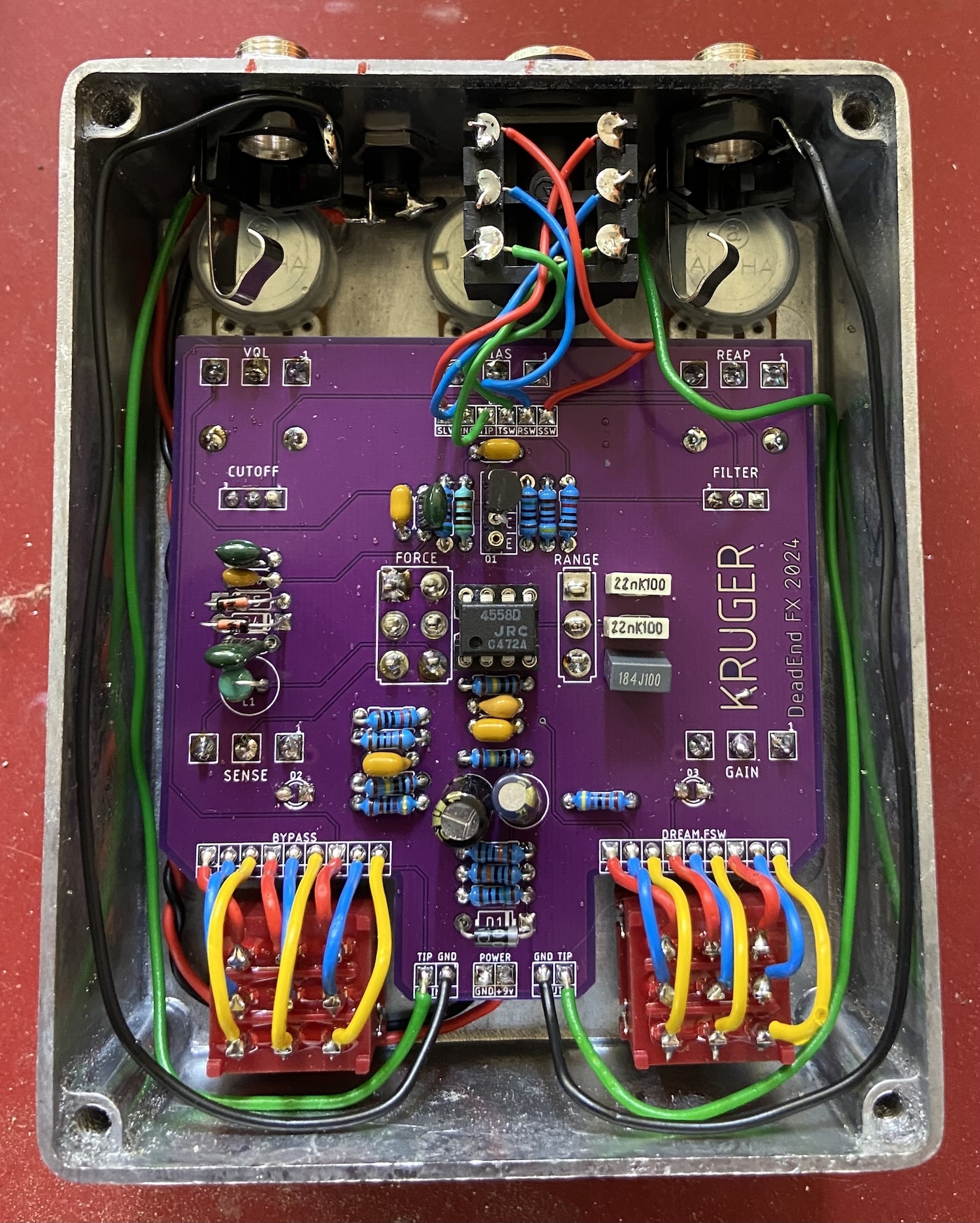
In the spirit of catching up, here's another great circuit from the masterminds at Deadend FX. It's a clone of the Adventure Audio Dream Reaper, which is ... well, it can be a lot of things or produce a wide array of different sounds. A lot of them are actually on the "not too crazy" side, I'd say, although the blurbs usually focus on the crazy stuff that can come out of this box.
It was advertised as a "Fuzzy Feedback Modulation Machine" and Deadend describes it as follows: "It's as if a PLL and a Parallel Universe II had a child together, abandoned it, grew up on the streets, and is all grown up now with a huge chip on it's shoulder."
The Force switch engages a built in „pick up emulator“ controlled by the Sense knob.
The Reap knob controls the strength of the input signal.
The Range switch is a low end capacitor selector for the filter that doubles as a frequency range selector when in Dream mode.
EXP controls the Filter knob.
The Dream foot switch activates self-oscillation mode. Woo-hoo!
 plug in - turn up - drone out
And two builds on vero.
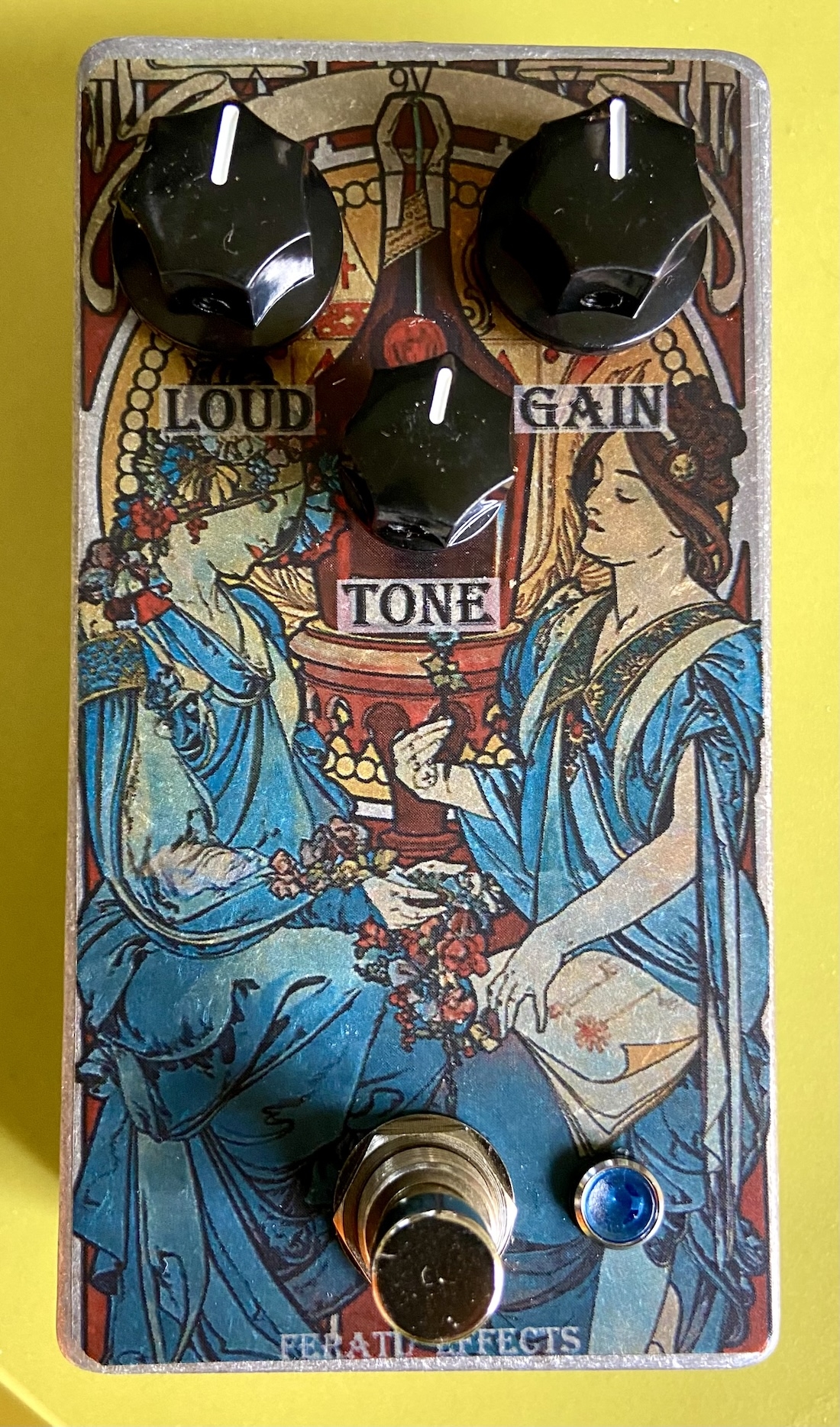
First up, Spaceman Charon. Deadend FX traced it and came out with a PCB, but given the simplicity of the circuit, I decided to try it on vero.
It's a 2 transistor NPN Siilicon / PNP Germanium fuzz, looks like an inverse Percolator circuit, according to Deadend. As usual with Spaceman, there are ferrite beads in there too. I used a 2N2219A and an old Hitachi 2SB75 as transistors and I refferred to the Deadend voltages to bias it.
Does it sound kinda percolaterish? It gets some of that vibe, I'd say. The Gain has a nice range, from dirty boost/OD to fuzzy.
Graphic is some old advertising for champagne.
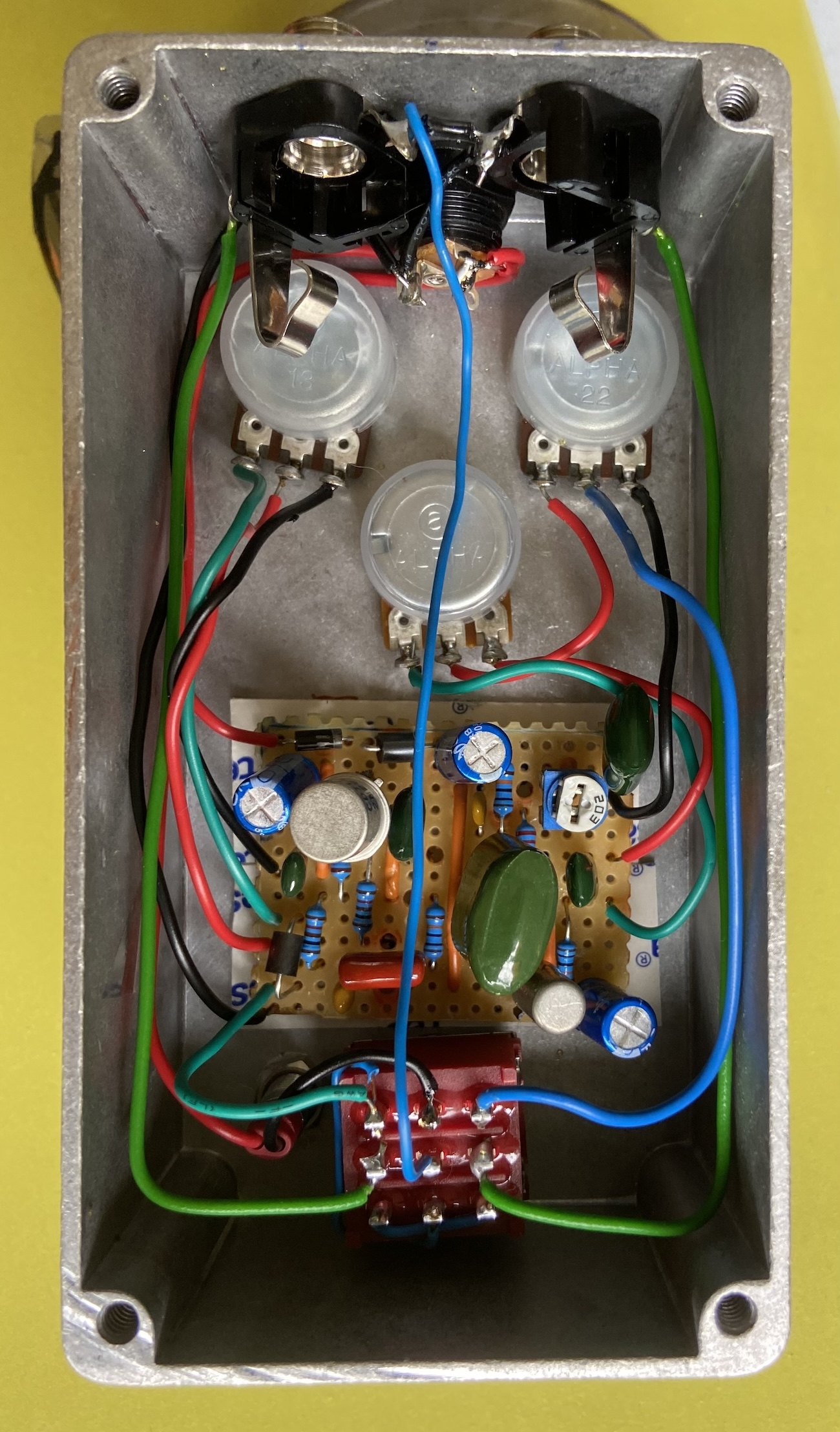
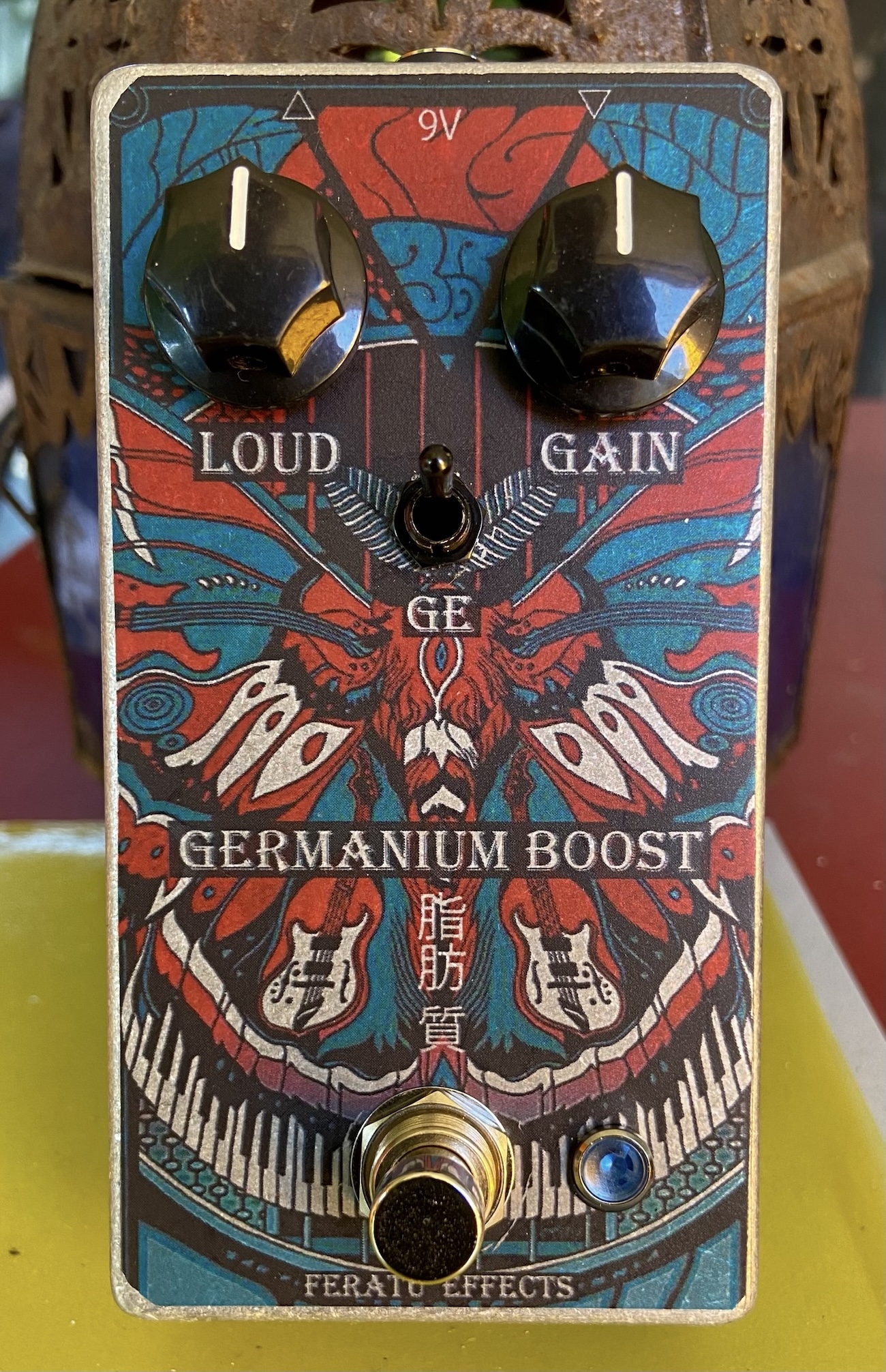
Finally, W&C Phat Phuk. The circuit seemed to be interesting with its J201/Germanium topology.
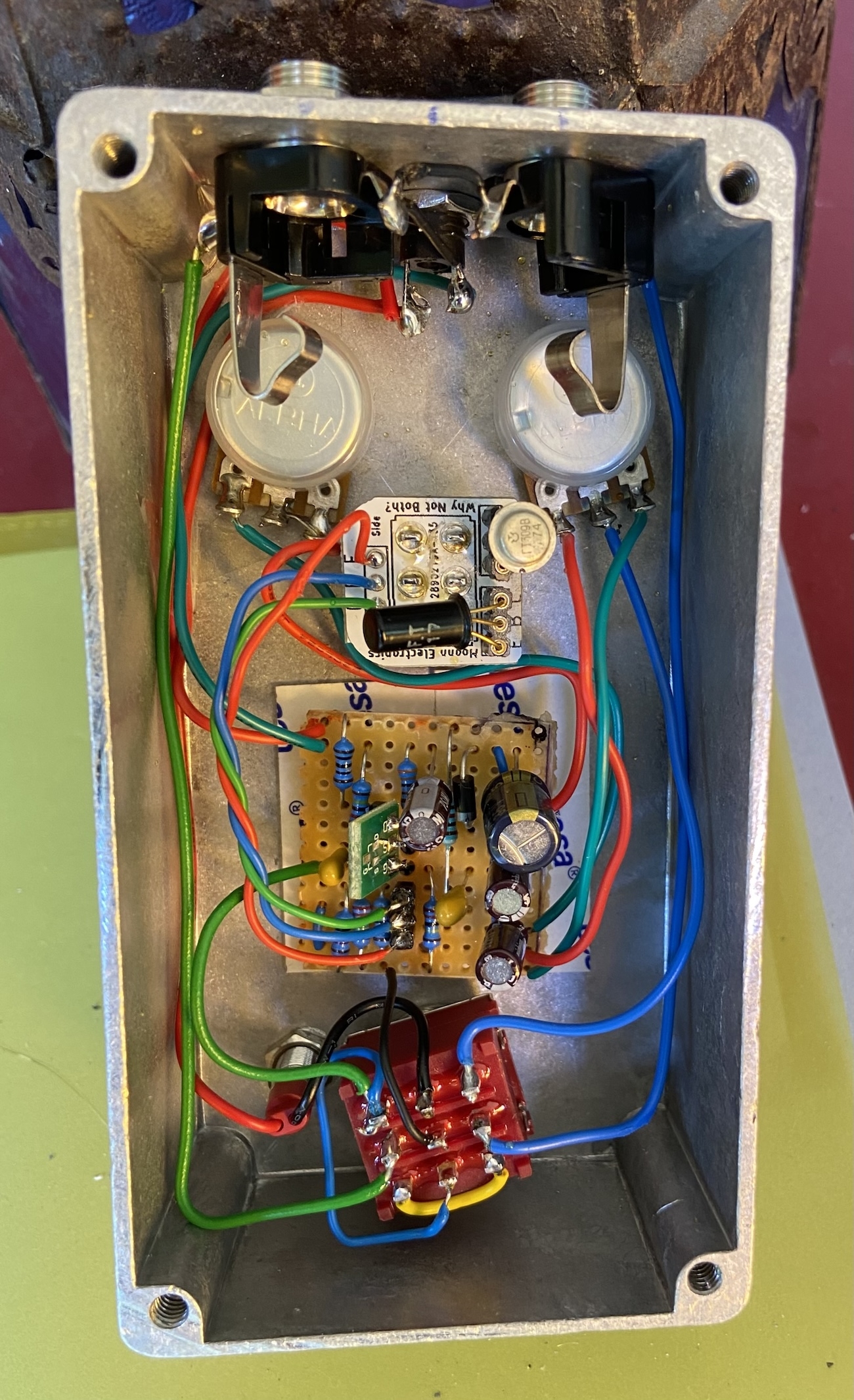
After populating the vero, I remembered that I had some "why not both" transistor PCB laying around, so I made the GE switchable (GT309B / SFT317).
I tried a few GE transistors, some sounded similar, some had a clearly different flavor, and it was interesting to hear that hFe didn't really matter, at least in terms of volume on tap. This pedal can go loud!
Also very cool is the Gain (or bias?) knob outside, it goes from clean boost, to that famous edge of breakup, to dirty boost, to fuzzy.
Great pedal that sounds bloody fantastic on bass .... and guitar. Actually my guitar player said after 2-3 minutes with it "I absolutely need this!". He's currently using an Echoplex preamp/boost that sounded pretty meh next to this one. I guess I'll have to make another one for me - with 4 GE transitors on a rotary
It was advertised as a "Fuzzy Feedback Modulation Machine" and Deadend describes it as follows: "It's as if a PLL and a Parallel Universe II had a child together, abandoned it, grew up on the streets, and is all grown up now with a huge chip on it's shoulder."
The Force switch engages a built in „pick up emulator“ controlled by the Sense knob.
The Reap knob controls the strength of the input signal.
The Range switch is a low end capacitor selector for the filter that doubles as a frequency range selector when in Dream mode.
EXP controls the Filter knob.
The Dream foot switch activates self-oscillation mode. Woo-hoo!
plug in - turn up - drone out And two builds on vero.
First up, Spaceman Charon. Deadend FX traced it and came out with a PCB, but given the simplicity of the circuit, I decided to try it on vero.
It's a 2 transistor NPN Siilicon / PNP Germanium fuzz, looks like an inverse Percolator circuit, according to Deadend. As usual with Spaceman, there are ferrite beads in there too. I used a 2N2219A and an old Hitachi 2SB75 as transistors and I refferred to the Deadend voltages to bias it.
Does it sound kinda percolaterish? It gets some of that vibe, I'd say. The Gain has a nice range, from dirty boost/OD to fuzzy.
Graphic is some old advertising for champagne.
Finally, W&C Phat Phuk. The circuit seemed to be interesting with its J201/Germanium topology.
After populating the vero, I remembered that I had some "why not both" transistor PCB laying around, so I made the GE switchable (GT309B / SFT317).
I tried a few GE transistors, some sounded similar, some had a clearly different flavor, and it was interesting to hear that hFe didn't really matter, at least in terms of volume on tap. This pedal can go loud!
Also very cool is the Gain (or bias?) knob outside, it goes from clean boost, to that famous edge of breakup, to dirty boost, to fuzzy.
Great pedal that sounds bloody fantastic on bass .... and guitar. Actually my guitar player said after 2-3 minutes with it "I absolutely need this!". He's currently using an Echoplex preamp/boost that sounded pretty meh next to this one. I guess I'll have to make another one for me - with 4 GE transitors on a rotary

Finally, W&C Phat Phuk. The circuit seemed to be interesting with its J201/Germanium topology.
After populating the vero, I remembered that I had some "why not both" transistor PCB laying around, so I made the GE switchable (GT309B / SFT317).
I tried a few GE transistors, some sounded similar, some had a clearly different flavor, and it was interesting to hear that hFe didn't really matter, at least in terms of volume on tap. This pedal can go loud!
Also very cool is the Gain (or bias?) knob outside, it goes from clean boost, to that famous edge of breakup, to dirty boost, to fuzzy.
Great pedal that sounds bloody fantastic on bass .... and guitar. Actually my guitar player said after 2-3 minutes with it "I absolutely need this!". He's currently using an Echoplex preamp/boost that sounded pretty meh next to this one. I guess I'll have to make another one for me - with 4 GE transitors on a rotary
Looks great! What hfe did you use for the Ge transistors?

- Feb 16, 2008
- 21,240
- 23,638
- Disclosures
- John K Custom Basses
Probably the last Dam Ezekiel that i'm going to make:


- Feb 16, 2008
- 21,240
- 23,638
- Disclosures
- John K Custom Basses
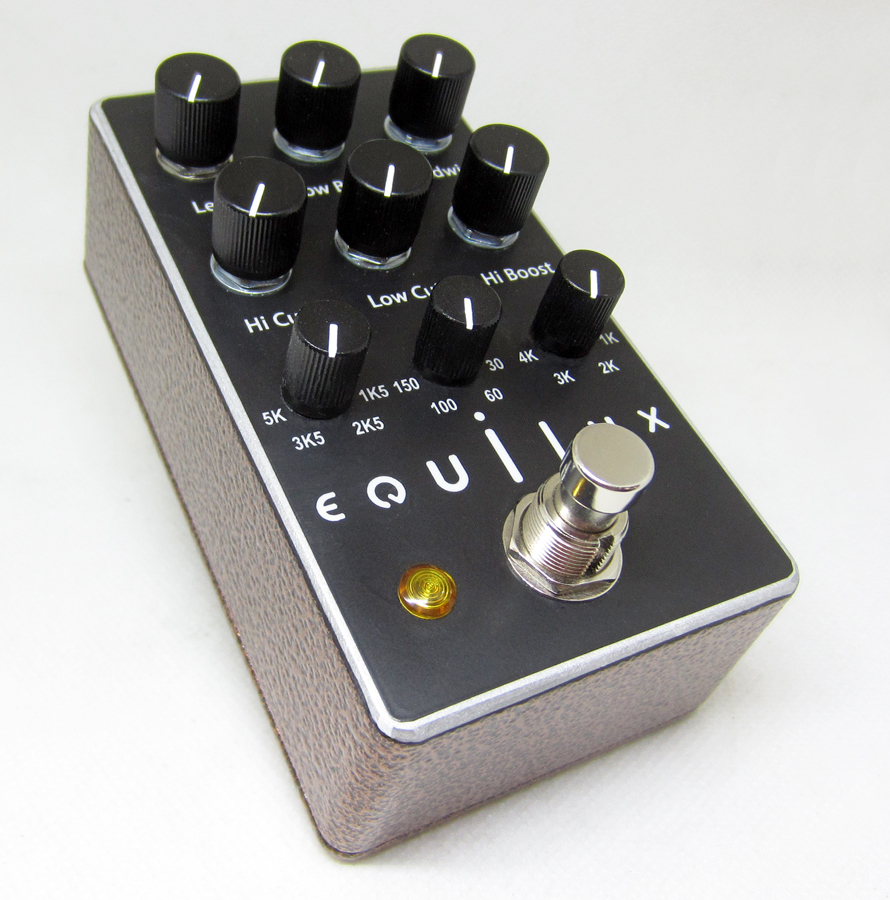
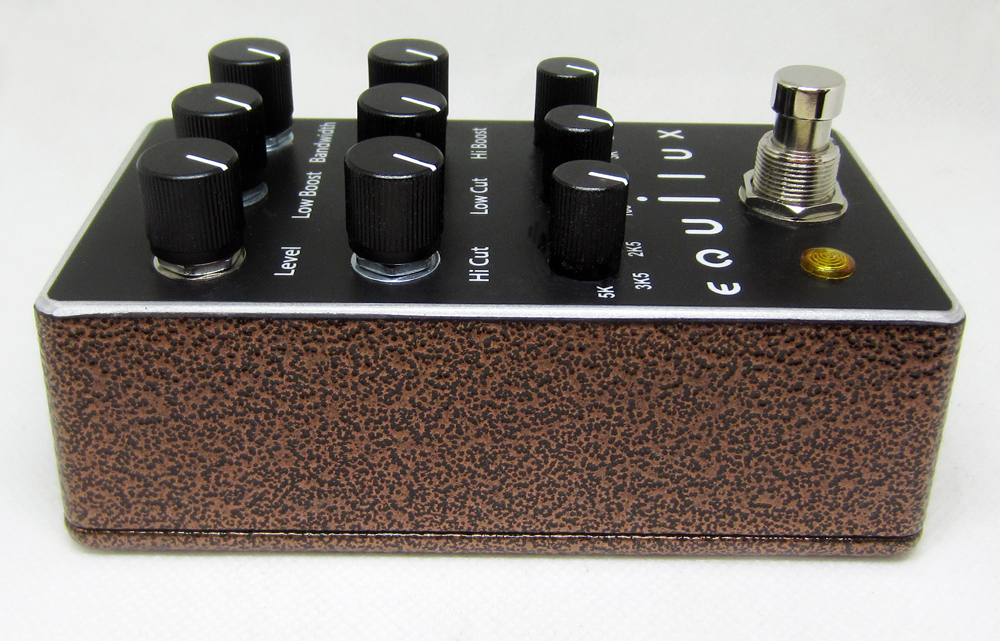
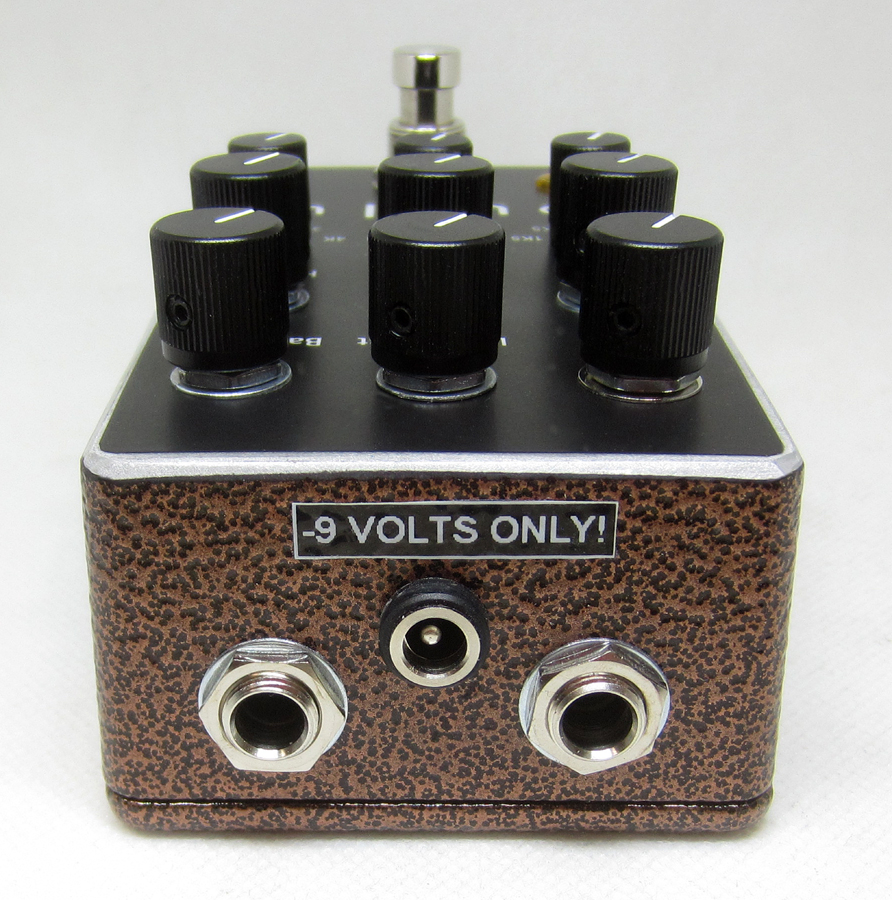
also the last 125B Equilux (Spaceman Equinox clone) that i'm going to make (this one's in a Copper vein enclosure:
One was around 70, the other around 35.Looks great! What hfe did you use for the Ge transistors?

After reading this, I realized I'd never tried my '69 with my bass rig.... went home last night & enjoyed it. Big thanks to @johnk_10 for helping me realize to keep trying what we already have.i love my original fulltone '69 on bass so much (the one with NOS NKT275 transistors that go for very high prices these days!- $600-$1K!) that i built an exact clone of the circuit back in 2018 in a smaller enclosure with a voltage inverter so i could use a standard -9V power supply.
View attachment 5373059

I finished up my Crowther Prunes & Custard on strip board project.
Bone Arrow is how my son used to say bow and arrow, lol.
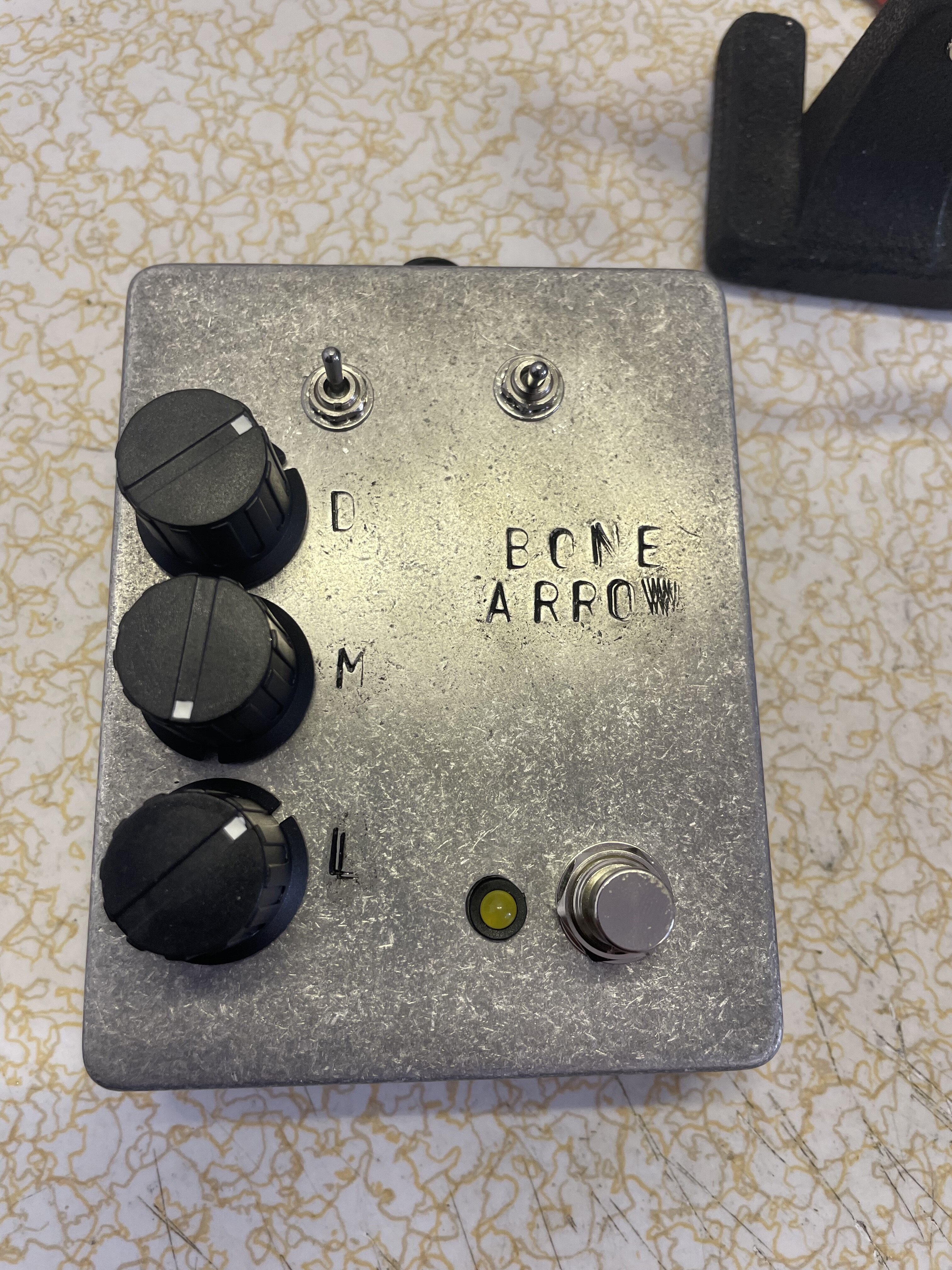
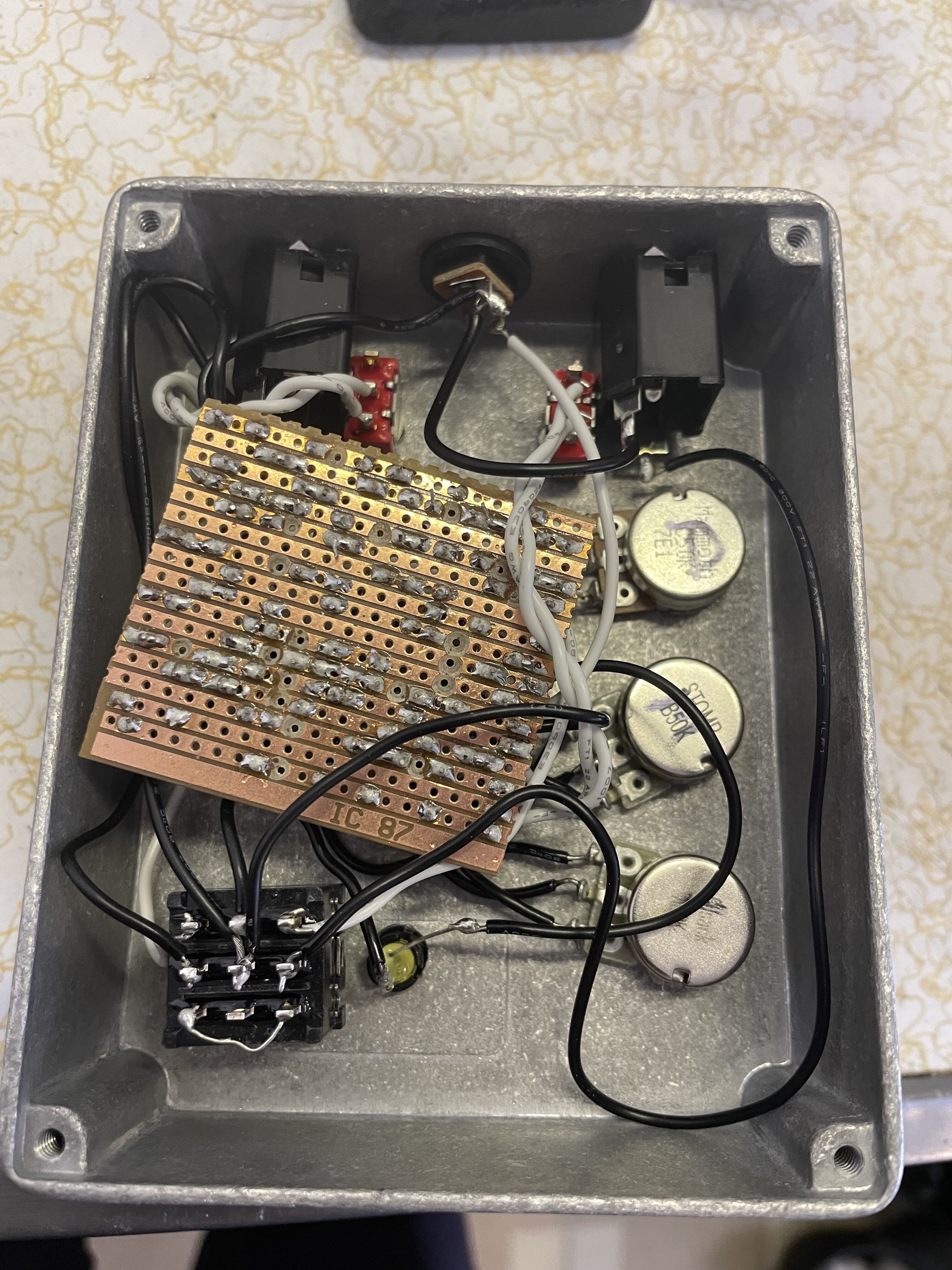
Bone Arrow is how my son used to say bow and arrow, lol.
- Feb 16, 2008
- 21,240
- 23,638
- Disclosures
- John K Custom Basses
How do you find it sound wise? I was recommended it and going to have a go at laying out a 1590b top jacks PCB for one of themI finished up my Crowther Prunes & Custard on strip board project.
Bone Arrow is how my son used to say bow and arrow, lol.
View attachment 7035351
View attachment 7035352


