Proper banjo meaning 4 string
No love for extended range banjos around these parts?


TalkBass has been independent since 1998. Add your voice.
Create a free account to reply to discussions, view embedded media, and browse with fewer display ads.
Join free Log in
Want zero display ads or expanded classifieds tools? Compare plans.
Proper banjo meaning 4 string

Well, $#!+ if we weren't cheating they would have got a real bass player.no, but I have squealed like a pig from time to time - for other reasons.
Just a personal bias since I play banjo. I don't think they sound right, and to me it is "cheating."
Learn to play the damn proper banjo. The kid on the porch did!
Proper banjo meaning 4 string


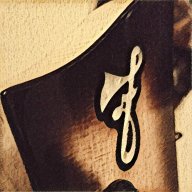
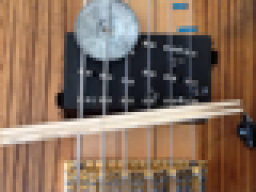
The Changeling 112 is basically a Hathor 1203 with a second, rear-firing 3" mid in its own little open-format chamber. Here are a couple of pictures:


If you look closely, you'll see three switches. The middle switch is labeled "0" and "-7" (you can't see the latter from this angle). Its purpose is to shelve down the rear-firing mid by about 7 dB, for situations where stage volume is an issue. Normally the rear-firing mid is about 3 dB down relative to the front-firing mid over most of the spectrum, so maybe I should have labeled them "-3" and "-10".
Anyway, the idea is related to open-back guitar cabs. You know how a good open-back guitar cab sounds richer and more enveloping than a closed-back cab? Well, the Changeling format leans heavily in that direction, but without the drawbacks of an open-back guitar cab: muddy low end, and sometimes too much stage volume (we have that -7 dB switch).
Something else I had in mind was, making it easier for your fellow musicians to hear what you're doing. For some genres (like "conversational" jazz), and for jam sessions, that can be beneficial.
Since we lose a little bit of internal volume, I went with three small ports instead of the one big port that you had in your Hathor 1203 cabs. With all three ports open, we actually have a little bit more low end than with the one big port, because the tuning frequency is a bit higher. And with one small port plugged, the tuning frequency is virtually identical to the single-port 1203. In fact current-build 1203s now have the three small ports. This raised the weight by about one pound, due to the additional bracing needed, so now the Hathor 1203 is a 26-pound cab.
I think the Changeling format is my future, and plan to do a bunch of different Changeling cabs, including a "112T", which uses a Taller box than the regular version, same footprint, giving us a bit more low end.

There seems to be a resonance or feedback of some kind. I can reproduce it at the same pitches with two different basses, in two different rooms, on the floor or elevated on a cushion, and with the amp physically removed from the cab. In every case the behavior is the same.
...I'm trying to figure out why this particular amp has such a problematic interaction with the Hathor when two other tube amps have worked wonderfully.
A few minutes ago I was playing my passive 5-string J Fodera through my Baer Valkyrie in tube mode (using just a bit of EQ for the room), driving my one-port Hathor 1203 with both switches down. With the pickups or tone pot in any amounts, with any technique, the little Hathor conveyed it all: the dynamics and harmonic complexity; the wooly, husky, thick, metallic, detailed, sweet, and sonorous voice of the instrument; all beautifully, faithfully, and spatially presented.
This design is a real honey, Duke. So you improved upon it? Subjectively/aesthetically as well as measurably?
Also, I wonder if you will still make the old Hathor 1203 cabinet if someone requests it. Thanks either way. I know that nothing lasts forever!
The Hathors are still very much in production, as they are more competitive from a weight and cost standpoint.

if Duke can't answer, ask Aged Horse.I have a question for the Collective, and possibly Duke himself.
I have a Hathor 1203 that I've run successfully with an Ashdown LB-30 and CTM-15, both all tube (as well as solid state amps). But I'm trying it with an Ampeg PF-20t all-tube amp and it's not quite working out.
There seems to be a resonance or feedback of some kind. I can reproduce it at the same pitches with two different basses, in two different rooms, on the floor or elevated on a cushion, and with the amp physically removed from the cab. In every case the behavior is the same.
With the port open, notes seem to resonate around Eb and E played on either the E- (open and octave) or the A strings. With the port plugged, it happens around B and C on the E and A. This occurs at a modest at-home practice volume, and it's not subtle or musical.
Maybe this amp/cab pairing isn't going to work, which is fine. But I would like to understand better what's going on even if I ultimately unload the Ampeg. I'm generally aware of the interaction between tube power amps and loudspeakers (I'm also an EE), but I'm trying to figure out why this particular amp has such a problematic interaction with the Hathor when two other tube amps have worked wonderfully.
Any thoughts or similar experiences?

Any word if duke would build a TC2x10?
The Hathor 1203 hit an amazing "sweet spot", I'm not sure it can be beat as an all around 12" cab.
Any word if duke would build a TC2x10?
I would very much be into that. Especially in a vertical configuration that's wide enough for, say, a Mesa D800 (think it's one of the wider class D heads).
Thank you!
I don't plan to pull the plug on the Hathors unless the market tells me to.
Yup!
I looked it up and the D800's footprint seems to be 10 5/8" wide by 11 1/4" deep, is that right? If so, no problem on the width. But on the depth, how close do the feet come to the front and rear edges? Or, to put it another way, what's the shallowest the cab could be and still work with that amp?
I looked it up and the D800's footprint seems to be 10 5/8" wide by 11 1/4" deep, is that right? If so, no problem on the width. But on the depth, how close do the feet come to the front and rear edges? Or, to put it another way, what's the shallowest the cab could be and still work with that amp?
I haven't run into the situation you describe before, and I've been trying to think of things that might be causing a resonance or feedback with the one amp but not with others that should have been more susceptible to that sort of thing. Thus far I far have come up short - I don't have any good suggestions. So like you, I'm hoping someone else has some ideas.
if Duke can't answer, ask Aged Horse.
Aside from sounding great together the subway is a perfect fit on top of the 1203. With the back edges aligned the feet straddle the handle recess but remain inside the corners while the front doesn't block the top mid vents. Shown with optional disco ball attachment.
View attachment 2127166