

Enjoy the benefits of a premium membership!
Upgrade Account
-
TalkBass has been independent since 1998. Add your voice.
Create a free account to reply to discussions, view embedded media, and browse with fewer display ads.
Join free Log in
Want zero display ads or expanded classifieds tools? Compare plans.
You are using an out of date browser. It may not display this or other websites correctly.
You should upgrade or use an alternative browser.
You should upgrade or use an alternative browser.
AudioKinesis Cabs Part VI...
- Thread starter Thor
- Start date
More options
Who Replied?
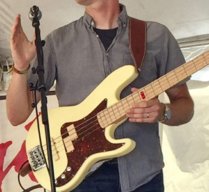
Hey Fourstr00 - thanks for the report. The H1203 has great cut-through clarity. What kind of speaker cable is that with the purple ends? Thanks, DM
It’s an older Carver Audio cable I’ve had for almost 20 years. Pretty sure they’re not making ‘em anymore.


Sounds great and I want that gig. Joy Division music at a brewing company. Dude.
Best part is we got asked back! We play again Sept. 15 at Workshop Brewing, Traverse City, Michigan!! Come on out!!!
Thank you so much! It means a lot to me!great video shrigg like the sound of your cab and playing.

I gotta ask: What's the cheater circuit do?
As Duke explained to me, it consists of a capacitor wired in parallel with the drivers, and an inductor wired in series with them. It has the effect of boosting the frequency response in the range of 3-5 kHz by a few dB, to add some snap without having to use a crossover, mid driver or compression driver and horn. He said that since the Birdhaus cab has two drivers facing out the front and one out each side, and bass frequencies are non-directional, having a boost in the upper mids and highs helped dispersal of those more directional frequencies so you wouldn't get the effect of hearing the bass out of all four drivers but only hearing the mids and highs out of the one(s) more or less aimed at your listening position.
However, I find myself doing a lot of subtractive EQ up around 4-5 kHz, and slightly boosting in the range of 700 Hz-1.3 kHz, so I wondered if disabling the cheater circuit might suit my particular needs a little better; it might allow me to run my EQ flatter than I do now and maybe benefit from less noise and phasey-ness or something. It might also make the cab seem too dark; I'll have to mess with it disabled for a few practices and see how I like it.
As Duke explained to me, it consists of a capacitor wired in parallel with the drivers, and an inductor wired in series with them. It has the effect of boosting the frequency response in the range of 3-5 kHz by a few dB, to add some snap without having to use a crossover, mid driver or compression driver and horn. He said that since the Birdhaus cab has two drivers facing out the front and one out each side, and bass frequencies are non-directional, having a boost in the upper mids and highs helped dispersal of those more directional frequencies so you wouldn't get the effect of hearing the bass out of all four drivers but only hearing the mids and highs out of the one(s) more or less aimed at your listening position.
However, I find myself doing a lot of subtractive EQ up around 4-5 kHz, and slightly boosting in the range of 700 Hz-1.3 kHz, so I wondered if disabling the cheater circuit might suit my particular needs a little better; it might allow me to run my EQ flatter than I do now and maybe benefit from less noise and phasey-ness or something. It might also make the cab seem too dark; I'll have to mess with it disabled for a few practices and see how I like it.
Ok. Thanks!
I wonder if anyone captured any video of Fourstr00's live gig, which we could view here? Looks like an interesting lineup. Also, thanks to Shrigg for posting his gig video. It's cool to see what various AK/TBers are doing, musically!
Sorry I missed this before - yeah, we do have some video and I’ll post it when we get home from the weekend. Four of the members of this group also work in the Irish band so we’re all down in Peoria for Erin Feis. It’s HOT out but great crowd.
Of course, I brought the Hathor. I really don’t know how I bothered with even a 2x10 for all these years when something like the 1203 is in production. I’ll never switch back. These cabs just flat work.
Duke and/or general Birdhaus-using TBers...
I was looking at some pictures of an earlier version of the Birdhaus 48 design where the cabinet was narrower and deeper, and the side-firing drivers were about halfway up each side and toward the front. The ports on the back were located at the top and bottom, with the jackplate in the middle.
For comparison, my Birdhaus 48 is the same in width and depth, and the side-firing speakers are at the top of each side. There's a port at the top rear, and at the bottom rear the port is shifted over to the right to make room for the jackplate on the lower left.
I have no complaints about the configuration of my cab, but I am curious as to whether the shape change was made to achieve a different sound, or in response to a form factor problem (I said form factor!!!) or what. Both configurations look pretty cool to me, but I suppose maybe the other earlier configuration might limit what heads you could put on top without edging into "aesthetic blight of lateral overhang."
I was looking at some pictures of an earlier version of the Birdhaus 48 design where the cabinet was narrower and deeper, and the side-firing drivers were about halfway up each side and toward the front. The ports on the back were located at the top and bottom, with the jackplate in the middle.
For comparison, my Birdhaus 48 is the same in width and depth, and the side-firing speakers are at the top of each side. There's a port at the top rear, and at the bottom rear the port is shifted over to the right to make room for the jackplate on the lower left.
I have no complaints about the configuration of my cab, but I am curious as to whether the shape change was made to achieve a different sound, or in response to a form factor problem (I said form factor!!!) or what. Both configurations look pretty cool to me, but I suppose maybe the other earlier configuration might limit what heads you could put on top without edging into "aesthetic blight of lateral overhang."

Passinwind
I know nothing.
- Dec 3, 2003
- 23,069
- 46,012
- Disclosures
- Designer/Toaster Tech @ Passinwind Electronics
Duke and/or general Birdhaus-using TBers...
I was looking at some pictures of an earlier version of the Birdhaus 48 design where the cabinet was narrower and deeper, and the side-firing drivers were about halfway up each side and toward the front. The ports on the back were located at the top and bottom, with the jackplate in the middle.
For comparison, my Birdhaus 48 is the same in width and depth, and the side-firing speakers are at the top of each side. There's a port at the top rear, and at the bottom rear the port is shifted over to the right to make room for the jackplate on the lower left.
I have no complaints about the configuration of my cab, but I am curious as to whether the shape change was made to achieve a different sound, or in response to a form factor problem (I said form factor!!!) or what. Both configurations look pretty cool to me, but I suppose maybe the other earlier configuration might limit what heads you could put on top without edging into "aesthetic blight of lateral overhang."
I was one of the beta testers for the older one. It was really deep and with the back ports stage placement was generally a bit problematic at the places I used it at. Sounded great though, and my bandmates loved the way it worked for onstage monitoring for them.
I was one of the beta testers for the older one. It was really deep and with the back ports stage placement was generally a bit problematic at the places I used it at. Sounded great though, and my bandmates loved the way it worked for onstage monitoring for them.
Huh, that makes sense. I hadn't thought of the depth/ports/proximity to back wall aspect. Thanks!
Passinwind
I know nothing.
- Dec 3, 2003
- 23,069
- 46,012
- Disclosures
- Designer/Toaster Tech @ Passinwind Electronics
Huh, that makes sense. I hadn't thought of the depth/ports/proximity to back wall aspect. Thanks!
On a regular sized stage it would have been no problem, but I was doing lots of coffeehouse open mikes and the like at that time. I'm still quite interested in something like a very small BH cab or maybe the upward firing deal @shwashwa has been asking for.

Up on one of those folding temp stages about 2 feet off the floor last night, the port plug makes all the difference. Love everything about the 1203.

On a concrete gazebo tonight. Beautiful park; lawn chair crowd. Playing till sunset.
Photos, top down: Mesa D800, Changeling 112 (serial #1), Hathor 1203 Tall. Bass is my wonderful new Lakland 55-14.
Hot damn! What a great sound.
Even minor tweaks to the onboard EQ made a noticeable difference. Chunky. Crunchy. Both thick and bright. All useful and BIG. I don't think I could have dialed in a poor tone.
Thanks Duke! And Mesa and Lakland. There's nothing left to buy. Mmmm. Well maybe I should get a .........
Photos, top down: Mesa D800, Changeling 112 (serial #1), Hathor 1203 Tall. Bass is my wonderful new Lakland 55-14.
Hot damn! What a great sound.
Even minor tweaks to the onboard EQ made a noticeable difference. Chunky. Crunchy. Both thick and bright. All useful and BIG. I don't think I could have dialed in a poor tone.
Thanks Duke! And Mesa and Lakland. There's nothing left to buy. Mmmm. Well maybe I should get a .........
Attachments


Last edited:

Al Kraft
Supporting Member
- May 2, 2016
- 10,771
- 40,450
- Disclosures
- Mesa Boogie beta product tester and player support
The D-800/800+ and one of Duke's cabs (two is better) are nothing short of spectacular IME.On a concrete gazebo tonight. Beautiful park; lawn chair crowd. Playing till sunset.
Photos, top down: Mesa D800, Changeling 112 (serial #1), Hathor 1203 Tall. Bass is my wonderful new Lakland 55-14.
Hot damn! What a great sound.
Even minor tweaks to the onboard EQ made a noticeable difference. Chunky. Crunchy. Both thick and bright. All useful and BIG. I don't think I could have dailed in a poor tone.
Thanks Duke! And Mesa and Lakland. There's nothing left to buy. Mmmm. Well maybe I should get a .........
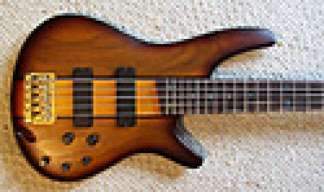
The D-800/800+ and one of Duke's cabs (two is better) are nothing short of spectacular IME.
I can confirm that.

The D-800/800+ and one of Duke's cabs (two is better) are nothing short of spectacular IME.
Yes! Keep saying things like this! My D800+ aches for the arrival of it's H1506 mate.


I only ordered a couple weeks ago, but it FEELS LIKE a couple months.
Al Kraft
Supporting Member
- May 2, 2016
- 10,771
- 40,450
- Disclosures
- Mesa Boogie beta product tester and player support
It will be worth the wait!Yes! Keep saying things like this! My D800+ aches for the arrival of it's H1506 mate.
I only ordered a couple weeks ago, but it FEELS LIKE a couple months.


The D-800/800+ and one of Duke's cabs (two is better) are nothing short of spectacular IME.
Forte isn't bad either, though lately I've been using the D800 more


