I think Bill was just shorthanding a little bit. He's well aware that displacement isn't the only number that matters. Not to put words in his mouth but I think he was just assuming we all know that the sensitivity of a 3015LF is fairly similar to most 4x10s (within a db or two).

Enjoy the benefits of a premium membership!
Upgrade Account
-
TalkBass has been independent since 1998. Add your voice.
Create a free account to reply to discussions, view embedded media, and browse with fewer display ads.
Join free Log in
Want zero display ads or expanded classifieds tools? Compare plans.
You are using an out of date browser. It may not display this or other websites correctly.
You should upgrade or use an alternative browser.
You should upgrade or use an alternative browser.
Avatar 3 way 15/6/tweet
- Thread starter sleepytime
- Start date
- Status
- Not open for further replies.
More options
Who Replied?
- Nov 24, 2008
- 4,343
- 7,163
- Disclosures
- Owner & designer, AudioKinesis; Auth. mfg, Big E (Home Audio only)
What Duke has done in two-way is exactly what I would have done - and for the same reasons.
And what greenboy has done is a three-way exactly as I would have.
Regarding dispersion, in my opinion that's arguably more important than the frequency response. Let me explain. You see, you can do a lot to fix the frequency response with EQ or even DSP, but those tools can't do anything about the radiation pattern. In some ways greenboy's radiation pattern is better than mine (it's wider), and in some ways mine may be a bit better (it's more uniform). I don't really have a strong philosophical preference between the two. The Jack 12 also looks very interesting to me, as it produces a wide, uniform radiation pattern down considerably lower than my approach, along with sufficient x-max to handle a lot of low-end EQ.
As for the Avatar 3-way... that d@mn thing is just about my worst nightmare. Five hundred bucks... and four hundred introductory price... I don't see how he does it. A most grudging but no less sincere tip of my virtual hat to Dave at Avatar.

- Dec 18, 2000
- 13,201
- 340
- Disclosures
- greenboy designs: fEARful, bassic, dually, crazy88 etc
As for the Avatar 3-way... that d@mn thing is just about my worst nightmare. Five hundred bucks... and four hundred introductory price... I don't see how he does it.
He cut all the corners you either can't or won't cut ; } ...and he's in the position to do it. But I mean, if I didn't have my stuff, I'd be buying your stuff. The extra dollars spent I know would give me the better performance and sound. And that's not "buying boutique brandname" stuffiness. It's that I recognize that the dollars will have made a difference I can appreciate sonically.
But Avatar is just one of the many reasons I decided not to go into the enclosure business. And you're another one.
The Jack 12 is amazing at filling a room. Seriously amazing. If I were the kind of player who could use all that extra midrange response I would be using mine as a bass cab a lot more often.
I would not be nervous about running PA mains for a medium sized club with my 2-jack stack, including kick drum, though, as long as the kick didn't need to be insanely low and I had a decent limiter.
One thing I will say about the cone midrange that I like better than the Jack is that the Jack seems to have narrower vertical dispersion. In a bass rig for stage monitoring, the vertical dispersion pattern is a big plus for me -- the Jack requires being tilted back for me to hear it when I'm standing up close. The fEarful, 3-6 feet is fine for me. I can literally stand on right up next to it and hear OK, although it's better a few feet out.
I would not be nervous about running PA mains for a medium sized club with my 2-jack stack, including kick drum, though, as long as the kick didn't need to be insanely low and I had a decent limiter.
One thing I will say about the cone midrange that I like better than the Jack is that the Jack seems to have narrower vertical dispersion. In a bass rig for stage monitoring, the vertical dispersion pattern is a big plus for me -- the Jack requires being tilted back for me to hear it when I'm standing up close. The fEarful, 3-6 feet is fine for me. I can literally stand on right up next to it and hear OK, although it's better a few feet out.

Wow. Long read. I love these kinds of threads. Like watching a debate competition. Many good points made though. The talk about the importance of dispersion really got me thinking. It makes good sense to me both on paper and on stage. You really can't ignore it.


Picking up a bass need not mean dropping one's IQ


Picking up a bass need not mean dropping one's IQ
I think I'll leave that one alone......but it was tempting......
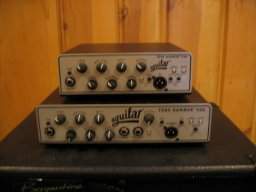
The Jack 12 is amazing at filling a room. Seriously amazing. If I were the kind of player who could use all that extra midrange response I would be using mine as a bass cab a lot more often.
I would not be nervous about running PA mains for a medium sized club with my 2-jack stack, including kick drum, though, as long as the kick didn't need to be insanely low and I had a decent limiter.
One thing I will say about the cone midrange that I like better than the Jack is that the Jack seems to have narrower vertical dispersion. In a bass rig for stage monitoring, the vertical dispersion pattern is a big plus for me -- the Jack requires being tilted back for me to hear it when I'm standing up close. The fEarful, 3-6 feet is fine for me. I can literally stand on right up next to it and hear OK, although it's better a few feet out.
Never did really understand people talking about room filling and midrange. The meat of the bass guitar tone is IMO in that 50hz to 500hz region (i.e., the typical 'PBass with flats and the tone control turned down a bit' sort of frequency response). These frequencies are relatively omnidirectional, from what I understand, and the mid mids that aren't don't really seem to be impacted by various mid driver designs, since they are typically crossed over at a pretty high frequency (800hz, 1.2K, etc.). As a matter of fact, I would guess they (i.e., the 'mid mids) are actually more directional coming from a 15" driver (as an example) than a nice 212 traditional box.
For those of us who enjoy a bit of a brighter tone, I would definitely agree that some of these designs will result in a bit more even upper mid response, at least to the point where the tweeter kicks in. Room filling though... not sure what that means with regards to upper midrange dispersion.
This one is literally a question... not so much a challenge
Never did really understand people talking about room filling and midrange. The meat of the bass guitar tone is IMO in that 50hz to 500hz region (i.e., the typical 'PBass with flats and the tone control turned down a bit' sort of frequency response). These frequencies are relatively omnidirectional, from what I understand, and the mid mids that aren't don't really seem to be impacted by various mid driver designs, since they are typically crossed over at a pretty high frequency (800hz, 1.2K, etc.). As a matter of fact, I would guess they (i.e., the 'mid mids) are actually more directional coming from a 15" driver (as an example) than a nice 212 traditional box.
For those of use who enjoy a bit of a brighter tone, I would definitely agree that some of these designs will result in a bit more even upper mid response, at least to the point where the tweeter kicks in. Room filling though... not sure what that means with regards to upper midrange dispersion.
This one is literally a question... not so much a challenge
I never really thought about it, but I would have to agree with this. I like the "P bass and flats" sound, and I have never noticed a dispersion problem with this sound when listening to live music. If I can, I will try to pick a spot where the sound is balanced, but the issue is always with guitar dispersion, not bass. Slappity clackity zingity poppity tone might be another story.
I never really thought about it, but I would have to agree with this. I like the "P bass and flats" sound, and I have never noticed a dispersion problem with this sound when listening to live music. If I can, I will try to pick a spot where the sound is balanced, but the issue is always with guitar dispersion, not bass. Slappity clackity zingity poppity tone might be another story.
Even with the poppy zingity tone, that is primarily in that 3k+ region covered by the tweeter (e.g., many slap poppers significantly cut upper mids in that 1K gank area). That's why I always comment on these dispersion discussions as being UPPER MID DISPERSION issues. Again, like gas mileage when evaluating an automobile purchase, an important feature that will be life changing for some and not even noticed by others IMO and IME.
However, still don't get the 'room filling' thing. I need clarification on what that means.
4x10s lose polar response by 800hz or so depending on driver spacing. Keep that in mind. That's "upper mid" I guess, but it's an important frequency band too.
Room filling means 'providing pattern control and radiation to predictably fill a room with a consistent sound' at least in the way I use the phrase.
As we've had out in the past, you can't tell the difference between room reflections and good polar response, so of course it's probably a meaningless thing to you
Room filling means 'providing pattern control and radiation to predictably fill a room with a consistent sound' at least in the way I use the phrase.
As we've had out in the past, you can't tell the difference between room reflections and good polar response, so of course it's probably a meaningless thing to you

Dave buys from Eminence by the container. I wouldn't be surprised if he's one of the top or the top U.S. buyer from Eminence, and gets rock bottom pricing. So how about this, Duke, if you're interested: contact him for some possible consulting on an Avatar AK153, an evolution of his TB153, where you design a magnificent crossover and give him tips on driver placement, damping and bracing. He'd have to charge more to cover the crossover components and your royalty, but dang, he could sell them by the thousands. Even if you only get $5 or $10 per cabinet that he sells, I think the volume could get you a decent return on your time invested.... As for the Avatar 3-way... that d@mn thing is just about my worst nightmare. Five hundred bucks... and four hundred introductory price... I don't see how he does it. A most grudging but no less sincere tip of my virtual hat to Dave at Avatar.

Chef
In Memoriam
As we've had out in the past, you can't tell the difference between room reflections and good polar response, so of course it's probably a meaningless thing to you
I tell you what, my rule is if you dish it out you have to also take it sometime. The above is an excellent, excellent zing
I commend you on that one...well played, and somewhat deserved
- Nov 24, 2008
- 4,343
- 7,163
- Disclosures
- Owner & designer, AudioKinesis; Auth. mfg, Big E (Home Audio only)
...you can't tell the difference between room reflections and good polar response...
Rpsands, I think you have just put your finger on one of the keys to good system design. The desired end result (imho of course) is a spectrally balanced reverberant field, and good polar response is not necessarily the only way to get there.
- Dec 18, 2000
- 13,201
- 340
- Disclosures
- greenboy designs: fEARful, bassic, dually, crazy88 etc
rp,
800 Hz is very much mid-midrange to my way of thinking, based both on octave divisio, and how it tends to function. 2nd chart down:
Link Removed
Chart above that of course is also relevant to bass guitar - even reggae/dub bass guitar. People ought to spend about a hundred hours watching music play through a good spectrum display if they can't do waterfalls of instruments. It's most illuminating to see what an instrument is actually doing to significant degree in its spectral balance. EDIT: foobar2000 is pretty decent when you get 20 or 40 bands up on a big monitor.
One should also note that if something is good when traveling directly on axis, why would that NOT be good elsewhere? Want consistency? Minimize variables? And treat other listeners as you would treat yourself.
800 Hz is very much mid-midrange to my way of thinking, based both on octave divisio, and how it tends to function. 2nd chart down:
Link Removed
Chart above that of course is also relevant to bass guitar - even reggae/dub bass guitar. People ought to spend about a hundred hours watching music play through a good spectrum display if they can't do waterfalls of instruments. It's most illuminating to see what an instrument is actually doing to significant degree in its spectral balance. EDIT: foobar2000 is pretty decent when you get 20 or 40 bands up on a big monitor.
One should also note that if something is good when traveling directly on axis, why would that NOT be good elsewhere? Want consistency? Minimize variables? And treat other listeners as you would treat yourself.
I tell you what, my rule is if you dish it out you have to also take it sometime. The above is an excellent, excellent zing
Sorry man I actually didn't mean it as a zing, I was being serious. Not everyone can hear the difference and it's not a matter of better or worse. If it sounds good to you and your audience likes it, who am I to tell you different?

BurningSkies
CRAZY BALDHEAD
- Feb 20, 2005
- 27,956
- 20,348
- Disclosures
- Endorsing artist: Dingwall Guitars
rp,
800 Hz is very much mid-midrange to my way of thinking, based both on octave divisio, and how it tends to function. 2nd chart down:
Link Removed
Chart above that of course is also relevant to bass guitar - even reggae/dub bass guitar. People ought to spend about a hundred hours watching music play through a good spectrum display if they can't do waterfalls of instruments. It's most illuminating to see what an instrument is actually doing to significant degree in its spectral balance. EDIT: foobar2000 is pretty decent when you get 20 or 40 bands up on a big monitor.
One should also note that if something is good when traveling directly on axis, why would that NOT be good elsewhere? Want consistency? Minimize variables? And treat other listeners as you would treat yourself.
I have a pretty traditional reggae sound, and Even though I roll my highs, and slightly attenuate my high mid, there's a surprising amount of sound that comes from that 6" speaker. I also think that the 6" provides definition that may be missing in many cabs in that zone between woofer and tweeter.

I have a pretty traditional reggae sound, and Even though I roll my highs, and slightly attenuate my high mid, there's a surprising amount of sound that comes from that 6" speaker. I also think that the 6" provides definition that may be missing in many cabs in that zone between woofer and tweeter.
I think a lot of people are missing it. Some prefer it, some wish they had it, but most don't even know what they are missing because most cabs don't have it.
It isn't necessarily a good or bad thing, just a preference. But when you can finally hear what you've been missing it can be quite enlightening. I didn't know what was wrong with my sound until I built a cab with a dedicated mid. Once I did, it was a "Eureka!" moment and I won't be going back down that mid-driverless path any longer.
And you are right, even for those that feel they don't like much in the way of highs or even hi-mids, there is a lot of content there that provides some distinction and clarity. It is, I do believe, part of the reason why some keep wanting more and more volume. They just can't quite hear their bass well enough so they keep turning it up more and more with no satisfying result...so then they feel they need a new, more powerful rig. When in reality (in some cases of course) it's just certain frequencies they are missing, not the power to deliver it. Once I started using mid drivers, I found that often times I didn't need to turn up my overall volume, just boost the mid driver more (I bi-amp and can control the output to the low and mid drivers separately...that's how I discovered this idea about a lack of mids versus a lack of overall volume...in a live band context anyway).
I think a lot of people are missing it. Some prefer it, some wish they had it, but most don't even know what they are missing because most cabs don't have it.
It isn't necessarily a good or bad thing, just a preference. But when you can finally hear what you've been missing it can be quite enlightening. I didn't know what was wrong with my sound until I built a cab with a dedicated mid. Once I did, it was a "Eureka!" moment and I won't be going back down that mid-driverless path any longer.
And you are right, even for those that feel they don't like much in the way of highs or even hi-mids, there is a lot of content there that provides some distinction and clarity. It is, I do believe, part of the reason why some keep wanting more and more volume. They just can't quite hear their bass well enough so they keep turning it up more and more with no satisfying result...so then they feel they need a new, more powerful rig. When in reality (in some cases of course) it's just certain frequencies they are missing, not the power to deliver it. Once I started using mid drivers, I found that often times I didn't need to turn up my overall volume, just boost the mid driver more (I bi-amp and can control the output to the low and mid drivers separately...that's how I discovered this idea about a lack of mids versus a lack of overall volume...in a live band context anyway).
+1 and good post. That's just the way I view it... a voicing that some will like and others won't... a nice additional choice to more traditional cabs that some will really dig, and the improved dispersion in the upper mids and lower treble below the tweeter is definitely a bonus. No argument there! I surely notice this impact with Duke's cab, and also listening to all the LDS executions I've played in various rooms and on and off axis (although it surely isn't 'night and day' versus my 212 cabs IMO and IME).
Nice that Avatar has an amazingly priced, immediately available version of this type of design in their product portfolio. And that introductory deal is just stupid good... my gosh.
- Status
- Not open for further replies.


