Enjoy the benefits of a premium membership!
Upgrade Account
-
TalkBass has been independent since 1998. Add your voice.
Create a free account to reply to discussions, view embedded media, and browse with fewer display ads.
Join free Log in
Want zero display ads or expanded classifieds tools? Compare plans.
You are using an out of date browser. It may not display this or other websites correctly.
You should upgrade or use an alternative browser.
You should upgrade or use an alternative browser.
Best Era For Fender Jazz Basses?
- Thread starter jazztonebass
- Start date
More options
Who Replied?

I have owned many Jazz basses from many different eras and I would have to say that my made in japan Geddy Lee Jazz is the best of them all.
I am one of those guys who avoids non MIA Fenders, but I did play a MIJ Geddy at a "Bass Player Live" thing a few years ago - and I was darned impressed. Sounded/felt/played great.


I smiled when I read this. I've owned a '69 for 45 years and can attest to how good it is. Fit and finish are first rate, neck is straight as can be, great feel, etc, and a wonderful organic sound. In the last year a bought a '66, and it is not a better bass, but is very nice as well. I own several more, and my two favorites continue to be my '69 and my Nordy VJ4, a "Jazz Derived" bass. One does the vintage thing, one does the modern thing - love them both.

Jim Carr
Dr. Jim
- Jan 21, 2006
- 16,223
- 7,614
- 76
- Disclosures
- fEARful Kool-Aid dispensing liberal academic card-carrying union member Musicians Local 72-147
...Any test of this nature, in my humble opinion, must be conducted with the exact same type, brand and gauge of strings - or the test would be inherently flawed...
+1
Absolutely true. When considering a CS Jazz strung with nickel-plated Fender rounds, I compared that instrument to a familiar Road Worn Jazz, also strung with the exact same TYPE and GAUGE Fender strings. Several comparisons later. I was very clear about the CS bass's unique and beautiful qualities.
My favorite era is probably '60, followed by '63.

+1
Absolutely true. When considering a CS Jazz strung with nickel-plated Fender rounds, I compared that instrument to a familiar Road Worn Jazz, also strung with the exact same TYPE and GAUGE Fender strings. Several comparisons later. I was very clear about the CS bass's unique and beautiful qualities.
My favorite era is probably '60, followed by '63.
This has been my experience with CS Fenders as well as a generalization.
- Apr 3, 2003
- 35,518
- 19,955
- Disclosures
- Editor-in-Chief, Bass Gear Magazine
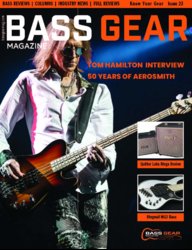
This article was printed in Tom Bowlus' excellent Bass Gear Magazine.
It's just another reason to subscribe to this excellent publication.
The article was groundbreaking and very educative.
Thanks! I'm glad that you liked the article! In all honest, I totally agree about "testing" each bass with the same strings, but unfortunately, it didn't work out that way.

BassHappy
Supporting Member
Thanks! I'm glad that you liked the article! In all honest, I totally agree about "testing" each bass with the same strings, but unfortunately, it didn't work out that way.
No harm, no foul - it was still VERY interesting and enlightening reading - but I wasn't sure at the end of the day how much faith I could put into the final conclusions.
Strings make SUCH a big difference.....
Thanks,
BassHappy
www.innertainment.net
Thanks! I'm glad that you liked the article! In all honest, I totally agree about "testing" each bass with the same strings, but unfortunately, it didn't work out that way.
No testing condition is ever perfect. The article had the merit of shedding some light on some uncharted territory. Having a pro review the physical aspects and construction of these basses backed up by a blind listening test by trained ears is good enough for me.
Again it provided some data into a field that had none and that is littered with preconceived notions (pre-CBS = better being the big one). I would love to read a similar article with Precision basses.
golden age? 1951 when the P bass was made, 1957 when P bass was defined, and 1960 when jazz bass was made.
the real golden age of Fender begins when Sadowsky, Lakland, G&L, and other companies like them started doing Fender-like basses better then any Fender made bass.
the real golden age of Fender begins when Sadowsky, Lakland, G&L, and other companies like them started doing Fender-like basses better then any Fender made bass.
- Apr 3, 2003
- 35,518
- 19,955
- Disclosures
- Editor-in-Chief, Bass Gear Magazine
No testing condition is every perfect. The article had the merit of shedding some light on some uncharted territory. Having a pro review the physical aspects and construction of these basses backed up by a blind listening test by trained ears is good enough for me.
Again it provided some data into a field that had none and that is littered with preconceived notions (pre-CBS = better being the big one). I would love to read a similar article with Precision basses.
Well, one factor that made me not as concerned as I otherwise would be regarding the strings issue is that Phil has decades of experience with these basses, and has played them with numerous different sets of strings, so his comments were based, in part, on collective experience, not just on the current set of strings (though again, if I had my druthers, we'd have done that comparison with fresh, similar strings on each bass). They were from private owners, though, who didn't want us to mess with their strings, etc.
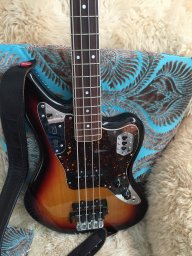
Certainly they all have a different feel that remains roughly accurate for each 'era'. The idea that modern luthiers copying the Jazz ideal to make arguably a better instrument has merit. Adjacently (and interesting to me as I have settled offer the years to a 66 Jazz,) is that johnk_10 (aka luthier John Kallas,) uses the 65-66 era as his template for his Jazz signature bass model.

IME bolting a piece of ash or alder to a maple neck with maple or rosewood fingerboard can have widely varied effects. No matter how much money and QC is put into the process. Winners and losers in all eras and its fairly personal which is which.

This article was printed in Tom Bowlus' excellent Bass Gear Magazine.
It's just another reason to subscribe to this excellent publication.
The article was groundbreaking and very educative.
It's no fun to read an actual objective article using real data. It better to read cloudy accounts and regurgitated stereo types by pissed off former owners who let some of them go before they became valuable!