Absolute red herring. No one is talking about plywood.The analogy falls short. It would be like telling someone they are listening to bass made of mahogany when you are playing a bass made of plywood.
I studied psychology in college. One of the interesting things I learned was that the people conducting those experiments were very good at lying. Is it possible for someone to question their own perceptions of something when they are being lied to? Of course. False information skews one's sense of reality. But just as it's possible for someone to convince themselves that there is a difference when there isn't one, it's also possible for people to convince themselves that there isn't a difference when one in fact exists. You don't get to play the brainwash card without at least acknowledging that it could be just as applicable to you.
I don't think anybody is trying to quantify the tonal differences in wood with mathematical precision. I'm pretty certain it's impossible. The grains of the wood in basses are as individual as the people playing them. I'd be stunned if there wasn't variation among necks and bodies made of the same type of wood. And I'm guessing there would be a lot of overlap between different wood types. But that's really not the issue anyway.
The real question is: Can you hear a difference at all? And if you can, do you then have a preference?
If you don't hear a difference, and you have actually had occasions to compare A/B, I'm not going to delegitimize your experience. I'll take your word for it. But when others here have compared A/B and have heard a difference, I'm going to take their word as well.

Enjoy the benefits of a premium membership!
Upgrade Account
-
TalkBass has been independent since 1998. Add your voice.
Create a free account to reply to discussions, view embedded media, and browse with fewer display ads.
Join free Log in
Want zero display ads or expanded classifieds tools? Compare plans.
You are using an out of date browser. It may not display this or other websites correctly.
You should upgrade or use an alternative browser.
You should upgrade or use an alternative browser.
Best wood for bass?
- Thread starter Aidan Engel
- Start date
More options
Who Replied?
Nobody was talking about tap water in bottles either, until it was mentioned as an illustration.Absolute red herring. No one is talking about plywood.
I did say it was a bad analogy.
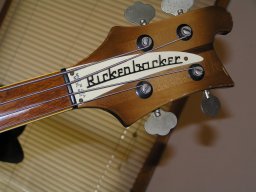
Hopefully this isn't a repeat of many other replies. (I don't have the time right now to read through 16 pages.) Wood varies from tree to tree and piece to piece. Narrowing down your favorite tonal qualities and the species that provide them is just the beginning. It is equally important to get a good piece of wood with uniform grain and no dead spots.

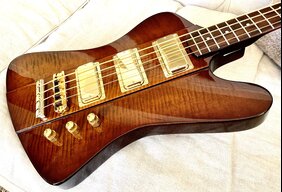
LOL - You're really grasping at straws.Absolute red herring. No one is talking about plywood.
Just substitute the wood of your choice in place of the word "plywood" and finish reading the rest of Talons post. His point is very valid and still holds true. Unless of course you've already made your mind up otherwise and are in complete denial of well established scientific procedures for proper data collection when surveying individuals or conducting focus groups.

My first custom made bass had a paduak body, looked amazing, sustain was excellent, weighed a TON! Ended up trading it for an old Jaguar guitar, since it wasn't stage-friendly. I don't think I'd ever rely on a certain wood again vs. comfort.

Anyone who doesn't think wood plays a big part in the sound of "electric bass" has not played around changing necks of the the same wood and other types. I respect one's opinion if they don't agree but I have my own experience. I have been slowly over the the years gathered tools, information, and flat out experience with the intention of building my own line (maybe 3 basses a year) just for enjoyment. I want to make a "pro" quality sounding/playing bass with little bells and whistles and no change in woods I use. I feel alder and walnut make great sounding bodies and maple/maple for the neck as it's in my backyard (USA) and is somewhat reliable from batch to batch. I like swamp ash but it's tone and weight is a bit unpredictable and I like the midrange and weight of alder. I do like rosewood boards (for sonic reasons) but good maple wood be easier to come buy making the basses more affordable. Think of SG basses or even Wal's, most are made of the same kind of wood and nobody cares because they love that particular sound. Good wood is what matters more, I would rather have really good basswood over crappy swamp ash. If it is really resonant, I'll take it.
I agree about the walnut and maple/maple! Here is a prototype with those woods (the maple is roasted but it changes the feel more than toneFor me the wood selection depends on what sound I'm after.
Classic Fender P bass tone - standard size alder body, maple neck, rosewood fretboard, split coil in p bass sweet spot with passive controls.
Snarl/growl in your face tone - small size but heavy dense body wood, dense neck wood with matching fingerboard and EMG or MEC pickups close to the bridge and a EMG BT or MEC preamp.
Deep dark smooth tone - large size mahogany body, rosewood neck, rosewood or ebony fretboard, bartolini pickups in the precision sweet spot with an East preamp.
Strong mid presence - standard size walnut body, maple neck, maple fretboard, pickups in standard jazz position with Aguilar preamp.
Bright snappy crystal clear tone - small size maple body, maple neck through, maple fretboard, EMG dual coil humbuckers with coil split and a Pope or Audere or East preamp.
Attachments

Sorry for the bad iPhone pic. I will be dropping in a set of jazz pickups next (60's position). If you look you can see by the bridge a faded area from all the bridge swapping I have done to find the right one. I like the high mass fender the most (one that's on it now). I like the sound of steel bridges, brass is a very close second. I also found that if you you are gonna have stiffing rods I recommend graphite. Personally I like the sound of no rods at all (my war wicks didn't have them and sounded great) but it can help with keeping the weight of the neck down and possibly straighter.I agree about the walnut and maple/maple! Here is a prototype with those woods (the maple is roasted but it changes the feel more than tone

Regardless of what you believe re: the tonewood debate, the question asked is "What is the BEST wood for bass". That is only something the individual can answer, as what is best is a matter of opinion and personal taste and nothing more.

Regardless of what you believe re: the tonewood debate, the question asked is "What is the BEST wood for bass". That is only something the individual can answer, as what is best is a matter of opinion and personal taste and nothing more.
This is slightly off point but it envolves tonewoods to an extent.
Have any of ya'll ever pressed your bass tip against walls and doors of buildings and made the room become an amp? The sound transfer works the same. Heavy wood doors are louder and clearer than drywall for example.
What I find especially irritating is how marketers have fooled us into thinking "Mahogany sounds warm" and "Maple sounds bright". Back when I was making instruments, a customer ordered a J bass with Mahogany body + Mahogany neck + Ebony fretboard. The tone was heavenly. Incredibly punchy with oodles of low mids, very "warm" yet articulate, etc. So I made a duplicate build for myself. But it sounded different. More like what I would expect from an Ash/Maple neck J bass based on conventional wisdom. Blanks of the same wood species can vary in tone as much as blanks from different species. It isn't predictable.
I no longer pay attention to wood species except with regard to looks. I plug it in and play. If it sounds good I buy it.
I no longer pay attention to wood species except with regard to looks. I plug it in and play. If it sounds good I buy it.

Which ever wood is holding the pickups you want in the location you like them in. It has been proven on this site that people could not tell the difference between the usual tone woods and a neck bolted to a 2x4.
Does anyone have a link to this test? I came here looking for it but couldn’t find it.

Does anyone have a link to this test? I came here looking for it but couldn’t find it.
The big problem with tone wood is. . . . people who can't hear a difference assume there is no difference.
That's OK. . . . until some of them try to "force" everyone else into the same opinion.
The reality is that some woods have little or no effect on the tone and some definitely do. They can shout as loud as they like. . . doesn't alter that.

We are always at the mercy of wood.
If there was no difference in tone between woods...all basses would be made out of the same wood. But I 100% agree that a bass can be made with all the "right" or "expected to be amazing" woods and specs...and it turns out to be a dud. I've experienced a dud bass or two and I've experienced anomalies. I totally agree with the line "play the bass" and fin out if YOU like it. I say "compare the bass to other basses" and you'll discover the mystery of wood.
If there was no difference in tone between woods...all basses would be made out of the same wood. But I 100% agree that a bass can be made with all the "right" or "expected to be amazing" woods and specs...and it turns out to be a dud. I've experienced a dud bass or two and I've experienced anomalies. I totally agree with the line "play the bass" and fin out if YOU like it. I say "compare the bass to other basses" and you'll discover the mystery of wood.
Last edited:

Hopkins
Commercial User
The big problem with tone wood is. . . . people who can't hear a difference assume there is no difference.
That's OK. . . . until some of them try to "force" everyone else into the same opinion.
The reality is that some woods have little or no effect on the tone and some definitely do. They can shout as loud as they like. . . doesn't alter that.
Another problem is that people convince themselves that they hear a difference when no actual difference is there. Or the slight tonal difference is from other components that is falsely contributed to "tonewood". Some people even go as far as to say that the wood is biggest contributing factor to the sound of a bass or guitar which is complete and utter nonsense.

I have no absolute preference, but have lately been partial to mahogany bodies/necks + ebony fretboard. That comes from playing an Ovation Magnum, which I like a lot for its "feel" - meaning, how the whole system vibrates between your two hands, and against your solar plexus. Ash/maple/maple seems kind of schtumm in comparison, but has its applications too. And certainly, there are varying grades of the same wood species, so nothing here is set in, um, stone.
Last edited:

I agree with you sir.I disagree. Wood definitely makes a significant difference.
Play a bass made with swamp ash/maple than play an identically configured one with mahogany/rosewood. No way you won't hear a difference.

It's been scientifically proven that different woods affect tone via reverberation, absorption, vibration, etc:
Invalid Link Removed
Sound quality assessment of wood for xylophone bars. - PubMed - NCBI
Wood for sound. - PubMed - NCBI
Material identification of real impact sounds: effects of size variation in steel, glass, wood, and plexiglass plates. - PubMed - NCBI
Invalid Link Removed
As for the "best wood for bass," it's incredibly subjective and really depends on the sound you want, what other instruments you're playing with, style, genre, and other factors.