• TalkBass has been independent since 1998. Add your voice.
    Create a free account to reply to discussions, view embedded media, and browse with fewer display ads.
    Join freeLog in
    Want zero display ads or expanded classifieds tools? Compare plans.

Beware Fodera's "certified pre-owned" web page and consignment deals

There was an 80/20 agreement. If someone already involved in the process buys it under that arrangement with a re-sale already in place through the same forum, that is definitively unethical at best. If they don't fire the dirt bag they should be ashamed of themselves.

The whole pre-owned forum nonsense is to protect the buyers and sellers from EXACTLY this kind of unscrupulous BS. If one of their own actually acted in this manner, it voids their whole deal.

Shameful behavior on the part of the selling agent, absolutely shameful. Definitely deserves an IMMEDIATE filing in small claims court for breech of verbal contract. With 6k at stake it is more than worth it.
 
If it sold for $12k, which apparently it did, it's a moot point at best.
:)

Well I don't know how apparent all of this is as this information has been posted second hand. ;)

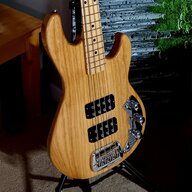
We are supposedly talking about a "2006 Yin Yang 4", when did that value of that jump to $12,000 when they retail for $9,000 and probably sell for less than that from Bass Central? Also this bass wasn't built alongside the original "Yin Yang" bass which I'm sure was made way before 2006. Maybe I'm just dense, I don't get it.:confused:
 
Well I don't know how apparent all of this is as this information has been posted second hand. ;)

The link to Robertb's post on another forum is in the first post. That's firsthand. That's pretty apparent.
:D

Like I said, if it sold for $12k, which according to the original OP it did, it doesn't make a difference how much other Foderas usually go for. Moot.

We are supposedly talking about a "2006 Yin Yang 4", when did that value of that jump to $12,000 when they retail for $9,000 and probably sell for less than that from Bass Central? Also this bass wasn't built alongside the original "Yin Yang" bass which I'm sure was made way before 2006. Maybe I'm just dense, I don't get it.:confused:

Obviously there was something special about this bass. Maybe someone involved can shed more light on why it sold for $12k. Robertb didn't mention Fodera disputing that figure so for now I have no reason to doubt it.

Bottom line, even if someone contacted them and was interested in the bass for $8,999, should they have passed that offer on to the seller... or bought the bass themselves and pocketed the difference and tell them it brought less? You know where I stand on that.
:cool:
 

+1000

The concept of "consignment" is based on the selling price. Ask any auction house. (I used to work for Christie's, so I'm fairly familiar with this topic.) Therefore, the 80% / 20% split should have been based on the selling price not on some estimate.

However, I'll go back to my earlier statement that this contract was verbal and not written therefore attempting to establish the terms of the contract (80 / 20) will be more difficult. It does not make what Mike did legally permissible: it just makes it more difficult to get proper recourse under the law.
 
+1000

The concept of "consignment" is based on the selling price. Ask any auction house. (I used to work for Christie's, so I'm fairly familiar with this topic.) Therefore, the 80% / 20% split should have been based on the selling price not on some estimate.

The problem with this notion is that the seller got a check weeks later and then days after he cashed the check i.e. got paid for the item, the bass was posted for sale. The moment he accepts the money the consigment deal is a done deal.

Since this bass wasn't built along side the original Yin Yang bass, I don't really see the additional 6Gs of value in it, but people pay more than they should on EBay every day and that doesn't mean that's what the item was worth.
 
I'm with Brad on this. I had a similar reaction about the 'legality' on consignment reading through the semi-recent thread about a bass store in Australia recently...

Consignment is NOT like trading your bass in at the local music shop for whatever price you negotiate with the salesmen. In that situation, the price negotiated is the price deserved.

When you enter into a consignment deal (verbal or written the law is the same, just the proof that changes) you enter into a partnership deal to sell the bass.

- The consigner provides the material for sale but keeps ownership of the item in question until a such a time that the item is sold.

- For the consignee's part, the do the actual work of researching the best price for the instrument so that it will sell in a reasonable amount of time and bring in an acceptable amount of money. They do the work of advertising the item for sale and otherwise finding a buyer. They deal with the buyer for the consigner and handle any negotiations. For this work they agree to take a percentage of the final price. The reason they take a percentage is because that way it is in both parties interest to get as much money for the item as possible.

Basically they are like a real estate broker for the seller. What is described in the story is like when the broker for the seller is ALSO the broker for the buyer. This situation really does happen in the real estate business. ANY ETHICAL BROKER that finds themselves in that situation will STEP ASIDE from one or both of their clients and LET ANOTHER BROKER WITHOUT CONFLICT OF INTEREST HANDLE THE SALE. That way there can be fair negotiations between the parties and a fair, agreeable price determined. A broker that just pockets the fee FROM BOTH SIDES IS COMPLETELY UNETHICAL.

That's the story as it is presented. The consigner represented BOTH sides of the deal, and not only that ONE OF THE SIDES WAS HIMSELF!

Imagine this scenario. You are selling a house. You get a broker. That broker does his normal market assessment BUT DOESN'T SHARE THIS WITH YOU and tells you he has found a buyer, gives you a number roughly in line with your idea of a decent market price. You enter escrow and close. Later you find out that the broker has information that your house is a historical monument. The broker also was the broker for the buying party. Of course, the told the buying party about the historical significance of the house in order to drive the price up. He took 3% from the sale from the buyer, kept you in the dark about that real value of the house so he could invest in the property with the buyer AND took another 3% off of the sale price AS HIS FEE! Not only did you get fleeced by the person who YOU HIRED TO REPRESENT YOUR BUSINESS INTERESTS, HE CHARGED YOU A FEE TO DO IT!


Sounds to me like that is what happened here.

Sure, the moral of the story is "do your homework first!" but that doesn't excuse such actions from business people. Like has been said before. Maybe there isn't a law, but you can't expect to remain in business for long if your business model is to screw your customers every way you can. Well OK, maybe that last part is a bit of wishful thinking. But I would never do business with a company that took a policy like that. I can't even count how many car dealerships I've walked out of after the paperwork (and the BS) comes out.


The story's author is correct in point out that the crux of the situation is when the deal shifted from consignment to direct sale. If 'Mike' had said "look instead of a consignment, I'll buy the bass personally for $X,XXX.xx" and the seller agreed, then fine. Still shady on Fodera's part, but totally legal. But, the story goes that 'Mike' found a buyer. That implies that there is still a consignment situation and 'Mike' still has an obligation to represent the SELLER'S INTERESTS. That's what he get's paid a fee to do. In the story, he failed to live up to his end of the partnership, and money is owed.


I'm wondering, does Fodera keep the 20% of the sale as profit and pay 'Mike' a salary, or is that 'Mike's' commission?
 
the situation is called dual agency

he represented the buyer and the seller, at the same time, without informing either.

that is a violation of any agent agreement

in fact now in new york, a very expensive co-op sale is being taken to court and the commisions that are supposed to be paid out to the broker and being withheld because a dual agency disclosure was not presented to the client


fire mike, or have mike undo the deal

there is a right and wrong way to do things


he said consignment.

not I am gonna buy it from you and sell it at a huge profit to someone else.....


all within the same four walls of the same buying and selling company, using company knowledge to determine the price of the bass


and yah know what, the bass community is so small, how could mike not figure out that this would come out into the open anyway?


Rokkitt
 
What if? What if Robert talked to Mike and told him what kind of bass it was, and Mike was trying to gauge what kind of consignment price to set when someone (we'll call him Eric) actually did offer him $7800 for it? So Mike calls Robert and says "Hey, I have a buyer already, and you'll get $6200, what do you think?" Of course Robert and Mike both think this is a reasonable offer, so they make the deal. Robert sends Mike the bass, Mike gives the bass to Eric for $7800, Mike sends $6200 to Robert. Case closed.

Now, in the original story, at least 2 weeks (and possibly 4-8 weeks) go by before word of another deal comes down. Eric, or some other guy he sold the bass to, comes to Mike and insists that the bass be sold for $12,000, because it's so special. Mike slaps himself on the forehead for not realizing that earlier, but can't pass up the $2400 commission he's about to make. Robert finds out and gets a little upset.

If that's how it played out, nothing illegal, nothing shady, and nothing unethical happened. Unlucky, for Robert, maybe.

Since we don't have all the facts, just Robert's (probably very slanted and poorly remembered) version of the story, this could actually be what happened. As a matter of fact, 90% of the stories in this vein that I have heard center on a pretty unlucky person who thinks that some 3rd party is out to get him. And when someone says "it's not about the $6000", the one sure thing I will guarantee is that it is totally about the $6000.
 
  • Like
Reactions: jsxtal
What if? What if Robert talked to Mike and told him what kind of bass it was, and Mike was trying to gauge what kind of consignment price to set when someone (we'll call him Eric) actually did offer him $7800 for it? So Mike calls Robert and says "Hey, I have a buyer already, and you'll get $6200, what do you think?" Of course Robert and Mike both think this is a reasonable offer, so they make the deal. Robert sends Mike the bass, Mike gives the bass to Eric for $7800, Mike sends $6200 to Robert. Case closed.

Now, in the original story, at least 2 weeks (and possibly 4-8 weeks) go by before word of another deal comes down. Eric, or some other guy he sold the bass to, comes to Mike and insists that the bass be sold for $12,000, because it's so special. Mike slaps himself on the forehead for not realizing that earlier, but can't pass up the $2400 commission he's about to make. Robert finds out and gets a little upset.

If that's how it played out, nothing illegal, nothing shady, and nothing unethical happened. Unlucky, for Robert, maybe.

Since we don't have all the facts, just Robert's (probably very slanted and poorly remembered) version of the story, this could actually be what happened. As a matter of fact, 90% of the stories in this vein that I have heard center on a pretty unlucky person who thinks that some 3rd party is out to get him. And when someone says "it's not about the $6000", the one sure thing I will guarantee is that it is totally about the $6000.


There are so many detours from the original story it's not even funny. And Robert "probably" poorly remembered? based on what?

So in your scenario, Mike never knew the "true" value of the bass, it sold to someone else (for the value that Mike told Robert) who then somehow figured it out and gave it back to Mike to be resold for the "true" value? And Mike has an unexpected windfall because of this?
:hmm:


Okay. Let's see if that's what happened.
 
The problem with this notion is that the seller got a check weeks later and then days after he cashed the check i.e. got paid for the item, the bass was posted for sale. The moment he accepts the money the consigment deal is a done deal.

Not quite. You don't normally get paid for an item before it actually sells. IF Mike knew the real value and lowballed the seller... it ain't over.

Since this bass wasn't built along side the original Yin Yang bass, I don't really see the additional 6Gs of value in it, but people pay more than they should on EBay every day and that doesn't mean that's what the item was worth.

If that's what it sold for, it most definitely is what it's worth... to that buyer:D. That's all that really matters to a seller. That's the beauty of it, you don't have to see the value... the buyer does.
 
This is probably just a bogus situation, anyone call Fodera and get their side of the story or just assume that it is okay to proceed with the witch hunt?

I'm Robert, the guy in the situation being discussed here. A friend of mine from another forum notified me of this thread. Interesting to see the issue getting so much attention here, and all the various viewpoints.

It was not my intention for it to wind up here; I originally posted about it on a site/forum with very small, paid membership. At that time, I was trying to get a feel for the consensus on this issue in the "court of public opinion" - specifically among the very small, known and trusted membership of that particular forum - while I considered how I would proceed.

All the posts in this thread are interesting, and some are really quite informative and helpful. But for multiple reasons, I don't really intend to discuss it at length here. I will tell you, though, that my description (as re-posted here verbatim and in its entirety by Allex) is factual and accurate. I have no reason to try to falsely convince people who were not involved in the situation that anything other than what happened, happened. That would serve absolutely no purpose of mine whatsoever. In fact, no offense to any of you, but as I'm sure you already know, the consensus of the "court of public opinion" will not factor into the situation at all. Again, though, that's not to say that I haven't found some of your posts to be very helpful and informative - I have.

Regarding this post that I've quoted & am replying to now, specifically ... I would be very surprised if Fodera would be willing to discuss it with talkbass member x who isn't involved and has no official "entitlement" to information about it, yet decided to call to inquire about it. From their perspective too, presumably, what purpose would that serve - even if they were to give a glossed-over, sugar-coated (dishonest, basically) account of it; but especially if they were to truly respond candidly and honestly about what happened?

I have no interest in convincing anyone here of anything. Again, I have no goal related to this which depends on how the general public feels about it. But I'll tell you that my description of what happened is not "slanted", and is certainly not "poorly remembered". It wasn't long ago, but besides that, if this had happened to you, would you easily or soon forget the details? Even if that were possible (aside from some degenerative mental or neural health condition, perhaps), 99% of my communication with the folks at Fodera as this situation played out was via email, and I still have all of that email - both sent and received.

I had originally replied to this lastnight, stating the preference that this thread be deleted, or atleast closed. But it seems that folks are very interested in discussing it as it pertains to the scenario itself and the general case - not just my situation specifically, so I see no reason that should be "disallowed" or whatever.

Peace, Grace & Bass,
Robert
 
I'm Robert, the guy in the situation being discussed here.

Hi Robert. I think I mentioned in my previous post that there was a recent thread here about the nature and legality of consignment agreements. Although the situation is wholly different than the one you describe, it might interest you to read it.
Here it is: http://www.talkbass.com/forum/showthread.php?t=348687

Essentially, that's what piqued my interest in your story. Anyway, I think most reasonable people take all such claims with a grain of salt. It is an interesting topic to discuss, however.

Cheers, and good luck.
 
Not quite. You don't normally get paid for an item before it actually sells. IF Mike knew the real value and lowballed the seller... it ain't over.

Yeah, but you weren't there so you don't know if it sold, got bought and then sold again as a lot can happen in weeks or even in a day. Moreover none of us have access to the written agreement if one indeed exists and so we don't know what the terms and conditions were. In most cases when you accept the money i.e. cash the check the deal is done with the implication that you agree with the terms and the conditions. This is especially true when you've received fair market value for the item.

If that's what it sold for, it most definitely is what it's worth... to that buyer:D. That's all that really matters to a seller. That's the beauty of it, you don't have to see the value... the buyer does.

Yeah, we are in agreement on that, but why buy a used Yin Yang for 12,000 when you can get a new one for $9,000? To each their own.