
Enjoy the benefits of a premium membership!
Upgrade Account
-
TalkBass has been independent since 1998. Add your voice.
Create a free account to reply to discussions, view embedded media, and browse with fewer display ads.
Join free Log in
Want zero display ads or expanded classifieds tools? Compare plans.
You are using an out of date browser. It may not display this or other websites correctly.
You should upgrade or use an alternative browser.
You should upgrade or use an alternative browser.
Big Amps will come back one day!!!
- Thread starter jkalads
- Start date
More options
Who Replied?


In the short term yes.I think there will always be a need for amps/cabs in some situations. You do a silent stage with your band and that’s great. But, there will always be a gig or rehearsal that requires an amp.

Sure but that’s kind of a reductive analysis. I’ll be alive as long as I continue to take breath. Right.I liked the line, “see superiority” in vinyl.
Big amps will be around as long as they serve a function and sell.
I was trying to explain how the market has evolved and why “vinyl is back” doesn’t capture the situation.
very true, it’s not like Yamaha is getting huge volumes of orders for the SVT, and the “lighter” Superbassman production is probably so low. I don’t know the actual numbers but I expect that the class d offerings far outstrip those #This reinforces why it's usually a ridiculous idea to recreate a very old design, the market has evolved beyond yet the nostalgia itself has not.

- Feb 12, 2006
- 60,986
- 5
- 220,768
- Disclosures
- Development Engineer-Mesa Boogie, Development Engineer-Genzler (pedals), Product Support-Genz Benz
By a factor of between 10 and 100.very true, it’s not like Yamaha is getting huge volumes of orders for the SVT, and the “lighter” Superbassman production is probably so low. I don’t know the actual numbers but I expect that the class d offerings far outstrip those #

And yet your listing of the top 5 vehicles indicates that the public, which spends its own money, has no interest in being aligned to any controls, initiatives or dictates, but thats life I guess.Well, just to wrap some context around that, the muscle cars are "halo" products intended for a niche customer audience. The 2024 Corvette starts at $68,000 USD and with a few trim options it can easily hit over $100,000 with tax and fees.
The Camaro is relatively affordable, but where are you actually going to be able to drive it at its top speed? Certainly not shuttling from home to work and ferrying the kids to and from school...same for the Mustang and similar production sports cars. They aren't really practical, they're wish fulfilment. They don't make up the majority of what automakers sell.
What have been selling in greater numbers than anything else in the past 10-12 years are fuel-inefficient SUVs and "light trucks" (read: oversized trucks), partly due to the perceived safety "arms race." It's come to the point where some makers have all but abandoned sedans and the compact segment altogether.
Car & Driver listed the top 5 vehicles sold in the US last year as:
So that's three massive pickup trucks and two SUVs. The F150 has been at or near the top spot for nearly two decades now. In 1990, the top seller was the Honda Accord.
- Ford F150 (a staggering 750,000 of them!)
- Chevy Silverado (543,000!)
- Dodge Ram (443,000!)
- Toyota RAV4 (434,000!)
- Tesla Model Y (estimated 385,900)
As others alluded to, regulations and climate accord agreements are accelerating the rapid phase-out of ICE cars. Sure, existing cars will still be on the road for as long as they're running (or as long as oil is subsidized...), but the change is happening now.
New ICE car sales will be banned in Norway starting next year; in the EU generally by 2035, with many member states setting 2030 as their target. The US has no law nationally, but California, which effectively leads the country due to its buying power, has ruled that 35% of new vehicles sold must be zero-emission by 2026, ramping up in phases over the following decade until it's 100% by 2035. The Biden administration has also issued an EO that 100% of new government-purchased light-duty vehicles need to be EVs by 2027, and all vehicles by 2035.
I note all this because there are some contrasts and parallels. Yeah, there's a certain slice of the market that needs or wants "big iron" bass amp stacks, or uses them because "it's expected". But I don't think it's going to be the mainstream for much longer.
To me, the switch to Class D amps, pedalboard preamps, going ampless and using IEMs isn't just like switching from ICE to EV cars, it's like switching from cars to trains.
Instead of lugging your two- to five-ton metal box around, usually just to carry yourself, you use common infrastructure that runs much, much faster, without stops and traffic, and uses way less energy per capita.
As a player, you bring a couple of gig bags, plug into the house PA and that's it! This also presumes that venues get on board with this, vs assuming an act is bringing 10 tons of gear in multiple 18-wheelers; just like cities have started to move away from car-centric planning and car dependency.
I think there's another parallel, which is that making things lighter, smaller and more reliable means less trash and e-waste. The more we can design gear to last, be easily repaired and dismantled for recycling, the better.
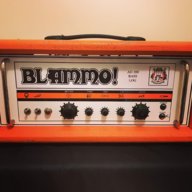
Auditioning for an excellent band Tuesday. This is my rig no matter where why or what.. and if its outside the SVT & fridge come out. Its easy.. its consistent & its always in the mix where it belongs. View attachment 5430250
My AD200 and Bergantino NV412 like this post


Some of this reminds me of a guitar forum thread in which a small number of folks claimed that "real men" string their electric guitars with 11s,12s, or even 13s and nobody can possibly sound good playing 8s or 7s.
Then somebody points out that BB King played 7s, and Billy Gibbons and Peter Frampton play 7 or 8s depending on the guitar, and they all sound fantastic. Oh yeah, BB developed a love that lasted the rest of his life for his solid state Lab Series combo amps.
Use whatever you like. No need to thump your chest and insult other people's gear selection.
Then somebody points out that BB King played 7s, and Billy Gibbons and Peter Frampton play 7 or 8s depending on the guitar, and they all sound fantastic. Oh yeah, BB developed a love that lasted the rest of his life for his solid state Lab Series combo amps.
Use whatever you like. No need to thump your chest and insult other people's gear selection.
Last edited:

I love the smell of gasoline engines. Thick vinyl car interiors, bow sewn headliner when it's been there for a while, crank windows, analogue gauges. The whole area smells like gas, off-gassing vinyl, rubber, grease. So there's that, olfactory prediction.

I don’t mind the amp head being a bit big and heavy. But keep the cabs light por favor.

So can you run those 2 humongous Peavey cabs with both of the Hartke 410s? Or run 2 amps so you can?View attachment 5428468
I'm waiting...

Absolutely. I only want to chime in that I think the behemoths Americans drive are repulsive and immoral. To still play an SVT is way less obnoxious than to drive a huge SUV.Well, just to wrap some context around that, the muscle cars are "halo" products intended for a niche customer audience. The 2024 Corvette starts at $68,000 USD and with a few trim options it can easily hit over $100,000 with tax and fees.
The Camaro is relatively affordable, but where are you actually going to be able to drive it at its top speed? Certainly not shuttling from home to work and ferrying the kids to and from school...same for the Mustang and similar production sports cars. They aren't really practical, they're wish fulfilment. They don't make up the majority of what automakers sell.
What have been selling in greater numbers than anything else in the past 10-12 years are fuel-inefficient SUVs and "light trucks" (read: oversized trucks), partly due to the perceived safety "arms race." It's come to the point where some makers have all but abandoned sedans and the compact segment altogether.
Car & Driver listed the top 5 vehicles sold in the US last year as:
So that's three massive pickup trucks and two SUVs. The F150 has been at or near the top spot for nearly two decades now. In 1990, the top seller was the Honda Accord.
- Ford F150 (a staggering 750,000 of them!)
- Chevy Silverado (543,000!)
- Dodge Ram (443,000!)
- Toyota RAV4 (434,000!)
- Tesla Model Y (estimated 385,900)
As others alluded to, regulations and climate accord agreements are accelerating the rapid phase-out of ICE cars. Sure, existing cars will still be on the road for as long as they're running (or as long as oil is subsidized...), but the change is happening now.
New ICE car sales will be banned in Norway starting next year; in the EU generally by 2035, with many member states setting 2030 as their target. The US has no law nationally, but California, which effectively leads the country due to its buying power, has ruled that 35% of new vehicles sold must be zero-emission by 2026, ramping up in phases over the following decade until it's 100% by 2035. The Biden administration has also issued an EO that 100% of new government-purchased light-duty vehicles need to be EVs by 2027, and all vehicles by 2035.
I note all this because there are some contrasts and parallels. Yeah, there's a certain slice of the market that needs or wants "big iron" bass amp stacks, or uses them because "it's expected". But I don't think it's going to be the mainstream for much longer.
To me, the switch to Class D amps, pedalboard preamps, going ampless and using IEMs isn't just like switching from ICE to EV cars, it's like switching from cars to trains.
Instead of lugging your two- to five-ton metal box around, usually just to carry yourself, you use common infrastructure that runs much, much faster, without stops and traffic, and uses way less energy per capita.
As a player, you bring a couple of gig bags, plug into the house PA and that's it! This also presumes that venues get on board with this, vs assuming an act is bringing 10 tons of gear in multiple 18-wheelers; just like cities have started to move away from car-centric planning and car dependency.
I think there's another parallel, which is that making things lighter, smaller and more reliable means less trash and e-waste. The more we can design gear to last, be easily repaired and dismantled for recycling, the better.

Better hope it happens before you get old. I had most of them and their associated 410s, but I got tired of asking my wife to help me load them. Now it's all Class D amps and Neo cabs for me by a particular builder, and I doubt anyone's going to get a better sound on a lead sled.I know Im in the minority, but I do think big amps will become fashionable again one day. Just like records have come back, kids will want to experience the real thing. There is something special that digital recreations cannot capture and just the feeling of moving that air cannot be truly mimicked. Prolly not 5 years but maybe 10. Thought?

The Vinyl comeback is not small at all. Its huge and its mostly pre-teens that are interested and buying them. For real…what goes around around comes around. I stand by the original post I guess time will tell…
Surveys had shown that 50% of vinyl purchasers do not own a turntable. The proportion is undoubtedly much higher among pre-teens. Kids love to collect things. Are stickers vinyl?

I know Im in the minority, but I do think big amps will become fashionable again one day. Just like records have come back, kids will want to experience the real thing. There is something special that digital recreations cannot capture and just the feeling of moving that air cannot be truly mimicked. Prolly not 5 years but maybe 10. Thought?
I would love that, but sadly tech is not going back.

I asked in another post (maybe on the Marshall forum) if there would ever be a need for Marshall full stacks made of cardboard, you just unpack and fold them together for the "authentic" look on stage.
It was just a joke but it might become a reality by the sound of it here.
It was just a joke but it might become a reality by the sound of it here.

I like Big Amps and I cannot lie

Al Kraft
Supporting Member
- May 2, 2016
- 10,770
- 40,447
- Disclosures
- Mesa Boogie beta product tester and player support
While I think there are some nostalgic similarities between the old bass gear and older cars, there is one huge difference that is hard to argue about. The new bass gear is a lot more power grid friendly and universally usable to replace older technology amps than electric cars are at replacing internal combustion engine vehicles.
If we all went to electric vehicles tomorrow, I'm not sure where the electricity would come from to charge them with our current infrastructure and grid capacity. Maybe we turn off our refrigerators, HVAC systems and/or let clothes air dry while we are charging our cars. IMO the problem is not an insignificant one with an obvious easy solution.
It's also worth noting that (last time I checked) roughly 60% of US electrical power was generated by fossil fuels. I'm not against electric vehicles, I am simply an engineer who likes to ask a few questions about how we actually make something work before rushing off to do it.
If we all went to electric vehicles tomorrow, I'm not sure where the electricity would come from to charge them with our current infrastructure and grid capacity. Maybe we turn off our refrigerators, HVAC systems and/or let clothes air dry while we are charging our cars. IMO the problem is not an insignificant one with an obvious easy solution.
It's also worth noting that (last time I checked) roughly 60% of US electrical power was generated by fossil fuels. I'm not against electric vehicles, I am simply an engineer who likes to ask a few questions about how we actually make something work before rushing off to do it.

We're also not carrying older cars on our backs or picking them up to load them into the back of another car. We climb in, sit down, and drive.While I think there are some nostalgic similarities between the old bass gear and older cars, there is one huge difference that is hard to argue about. The new bass gear is a lot more power grid friendly and universally usable to replace older technology amps than electric cars are at replacing internal combustion engine vehicles.
If we all went to electric vehicles tomorrow, I'm not sure where the electricity would come from to charge them with our current infrastructure and grid capacity. Maybe we turn off our refrigerators, HVAC systems and/or let clothes air dry while we are charging our cars. IMO the problem is not an insignificant one with an obvious easy solution.
It's also worth noting that (last time I checked) roughly 60% of US electrical power was generated by fossil fuels. I'm not against electric vehicles, I am simply an engineer who likes to ask a few questions about how we actually make something work before rushing off to do it.


