• TalkBass has been independent since 1998. Add your voice.
    Create a free account to reply to discussions, view embedded media, and browse with fewer display ads.
    Join freeLog in
    Want zero display ads or expanded classifieds tools? Compare plans.

Big Amps will come back one day!!!

I asked in another post (maybe on the Marshall forum) if there would ever be a need for Marshall full stacks made of cardboard, you just unpack and fold them together for the "authentic" look on stage.
It was just a joke but it might become a reality by the sound of it here.

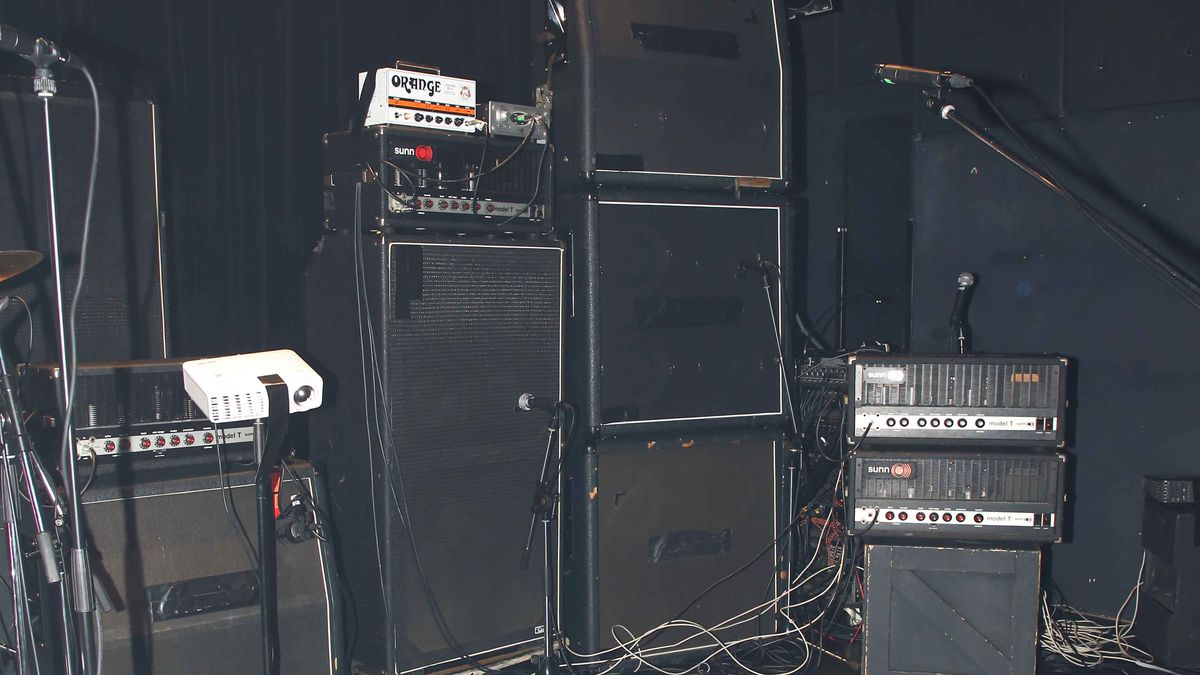
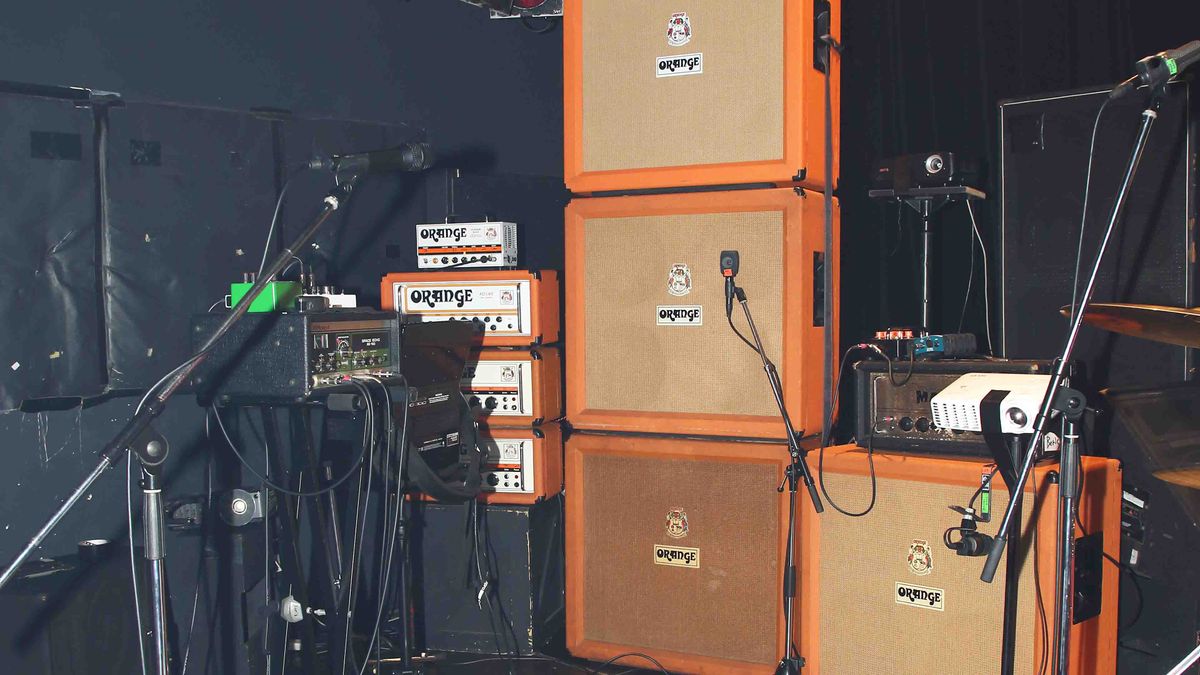
The problem with cardboard is it collapses with too much wind or rain. Mockups made of plywood that nest inside each other for transport are more practical:

WallOfAmps.jpeg


Can an affordable way to holographically replicate a touring backline be that far off?

Concert 'holograms' are fiction. Real 3D holograms are still not practical at scale. What people are calling holograms these days are really just an improvement on a 19th-century stage illusion known as Pepper's Ghost:
Pepper's ghost - Wikipedia
 
Last edited:
The biggest rig I've assembled out of this is the two Hartke 410s each getting fed 50w of tube power while each of the 18s were getting 450w from the Crown.

The sound coming out of the hartkes could peel the paint off the walls, but the two 18s can literally blow out windows if I'm not careful. I only did that set up once, and only just to be an ahole. It's really not usable in any venue. Even when I was playing large stages and outdoor fests, the biggest we ever used was a mic'd 210 and the 18s just to make the stage move.

Theoretically, though - I could chain the the Peavey and Eden 210s into one side of the Mesa, chain the Hartkes to the other side and run them all, but why? Even with just the 210 using one side of the Mesa, I still can't crank it up as loud as I want to to really get the character out of the 6l6s. I wish I would have gone with the 20 watt Mesa instead, but I was worried I'd be left wanting (ha!).
My old Hartke rig was close to yours:
Screenshot_20230827_101920_Message+.jpg
 
If we all went to electric vehicles tomorrow, I'm not sure where the electricity would come from to charge them with our current infrastructure and grid capacity. Maybe we turn off our refrigerators, HVAC systems and/or let clothes air dry while we are charging our cars. IMO the problem is not an insignificant one with an obvious easy solution.

I heard a surprising estimate from ERCOT (Energy Reliability Council Of Texas) the other day that energy needs would increase by 30% in the next few years due to data centers and cyber money mining, dwarfing the expected increase due to EVs.

It's also worth noting that (last time I checked) roughly 60% of US electrical power was generated by fossil fuels. I'm not against electric vehicles, I am simply an engineer who likes to ask a few questions about how we actually make something work before rushing off to do it.

Texas has more installed wind power generation* and is second (after California) in solar power generation. There are places in west Texas and the panhandle that are literally the flattest land possible, where you can see to the curvature of the Earth, that have hundreds of wind turbines in rows as far as you can see. They all have large red lights on top as aviation warnings that flash in sync. Really eerie at night.

* - And the places with the most hot air are NOT around the State Capital. :)
 
Aptera is a California company that has designed a super-efficient 2-passenger, 3-wheel electric car, but redesigning it from first principles. It uses hub motors, so there's no mechanical energy loss from a traditional transmission; three wheels reduces rolling resistance; and it's so light and aerodynamic it barely needs much power to move.

I saw a car going down the street a few days ago that looked a whole lot like one of those.
 
I suspect they all belong to the venues so no one has to carry them around. I played probably a hundred gigs in Tokyo and never brought an amp - everything was there and even the smallest “live houses” had great sound systems and staff to run them. We’d just hop on the subway with our guitars, bass, cymbals/snare, fight over who gets which amps, and get right to it. What a way to gig.
 
I have gone full circle. 20 years ago I was using a GK 2001 then a Fusion 550 when they came out. 15 years ago bought a Lemmy Marshall all tube. Then the whole light weight craze really kicked in. Got rid of all my big gear (except the Lemmy) and was down to using a Markbass 210 combo. Sure for gigging the 210 was nice for moving but the sound was meh.

now I am back to using a GK Fusion 800S 212 combo with a 212 ext cabinet. Recently bought a Mesa Powerhouse 810 and I am on the lookout for a tube head. New ones are very pricey and I am not sure I want to buy used without knowing a bit of its history.

Back in the day (the '80s) I used solid state Peavey gear cause that's what I could afford.

Now about all the EV posts in the thread....
 
The only reason I haven't replaced my Walkabout Scout with a Subway rig is lack of funds. Not that the Walkabout is hugely heavy, it's only 55 lbs, the head being only 13 lbs of that, if I remember correctly. But, my next, and probably final, bass rig in my life will be a Subway head with either Mesa or Barefaced cab(s).

Many of the bigger, heavier amps of the past were great amps, but they weren't and aren't better than the best of the current offerings, and the cabinets today are much lighter and more accurate than the cabs of 20-30 years ago.