• TalkBass has been independent since 1998. Add your voice.
    Create a free account to reply to discussions, view embedded media, and browse with fewer display ads.
    Join freeLog in
    Want zero display ads or expanded classifieds tools? Compare plans.

Bolt-on or neck through - what's the real difference?

Never noticed a difference my man. I like the look of neck-through body but that's about the only thing different, since the sound to me is not any better/worse. YMMV
That would be the reason for me to opt for neck-through-body design; ergonomics.

I've always found it a bit peculiar when bassists opt for a certain design or a high mass bridge in a quest for more sustain. Are they planning to play David Gilmour or Gary Moore solos on bass? :smug:
 
I have both. Truth be told, I'm now starting to lean more towards bolt on for the sole purpose that if my bass falls and breaks the neck, I can always have another neck built and bolted on. If my neck breaks on a neck thru, the bass has to be discarded.

Also, I am leaning more towards bolt on because if so desired, I can build new necks or bodies and just swap whenever in the mood. I have never done that, but I could if I wanted to.
 
  • Like
Reactions: markfretless
I've owned 13 basses in my lifetime - 3 of which were neck through and to be honest I can't tell the difference. My 2 main basses are bolt ons and my acoustic is . . whatever an acoustic is (set neck?) I'm thinking about having a custom bass made and is it worth the expense to have a neck through?
I play fretless bass almost exclusively, and to my ears, there is a noticeable, audible difference between a neck-through design and a bolt-on. The bolt-on and set-neck connections to the body of the bass deliver a different kind of resonance than the neck-through does; the "mwah" sounds more present and colorful. The neck-through design on a fretless sounds slightly more even and neutral. Obviously a subjective perception! Again, for fretless...I believe the two critical points, in addition to the type of neck joint, are the type of wood used for the fingerboard and the overall stiffness of the neck...After that, it's pickups and body wood. To reiterate, this is just my opinion and I am neither a scientist nor a luthier!
 
  • Like
Reactions: khangurumc
My answer is as follows:

On a neck-through, at times, I can feel the vibration of the instrument (like a tuning fork), and have actually been able to detect my intonation is correct at concert volume - while 100% unable to hear. This has happened precisely twice over thousands of gigs.

Not sure other than that.
 
I have both. Truth be told, I'm now starting to lean more towards bolt on for the sole purpose that if my bass falls and breaks the neck, I can always have another neck built and bolted on. If my neck breaks on a neck thru, the bass has to be discarded.

Also, I am leaning more towards bolt on because if so desired, I can build new necks or bodies and just swap whenever in the mood. I have never done that, but I could if I wanted to.
If the through neck breaks, just make a clean cavity the same size as a bolt on neck heel. Get a neck and attach it.
 
  • Like
Reactions: Jefenator
It's not cynicism or an opinion.
I'm just telling you the real reason for decisions like that.
I know people love to romanticize everything and describe their bass sounds like they're describing a complex fine wine.
That's fine, if that makes you warm and fuzzy. But it doesn't help the OP make an informed decision.
It’s well known that Leo Fender chose the woods he did because they cost less than other choices, yet people here will go on and on about the tonal qualities of ash vs alder.
 
No, that would be incorrect. The Epiphone Vintage Pro ( or '60s Thunderbird) is multi laminated neck through.

Beat me to it!

Somewhat anecdotal but I have a '64 Thunderbird (neck through) and '64 Embassy Deluxe (same pickups, scale, mahogany, etc but set neck) and while they sound related, they do sound different. As with so many things what's 'better' is subjective and, as with a lot of pickups, preamps, hi-mass vs bent plate bridges, et al, it's more lateral changes/choices than "upgrades". I really notice on the t-bird that the upper register has a stronger character - really, the notes above the 12th fret carry the same sort of weight as those at the bottom register. The best sounding upper register of any bass I have (of course, the access is limited by it being a t-bird but that's another subject...)
 
  • Like
Reactions: TBird1958
Never put that much thought into it. All of my favoite basses have been neck thru. Much more pleasing asthetically and over all feel wise for me. With one expection, I was never able to get the action as low with a bolt on neck as I can on a neck thru. Doesn't seem like a hill to die on for either choice.
 
I've owned 13 basses in my lifetime - 3 of which were neck through and to be honest I can't tell the difference. My 2 main basses are bolt ons and my acoustic is . . whatever an acoustic is (set neck?) I'm thinking about having a custom bass made and is it worth the expense to have a neck through?
You said you can't tell the difference
 
I've owned 13 basses in my lifetime - 3 of which were neck through and to be honest I can't tell the difference. My 2 main basses are bolt ons and my acoustic is . . whatever an acoustic is (set neck?) I'm thinking about having a custom bass made and is it worth the expense to have a neck through?
The ability to get a new neck
 
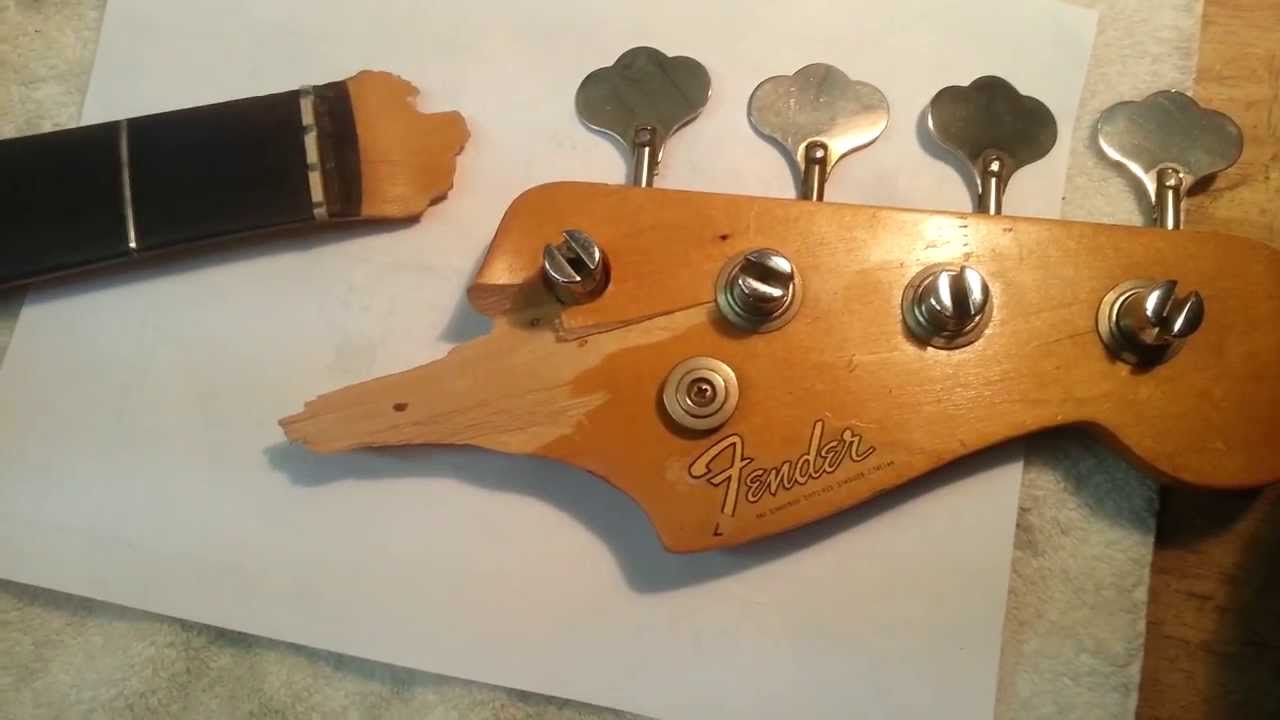
THIS!*** are you guys doing that breaks necks??
View attachment 4968559
View attachment 4968562 ????

Never broken a neck before but between my thunderbirds and my FSO’s - I know which ones I am more careful with on stage. I mean honestly, if one of your basses fell - someone bumped the stand it was on, a strap pin came undone, or you spun around too fast and smacked the headstock into a wall or cabinet…which one would you be more nervous about?

Meanwhile I’ve also had to replace the neck on my G&L ASAT for a twist and ski jump. My Jazz bass has what looks like the beginning of a ski jump, and I’ve also replaced a twisted neck on my Fender Duosonic.
 
With enough stupidity anything is possible.

BT2bhHN.jpg


I have Gibsons with broken necks, mind you I didn't break them - getting them fixed isn't more expensive than a new neck.
Can you tell which one has been broken?
AT6krDO.jpg

Yes, there are luthiers that have gotten pretty darn good at fixing broken necks on Gibsons to where they look good as new. To some extent, that's a testament to how commonplace the issue is - the good ones have had a LOT of practice.
 
This is the tone wood debate all over again.

If you can hear a difference between types of neck construction then there is a difference, end of discussion. That someone doesn't hear a difference doesn't mean there isn't one. . . . just means they can't hear it and therefore it isn't important to them.

Don't let other guys tell you what you can hear. Let them tell you what they can or can't hear and then make up your own mind.
 

Latest posts