• TalkBass has been independent since 1998. Add your voice.
    Create a free account to reply to discussions, view embedded media, and browse with fewer display ads.
    Join freeLog in
    Want zero display ads or expanded classifieds tools? Compare plans.

Bolt-on or neck through - what's the real difference?

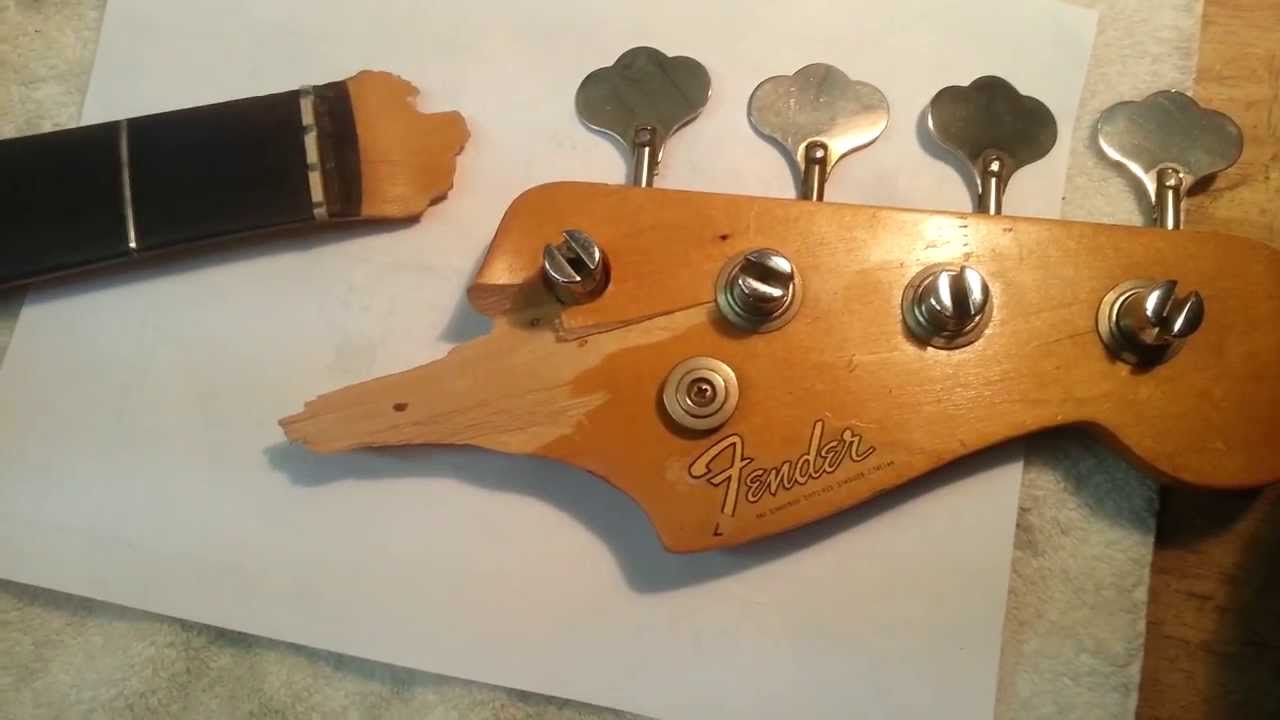
My point is, if the neck through uses the same design for it’s headstock as Gibson, when you drop it, you’re gonna be in for an expensive, time consuming repair. No neck should be made the way Gibson does it - bolt on, set neck, neck through, it’s just a bad idea. But with a bolt on, if that happens, you can swap a neck quickly should that issue befall you. With a set neck or neck through, a break is a bigger issue. You won’t have that bass for a while. If you have lots of basses, no big deal, but if you’re a 1 bass guy, it’s something to ponder.

I have gigs every weekend, so if I had only one bass, I’d be thinking about how to mitigate worst case things. Some of my gigs are important enough that, if I had a Gibson, I’d definitely bring a spare.
I agree with most of what you are saying except I don’t think there are many people here with only one bass:D
 
  • Like
Reactions: MCF and gstaats
The problem with it is that people keep referencing it as “proof” of something that it didn’t even test. It’s more disinformative than informative.

It's a good watch. It is like anything on the interwebs, one must view it through a critical eye. The folks that make living selling deception, whether it is what/how a guitar is made, or products, are truly the ones being misinformative. Maybe some it matters when looking at a scope - but that isn't how we consume music. We listen to it with our ears, and process with our brains... And it is all subject to the imperfections of our ear, our brains and psychoacoustics. Snake oil salesmen, whether it is audiophile crap or peddling misinformation about instruments (especially solid-body electric basses/guitars) are both uninformative.

I mean, look at the snake oil that is out there to fool people... [Invalid or Expired Link Removed]
[Invalid or Expired Link Removed] (It "award winning Blue Fuses to eliminate digital noise through an inductive process that takes place outside the signal path. UEF Graphene Shielding is now applied in a new Matrix Grid pattern for a striking lowering of your system’s overall noise floor so you hear detail and dynamics in the most holographic soundscape of any Ethernet cable in Synergistic Research history") (Reducing noise on a resilient digital protocol with a cable... isn't possible)

[Invalid or Expired Link Removed] The list goes on.
 
I feel insecure that a neck-through would be/stay perfect.
My neck-thru Pedulla has the lowest action and the flattest fingerboard of any bass I've owned, and it's been that way since I purchased it used in 1990, and it was already eight years old then. I've adjusted the neck a few times after changing strings to different tension sets every now and again, but it always dials in perfectly and holds up even under rapid changes of weather.
I also had a neck-thru Ibanez Roadstar II during the 1980's that was much the same way. Perfect setup, and stable as all heck.

Then again, My Rick 4003 did set up really well, but just like my Fenders it needed fine adjustment for the changing of the seasons. Still not really all that problematic. Learn to do your own setups, and it's just not a real inconvenience to fine tune the truss rod(s) from time to time, unless you have a bolt-on bass that requires neck removal in order to access the truss rod bolt/nut/head.

Maybe it depends upon the individual neck-through bass or individual bolt-on bass. I own both, but for playing original/progressive/improvisational music, I do prefer a neck-through. It feels nicer when I have to play up high past the neck/body joint, and my personal experiences with them have been mostly positive.

Some of the Blues bands/artists have asked me to play a FSO, and when they do, I always have at least one Fender and one Ray.

@Ron Berenato ,
Is the price of going Neck Through on a custom worth it?
I guess that depends upon your own preference. If you already own a few of each, and you cannot tell the difference, probably not.
If you have noticed big differences in sound or feel before, then probably so.
 
Last edited:
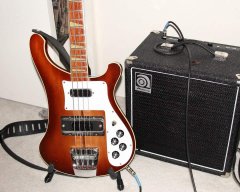
All I know is when I see a 4001 type bass without the neck through, it looks weird.

Personally, IMO to gauge sustain of neck through vs. Bolt on, you would have to test dozens because each creation is a one off. Infantissable differences in wood density, laminations and gluing would affect the decay of the note. Even the physical connection of the bridge to a part of the guitar that could have minute differences in density. And you would have to have strings from the same lot, etc. We all have perceived sonic differences in basses from the same year(s), so the quest continues. If they all sustained the same or sounded the same, what fun is that?
 
You need to buy a Gibson, and drop it off a stand. After that, you’ll have a story to tell.

There are a few Epiphones that might “work” as well, but most Epiphones have scarf joints. If you want to join the broken neck club, you need to avoid those.


With enough stupidity anything is possible.

BT2bhHN.jpg


I have Gibsons with broken necks, mind you I didn't break them - getting them fixed isn't more expensive than a new neck.
Can you tell which one has been broken?
AT6krDO.jpg
 
Ah yes, the one where the guy "gets rid of the wood" by mounting the ends of the strings to 2 WOOD benches, and then says "it sounds the same" - "proving" that wood doesn't affect the tone of an electric guitar. Nobody seems to grasp how poor his experimental design is - that he hasn't controlled the variable he wished to demonstrate at all. As a scientist, that video is really good at one thing - demonstrating how bad pseudoscience can get, and how people will jump to conclusions that aren't at all supported by the "experiment" that was run.
To be fair, I think most people do not learn what's needed for a good experiment or good research. I certainly had no idea until grad school. However, I keep seeing examples of why teaching people what good research looks like should be taught in high school.

That experiment had me rolling my eyes too. It's like trusting a poll on a politician's popularity, when that poll surveyed 3 people. A few chord strums and just recording with a mic is so far from saying anything meaningful about how any of those variables affect guitar tone. Add in all the different ways people are listening to the sound samples and it's just a mess.
 
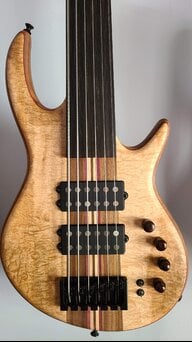
OP, the real difference is that they look different and the area where the neck meets the body is more streamlined on a neck through. That may or may not make a difference in the rare instance you are playing in the extreme upper register of the bass. There is also a cosmetic difference if the finish and construction allow for visibility that shows the neck running the length of the body.

I prefer a neck through for the appearance and craftsmanship that goes into building a bass this way but I also own bolt on basses that sound great. I think it's largely a cosmetic decision that may (or may not) be trumped by the overall work of the luthier. This does not significantly influence my decision to buy a bass but it is a factor I consider.
 
Fodera posted recordings and oscilloscope graphs of a 1) set neck, 2) neck through, and 3) bolt-on, using otherwise identical components on the three instruments, and the results were kind of shocking...they were - for all intents and purposes - completely identical. You'd need golden ears to tell the difference. Thankfully, some of us hear with our eyes :)
 
  • Like
Reactions: Hectobar
I seem to hear this rationale too much “I like bolt-on necks so I can replace that broken neck”

so I have to ask… how many broken necks have folks needed to replace?

I’ve owned well over 60 basses, and I’ve built a few from scratch, and I’ve never needed to replace a broken neck. Do I need to play harder? :D
THIS!*** are you guys doing that breaks necks??
jump.jpeg

6c13f3a7038260793d7bce037db86f4f-636446203.jpeg
????
 
Last edited:
my Pedulla Buzz vs my bolt on FSO fretless. The Pedulla seems to be a rounder tone while the FSO bolt ons are more open, more air and one of my fretless has epoxy treatment on the fingerboard like the buzz. Yamaha 6-string TRB 6P vs Tune BEB-6. the same and probably more than the fretless
 
Yeah--like most stuff there are good & bad examples of each one---and pros & cons to each as well.

Both my basses are bolt ons--not be design, just how it worked out.
I look at other stuff first--and as long as the neck is made properly, they all can work.
 
My bolt-ons don’t either :) but I don’t own a FSO either

Are you sure you really know what a dead spot is? Because ALL basses have them. I've played HUNDREDS of different basses and they've all got them. The severity and position of the dead spots can vary but they're always there. You can't get around the laws of physics.

Neck through vs bolt-on has no significance whatsoever with dead spots. Neck through does not remove or even reduce dead spots. All basses have dead spots. After 30+ years as a touring musician, studio owner and working at a guitar workshop (as well as currently owning over 50 basses of various construction) I have yet to find a single bass without dead spots. Not that I would ever expect to, laws of physics again...

Whenever someone tell me their bass has no dead spots it has ALWAYS been either because they don't know what a dead spot really is (they often confuse it with fret buzz) or they've never played their bass through an amp/PA where dead spots really become a problem (you may not notice dead spots through a small practise amp because the "dead" fundamental is so poorly reproduced by smaller amps). It usually takes me around 10 seconds to find a dead spot on these basses with "no dead spots".

Neck through vs bolt-on can affect SUSTAIN though but for any practical purposes I find the differences to be negligible, provided that both instruments are properly made of course. A poorly made bolt-on (like many entry level instruments) will often have noticably poorer sustain though. Still, I generally prefer bolt-on as it makes service/setup of problematic instruments a lot easier. That's the genius part of Leo Fender's design.
 
Sorry, but this is bad "science".

Too many variables, not the least of which is: strings, wood, pickups, scale length, frets, bridges. Not to mention these are guitars and not basses (different frequency ranges, different string masses, etc). To make a comparison like this valid, one would have to have three identical guitars, except for the neck joint. Same strings, same pickups, made from the same pieces of wood (not just species, but actual pieces), same hardware, etc.

I'm sure some people will look right past these basic insufficiencies and accuse me of holding on to unsupported claims, but I'm not saying that a neck-through has more sustain than a bolt on (I've never said that). I'm simply saying this so called "test" design wouldn't pass a basic first-year engineering class.
That is one of the points I'm making, hence the comment at the end. And some of the issues mentioned by the author are on point as well; guitarists do tend to have preconceived notions about the impact of the neck construction. And other aspects of the instrument, one in particular that I won't mention here.

Musicians are good at making music, but when it comes to science it's often

"In my experience I've noticed that..."
"I do believe that..."
"You can clearly hear that"

which of course is not scientific at all. For example, none other than Steve Vai has made some funny comments like this. Builders are sometimes "guilty" of this as well.
 
Just to pile on on the anecdotal evidence:

In my experience the sustain is not the difference. The difference I hear is in a slightly difference voicing, especially during the attack fase. I can’t be sure it is the NT or the multilaminate part though.

My NT Yamaha has this less mid oriented, more lower harmonics voice that I also hear in ie NT Spectors. There is not less attack or punch, it’s just spread out over a wider frequency range. If I capitalise on it with the right electronics, strings and amplification the attack is even more in your face. If I don’t the difference is subtle and only for me to hear.

Anyway, I also find a lot of modern basses with reinforced necks, 6 bolts and more contact surface with the body are somewhere. In the middle. In the end the difference is more in the overall construction is my belief.
 

Latest posts