• TalkBass has been independent since 1998. Add your voice.
    Create a free account to reply to discussions, view embedded media, and browse with fewer display ads.
    Join freeLog in
    Want zero display ads or expanded classifieds tools? Compare plans.

Bolt-on or neck through - what's the real difference?

people are raving about the Epiphone 'Birds out now and they are bolt on.
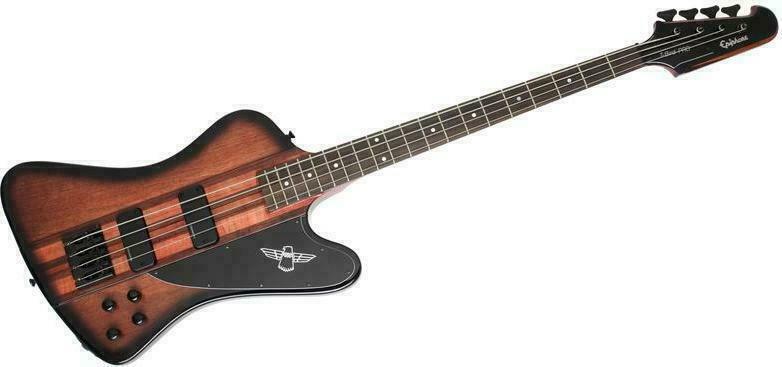
The Epiphones I've heard people talking about positively is the new(ish) 60s Classic which is neckthrough. The other one is the Pro IV, which again is neckthrough.
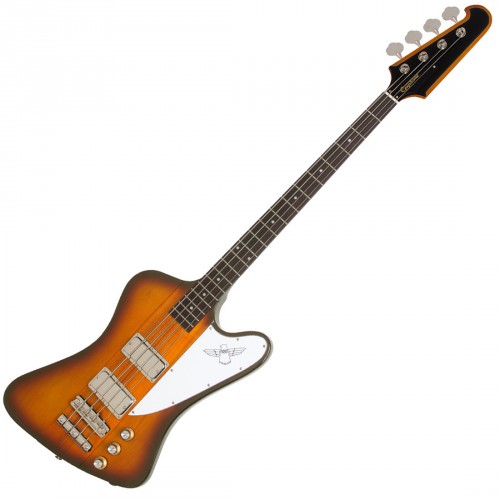
Have to admit, the 60s Classic is a nice looking bass. Haven't tried one yet though, but I'd rather have a bridge like that on my Gibson -- already swapped out all the black hardware for chrome.

Epiphone | Thunderbird 60s Bass

500medium.jpg


epiphone-thunderbird-pro-iv-5-full.jpg
 
Ok, you're cynical. That's fine. I prefer to accept his explanation.

Heaven forbid anyone has a different opinion than you.
It's not cynicism or an opinion.
I'm just telling you the real reason for decisions like that.
I know people love to romanticize everything and describe their bass sounds like they're describing a complex fine wine.
That's fine, if that makes you warm and fuzzy. But it doesn't help the OP make an informed decision.

 
  • Like
Reactions: Roger W and Snert
I just like the way neck-throughs look and feel.

Can't say any difference in sound I've heard is attributable to that and not pickups, body wood, neck wood, fretboard wood, fret size/material, string gauge/material, electronics, pickup style, pickup brand, pickup height, body finish, neck finish, string trees, lack of string trees, day of the week, or any combination of these.
 
  • Like
Reactions: 6-3-2
It's not cynicism or an opinion.
I'm just telling you the real reason for decisions like that.
I know people love to romanticize everything and describe their bass sounds like they're describing a complex fine wine.
That's fine, if that makes you warm and fuzzy. But it doesn't help the OP make an informed decision.
Also, I'm not trying to sell anyone anything.
So, I don't need to blow smoke up anyone's rear. A can just be matter of fact and I won't lose a dime.
 
It's not cynicism or an opinion.
I'm just telling you the real reason for decisions like that.
I know people love to romanticize everything and describe their bass sounds like they're describing a complex fine wine.
That's fine, if that makes you warm and fuzzy. But it doesn't help the OP make an informed decision.

Thanks for schooling me. I didn't know that people would lie about design decisions to make people feel warm and fuzzy about their purchase. I've never owned any MTD products, but you can rest assured that I will be skeptical of any purported reasoning behind their design decisions if I ever do come across one.

I live a sheltered life as an engineer, where my 20+ year career is built on design decisions based on technical data. I just can't imagine that anyone would ever compromise to save a buck. Whatever is the world coming to?
 
I seem to hear this rationale too much “I like bolt-on necks so I can replace that broken neck”

so I have to ask… how many broken necks have folks needed to replace?

I’ve owned well over 60 basses, and I’ve built a few from scratch, and I’ve never needed to replace a broken neck. Do I need to play harder? :D

You need to buy a Gibson, and drop it off a stand. After that, you’ll have a story to tell.

There are a few Epiphones that might “work” as well, but most Epiphones have scarf joints. If you want to join the broken neck club, you need to avoid those.
 
  • Like
Reactions: Barticus
You need to buy a Gibson, and drop it off a stand. After that, you’ll have a story to tell.

There are a few Epiphones that might “work” as well, but most Epiphones have scarf joints. If you want to join the broken neck club, you need to avoid those.
Okay, you’re referring to the well known problem with the Les Paul’s? I know of at least 4 first hand stories of LP broken headstocks. You’re suggesting Gibson basses are at risk too, or just a specific model?
 
None of my neck thru basses have dead spots.

There is nothing in the Physics that would predict any real difference between a bolt on and a neck through (or a set neck) in terms of susceptibility to “areas of reduced sustain” - all basses have these. Whether or not your bass’s areas of reduced sustain are bad enough to call them “dead spots” is part luck, part your sensitivity to such things, and part your psychology - whether or not you want to admit how much sustain reduction your bass has.
 
  • Like
Reactions: Engle
27235019[/URL], member: 314567"]Okay, you’re referring to the well known problem with the Les Paul’s? I know of at least 4 first hand stories of LP broken headstocks. You’re suggesting Gibson basses are at risk too, or just a specific model?

Gibson bass necks are made the same way as their guitar necks - tilt back headstocks, but without a scarf joint. That means a lot of grain runout at the headstock/neck joint. That means that area is much weaker than if the grain is used properly - a scarf joint.

Gibson guitars’ issue with this are more well known than the basses, but only because there are so many guitars, and so few basses. Within bass circles, though, the issue with Gibson basses is well known.

If you made a guitar neck in wood shop in school without a scarf joint, it would be, at the very least, a “teachable moment”. If the teacher was old school, you might just get a very low grade.

The fact that Gibson persists in making instruments this way shows that they really aren’t trying to fix real problems for their customers. It’s a well known problem, with a well known, straightforward solution. I worked for a company that, if we had an issue like this with one of our products, it would have been fixed pretty quickly. It’s almost certain that our pre-launch testing (which included dropping products) would have caught this specific issue BEFORE the product went into production.
 
Last edited:
  • Like
Reactions: Engle
Gibson bass necks are made the same way as their guitar necks - tilt back headstocks, but without a scarf joint. That means a lot of grain runout at the headstock/neck joint. Gibson guitars’ issue with this are more well known than the basses, but only because there are so many guitars, and so few basses.

If you made a guitar neck in wood shop in school without a scarf joint, it would be, at the very least, a “teachable moment”. If the teacher was old school, you might just get a very low grade.
OK, this seems like an extreme edge case… so the concern of broken necks (and ‘I need a bolt on for insurance’) comes down to possible risks with Gibson basses? Aren’t most of them set necks like the LP anyway?

I guess I should start wearing suspenders with a belt and fill my car trunk with spare tires… :D:laugh:;):roflmao::thumbsup::smug::woot:
 
  • Like
Reactions: Engle
Neckplates and bragging rights.
Seriously, one is not better than the other. I have one neck-through that I love for the elegance of the build and unimpeded access up the neck. It functions as a singular piece of wood. I also love my bolt-on basses and consider them to be a bit more utilitarian - if that makes sense.
 
  • Like
Reactions: Barticus
I have 4 Spector NS style basses - two are USA bolt-ons and 2 are Korean neck thru's. The neck thru's have just slightly more sustain, but all are pretty ridiculous. I suspect the higher mass bridges on the USA basses help a lot in keeping the sustain almost the same. The bolt-on's have a just slightly snappier attack, although this may be due to different preamps and pickup config (PJ and P/40DC vs J/40DC and J/40TW). There are so many other factors involved and I can't say either is better or worse than the other. If I'm being honest, pickups and preamp count for much more.
 
27235078[/URL], member: 314567"]OK, this seems like an extreme edge case… so the concern of broken necks (and ‘I need a bolt on for insurance’) comes down to possible risks with Gibson basses? Aren’t most of them set necks like the LP anyway?

I guess I should start wearing suspenders with a belt and fill my car trunk with spare tires… :D:laugh:;):roflmao::thumbsup::smug::woot:

My point is, if the neck through uses the same design for it’s headstock as Gibson, when you drop it, you’re gonna be in for an expensive, time consuming repair. No neck should be made the way Gibson does it - bolt on, set neck, neck through, it’s just a bad idea. But with a bolt on, if that happens, you can swap a neck quickly should that issue befall you. With a set neck or neck through, a break is a bigger issue. You won’t have that bass for a while. If you have lots of basses, no big deal, but if you’re a 1 bass guy, it’s something to ponder.

I have gigs every weekend, so if I had only one bass, I’d be thinking about how to mitigate worst case things. Some of my gigs are important enough that, if I had a Gibson, I’d definitely bring a spare.
 
Last edited: