
Thanks for contributing.
Hope it’s ok to post here but I’m selling my core if any uk guys are interested dm me

TalkBass has been independent since 1998. Add your voice.
Create a free account to reply to discussions, view embedded media, and browse with fewer display ads.
Join free Log in
Want zero display ads or expanded classifieds tools? Compare plans.
Hope it’s ok to post here but I’m selling my core if any uk guys are interested dm me

I want to have a play with this stuff but never get time. I set up some wave stuff controlling wow and modulation which added a little life to some delays but that was about it. A random generator would be a great addition.Something else on the GTKC that I like is the 'Modulation Matrix'. I have yet to do something with it, but I like how potentially wild/crazy this can go (a Helix/most MFX can only dream of).
The 'Modulation Matrix' is within the 'Assign Menu' and has two modulation sources:
1. 'Envelope Generators' (EG, 'Internal Pedal' in Boss terms), Attack and Decay needs separate triggering.
2. 'Low Frequency Oscillators' (LFO, 'Wave Pedal' in Boss terms).
Compared to a synthesizer the EG and LFO's are simpel but there's a lot of them. A synth might have 2 or 3 LFO's, the GTKC has 16 since every assign can be a separate LFO! These modulation sources can be applied to almost every parameter on the Core and can also be synced to BPM.
I find it funny that the GT's have a reputation of being slightly boring MFX's while in reality this is potentially a much more wild and experimental device vs. many other MFX's. It is just that the effects themselves are not really wild.
Anyone here putting this stuff to use?
I want to have a play with this stuff but never get time. I set up some wave stuff controlling wow and modulation which added a little life to some delays but that was about it. A random generator would be a great addition.
Something else on the GTKC that I like is the 'Modulation Matrix'. I have yet to do something with it, but I like how potentially wild/crazy this can go (a Helix/most MFX can only dream of).
The 'Modulation Matrix' is within the 'Assign Menu' and has two modulation sources:
1. 'Envelope Generators' (EG, 'Internal Pedal' in Boss terms), Attack and Decay needs separate triggering.
2. 'Low Frequency Oscillators' (LFO, 'Wave Pedal' in Boss terms).
Compared to a synthesizer the EG and LFO's are simpel but there's a lot of them. A synth might have 2 or 3 LFO's, the GTKC has 16 since every assign can be a separate LFO! These modulation sources can be applied to almost every parameter on the Core and can also be synced to BPM.
I find it funny that the GT's have a reputation of being slightly boring MFX's while in reality this is potentially a much more wild and experimental device vs. many other MFX's. It is just that the effects themselves are not really wild.
Anyone here putting this stuff to use?

I'm considering scaling back my pedal collection and just going with a multi effects pedal solution. I think it would be great to be able to use the same solution for both bass and guitar. I barely play guitar, just at home these days -- but I do gig bass. I have a lot of pedals now, but my pedal board has grown so big and complex, I just don't want to put all the time into it (I use a lot of source audio pedals). My previous experience with multis is the Zoom B3.
I'm trying to decide between platforms now, but I like the idea of Boss. Anybody regret getting the Core instead of the GT-1000? I do often use DI, so with the Core not having a DI, I'd have to continue to have some external DI or pre-amp. Also having an expression pedal looks interesting, though I've never use one with bass before.
Anybody switched over to Boss from Line6 HX series? What'd you learn through the transition?

....
Anybody switched over to Boss from Line6 HX series? What'd you learn through the transition?
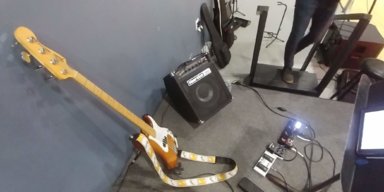
View attachment 5291005 Well the Basebone was very noisy so I returned it and the Core and got the big boy
Yeah that's what I'm considering. I do have a nice Pre-amp I have been using, the Two Note Bass Revolt, and a Cali76 compressor that I will probably miss though.....

I used it for all my delay and verb, I’ve cut down my use of delay and have brought back my rv500 till the new year were I will be moving to a kemperMay I ask how you used your core and what you are going to replace it with?
I got the Core a couple days ago. This thing is intimidating compared to my old Zoom! Anybody willing to share their patches for live use?
I seem to be overdriving the stock bass patches for some reason, even though I set the input level so it is below the triangle. Anybody experience that?
How are you using it, ie recording or with a bass amp?
I wouldn’t bother with the Boss presets. It’s not known what bass, strings, pickups, recording/bass amp, signal chain they used. But they do provide some guidelines for your own parameter settings and patch building. Clipping can come from a number of places within the patch. First I would do is Initialise a User Preset which takes all the blocks to the default positions and Levels to unity gain. That’s a good starting point. If you’re using pickups with a preamp or they’re hot passive pickups, I’d take the Input Level back to -5db. You can always push up later when you build the patch. Same with the Output Patch Level. Set that back a bit and raise it later if needed. Next turn off all the blocks and check to see how it sounds.


