• TalkBass has been independent since 1998. Add your voice.
    Create a free account to reply to discussions, view embedded media, and browse with fewer display ads.
    Join freeLog in
    Want zero display ads or expanded classifieds tools? Compare plans.

Boutique Basses 10k and up?

I'll try and address the question of the quality of an instrument that distinguishes top tier luthiers instruments from good playing mass produced basses.
There is no substation for properly seasoned wood, properly made necks, and fundamentally sound designs. The average buyer might not be aware of what it takes to build a bass beyond the oblivious. The attention to detail and precision required in each step of the process that results in a flawless instrument. If one does their research they can find luthiers who do phenomenal work flying under the radar for one reason or another. Educating oneself goes a long way when dealing with the task of choosing the right luthier. There are , unfortunately, some less than reputable luthiers who are not fundamentally sound. But I digress.

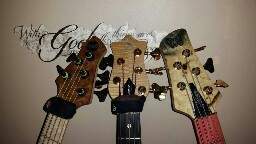
I happen to love my Skjold Design Guitars Catacomb bass. The feel of the neck is perfect for me. The depth of thought towards every aspect of this instrument is a reflection of the luthiers commitment to excellence. The voice of the bass is exactly what I was looking for. It's perfect for me! It cost what it cost and I find value in his labor of love. I'm paying for the numerous hours spent in each step of the building process, the highest quality parts, and the custom electronics.
It doesn't mean that a good mass produced bass won't get the job done. They do. It's just not fair to compare its overall quality to a custom hand made bass. Is a custom build worth it? Well that's a personal decision each one of us has to make for themselves.
 
  • Like
Reactions: Thombas
I recently placed an order for an custom Elrick. Rob Elrick offers less expensive versions of his basses that to me "feel" the same as the custom ones I've played. I chose to go the custom route because I finally can afford to. Im not a professional musician and I don't plan to be. This is for my personal enjoyment. I don't have to justify that to anyone (except my wife). I find it interesting that people feel the need to diagnose the reasons why myself or anyone else would make the decisions to spend X amount on an instrument. Play and pay for what you want. Its really none of your business anyways.
 
  • Like
Reactions: dedpool1052
Hello good people ,

It looks like I may have to ask my question in the Luther's section, while I appreciate your comments, no one has even made an attempt to come close to addressing my question, and maybe it's my fault for not asking it properly. I will put it in a very simple format and take price completely off the table.

How does the wood and carving of the body of an electric bass effect it's tone?

Thanks
 
Hello good people ,

It looks like I may have to ask my question in the Luther's section, while I appreciate your comments, no one has even made an attempt to come close to addressing my question, and maybe it's my fault for not asking it properly. I will put it in a very simple format and take price completely off the table.

How does the wood and carving of the body of an electric bass effect it's tone?

Thanks

It's not that you asked the question poorly, but rather its a poor question. As to the tone of wood, that question has been asked dozens of times, and is the subject of numerous active threads. I'd suggest tracking one of those down.
 
Hello good people ,

It looks like I may have to ask my question in the Luther's section, while I appreciate your comments, no one has even made an attempt to come close to addressing my question, and maybe it's my fault for not asking it properly. I will put it in a very simple format and take price completely off the table.

How does the wood and carving of the body of an electric bass effect it's tone?

Thanks

The wood and carving of the body are, in most cases, only a small contributing factor bringing an instrument to a $10k+ price tag.
 
Guy (above) is correct, that there are lotsa threads (and debate) about the importance of woods (or relative lack of importance) and other materials to the tone and response of an instrument. Pull those up, and there's extended discussion about that part of your question.

And other folks have touched on the matter of construction cost, above. A custom builder has to cover the cost of materials (exotic woods, expensive electronics, and the like), his/her labor (and a truly custom build is labor-intensive), and overhead (like the shop and tools, pay and benefits for staff).

So you can see how a tricked-out fully-custom bass would get pricey.

The builders that amaze me are the ones that can offer a good deal of customization to a standardized config, and bring it in for four figures. Thinking of Sadowsky, Valenti, MTD. There are others.
 
Hello good people ,

It looks like I may have to ask my question in the Luther's section, while I appreciate your comments, no one has even made an attempt to come close to addressing my question, and maybe it's my fault for not asking it properly. I will put it in a very simple format and take price completely off the table.

How does the wood and carving of the body of an electric bass effect it's tone?

Thanks

Your first question was what justifies spending $10k or more on a bass.
The answer to that question is simply someone wanting it and being willing and able to pay the asking price.

If you were trying to ask where that number comes from, it's like any product, it is a matter of the cost of materials, overhead and enough margin to provide the company with enough money to make their payroll and ideally have some operating capital.

For a company like Fodera the materials are certainly higher grade than on cheaper instruments and they don't order lumber in the same quantities as huge manufacturers. Still, the vast majority of the difference in cost comes from the overhead (rent of a large space in Brooklyn isn't cheap) and paying the workers. The amount of time spent per instrument is far greater than in a large factory. I'm guessing each Fodera has somewhere around 40-50 hours of actual work time spent on it and more for some of the really complex builds. A Fender Factory probably cranks out several basses per hour. That's just the economics of things. And all part of the formula. For instance, Fodera could lower their overhead and thus prices by moving to the middle of nowhere but then they wouldn't have access to the great bassists in NYC and thus they'd lose a crucial element of real player feedback on their instruments.

Your revised question is how the wood and carving of a bass effects the tone.

There's no consensus answer to that question.

Personally I don't think the actual shape of the bass plays a huge part in the tone. Construction methods can though. There is a difference (to my ear) between neck through and bolt-on basses with the latter having a punchier attack and quicker decay on average.

As for the woods many people feel it makes no difference at all. Personally I think the density of the wood plays a huge role. There are countless threads discussing/arguing whether or not the woods determine the tone and if so, to what degree.

The reality is that even basses made with the exact same woods, electronics and hardware often sound different. Given that we can control the variances inherent in things like hardware and electronics I have to attribute that difference to inherent differences in the wood.
 
I might be a little late to the party, but I'd like to present to you a few determinants of demand that I think can relate to bass purchases...

DEMAND DETERMINANTS
  • Consumer income
If someone has enough money to purchase high quality [cars/basses/boats/homes] they will. It's "worth it" to them, and if they want to buy it they have every right to do so.
  • Consumer preference or taste
It doesn't matter if a boutique instrument is (to borrow your word) justifiable for you to purchase. Some people (for whatever reason) have a preference for expensive things, so if their aforementioned income allows for such a purchase they are permitted to make it. It's their money...it's their decision.
  • Consumer expectations
If someone expects that their 10k bass will play better/sound better/magically make them a better bassist then they will purchase it.
  • Future prices are expected to increase
For some, purchasing instruments (or cars etc.) is viewed as an investment. If you expect your 10k bass to double in value in ten years you will buy it (and perhaps use the resulting 20k to buy another bass).

It's simple economics. People exhibit rational behavior, meaning they do what they believe is in their own best interest. Meaning they shouldn't have to "justify" their purchase to anyone but themselves. They analyze the costs and the benefits, and if they decided it's worth it they make the purchase. Simple.

Now, would I purchase a 10k bass? Hell no! To me it's not worth it, but it's really not my right to judge or criticize others who do buy boutique instruments. Their motives are of no importance either; it doesn't matter if they're gigging or hanging it up on their wall...it's their money, not mine.

And let's not forget that consumption is about 70% of the United States' GDP...purchasing expensive stuff is actually "the most patriotic thing you can do," (to borrow a phrase from my Economics teacher).
 
One of the best players on this site is "Narud". Mostly jazz/fusion from what I've heard.

He went from Fodera (which sounded fantastic IMO) down through *all* the other boutiques and finally settled on very heavy 70's Fenders (so far).

Just sayin'. Perfect playability for even the most discerning persons (he being among them, per his many posts that don't pull punches on sacred brands here) can be found at any price point. It's certainly easier to find it at higher price points, but not a necessity. A double bass of any durability and quality is inherently expensive vs. electric instruments. That said, http://www.cbc.ca/news/technology/stradivarius-violins-lose-in-blind-test-against-new-ones-1.2601191
humbled.:bassist:

the only reason i got into foderas years ago was because i thought R basses looked awesome. at the time, a used one was slightly more than a new lakland and an optioned out custom was in the 5k range. not too insane. i was very much into the whole tone block,wood combination mysticism thats involved with spec'ing out a custom. in retrospect, it was pretty goofy. thinking your going to get the low mids of alder with the punch of ash or whatever isnt going to happen ime. youll get the sound of the body density,the attack/response of the fingerboard and the voicing of the electronics plus whatever variability might occur from the wood itself which sometimes can be huge. in general, ill get the same ballpark of sounds from any halfway decent 9 pound alder/rosewood jazz and then one will be completely different. their will always be outliers.

things have come full circle because im currently on the look out for a 4 string R bass since i still think they look awesome, price isnt nuts, and i know i can get the playability from any instrument provided theres now serious build flaws.
 
  • Like
Reactions: Tom Bomb
I've had a few custom basses: Leduc, Pedulla, Linc Luthier, etc. They really are a pleasure to own and enjoy from a purely aesthetic point of view. They play beautifully, sound terrific, and reflect the choices/values/tastes of the individual luthiers who designed and built them.

But whenever I was in the mood to play, I always found myself reaching for my 40-year-old Jazz Bass. I realized that I prefer passive electronics and bolt-on necks...though I really have no idea why.

In the end, I think every player finds what they're looking for. I'm lucky that my "sweet spot" happens to be on the lower end of the price scale!
 
I am curious what is the justification on spending this much money on an electric bass?
I am not looking for a fight, I want to become more educated on the subject.
I have an understand of why some acoustic instruments can be rather pricey but even at that , unless it's a rare vintage or highly ornate the prices usually don't go over 5-7k, and it seems an acoustic instrument it much more detailed in the construction because the tone , loudness and precision of construction is all the instrument has, no pick ups, effects or amp to modify the sound.
Perhaps because I have never played a Carl Thomson or a Fedora, I can't really ask this question.
I understand that an electric bass played acoustically can give you a lot of information on how it may sound, but I would think that the pick up have the most influence on how an electric bass sounds , because while the resonance of the wood will effect how the strings vibrate, I can't see it being that affective.
For instance I can hear a difference between a Mahogany and Rosewood acoustic guitar , but an electric bass made from Ash or Adler or whatever , I never have associated a particular wood with a particular sound on an electric bass.
So I'am curious as to what makes a bass retail for 10k plus .
Remember not looking for a fight, but rather an education.
Thanks

I think that to a certain extent the same can be said for high end boutique basses.. I do think that once you get above say the 5K range a lot of this becomes far more subjective.. but I have never played a bass that expensive so I have no clue as to what the draw may or may not be.. and I will probably never find out. In a way this question is like.. why spend 100k on a car when you can get a well built functional one for 25k ... it is all in what you want out of it. I don't think that a lot of folks get these kinds of basses for "bragging rights" . I think that by the time a bassist or bass player (two different levels of skill IMO.... I consider myself more of a bass player than a bassist..) gets to the point where they can afford a bass that expensive either A)They have made enough money at their craft where they can afford it and the only justification needed is "I like this and I want it.." or B)They have made enough money doing whatever else it is they do .. and the only justification needed is again "I like this and I want it..." I don't think there are too many guys who drop 4K+ on a bass just because they want to feel good and brag about it or because they think it will make them a better player. There are some probably .. but not too many when considering the bigger picture.. and TB is a small microcosm of the bigger picture. I think that most of us get that lesson early on. If I ever decided to spend even 3K on a bass it would be because I wanted to and I could... and I think a lot of the NBD posts here are more folks excited about their new bass... The last NBD post I made here was for a $300 bass.. but it was a fretless and I was excited and I wanted to share.. I think there is a lot of that.

Maybe I am naive.... or not as cynical.. For me the only justification for spending 10K on a bass would be because I could.... Over the past 7 years I have bought used basses that sold for $800-$1600 new at half the price ... but with each one I can see why having a better instrument helps. I can only imagine that me playing a 10K bass would still just be me playing a 10K bass..
 
I used to not understand it and for me personally, I could never justify it. But I get it now. It's art. It's appreciation of the craftsmanship that goes into these instruments. Does a 10k instrument play inherently better than one costing $3,000? Maybe and probably not, but there is a level of quality that can't be matched that some appreciate.

/thread
 
Yours is the million dollar question. Who knows? Not me, but I'll have a stab. The tricky part, it seems to me, is employing the best wood. Outside of that, it's the build - that is, what form, or shape, the bass takes - then it's going to be the precision and accuracy in that build, and then it'll be the overall stability, which to an extent is determined by the choice of wood. There's so much more to it, really, delving into the detail. There's little doubt that wood should equate to tone but there are countless examples of huge fluctuations in tonal quality even with the same species and the same dimensions in play. Those luthiers - the ones who command the greatest prices - have a knack for selecting timber. How they do it is a bit of a mystery. No science can measure this accurately yet.

If tone's the yardstick, it would make good sense to use the same woods as were used in those more prominent instruments, the ones that set the tone in the first place. That's a pretty good gamble and, if you have the good wood on board, you should have half the problem licked already. I can vouch for this - all mine are cheap and cheerful, off the rack, secondhand and well under a grand, with traditional woods. But, if you're on a quest like this, it will also make ultimate sense to utilize the skills of a more prominent, master luthier (or buy in to the scene through secondhand markets). Buy from one who has a demonstrated awareness of the magic involved, one who's recognized by the music culture for having the required skills. This will naturally most often equate to a heftier price. There's no way around this. Lastly, in the hunt for the ultimate tone, in a big way, good strings will come into play.
 
Last edited: