• TalkBass has been independent since 1998. Add your voice.
    Create a free account to reply to discussions, view embedded media, and browse with fewer display ads.
    Join freeLog in
    Want zero display ads or expanded classifieds tools? Compare plans.

Budget bass amp

Being the Rumble 100 is at the top of your budget, I like a little trick a few of their owners have been doing. Start with one of these first. You can use it for you personal practice and when you get to it, band rehearsal and smaller gigs. you can still do larger gigs if you can run the amp into the PA, via the XLR out. Later on if you need more, you can get a second one. Use one as a master and run a line from the FX Send to the FX Return of the slave unit. The master will have all your controls and the slave will do as the master does, doubling your wattage and speakers/surface area. See the diagram on how this works:

psx_20200820_150524-jpg.4569248


If that is still a bit short, look into upgrading the speaker. The stock Eminence speaker only has an SPL of 92.6dbl, as opposed to better Eminence speakers of 3+ dbl more. This would be the same as approximately twice the wattage, i.e., equivalent to 200+ watts to each amp. See more here: Fender Rumble V3 100 speaker up-grade ?

With this pairing, you could have anywhere from the stock 100 watts to an equivalent of 400 watts. All this versatility can be done in stages as you learn and play more. Also if one were to fail, you still have one to fall back on.
 
@Cloud04 roughly where are you (country and/or state will help).

Your dollar will go further in the used market. Tell us roughly where you are and we can poke around your area for deals. Our experience will help us help you.

Welcome to TalkBass!!!

I am from the EU (Middle Europe, Czech Republic specifically).
If that helps.
Other than that, thanks everyone for their posts and opinions!
 
An alternative to the Fender Rumble 500 (I'd recommend trying both):

I tried out an Ampeg Rocket Bass 210 and was extremely impressed. Super light and plenty of power. Very punchy and can be dialed up to get some nice percussive quality without sacrificing low end.

Pros:
  • $630 new
  • 500 watts
  • Super light weight, easy to transport
  • Tones work especially well for classic rock, classic 70's soul/r&b and country

Cons:
  • Does not have a mute button for changing basses
  • DI-out is only post-EQ, though this is how I prefer to send my signal to FOH, rather than pre-EQ
  • Would not be my first choice for ultra-modern, tighter/higher-frequency, high-performance bass work, though that's not really my thing, and doesn't sound like the OP's either
 
  • Like
Reactions: Akiyama
I am from the EU (Middle Europe, Czech Republic specifically).
If that helps.
Other than that, thanks everyone for their posts and opinions!
Ah, you might not have used Peavey or Traynor as readily available as we do in North America. I’d be interested to know what you do have for readily available used gear there. The recommendations to focus more on speaker area than on watts still apply globally.
 
Being the Rumble 100 is at the top of your budget, I like a little trick a few of their owners have been doing. Start with one of these first. You can use it for you personal practice and when you get to it, band rehearsal and smaller gigs. you can still do larger gigs if you can run the amp into the PA, via the XLR out. Later on if you need more, you can get a second one. Use one as a master and run a line from the FX Send to the FX Return of the slave unit. The master will have all your controls and the slave will do as the master does, doubling your wattage and speakers/surface area. See the diagram on how this works:

psx_20200820_150524-jpg.4569248


If that is still a bit short, look into upgrading the speaker. The stock Eminence speaker only has an SPL of 92.6dbl, as opposed to better Eminence speakers of 3+ dbl more. This would be the same as approximately twice the wattage, i.e., equivalent to 200+ watts to each amp. See more here: Fender Rumble V3 100 speaker up-grade ?

With this pairing, you could have anywhere from the stock 100 watts to an equivalent of 400 watts. All this versatility can be done in stages as you learn and play more. Also if one were to fail, you still have one to fall back on.


What do you know about the Delta-Comp Limiter? I'd love to find something like that as a plug-in....
 
Very happy here with a Carvin MB15, 200w (250 w ext. cab, which I have), 1 15” + tweeter. I got one new before Carvin stopped making amps for under $400, so a used one should be a great deal if you can find one.
 
  • Like
Reactions: kevmac
I've owned the Rumble 100 and currently own the Rocket Bass 112 combo. Both are great amps, but the Rocket bass sounds better IMO. Now playing with a moderately loud drummer and guitarist, I would get the Rumble 200. I could hear myself with the Rumble and Rocket bass combos, but I had to crank both amps.
 
  • Like
Reactions: Akiyama
I have a Rumble 40 and I can guarantee you that you'll be disappointed by it. Mine is sitting unused in a storage room, along with some other disappointments. I'm currently playing through an Acoustic B100C and IMO that's the minimum for what you want to do. And the good news is if you stick with solid-state amps the 100-watt class amps aren't really all that expensive.
 
I've owned the Rumble 100 and currently own the Rocket Bass 112 combo. Both are great amps, but the Rocket bass sounds better IMO. Now playing with a moderately loud drummer and guitarist, I would get the Rumble 200. I could hear myself with the Rumble and Rocket bass combos, but I had to crank both amps.

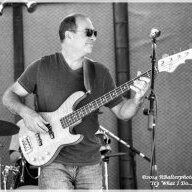
Every electric bass player needs an Ampeg in their stable. :-)
 
  • Like
Reactions: bordinco90
If you can, buy used. There is a lot of great stuff that people are looking to unload. I've been playing since the 70's and still have my Peavey TKO that occasionally leaves our practice space and appears at outdoor gigs when we know it will double as a Red Solo Cup rest area. I used to play through a huge EV bottom with a 15" speaker with a 10" "tweeter" that I drove with a gnarly tube head. I played outdoors and never went above 4, but I had a vehicle big enough to transport it. So thinking logistically is important. I eventually downsized and I have various set ups. I usually play through a Ampeg PF-500 with the matching 2x10" cabinet. There are skeptics here on Talkbass with this unit, but it has never failed me and has been out in rain (drizzle) and light snow. Its plenty loud and easy to transport. I also have an Elf head that I use with a lighter weight 2x10". It doesn't have the volume of the Ampeg unit, but it's more than enough in most bars and smaller outdoor situations. Consider:
-how big can the thing be? The older it is, the bigger it will generally be. But it is most likely bomb proof and you get a lot for your money.
-do you need a headphone jack for practicing?
-do you need a D.I. output for going to the front of house, or is that a feature that can wait for a point in time when you have more cash and need to upgrade?
-do you want a separate head and cabinet? Going with a more powerful head and a smaller cabinet will allow you to grow into what you need. You simply upgrade the cabinet.
-the newer lines of Fender Rumbles and Peavey Max are really great values that perform. If you want to buy new, stick to the major brands and buy as much as you can with whatever you can afford.
-buying used through Guitar Center or another shop can be a great experience. You don't have to meet anyone in strange places and you have some level of reassurance that the stuff isn't being held together by scotch tape to get through a sale.

Try before you buy. You will want to like how the amp sounds with your bass. If you don't like the tone, you will never be satisfied.

Wishing you lots of years of joyful playing!
 
You can't go wrong with a Fender Rumble combo, but I would be looking at the Rumble 200 as a minimum.

For your best bang for buck, look second hand. You could probably buy an old Hartke HA3500 and 4x10 cab for the same piece as a new Rumble 100.
 
If I had a small budget, I would get an older 4x10 cab and head.
It would sound fine and have the power for pretty much anything I needed.
Sure, it may be heavy but I'd be okay with that (and it's what we all used to do back in the day).
I'd put some castors on the cab so I could wheel it around.

I wouldn't bother with a brand new little combo that is barely gonna cut it, if I was wanting to play with a band.
 
Last edited:
You're best to get something used - tons of older great sounding gear for sale as long as you don't mind lifting heavy cabs and heads. If you don't like it, you can usually sell it for roughly what you paid for it. I'd recommend an old Peavey combo - Like a TNT 150 - preferably the B&W equipped version. You can probably find one for $100.
 
Ah, you might not have used Peavey or Traynor as readily available as we do in North America. I’d be interested to know what you do have for readily available used gear there. The recommendations to focus more on speaker area than on watts still apply globally.
We tend to have Peavey gear in Europe but not Traynor. Not sure about Czech Republic though. My first decent gigging amp was a Laney BC250 combo. It was plenty loud and although heavier than modern gear wasn't completely back breaking.
 
I did some quick testing of the RB110. Using a stock Fender Player Jazz. In a 12 x 14 foot room with much clutter that dampens, the RB110 was placed level on the carpeted floor, all EQ at 12 o'clock and SGT off, playing some rock riffs on the E and A strings with pick, the dB meter was placed 6 feet away and off-axis approximately 15 degrees. At 50% volume on the RB110 the dB meter generally ran at 88-95 average dB. At 100% volume on the RB110, and everything the same, the dB meter generally ran at 98-110 average dB. The resonant frequency seemed to be in the 100-110 Hz range. Highest peak dB measurement was 121 dB. I hope this helps.

https://soundproofingguide.com/wp-content/uploads/Levels-Of-Noise-In-Decibels.jpg
 
Last edited:
I’ve gigged this Peavey Max 115 many times. It’s stupid loud and super clear. I’ve never had it over 50% even as a back line at club gigs. Could probably find one used in the $200-250 range. Maybe less.

Peavey Max 115 II 1x15 300W Bass Combo Amp

I know this is an old thread, but I just purchased a Peavey Max 115 (I don't know the version) used in great condition and the seller advertised it as a 300W amp. When I got home, looking at the back, I noticed it was a 7x watt AC input (It is in another location now so I don't remember exactly) and indicated 60W output. Looking at the link you supplied and zooming in on the rear AC connector, it indicates a 74W AC input (see attached image). Yet this amp was advertised everywhere as a 300W amp. Does anyone know the scoop on this?

It does do the job for me, which was in a rehearsal space with fairly loud drums and guitar amp. It reminds me of my first bass amp, a Peavey TKO 65, which I used in club gigs without PA support.
 

Attachments

  • PeaveyMax115ACInput.png
    PeaveyMax115ACInput.png
    875.7 KB · Views: 38
I know this is an old thread, but I just purchased a Peavey Max 115 (I don't know the version) used in great condition and the seller advertised it as a 300W amp. When I got home, looking at the back, I noticed it was a 7x watt AC input (It is in another location now so I don't remember exactly) and indicated 60W output. Looking at the link you supplied and zooming in on the rear AC connector, it indicates a 74W AC input (see attached image). Yet this amp was advertised everywhere as a 300W amp. Does anyone know the scoop on this?

It does do the job for me, which was in a rehearsal space with fairly loud drums and guitar amp. It reminds me of my first bass amp, a Peavey TKO 65, which I used in club gigs without PA support.
Most amps will show two wattage ratings on the back: one higher one indicating essentially what it “eats,” and a second lower one reflecting an approximation of what it actually puts out.

A scrupulous seller could innocently list the higher number because they simply don’t know any better, while an unscrupulous seller might intentionally list the higher rating in order to fool buyers into thinking they’re getting more than they really are.

~74 watts through an efficient 15” speaker will still get pretty loud, and Peavey products notoriously so; and while 300 watts will get noticeably louder than ~74, it won’t get 3x louder than ~74. So … don’t feel too bad, live and learn, and so on :thumbsup: