Compression Ratio: What?? OK, it's simpler than it sounds. If the input gets 10dB louder but the output only increases by 5dB then the compression ratio is "2 to 1". If the input goes up 10dB but the output only goes up 1dB, then the compression ratio is "10 to 1". In a theoretically ideal compressor, this ratio is the same for any size of signal above the threshold but for that to be true, the gain cell and its control circuitry must be perfectly linear over a very wide range. In practice only compressors based on VCAs and digital potentiometers are likely to behave in this way. Some compressors have a control to set the ratio anywhere between 1:1 (ie: no compression), and 20:1 (which would be regarded as a "brick wall limiter"). In the floorQ the "Slope" or "Compression Ratio" is variable from 1:1 (ie: no compression) to 10:1. However that's not all there is to it.
Variable Ratio: In the Joemeek optical compressor the compression 'threshold' is not clearly defined and the compression ratio varies with the amount of compression applied. Suppose the 'SLOPE' control is set half-way (5:1). For signals only just exceeding threshold, the ratio is little more than 1:1. As the compressor is driven harder, the ratio rises to 5:1, at least up to a point. It is a feature of the Joemeek compressor that the compression ratio actually reduces again during large transients and, adjusted correctly, this helps to retain brightness that is often lost with other types of compressor. This is why vintage compressors often sound more lively than their modern counterparts.

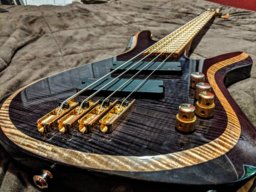



 I am gonna copy your setup, I am sure I will love it too!

 . I got a new amp bag(Laptop bag...Amazon Prime score, lol)
 ! Perfect size for Veyron




