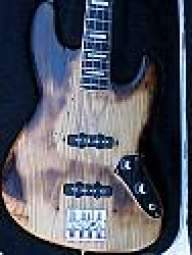
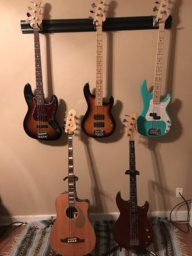
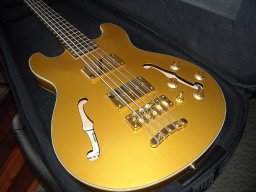
I got a Sterling Ray 34 and 35...almost as good as the real deal for less than 1/2 the price tag

TalkBass has been independent since 1998. Add your voice.
Create a free account to reply to discussions, view embedded media, and browse with fewer display ads.
Join free Log in
Want zero display ads or expanded classifieds tools? Compare plans.
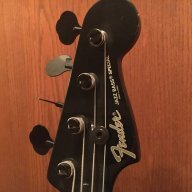
Country matters is the same way the name on the headstock matters.




since about '08 or so. there was a noticeable drop in quality from the earlier korean skylines.Wow, so are most of the Skyline Laklands made there? If so, I have to wonder if it is a different facility from my possibly real or conjured "Giant Factory" impression.
With all due respect to our Indonesian board member, just being "from somewhere" doesn't mean you know the inside details of every industry that operates there - especially one that likes to keep information away from prying eyes due to the kind of multi-brand contract manufacturing that goes on. When he states "there is no Giant Instrument factory in Indonesia" he's just plain wrong, and then goes on to compare Fender/Squier, Ibanez and Cort as if they are different factories (rather than different brands who source from the same factories).
The Samick factory, for example, spans something like 4 million square feet over a dozen buildings, has over 3000 employees and builds over 500,000 guitars (they also do 15,000 pianos). It certainly qualifies as a mega-plant, yes? Cort is pretty much the same with its multi building campus, 2,000 employees and reported 1,000,000 guitars per year capacity (no pianos here).
There are other factories of course, like Yamaha (who is actually the #1 largest musical instrument company in the world), but they don't do as much OEM manufacturing for 3rd party brands and wouldn't fall into the "make guitars for everyone" conversation that is being asked about.
There are other factories as well, since there is such a large and music-experienced labor force, but they're not on the same scale.
.
"Foreign" does not describe a badly made bass.
Factories in any country will make the bass that the commissioning company pays them to make. If it is a bad bass then blame the commissioning company. The finished product is the responsibility of their QC policies.
This works if you have time to got through every brand and model, which we don't.
Country or origin is akin to a brand - MIJ or MIA is simply a quality filter for those people (most people) who haven't time to trawl through all basses.
Country matters is the same way the name on the headstock matters.

*can't believe that talkbass changed out company name Matsus*h*i*t*a to poopia. C'mon guys. A word or name in another language is like that, whether you'll like it or not!
What would be a better bass in your opinion? One made in Vietnam or Indonesia?My impression has always been there is one single gigantic factory in Indonesia that produces all or nearly most guitars and basses which sport the "Made in Indonesia" moniker.
True or False?
Another impression is that a dozen companies or more have some series made there. I see it also as a place/factory where entirely new brand names are setup for a few runs, then rarely seen again. Presumably with some bigger corporation behind the 'project'.
Anyone know for sure?
For me the "Made in Indonesia" stamp on an instrument foretells of the world's possibly lowest quality. This is a generalization, and I'm sure is not universally applicable to every single thing made there, yet IMO, there is some truth to it. Even surpassing China as a kind of "be careful of what you are getting" type of warning.
Just in case anyone might be thinking that I'm personally ragging on Indonesia or its populous, don't.
Mats.... I said "whatever" after that one even. Not sure though.Try spelling it Matsumoku.
As an Indonesian, I believe that you shouldn't worry. Two reasons:
1. Quality
I used to own an L2K Tribute, and it was hard to pinpoint the gap of its build quality compared to the MIA. Again, that was me.
2. Working Condition
For the last 10 years, there have been many worker unions, academics, and university students piling up enormous pressure on various factories to create better working environment (including better terms in contract). And it works. When I was 9 years old, my mom took me to different factories (she was in the garment industry) and I witnessed the best and worst possible conditions of Indonesian factory workers. Long story short, I never wear Nike apparels. Until now.
The condition is greatly improving. Even the lowest paid workers here (minimum wage about $250/month) get full health insurance coverage, enough paid leave, et cetera. Of course there are several companies who are still getting away with violations, but people are hunting them down, and we hunt them hard. And MUSICAL INSTRUMENTS BUSINESSES ARE NOT ONE OF THEM. Rest assured.
Pffffft, try a G&L L2000 Tribute and see if they suck.... Do I like my USA G&L's more? You betcha, but if I was on a tight budget and didn't want
to spend an extra $1k on any American bass I'd surely go with a tribute, or even a Squier for that matter if I want a more traditional jazz
or Pbass. Like anything else, you gotta play each one because some will be lemons, some decent and there's always a few that are stellar.
Lately the old adage "you get what you pay for" doesn't always ring true! This is a great time to be a musician, there are many high quality
instruments these days, even at the "entry" level price range.