• TalkBass has been independent since 1998. Add your voice.
    Create a free account to reply to discussions, view embedded media, and browse with fewer display ads.
    Join freeLog in
    Want zero display ads or expanded classifieds tools? Compare plans.

Can someone explain old combo amps to me

IMG_4291.jpeg


Game changer as far as both a combo and closed back, for bass. Good tone. still wasn't loud enough.

:)
 
So I guess the moral of the story is, if you want to play a bass through a guitar amp for whatever reason, it should be a guitar head with a bass cab.
I was kind of expecting that, but I also hoped a little that there may have been some combos of the past, that proved to be great on bass, even though they weren't initially designed to be used for bass.
Feels a little depressing to me, to think that they just didn't have any other choices back then, and that's why they used that stuff.
 
.
So I guess the moral of the story is, if you want to play a bass through a guitar amp for whatever reason, it should be a guitar head with a bass cab.

This.

Guitar head through a bass cabinet can be amazing.

One of the better tones I've ever accidentally stumbled into was an Elk copy of a fender head ("custom amp 60") into an SWR Goliath II.
See also vox ac50 into most any capable bass cab
 
It’s been too many years ago now…but I remember everyone was “daisy chaining” their Fender heads. Bassman to Bassman, Bandmaster to Bandmaster, etc. I don’t recall my pals mixing different heads for example Bassman to Showman. So I think that what the Send/Rec labels were about(?). So some hapless roadie wouldn’t just blow the whole place up.

I too wound up with a Standel for awhile. It was a combo with two 15s. Not bad, especially after graduating from a St.George head with a Bandmaster bottom.
In the mid to late 60s, the best I could do gigging was a 60W Dynaco and a 2-15 D140F cab. It was a Sunn clone.
 
So I guess the moral of the story is, if you want to play a bass through a guitar amp for whatever reason, it should be a guitar head with a bass cab.
I was kind of expecting that, but I also hoped a little that there may have been some combos of the past, that proved to be great on bass, even though they weren't initially designed to be used for bass.
Feels a little depressing to me, to think that they just didn't have any other choices back then, and that's why they used that stuff.
How about playing guitars and bass through bass amps…

IMG_4292.jpeg
IMG_4293.jpeg
IMG_4294.jpeg
:)
 
I started with an Ampeg SB-12 in Feb. 1969. I soon traded it in toward an Ampeg B-18 when my band got its first real gig in September. That amp was never loud but it did sound great when we turned down. I never had enough volume until I got a Kustom 200 with a 2- 15 inch CTS speakers and then I added another 2x15 cabinet to tour with in the late 70's. If you could hear your bass, you were wining back then.
I still own the Ampeg B-18 but the Kustom amp is long gone.
They have learned a whole lot about amps and bass reproduction since those days.
I use a MarkBass 102p combo for most gigs now.
 
  • Like
Reactions: DJ Bebop
I toured with a nightclub group playing 5-nights a week, 50-weeks a year, for three years in the early 70's and I can count on one hand the number of venues that provided a PA. And then, when they did provide a PA, it was only for vocals. So yes, you are quite correct, we had to produce all the sound on stage without any FOH reinforcement at least until the end of 1973 when I stopped touring. We had a Kustom 6 channel PA with the 2 towers. Another common PA you'd see bands use was the Shure Vocal Master PA with its two towers.
Boy your giving away your age ;)
 
Hey guys, let’s not forget we were just kids and quite broke back then. Only rich kids got any sort of allowance. We had to work and save for gear purchasing. Getting gear together required some degree of luck, open mindedness, and determination. Having a sympathetic poppa who would “lend” $40 or $50 also helped a lot.
I even played bass through (gulp), a Super Reverb for a few months. I knew I was walking on eggshells regarding blowing out the speakers. Luckily, I think I was between bands at the time so it was just low volume song writing type jams during that period. I never harmed those 4x10 guitar speakers. I swear!
 
When I look at pictures of bands from the ~60s, I often see bass players playing through small (but probably really heavy) combo amps. I understand that Fender and Vox and such are very famous for these old combo amps from back then. And I know that Fender currently produces a signature Adam Clayton bass combo, that seems to be modeled after those old amps.
Now I'm wondering, what makes these old amps bass amps, and when did they consider an amp a bass amp?
I also saw a Fender combo on Thomann, which is in the guitar amp section, but supposedly also is meant to be used with bass guitar as well.

I've seen people use marshall heads for bass, but specifically I'm interested in if there are reissues of some old Fender/Vox amps that are built to be used as guitar and bass guitar amps.

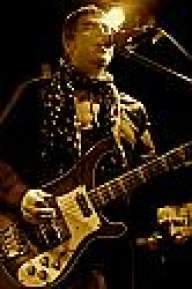
I think the popularity of the Ampeg Port-A-Flex had something to do with the need to designed dedicated bass amps. Also the size of the venues might have has something to do with it. Like trying to overcome 40,000 screaming fans in Shea Stadium.
 
  • Like
Reactions: Fynn and DJ Bebop
Just for a different perspective, the kids like me who were learning bass in the 80s had a bit of an advantage with the availability of Peavy combos. They didn’t sound all that great, but they were less expensive than what guys 10 years before us had to choose from and you could actually play loud enough to play with a band. You just about couldn’t break them, either. I started with one of those and soon “regressed” to an old Ampeg V4 and a 1x 15 cab. That sounded a lot better. I got into some weird rack stuff in the late 80s, but that’s beside the point.
 
Electric bass guitar was a very new thing from the mid 50's up into the mid 60's. Leo Fender saw a real need for SOMETHING that could keep up with Teles and Strats and his guitar amps, so the Precision Bass came from this . . . and into guitar amps: Dedicated bass amps as we think of them today were still a distant development. You have to remember that the Book of Electric Bass was still being written, and the ink was still drying on the first several chapters.

It was a completely different world. PA's back then were little more than bingo-calling rigs. 100w was a LOT of power, either through tubes or the early transistor amps with their terrible tone, a club that the tube-amp-mafia still beats the rest of us with. Power handling in speakers themselves was laughable.

It's not until the advent of big rigs like SVT's, the Acoustics, the rare Fender PS300 and their cabinets that the gap began to close and 'bass amps' began to be a separate category, but these were still expensive, and a bear to move, and a tight fit in little bars. The Ampeg fliptops are fondly remembered, but today they're little more than a bedroom amp, they could never keep up even with a moderately loud band. Then later down the line, you begin to see things like SWR or OG Trace Eliott and we are on our way to where we are today.

You will hear guitar players rave about vintage guitar amps, but anybody (like me) that would rave about the horrible bass amps we had then are obviously in need of medical attention. We made do with them as that's all there was, but I'd never even think about any of those old dogs as a reissue or a very preserved original for even tiny amounts of money. Good Riddance.

This is why I wouldn't even THINK of a distortion pedal for bass today: Those old amps, that's what you'd get constantly trying to keep up with Twin Reverbs or Marshall half-stacks, those old rigs running right past redline into a constant out-of-breath gritty tone. Forget it!
 

After a while we started hearing bass, for real. Things then started to change. Where once amps and combos plus a bass was the sound, the boxes ended up taking back seat to the instrument. From there, we began in earnest trying to support that intrinsic instrument sound — that direct injected, studio magic detail. We've come a long way:)

So, there's amps and combos etc. that were designed around that old amp plus instrument vibe. They in turn have gone out of favor because that great big tone, coming naturally from a good bass, without too much help, found its feet.

My only combo, a Fender Japan job from the eighties, has an open back. Take what I say with a grain of salt.