
Enjoy the benefits of a premium membership!
Upgrade Account
-
TalkBass has been independent since 1998. Add your voice.
Create a free account to reply to discussions, view embedded media, and browse with fewer display ads.
Join free Log in
Want zero display ads or expanded classifieds tools? Compare plans.
You are using an out of date browser. It may not display this or other websites correctly.
You should upgrade or use an alternative browser.
You should upgrade or use an alternative browser.
Can You Tell The Difference??? MAPLE vs. ROSEWOOD
- Thread starter -=DanAtkinson=-
- Start date
- Status
- Not open for further replies.
More options
Who Replied?
Here's another test along the same lines:
I dig that video. I guess maybe that is why I prefer maple on my Jazz (which I tend to slap more on) and rosewood on my P (which I tend to thump more on). Even if the difference is minimal at best and I would be the last person you would want to try to explain the differences to others...
It just feels and sounds right....man!


I dig that video. I guess maybe that is why I prefer maple on my Jazz (which I tend to slap more on) and rosewood on my P (which I tend to thump more on). Even if the difference is minimal at best and I would be the last person you would want to try to explain the differences to others...
It just feels and sounds right....man!
Yet another testimonial to the idea that you should play whatever you like regardless of why you like it. Because it just feels and sounds right.
It is what it is, and that's that.
Check, please.

EDIT: The answer is revealed in post 112.
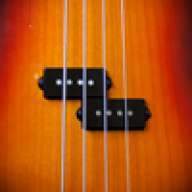
Ok, as promised, here's a fretboard wood test. The conventional wisdom is that a Maple fretboard is "snappy" and a Rosewood fretboard is more "warm". Whatever those terms mean!
So, I made recordings of each type of fretboard wood. Everything else on the bass is exactly the same. I simply swapped necks.
Which is which?
Clip A
Clip B
(I used a P bass with roundwounds for this test. Normally I use flats on a P, but I thought rounds would be better since they have a broader frequency response)
A is Maple
B is Rosewood
Let's see if I do better on this, than the body wood test


I know this is an old(ish) thread, but what also stood out for me was that the playing was better on the B clip

I know this is an old(ish) thread, but what also stood out for me was that the playing was better on the B clip

Don't hear it. And I'm the only playing it. There's an extra 16th note in a couple of spots in clip B. Maybe you like those?
Don't hear it. And I'm the only playing it. There's an extra 16th note in a couple of spots in clip B. Maybe you like those?
Very likely it, but it was a mostly tongue in cheek comment anyway, and not a knock on your playing in any way Dan
- Jun 24, 2006
- 2,560
- 90
- Disclosures
- Endorsing Artist: MTD basses and strings; Bergantino Amps & Cabs
EDIT: The answer is revealed in post 112.
Ok, as promised, here's a fretboard wood test. The conventional wisdom is that a Maple fretboard is "snappy" and a Rosewood fretboard is more "warm". Whatever those terms mean!
So, I made recordings of each type of fretboard wood. Everything else on the bass is exactly the same. I simply swapped necks.
Which is which?
Clip A
Clip B
(I used a P bass with roundwounds for this test. Normally I use flats on a P, but I thought rounds would be better since they have a broader frequency response)
to really hear a difference, you need a back pickup involved, but, live, in a room with a bass amp, you'll hear a huge difference unless you're a moron. By the time you record it digitally through WHATEVER means, with whatever mikes, condense and compress it down and back up again in the recording process, then back down again for internet transfer, upload it, through millions of servers, freaking satellites or whatever transmission process, through your browser, your computer, and out whatever crappy little computer speakers you have, you probably WON'T HEAR MUCH DIFFERENCE.
Try the same test on a jazz bass with a back pickup...you'll hear a MUCH bigger difference.
Flame suit on...here comes the legions of loudmouthed nutbags who think lutherie is a sham, and tonewoods are for looks only...

Cameron
to really hear a difference, you need a back pickup involved, but, live, in a room with a bass amp, you'll hear a huge difference unless you're a moron. By the time you record it digitally through WHATEVER means, with whatever mikes, condense and compress it down and back up again in the recording process, then back down again for internet transfer, upload it, through millions of servers, freaking satellites or whatever transmission process, through your browser, your computer, and out whatever crappy little computer speakers you have, you probably WON'T HEAR MUCH DIFFERENCE.
Try the same test on a jazz bass with a back pickup...you'll hear a MUCH bigger difference.
Flame suit on...here comes the legions of loudmouthed nutbags who think lutherie is a sham, and tonewoods are for looks only...
Cameron
One thing I've noticed in all these threads - There is a general difference in tone (pardon the pun) between the two sides of this debate. The Tonewood Faithful (like Cameron in the post above) are generally more snarky, arrogant, condescending, emotional, etc. Whereas those of us who question the "wood matters" claims are typically more calm, collected, logical, respectful, etc.
There are exceptions, of course. But that seems to be the common pattern.
Cameron, to your post above... Do you realize that your argument is self-defeating?? What you are saying is that differences in wood tone can only be heard in a very specific scenario: when using a bridge pickup in a live setting. That's it. According to you, any other scenario (such as a studio recording in MP3 format, downloaded from iTunes or Amazon) would make hearing wood tones impossible.
That argument would suggest that wood really doesn't matter all that much.
Also, I've never heard anyone suggest that only a bridge pickup can detect differences in wood tone. Got any evidence for that?

One thing I've noticed in all these threads - There is a general difference in tone (pardon the pun) between the two sides of this debate. The Tonewood Faithful (like Cameron in the post above) are generally more snarky, arrogant, condescending, emotional, etc. Whereas those of us who question the "wood matters" claims are typically more calm, collected, logical, respectful, etc.
That's pretty snarky.
- Jun 24, 2006
- 2,560
- 90
- Disclosures
- Endorsing Artist: MTD basses and strings; Bergantino Amps & Cabs
I'm not a moron... and the differences to me are negligible.
And what kind of $39.00 plastic computer speakers are you listening to it through again...?
One thing I've noticed in all these threads - There is a general difference in tone (pardon the pun) between the two sides of this debate. The Tonewood Faithful (like Cameron in the post above) are generally more snarky, arrogant, condescending, emotional, etc. Whereas those of us who question the "wood matters" claims are typically more calm, collected, logical, respectful, etc.
There are exceptions, of course. But that seems to be the common pattern.
Cameron, to your post above... Do you realize that your argument is self-defeating?? What you are saying is that differences in wood tone can only be heard in a very specific scenario: when using a bridge pickup in a live setting. That's it. According to you, any other scenario (such as a studio recording in MP3 format, downloaded from iTunes or Amazon) would make hearing wood tones impossible.
That argument would suggest that wood really doesn't matter all that much.
Also, I've never heard anyone suggest that only a bridge pickup can detect differences in wood tone. Got any evidence for that?
Coming right up...sick of this stupid argument. I'm posting a video in response to this idiocy. In a room, live, through a good modern bass amp, the differences are enormous...likewise through a back pickup. I'm sorry you're not experienced or sensitive enough to notice it.
That's pretty snarky.
Precisely...it's hard to NOT get snarkey when you're dealing with such self-perpetuating ignorance. Let's see, I've got Michael Tobias, Roscoe, Pedulla, Sadowsky, Fender, Furlanetto, Fodera, Warwick, and hundreds of others on my side, and you've got...

Video momentarily...
Cameron
- Jun 24, 2006
- 2,560
- 90
- Disclosures
- Endorsing Artist: MTD basses and strings; Bergantino Amps & Cabs

Bassflute said:
Why are you so emotionally impacted by the fact that some folks think wood tone is exaggerated??
Weird.
EDIT: I find it funny that you attempt to prove your case by using a YouTube video, when you just finished saying that listening to audio over the Internet is a useless test.

I failed some of these tests, badly.
Personally, I believe that tonewoods/the wood in electric instruments can have an affect on overall tone. But I believe it's probably a slight affect.
I believe the whole chain of the instrument's electronics/neck and the amp/tubes/cab (speakers), EQing and the whatever you have connected in the chain and how you play.....; all contribute to the overall tone/sound. As does the room/venue one is playing in.
Now, I believe my ears hear and feel differences in different basses' bodies and electronics, when I'm playing it. I also believe that difference in tone/depth of tone/sweetness of tone can be heard in recordings.
I believe that in order to retain the unique and special tone of the wood, the signal should be as simple and short as possible. It can be a fragile nuance of recording.
But I also believe I have a tendancy to romanticize certain things and that I also have an over-active, dreamy (some might say, delusional ) imagination I think I hear differences in tone/tone depth and sustain from certain types of woods I make no apologies for that.
I like tonewoods and I think it's worth it (to me) to get tonewoods I like. I respect other people's opinions and they are free to choose what they prefer/like. But I don't care what other's believe, in the aspect of how if affects my preferences and beliefs in it.
I tend to agree with Dan that it's probably not a very significant difference. But then again, I do believe that there are special pieces of wood out there. Pieces of wood that are more tuneful.
Ultimately, my imagination loves the romantic idea of wonderful tonewoods. And tone and dept of tone are huge influences in my love of music. It sparks.....ignites my imagination and adds a little more depth of emotion to the music.
If that's all in my head, I thank god I was provided such a cool, dreamy imagination.
You're all free to believe what you want.
I'm happy.....delighted to live in my musical imagination.
Thank you for the forum.
Personally, I believe that tonewoods/the wood in electric instruments can have an affect on overall tone. But I believe it's probably a slight affect.
I believe the whole chain of the instrument's electronics/neck and the amp/tubes/cab (speakers), EQing and the whatever you have connected in the chain and how you play.....; all contribute to the overall tone/sound. As does the room/venue one is playing in.
Now, I believe my ears hear and feel differences in different basses' bodies and electronics, when I'm playing it. I also believe that difference in tone/depth of tone/sweetness of tone can be heard in recordings.
I believe that in order to retain the unique and special tone of the wood, the signal should be as simple and short as possible. It can be a fragile nuance of recording.
But I also believe I have a tendancy to romanticize certain things and that I also have an over-active, dreamy (some might say, delusional
) imagination I think I hear differences in tone/tone depth and sustain from certain types of woods I make no apologies for that. I like tonewoods and I think it's worth it (to me) to get tonewoods I like. I respect other people's opinions and they are free to choose what they prefer/like. But I don't care what other's believe, in the aspect of how if affects my preferences and beliefs in it.
I tend to agree with Dan that it's probably not a very significant difference. But then again, I do believe that there are special pieces of wood out there. Pieces of wood that are more tuneful.
Ultimately, my imagination loves the romantic idea of wonderful tonewoods. And tone and dept of tone are huge influences in my love of music. It sparks.....ignites my imagination and adds a little more depth of emotion to the music.
If that's all in my head, I thank god I was provided such a cool, dreamy imagination.
You're all free to believe what you want.
I'm happy.....delighted to live in my musical imagination.
Thank you for the forum.
- Jun 24, 2006
- 2,560
- 90
- Disclosures
- Endorsing Artist: MTD basses and strings; Bergantino Amps & Cabs
Why are you so emotionally impacted by the fact that some folks think wood tone is exaggerated??
Weird.
EDIT: I find it funny that you attempt to prove your case by using a YouTube video, when you just finished saying that listening to audio over the Internet is a useless test.
and I feel it's my duty to fight ignorance to the best of my ability.
Sincerely,
Cameron Hood
B.Mus., B.Ed., A.A., B.C.R.M.T.
- Status
- Not open for further replies.


