
Enjoy the benefits of a premium membership!
Upgrade Account
-
TalkBass has been independent since 1998. Add your voice.
Create a free account to reply to discussions, view embedded media, and browse with fewer display ads.
Join free Log in
Want zero display ads or expanded classifieds tools? Compare plans.
You are using an out of date browser. It may not display this or other websites correctly.
You should upgrade or use an alternative browser.
You should upgrade or use an alternative browser.
CITES - What every bass player should know
- Thread starter Turnaround
- Start date
More options
Who Replied?

Why can't you simply contact Samick and ask customer service what woods the bass was made from?

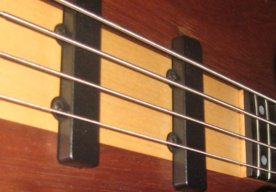
Here is the picture of the neck
Why can't you simply contact Samick and ask customer service what woods the bass was made from?
I agree with Jeff - contact Samick.
Hmm, we usually spend time in Nova Scotia in the summer, and I've flown into Halifax with, usually, a tenor uke. Never so much as had anyone look twice at it. Four summers ago was last time I think. Recent crackdown?

Hi everybody. Quick question, and I think I can guess the answer, but it's worth a shot: say I import a bass from the US to Canada and it comes with a CITES permit because rosewood; if I, in turn, were to sell the bass to somebody in the US before said permit expires, is that acceptable or would I need to apply to my own government for a whole new permit? Thanks!

Hi Jeff. Sorry about the slow reply, I'm on the road. I can't provide any detailed pics because the instrument is in Australia and I am in the US. About all I can provide is one pic that I have on my desktop at home, where I will be next week and which I will happily post then. Thanks!Post lots of sharp, detailed photos here and we can help in ID'ing of the wood.
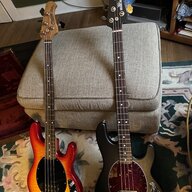
TBer was wanting to trade his rosewood fret board,for my maple fret board. Problem is might have issues with his rosewood fret board,coming from outside of US? He has Ray34CA,with rosewood fret board,and wants to ship it to me in the US. Might need to see what type rosewood, Sterling by Music Man uses on their guitars? Any Help?

Bahahahaha! I am going to have A VERY long post about this CITES and Lacey Act, and possible solutions. Very tricky, very expensive and the end result will be much increased prices in the final product. There is, at this point in time, NO way around the issue, aside from filling out paperwork . I work for a company that does imports/ exports for hunting trophies which very much fall into the same categories. Anyway, I'll have a thread and a lengthy, informative, and probably upsetting solution for all luthiers, companies, and musicians crossing borders alike!You must be of the MTV generation.


Update: a few pages ago i posted this:
The 2018 Conference of the (CITES) Parties which will vote on this recommendation was originally scheduled to take place in Sri Lanka in May, but it was postponed after the awful terrorist attacks there. The Conference has now been rescheduled and will take place in Geneva beginning August 17, 2019. The CITES Secretariat has recommended that the proposed change, which includes the “finished musical instrument and finished musical instrument parts” exemption be adopted, despite its concern that there is “no agreed definition... for musical instruments.”
For those of you keeping score at home, the relevant proposal is CoP18 Prop. 52. Maybe some good news is on its way!
There may be some good news for us on the horizon. In May of 2019 a conference of the nations who have signed the CITES treaty will vote on a recommendation that has already been approved by the appropriate CITES committee which would exempt finished musical instruments and musical instrument parts from the CITES restrictions on the movement of all dalbergia rosewoods (basically, cocobolo, bubinga and all rosewoods except Brazilian). If the recommendation is adopted, there will be no restrictions on the international movement or sales of musical instruments unless they contain Brazilian rosewood or other so-called “Appendix I” materials (like ivory). Fingers crossed ...
The 2018 Conference of the (CITES) Parties which will vote on this recommendation was originally scheduled to take place in Sri Lanka in May, but it was postponed after the awful terrorist attacks there. The Conference has now been rescheduled and will take place in Geneva beginning August 17, 2019. The CITES Secretariat has recommended that the proposed change, which includes the “finished musical instrument and finished musical instrument parts” exemption be adopted, despite its concern that there is “no agreed definition... for musical instruments.”
For those of you keeping score at home, the relevant proposal is CoP18 Prop. 52. Maybe some good news is on its way!
Last edited:
... aaaaand, here it is:About all I can provide is one pic that I have on my desktop
Sorry but this is all that I have.
Update: a few pages ago i posted this:
The 2018 Conference of the (CITES) Parties which will vote on this recommendation was originally scheduled to take place in Sri Lanka in May, but it was postponed after the awful terrorist attacks there. The Conference has now been rescheduled and will take place in Geneva beginning August 17, 2019. The CITES Secretariat has recommended that the proposed change, which includes the “finished musical instrument and finished musical instrument parts” exemption be adopted, despite its concern that there is “no agreed definition... for musical instruments.”
For those of you keeping score at home, the relevant proposal is CoP18 Prop. 52. Maybe some good news is on its way!
CoP18 Prop. 52 : COUNTING THE DAYS...
I have been looking at the colors of various Rosewood variants and the closest to my fretboard in terms of color and grain seems to be East Indian Rosewood (Dalbergia latifolia) which is a CITES Appendix II timber (I think, it is not specifically listed) so assuming that Prop 52 passes on Friday I think I should be good to go.... aaaaand, here it is:
Brazilian Rosewood is quite a lot darker to the point of being almost black.

I've seen Brazilian with streaks of deep red, purple, brown, orange... Heartwood can be much, much lighter.I have been looking at the colors of various Rosewood variants and the closest to my fretboard in terms of color and grain seems to be East Indian Rosewood (Dalbergia latifolia) which is a CITES Appendix II timber (I think, it is not specifically listed) so assuming that Prop 52 passes on Friday I think I should be good to go.
Brazilian Rosewood is quite a lot darker to the point of being almost black.
The good news is that anything made with Brazilian over the last 20 years or so would have come from a boutique builder, cost BIG bucks, and it would have been mentioned as a major selling point.
This particular Rosewood was given to me, and knowing the guy who gave it to me if it cost him anything he would have gouged me for it.That pretty much rules out Brazilian Rosewood.
Last edited:
CoP18 Prop. 52 : COUNTING THE DAYS...
(sigh... apparently Invalid Link Removed does not wrap up until 28 August 2019...)
ongoing discussion summaries posted Invalid Link Removed!!
Last edited:

Ebony is a so-called “Appendix III” wood, which only means that if a particular country wants to it can require a person seeking to export ebony from that country to get a permit first. There are only 3 countries that have that requirement for ebony - all in Central America, which isn’t where most fingerboard ebony comes from. Bottom line: there are no real-world controls over ebony, and so there is no reason to worry if you are buying or selling a bass with ebony in it. Yet.
Appendix II woods are covered world-wide and can only move internationally for commercial purposes with a permit. Bubinga, cocobolo and all the rosewood species except Brazilian are Appendix II woods. Brazilian rosewood is in Appendix I, and so it can’t be traded internationally at all.
I want to import a bass with ebony fingerboard från USA to Sweden. At least I think it is an ebony fingerboard. It is a Yamaha BB3000S.
How do I know that it is an ebony fingerboard, and most important, how do the customs know that it is an ebony fingerboard and not rosewood? Do I need som sort of paper/document that states the wood in the bass, body, neck and fingerboard?
Does anyone know the latin word for ebony wood?
Hope someone can help.
Diospyros spp according to the CITES manual.Does anyone know the latin word for ebony wood?


