
Enjoy the benefits of a premium membership!
Upgrade Account
-
TalkBass has been independent since 1998. Add your voice.
Create a free account to reply to discussions, view embedded media, and browse with fewer display ads.
Join free Log in
Want zero display ads or expanded classifieds tools? Compare plans.
You are using an out of date browser. It may not display this or other websites correctly.
You should upgrade or use an alternative browser.
You should upgrade or use an alternative browser.
Class D amp with the most slam/punch
- Thread starter g4string
- Start date
More options
Who Replied?


I have a DB751, and I would personally day is it the quick and responsive pushing of low mids while still maintaining articulation. Some amps have a lot of meaty lows but they come off as wooly in that if you are playing quick notes each one can get a little lost. My Aguilar feels like when I am playing fast there is a throb between the notes. And if I hit a note quick "stabbing" note it's just there smacking you in the face.I've never had the opportunity to play through a DB75x, and regret not picking one up at a decent price on the local CL a year or so ago...
I've been curious about the Berg HP for some time, but just fell into a Forte at the local GC a couple weeks ago, and figured I'd give that a try 1st to see how I liked the amp.
Curious; How is "slam" best measured - or at least, what is the most significant factors that contribute?
Is it the dampening?
My Mesa 800+ can match the eq of my DB751 if I work at it, but it doesn't hit as hard. The onomatopoeia of "slam" or "punch" really is appropriate. With the DB751 Its just like...the note is suddenly THERE...just wham!
Last edited:
A cab needs to be responsive, but as a person with a DB751 and a Mesa 800+ I can say there is a difference. I've played both on the same cab, and the DB751 is like a sledge hammer with each note. No mushing between them if you play fast. The Mesa had more treble on tap but doesn't punch the same way at all.Is slam or punch cabinet dependent?
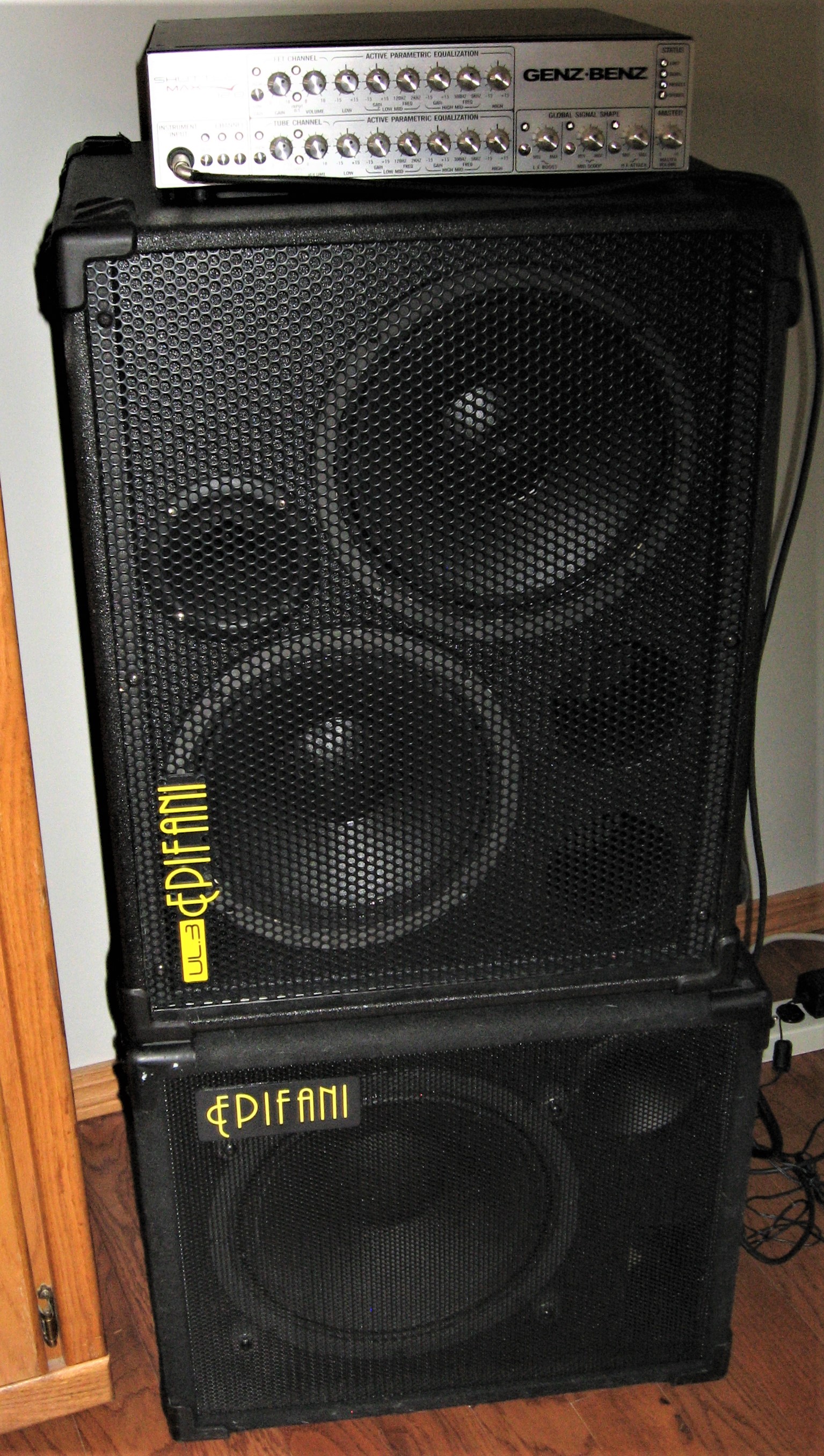
I'm shocked to see that not every response was Mesa. I feel my ShuttleMax 12.0 slam. It also thumps and has punch.
Amplitube 5 has a model of the DB750. It isn't an apples to apples comparison to my DB751 because the mid eq is a tad different, but it is pretty close. You can't really feel "slam" in a recording, but the model does have the big low mids that cut through if your mix is right.I wonder how much of the DB75X's ´slam' and ´punch' could capture a good amp modeler? When you see blind tests of legendary guitar amps...
Also, I'd like to see how this slam/punch would translate into the digital definition of a tone capture.
The biggest problem I have with AT5's model is they got a bunch of line noise in the simulation and if you are using it to practice alone, you can hear a faint buzz.

Man, we really need a sticky thread for vernacular on here

Yes, exactly...5- and 3-page definitions!
 Just like this thread!
If it's about a feel in one's gut, or chest, then there must be an aspect of focus to the soundscape. As in, you feel the slam/punch in a certain spot in the room, but a foot or two away, not so much. Does this make sense? If so, an empty room could have more s/p than a crowded room. Yes or no?

It's easy to say "we're all." My eyes and ears see and hear something else. How about "some of us?"
Practically, how does a bassist play in a duo at a small bistro or a Roadhouse biker gig, or bluegrass jam all in the same weekend? If your band is ampless, great. They carry significant PA to accomplish this? Ampless has it's time, place and advantages. So do amps.
It was meant to be funny . . .
I agree with you about the "hit". Class D amps have been around for many years now and yet I still haven't played one that has the ass that a lead sled does, which I can only attribute to not having a transformer to store up power for peak slams. The Class D stuff I have played is all horsepower like a sport bike, little torque.
The Trickfish 1K features additional capacitors alongside the Pascal power module, which might explain why it feels more like an A/B amp. I ain't no tech guy, but do know that big capacitors are often an element of the lead sleds, or high-power A/B hi-fi amps, we all know and love. Perhaps "headroom" is the right word for that sense of easy authority? I should add that the Trickfish propaganda on power output is sort of vague, but I'm voting with my ears - and wallet - that they are onto something...and the horsepower/torque analogy is spot on!
Many years ago I assembled a car stereo setup that consisted of an Alphasonik 40 wpc amplifier and a 100 watt sub amp with crossover. It was all class AB, sturdily built and spendy. No name 6.5" poly woofers 1st order crossed to Philips dome tweeters and an 8" Alpine sealed sub. I can tell you that that setup was MUCH MUCH louder and hit harder than my purported 1000 watt class D B&O system in my Ford Edge.
No contest.
There is something to the perceived difference between class D and class AB, but I have no idea what causes it.
No contest.
There is something to the perceived difference between class D and class AB, but I have no idea what causes it.

The difference between class D amps is more in the preamps and speakers than the power section. The Fender Rumble series has a preamp that is both clean and aggressive, capable of slap/pop, p-bass/flats grooves, and handling aggressive pick playing. There are easy-to-use tone shaping options. Drive channel sounds really good and natural, not like a pedal sitting on top of your amp.
My 800 combo is capable of being obscenely loud and moves a ton of air. I can feel it in my chest even when I am running my in-ears.
My 800 combo is capable of being obscenely loud and moves a ton of air. I can feel it in my chest even when I am running my in-ears.
Last edited:
What cabinet are you using?A cab needs to be responsive, but as a person with a DB751 and a Mesa 800+ I can say there is a difference. I've played both on the same cab, and the DB751 is like a sledge hammer with each note. No mushing between them if you play fast. The Mesa had more treble on tap but doesn't punch the same way at all.
.......for some of us our amps are part of the musical instrument signal chain. We want them to be. It's not a burden its a feature.
I couldn't agree more!! For a lot of us in that group we are working on finding a balance between the sounds we want to make and what is practical. I think that's probably is where the OP is at.
Guys obsess about the nuance between strings, pickups, high-mass bridges, nut material, etc... The thickness and material of a pick makes a difference for some. Amps / speakers are no different.
As far as the "audience can't tell" or "your sound is all in the FOH" - that's probably true. But remember that everyone is in this music / bass playing thing for different purposes.
For me, I'm not worried about the audience. I try to focus on MY thing. That means my little corner of the stage. I'm concerned about the sounds I'm making, and how that fits into the context of the band. My bass, amp, and cab are a big part of that for me. I've always found that when I'm making myself happy, I play good, and the audience responds. The right amp makes me happy and that makes me play good, and everything else falls in line.
The audience is not supposed to know about what goes into the sausage - just that it tastes good. But you can be damn sure that a really good sausage maker is concerned about every small detail - the quality of the meat, the exact blend of ingredients, the freshness and quality of the spice. If you are fine with hot-dogs, good for you, but you shouldn't give someone a hard time for giving a damn about making the best sausage they can.
Some people like to make "paintings" on an Ipad, and some people like to stretch their own canvas and mix their own oils. Everyone should do their thing. If your aural painting involves finding an amp that has "slam," then that's what you should chase.

- Feb 12, 2006
- 60,986
- 5
- 220,768
- Disclosures
- Development Engineer-Mesa Boogie, Development Engineer-Genzler (pedals), Product Support-Genz Benz
A cab needs to be responsive, but as a person with a DB751 and a Mesa 800+ I can say there is a difference. I've played both on the same cab, and the DB751 is like a sledge hammer with each note. No mushing between them if you play fast. The Mesa had more treble on tap but doesn't punch the same way at all.
Of course there is quite a bit of voicing differences between the two amps as well.
Except that there is generally MORE energy storage and BETTER regulation in the power supply of an SMPS compared to a linear (line frequency) supply. This is one reason large pro audio amps migrated to SMPS early on, in addition to the weight savings. Other reasons are a more efficient use of AC input power (both due to the rectification process, PWM regulation and PFC)The Trickfish 1K features additional capacitors alongside the Pascal power module, which might explain why it feels more like an A/B amp. I ain't no tech guy, but do know that big capacitors are often an element of the lead sleds, or high-power A/B hi-fi amps, we all know and love. Perhaps "headroom" is the right word for that sense of easy authority? I should add that the Trickfish propaganda on power output is sort of vague, but I'm voting with my ears - and wallet - that they are onto something...and the horsepower/torque analogy is spot on!
The size of the caps (value) alone does not define the amount of energy stored.

apropos of nothing the OP intended .... but honestly way more interesting to me than these discussions of Slam/Heft/Punch as it relates to amps.
My Dad (1928-2014) was a pro bass player in Chicago for many years and was an avowed fan of Slam Stewart, who's style deeply influenced my Dad's playing.
https://www.talkbass.com/threads/class-d-amp-with-the-most-slam-punch.1628487/page-2#post-27929831
Absolutely. It took me a while to get the low mids right, but I think I got the 800+ to sound like the DB751, but there is a difference to how they are presented. Those low mids don't seem as quick on the Mesa.Of course there is quite a bit of voicing differences between the two amps as well.
Except that there is generally MORE energy storage and BETTER regulation in the power supply of an SMPS compared to a linear (line frequency) supply. This is one reason large pro audio amps migrated to SMPS early on, in addition to the weight savings. Other reasons are a more efficient use of AC input power (both due to the rectification process, PWM regulation and PFC)
The size of the caps (value) alone does not define the amount of energy stored.

I'm shocked to see that not every response was Mesa. I feel my ShuttleMax 12.0 slam. It also thumps and has punch.
and yet, both Mesa (recent) and Genz were designed by the same guy .... so .....

I have a DB751, and I would personally day is it the quick and responsive pushing of low mids while still maintaining articulation. Some amps have a lot of meaty lows but they come off as wooly in that if you are playing quick notes each one can get a little lost. My Aguilar feels like when I am playing fast there is a throb between the notes. And if I hit a note quick "stabbing" note it's just there smacking you in the face.
My Mesa 800+ can match the eq of my DB751 if I work at it, but it does hit as hard. The onomatopoeia of "slam" or "punch" really is appropriate. It just like...the note is suddenly THERE...just wham!
Are you saying your d800+ does hit has hard as your db751 or does not? It isn't clear from your response.
If I were to supply a competent amp desginer with unlmited budget could they build an 8 pound or less amp that sounds and feels exactly like a db751?


