
FWIW, unless I misread the list, only one is listed as Brazilian.I don't know but is Looks like more than just one species ....

TalkBass has been independent since 1998. Add your voice.
Create a free account to reply to discussions, view embedded media, and browse with fewer display ads.
Join free Log in
Want zero display ads or expanded classifieds tools? Compare plans.
FWIW, unless I misread the list, only one is listed as Brazilian.I don't know but is Looks like more than just one species ....

FWIW, unless I misread the list, only one is listed as Brazilian.

See this is interesting, because when I played XavidmanX's LG with the DN board, it seemed relatively snappy for a rosewood. I wonder if the age of the wood has resulted in maybe some partial petrification or otherwise hardening?

 ).
). .. and no upcharge


Slow down there T we are just having a discussion here no need to get all worked up......
See this is interesting, because when I played XavidmanX's LG with the DN board, it seemed relatively snappy for a rosewood. I wonder if the age of the wood has resulted in maybe some partial petrification or otherwise hardening?
Then is it true that the rosewood fingerboard on my 1960 Fender Precision is for sure Dalbergia Negra?
-Steve

Then is it true that the rosewood fingerboard on my 1960 Fender Precision is for sure Dalbergia Negra?
-Steve
Kingwood (Dalbergia caerensis), Tulipwood (Dalbergia variabilis), Jacaranda do Para (Dalbergia spruceana), just to name a few are rosewoods from Brazil with different species names...
I don't think it really matters too much because people that actually use "real" brazilian rosewood still just call it brazilian rosewood. For example, among acoustic builders, Olson and Applegate use old growth brazilian rw, but they never refer to it as dalbergia negra (nigra). It's just the scientific name for it so I don't think it's that big of a deal. To me it almost seems like an argument about whether to call water "water" or "h2o".
All I know is, the builders that do seem to have actual old growth brazilian, tend to have them available at very high option prices. Applegates brazilian back and sides option ranges from $2000 - $5000 depending on figuring and age, granted you're also paying for their (the builders) craftsmanship as well.
And as Coelho said, those other Dalergia species woods out of brazil are referred to with different names.

This has been entertaining
So what you are saying is that DN is a bit like graphite?

This is the board on my '59 P:
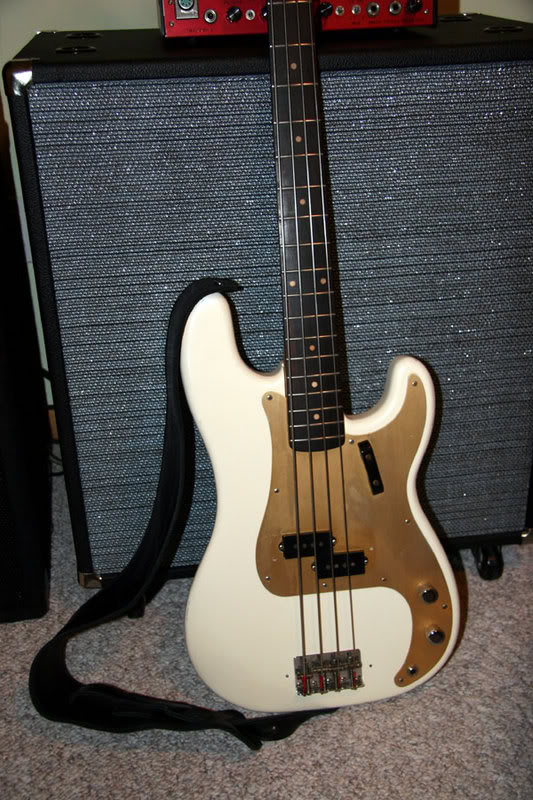
This is the board that Jimmy is using:

If you ran the AC neck through the mud and hung it up to dry, they'd look pretty darn close.
C'mon, gimme a break...Frankly I can tell the difference from playing it....If you blindfolded me and handed me 10 Instruments I bet I could tell you which one is old Dalbergia...In fact I would bet ANYBODY $1,000.00 that I could. I HOPE somebody takes me up on it....
C'mon, gimme a break...




