Although another poster mentioned that the relation considering Reverb sales is rather 1:5. This fits my impressions.
Read post 60 (above) - the comparison that brought 5:1 to the discussion was comparing apples and oranges.

TalkBass has been independent since 1998. Add your voice.
Create a free account to reply to discussions, view embedded media, and browse with fewer display ads.
Join free Log in
Want zero display ads or expanded classifieds tools? Compare plans.
Although another poster mentioned that the relation considering Reverb sales is rather 1:5. This fits my impressions.
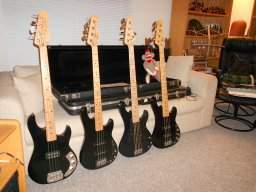
HM 4 and 5, Heartfield with active electronics and XLR outputs.....Bass VI
Precision Special
Elite Precision Bass
Lyte
Jazz Power Special
Prophecy
Telecaster Bass
They make whatever they think might sell…. Its as simple as that.


They're fine. People just don't know how to set them up properly.One could argue that things went downhill with the Jazzmaster/Jaguar. Both are severely flawed instruments (basically the poor break angle over the saddles).
They're fine. People just don't know how to set them up properly.
And: how many bass players just bought a bass and never a guitar?

The sales statistic I quoted above says 1:3 (electric basses sold in relation to electric guitars). About 500 million cs. 1.500 million in sales in 2022.

I'm not a Fender expert but I think they've made a few more models.Whereas the solid body electric bass...
1951 - Precision
1960 - Jazz
I'm not a Fender expert but I think they've made a few more models.
Pretty sure they make one called the Jaguar.
No problem...not a Jaguar owner but I still regret not buying a mint Japanese one a few years ago for a price I'll never see again.They did. I skipped a whole bunch just to get to the point faster. Not to ignore or belittle models.
Shimming is just a part of the setup. It's a feature, not a bug.I disagree. They are flawed designs that at a minimum need the necks to be shimmed, unless you like that characteristic thin, jangly tone you get from a very poor break angle over the saddles (and never do any bending). Some people like them of course but they are very poorly designed guitars. Guitars with a bridge/tailpiece like that needs the neck to be angled backwards from the body.
They can sound cool for certain styles of music but they are NOT great designs. Except for the looks of course, they are definitely the coolest looking guitars Fender has ever released.

. . . . Why so many guitar variants, and not so much the bass?
Would it make you feel better if Leo had renamed the Precision every time the body style and headstock style changed? Also, does the Dimension or Jaguar or Mustang not count as a bass?When you look at the development of the Fender solid body electric guitar...
1951 - Esquire
1952 - Telecaster
1954 - Stratocaster
1957 - Jazzmaster
1959 - Jag, or mustang... (I'm going from memory, all dates are approximate)
Whereas the solid body electric bass...
1951 - Precision
1960 - Jazz
Why so many guitar variants, and not so much the bass? I know he tweaks the P - the pickups change, and I think the bridge changes, etc... But given the difference between a Tele and a Strat, then a Strat and a Jazzmaster... why?
Several reasons, and it could be any of them, all of them, or some of them, or none of them, suggest themselves.
1) He got the P so right, there was very little to change. (This is supported by one of the fender people, who said the Jazz wasn't really a passion project)
2) There wasn't enough market for bass (This is supported by the length of time it took the bass to become a 'respectable instrument'. It's not til the early 60s that the bass becomes ubiquitous, and it had competition from Gibson, Gretsch, Danelectro, etc ....
3) Leo and the crew didn't care much about the bass as a product, so didn't want to spend resources on developing it.
4) Being more expensive (more materials) it was uneconomic to change very much
I've looked through several histories, but there's no real reasons given.
Did I miss something? Does anyone know? Thanks in advance!
I've bought a few basses but never an electric guitar. Only reason I have one at all is I had arrived at a yard sale while it was packing up and the seller literally shoved a Tiesco in my hands and told me to enjoy it.And: how many bass players just bought a bass and never a guitar?

When you look at the development of the Fender solid body electric guitar...
1951 - Esquire
1952 - Telecaster
1954 - Stratocaster
1957 - Jazzmaster
1959 - Jag, or mustang... (I'm going from memory, all dates are approximate)
Whereas the solid body electric bass...
1951 - Precision
1960 - Jazz
Did I miss something? Does anyone know? Thanks in advance!
Dude, if the whole point of your OP is that ~Fender only made a couple of models of basses and what would be the reason for that?~, then "skipp[ing] a whole bunch" of models "just to get to the point faster" seems like a colossally dumb thing to do.They did. I skipped a whole bunch just to get to the point faster. Not to ignore or belittle models.

++
Fender Jaguar Bass
Fender Mustang Bass
Fender Bullet Bass
Fender Bass IV
Fender Meteora
Fender Telecaster bass
Fender Musicmaster bass