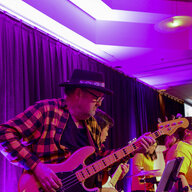
I hope they bring back the Dimension. And they had weird stuff like the Prophecy II and the Performer
I really love my dimension. Such a versatile but good-sounding bass, and a cool-looking instrument.

TalkBass has been independent since 1998. Add your voice.
Create a free account to reply to discussions, view embedded media, and browse with fewer display ads.
Join free Log in
Want zero display ads or expanded classifieds tools? Compare plans.
I hope they bring back the Dimension. And they had weird stuff like the Prophecy II and the Performer

Those numbers are biased - it depends on how your search as to what you get.
If you search "electric bass guitars" and "electric guitars", you get 193K and 11 K guitars and basses.
If you search "guitar" and "bass guitar" (a lot of acoustics involved), you do get 44K bases, and you get 660 K guitars. So, somewhere between 15 (including acoustics) and 17.5 to 1(just electrics)
Read post 60 (above) - the comparison that brought 5:1 to the discussion was comparing apples and oranges.
Dude, if the whole point of your OP is that ~Fender only made a couple of models of basses and what would be the reason for that?~, then "skipp[ing] a whole bunch" of models "just to get to the point faster" seems like a colossally dumb thing to do.
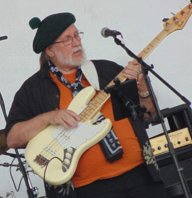
Full disclosure: I've been playing a Fender Jazz Bass since 1966.When you look at the development of the Fender solid body electric guitar...
1951 - Esquire
1952 - Telecaster
1954 - Stratocaster
1957 - Jazzmaster
1959 - Jag, or mustang... (I'm going from memory, all dates are approximate)
Whereas the solid body electric bass...
1951 - Precision
1960 - Jazz
Why so many guitar variants, and not so much the bass? I know he tweaks the P - the pickups change, and I think the bridge changes, etc... But given the difference between a Tele and a Strat, then a Strat and a Jazzmaster... why?
Several reasons, and it could be any of them, all of them, or some of them, or none of them, suggest themselves.
1) He got the P so right, there was very little to change. (This is supported by one of the fender people, who said the Jazz wasn't really a passion project)
2) There wasn't enough market for bass (This is supported by the length of time it took the bass to become a 'respectable instrument'. It's not til the early 60s that the bass becomes ubiquitous, and it had competition from Gibson, Gretsch, Danelectro, etc ....
3) Leo and the crew didn't care much about the bass as a product, so didn't want to spend resources on developing it.
4) Being more expensive (more materials) it was uneconomic to change very much
I've looked through several histories, but there's no real reasons given.
Did I miss something? Does anyone know? Thanks in advance!
No, it was comparing guitars to bass guitars.

I'm not a Fender expert but I think they've made a few more models.
Pretty sure they make one called the Jaguar.
I am not as up on various 7ender bass models as I am some other brands; was there a Jaguar Bass during Leo's reign?Would it make you feel better if Leo had renamed the Precision every time the body style and headstock style changed? Also, does the Dimension or Jaguar or Mustang not count as a bass?

Look at the time period you're referring to...
It's difficult now for some to understand the historical context at the time;
the bass "guitar" - electric or not, did not exist before 1951*, and it certainly was not widely accepted at that point (1950s).
Further; it's full potential couldn't be realized due to limitations of the amplification for the bass.
That eventually changed over time, with advances in recording technology in the 60s, and a big change in amplification by the 70s.
Peoples reference for Bass in the '50s was the upright - that's what they thought the "bass" should sound like.
The Precision did what it needed to do (and still does) where as the guitar / electric guitar had already been continuously evolving for decades.
(* yes, Tutmarc, that a total of five people had heard of prior to 1980)
Yeah, bass was something that was played by the last guitar player who joined the band and they already had two guitarist.

When you do that (I used those terms), you get 660K guitars. The number you got for guitars is what you get if you search for electric guitars.
1961 - Bass VI (borrowing from the Jaguar guitar)
1965 - Bass V
Of course, after Leo left Fender, he kept going.
1976 - MM StingRay
1979 - G&L L-1000 and L-2000
While both MM and G&L have always made guitars, it’s the basses that bring home the bacon.
Gibson (1953), Danelectro (1956), Kay (1952), Hofner (1955) and Rickenbacker (1956) were all making basses in the 1950s.
P.S. I don’t consider the Telecaster bass as something unique. The first ones were essentially reissues of the 50s P, and later models using an actual Tele body or different pickups were hardly major design changes.

You completely forgot the Mustang, bronco, Rascal, Stingray, ASAT, L-1000, L-2000, Meterora, Contemporary HH, and many many others that everybody seems to completely overlook when they complain about fender making limited bass optionsWhen you look at the development of the Fender solid body electric guitar...
1951 - Esquire
1952 - Telecaster
1954 - Stratocaster
1957 - Jazzmaster
1959 - Jag, or mustang... (I'm going from memory, all dates are approximate)
Whereas the solid body electric bass...
1951 - Precision
1960 - Jazz
Why so many guitar variants, and not so much the bass? I know he tweaks the P - the pickups change, and I think the bridge changes, etc... But given the difference between a Tele and a Strat, then a Strat and a Jazzmaster... why?
Several reasons, and it could be any of them, all of them, or some of them, or none of them, suggest themselves.
1) He got the P so right, there was very little to change. (This is supported by one of the fender people, who said the Jazz wasn't really a passion project)
2) There wasn't enough market for bass (This is supported by the length of time it took the bass to become a 'respectable instrument'. It's not til the early 60s that the bass becomes ubiquitous, and it had competition from Gibson, Gretsch, Danelectro, etc ....
3) Leo and the crew didn't care much about the bass as a product, so didn't want to spend resources on developing it.
4) Being more expensive (more materials) it was uneconomic to change very much
I've looked through several histories, but there's no real reasons given.
Did I miss something? Does anyone know? Thanks in advance!

I agree with you on the times. My dad played upright, so there was a bass around the house (among all the other instruments), but I never really learned to play it. I wasn't even aware of bass guitar until 1963. I' sure I probably had heard one on records, but wasn't aware of them.Look at the time period you're referring to...
It's difficult now for some to understand the historical context at the time;
the bass "guitar" - electric or not, did not exist before 1951*, and it certainly was not widely accepted at that point (1950s).
Further; it's full potential couldn't be realized due to limitations of the amplification for the bass.
That eventually changed over time, with advances in recording technology in the 60s, and a big change in amplification by the 70s.
Peoples reference for Bass in the '50s was the upright - that's what they thought the "bass" should sound like.
The Precision did what it needed to do (and still does) where as the guitar / electric guitar had already been continuously evolving for decades.
(* yes, Tutmarc, that a total of five people had heard of prior to 1980)
Tom Petersson and Treena Foster used/has a 4000, and IIRC so does/did Michael Anthony. A few other, too, but yeah, it wasn't really until the 4001 that they really got more bassists using Ricks.Great points. Although I would just point out that although it can be claimed that "Rickebacker was making basses in the 50's"....according to my source, '57 was the first year for the Ric 4000, and around a dozen were built per year until the 4001 appeared, for a grand total of ~80 basses made between '57 and '62. So yeah technically Ric made basses in the 50's. That puts them in the "Tutmarc" category re their bass guitar involvement.
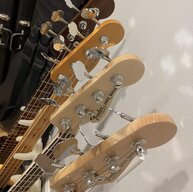

Bass VI
Precision Special
Elite Precision Bass
Lyte
Jazz Power Special
Prophecy
Telecaster Bass
They make whatever they think might sell…. Its as simple as that.


I’m thankful that I own a Dimension V. It has a great sound, very robust.I hope they bring back the Dimension. And they had weird stuff like the Prophecy II and the Performer