• TalkBass has been independent since 1998. Add your voice.
    Create a free account to reply to discussions, view embedded media, and browse with fewer display ads.
    Join freeLog in
    Want zero display ads or expanded classifieds tools? Compare plans.

Dingwall Owners Club

I’ve found that I use my plucking hand differently on my 3X than on my other Jazz basses which are both traditional J+J. I’ve never been a floating thumb player but I’ve found myself doing just that on my 3X Super J quite naturally. Funny how different instruments can make you play differently without much effort at all.
Actually I find myself using floating thumb much more with all my Dingwalls than I used to previously. Perhaps it's because you need to play across the strings and an angle too so you're not increasingly playing right at the bridge as you go down to the higher strings.
 
Last edited:
The two major differences to me are the string spacing and the scale length/reach. I find the most difficult part of transitioning between the two is the string spacing (19mm at the bridge on the SJ5, 18mm on the Combustion). My preference is 18mm, but I have grown accustomed to the 19mm. There are times when I have to play certain parts that require string skipping/octaves and I know I would have an easier time on 18mm.

Another big difference is the reach. The SJ5 feels about two positions shorter than the super long scale models. In that respect, it makes it really comfortable to play both seated and standing, especially for long gigs. One of the drawbacks to that is the upper fret access can be a bit hindered. Not only is it a little hindered by the bass body, but also your physical body when you're standing.

As for sound, it really is a toss-up and a matter of preference. You won't beat the 37" scale B-string. On the other hand, the punch of a 32" G-string is nice too. If it would be playable (and I am pretty sure it wouldn't be), I would love the clarity of the super long scale on the bass strings and the warmth and punch of the medium scale on the treble strings. That would be 5" fan, which would make it too extreme.

pretty much my sentiments.

If I’m not paying attention and have swapped to the super from a long scale I find myself about a tone off on the lower part of the neck.

I notice the spacing closer to zero and the scale up to about the 12th

the one thing I will add is that the B is obviously different IMO.

Not in a bad way.
The long scale B speaks like no other B.
It’s articulation, definition.... punctuation(?) is more clear and well spoken then one is used to from a B

The Super B is still well defined accurate but it’s less “well spoken” then the long scale but it seems to have more thump. More full and big bottom end.
 
As far as I know, the 'custom' order works like:

-Rough in your specs and work with your dealer to get the basic instrument lined up and an estimate for the work. If you have any oddball or specifics, this is the time to bring that up and your dealer will find out if it's do-able or not. Once you have that in place, you'll be asked for a deposit and you're in queue...with a very rough estimated timeline.

-Once they're closer to your build, Dingwall reaches out with an actual work-order document for you to confirm, make sure you get eyes on this and look it over personally. This means they're close to doing your actual build, and want to confirm that everything is solid. From here, you make sure they've got exactly on paper what you want. Check the fine details. If you've fussed a few things around, you'll get new pricing information on those changes. In my case, that was a switch from a flat black one-ply pickguard to a gloss 3-ply black, and I also noted that the Luminlay markers I requested didn't get noted, so that got fixed.

-When your build is complete (or nearly so) the shop will let your dealer know it's time to pay off the rest of the balance on the bass for shipping.

Sometimes there just are things that you may need to clarify with the shop directly, small details, if they can or will do certain things, if color swatches have been back and forthed, etc.. It would be best to confirm any of those with the dealer as well so everyone is in the loop and so the dealer can confirm with Dingwall what's gone on and close the loop.

Thanks for sharing this, feeling much better about my order. Cheers!
 
  • Like
Reactions: BurningSkies
Any Super J 5 owners that also have a Combustion model?

I'm so enamored with my new Super J, I'm also considering trying other Dingwalls. Primarily the Combustion NG3 model.

But the scale lengths on the two model are quite different. Can any owners of both models tell me about what it's like transitioning between the two?

My NG is a four-string, so the string spacing is the same as my SJ-5. No problems at all transitioning...
 
  • Like
Reactions: phillipkregg
Yes, you definitely want to try more Dingwalls! Eventually, you’ll sell all your straight basses to make it happen! We can help with that!

String spacing would trip me up more than scale length when switching between a longscale and Super 5. But only for as long as it took to get warmed up and playing.

I’m sticking to four string Dingwalls now days, so they are all 19mm spacing. Now I notice the scale length. Mostly I notice when I switch to the Super P and it just feels so nice and fast and compact.

Not that I’d give up the AB or Dbird, the longscales are awesome fun too.

Number of strings is the biggest difference. If I wanted to make the six string work, it had to be all six, all the time. Mostly because muting techniques and the brain rewire took a lot of time to dial in.
 
  • Like
Reactions: phillipkregg
Besides the obvious spec differences (neck/fingerboard profile, FDV pickups, different body shape, etc.), how would you describe them as being so different? I guess I imagined them to be more similar than different beyond said specs.

I don't have many opportunities to play a Z. And putting in an 18-month-wait blind order on an 8+k instrument seems a bit absurd. Although I'm highly tempted...

playability you pretty much covered with the neck profile and specs although there is a bit of difference in how they hang too. Not much but just a slight bit to be noticeable IMO.

When you start looking for reasons to justify the cost difference, for some it’s easy others not so much.

do you want a bass that has your fingerprint on it? Is it worth tricking out a production model increasing your costs there or going further yet to a custom Canadian built bass? Is the added refinement justifiable?

for me the answer is yes. On a six string I absolutely love the neck. It is the best six string neck I think ever made. No I haven’t played some other boutique necks(such as skjold) so I cannot verify that but the scale combined with the Z neck is magic. The AB necks which are more similar to the NG are also incredible, just meatier.

diving into the differences can be done on the website.
Bass Specs | Dingwall Guitars

But to offer some up here.
The sound.
The NG is designed to be big, loud and in your face. Sure it can be molded to a different nature but the electronics, hardware, wood spec and finish is designed with specific purpose. To be Nollied.
The Z can be configured how ever you chose varying the wood specs and electronic.... and appearance.

The Bridge.
This is a big one IMO. I love the Z bridge with its recessed sustain block and precision adjustments. There is definitely more going on with it and it does perceptibly affect the tone. It is significantly different then the NG bridge pieces. They are top mounted, lightweight and not built into the integral fundamental of the instruments construction. High mass vs low mass. Both have pros and cons. The NG bridge(low mass) brings the immediate snap and attack or most low mass bridge set ups where as..... in my perception, the Z bridge brings more depth, resonance to the tone.

The pick ups.
Obvious. FD3 4n vs Canadian built options. FD3,FDV,and what seems to be the often overlooked underdog the SF2s. I need to get me a set I think.
Different flavors. I speculate the NG/combustion pick ups are higher output but not as rich in the specified model flavor. More texture can be found in the Canadian options.

the electronics.
A DG is a DG. You’ve already shown interest in the DG which is a solid choice and the main differences you’ll find with this is the ability to get the 3x series/parallel switches installed from the shop vs aftermarket. That and the volume being push/pull vs the NG toggle.

the jack.
However minor it may be. I like the Nuetrik vs the NG recessed. Every time I get an NG I’m like, “shag, gotta change my cords around” as it’s the only bass that won’t take a common angle jack, which I prefer.

the head stock.
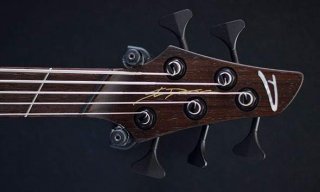
the Z has an Engineered headstock to not require the string retainer. It’s sexier. It also can be matching to the body exotic wood. The D is an inlay vs a watermark.

The woods.
I believe they make a difference in tone. Others do not. You do you.
The NG is specific to alder body(ash on combustion currently), maple/maple

Neck.
The Z offers just about any wood spec dingwall will offer. I’m curious on the new ovankol necks and I used to love my walnut necks but I have really come to adore the wenge necks. The stability is unparalleled. The feel is luscious. And the tone is clean, articulate, forcefully defined Albeit perhaps more scooped then Maple. The maple necks are no slouch and IMO have a more open effect throughout the mids on the tone.
Profile you’ve already discussed.

fretboard.
Wood options. You have wood options. Yada, yada, tone, yada, yada, appearance, etc.
with that you can also choose from a variety on inlays. Blocks, speedos, dots.

Body.
Base spec for a Z is dual density(2 separate pieces) of Ash. The NG being alder.
With that, the Z is customizable. You can incorporate walnut, maple, alder, ash, northern ash and perhaps something else I’ve forgotten. Maybe black limba now with the introduction of it in the D roc?
Appearance and tone woods. My latest build has a Ash/alder body wood combo.

do you believe contrast layers affect the tone? Well wether you do or you don’t you can add some. Wenge or maple perhaps to really make a top pop off the body? Purple Heart for some color added to a shadowy bass?

X tops. Of course this is where your personal desires really leave a fingerprint on the bass built. How do you want that beaut to look?
Is your X too for tone, is it purely because you love burls???? Do you want to bleach it or paint it or both??
Can’t do any of that stuff with an NG.

Then there is the subtle slash BOLD refinement.
The body contours.
The increased level of quality. All the way down to the battery access hatch. It’s more refined on a Canadian model. The knobs(hot topic).

finally perhaps(?). The finish. The finish used on the Z is different. I cannot recall technical terms at the moment but not only does it look and protect differently, I again believe the finish affects the tone. I would love a satin Z to compare and contrast my other ones.

So there you have it. I’m sure I’ve forgot something but this is a small summary of some model discrepancies which may help you decide your priorities and level of investment.
 
Wow..... that was a long one.
:laugh: That's for sure! But much appreciated, my brother! :thumbsup:

I can pour over specs on the website over and over again, but getting somebody's experience on it is so much more valuable.

At the moment, I'm planning a Z3-6 with Swamp Ash body, wenge neck. I may still opt for the Glockenklang pre, because as you said, it provides the options of series/parallel on all the pickups where the DG does not (which I wasn't aware of before, thx!). I'm hoping this will keep me somewhere in J-bass territory which is the tone I've grown accustomed to over the years (using Sadowsky's, Lull's, and occasionally Fenders of various types). The wenge, though, I'm not familiar with being a player of more classic Fender wood instruments and sometimes ebony (like my Strandberg). Haven't delved into the exotics.

The part I haven't decided yet is which X-top to go with and whether or not it will "need" a contrast layer. I do love natural wood tops, and a satin finish would be quite lovely... That purple reverse-burst over burl maple with wenge contrast has certainly caught my eye, but it's been done many times over already. Hmm...
 
Last edited:
:laugh: That's for sure! But much appreciated, my brother! :thumbsup:

I can pour over specs on the website over and over again, but getting somebody's experience on it is so much more valuable.

At the moment, I'm planning a Z3-6 with Swamp Ash body, wenge neck. I may still opt for the Glockenklang pre, because as you said, it provides the options of series/parallel on all the pickups where the DG does not (which I wasn't aware of before, thx!). I'm hoping this will keep me somewhere in J-bass territory which is the tone I've grown accustomed to over the years (using Sadowsky's, Lull's, and occasionally Fenders of various types). The wenge, though, I'm not familiar with being a player of more classic Fender wood instruments and sometimes ebony (like my Strandberg). Haven't delved into the exotics.

The part I haven't decided yet is which X-top to go with and whether or not it will "need" a contrast layer. I do love natural wood tops, and a satin finish would be quite lovely... That purple reverse-burst over burl maple with wenge contrast has certainly caught my eye, but it's been done many times over already. Hmm...

oh no, you CAN get the switches with a DG pre as well. What you do NOT get with the DG is a passive tone control. The glockenklang treble knob doubles as a passive tone control where as the dark glass has no passive control. It’s just flat.

Here in Calgary we have some of the most swinging weather in the world. Temp and humidity can be all over the place thanks to our chinooks. The wenge is not phased by this at all. It is noticeable with maple.
You’ll here the difference. The NG will come across as more powerful IME but louder doesn’t mean better.

If your gonna paint over an X top and burst dark to the perimeter a contrast layer doesn’t add much to the appearance unless maybe you get them to Pin stripe it. My latest build I didn’t bother for that reason but my previous ones I did utilize contrast layers.

I think your right. I love the looks of those bleached maple tops with the bursts and it’s a signature dingwall finish but it’s a bit over done now.

they often recommend the bleaching for that but I actually prefer a non bleach top painted more often. Both have a place.
 
  • Like
Reactions: Scott McArron
At the moment, I'm planning a Z3-6 with Swamp Ash body, wenge neck. I may still opt for the Glockenklang pre <...>. I'm hoping this will keep me somewhere in J-bass territory which is the tone I've grown accustomed to over the years
I happen to own a Z2-6 with Ash body, Wenge neck (CORRECTION: Maple neck with Wenge fretboard), Glockenklang pre, a stunning quilted Maple top... and the Jazz sounds that this baby can produce are sometimes more "Jazz" then my Fender Jazz bass :)

But you can also get the punchy P-bass sound, and even something that rivals my Spector. It took me quite a while to actually wrap my mind around the breadth of sound you can get from this bass. And, to be honest, I'm sure I have only scratched the surface so far (while trying not to scratch that finish)
PXL_20210325_195852256.jpg
 
Last edited:
I happen to own a Z2-6 with Ash body, Wenge neck, Glockenklang pre, a stunning quilted Maple top... and the Jazz sounds that this baby can produce are sometimes more "Jazz" then my Fender Jazz bass :)

But you can also get the punchy P-bass sound, and even something that rivals my Spector. It took me quite a while to actually wrap my mind around the breadth of sound you can get from this bass. And, to be honest, I'm sure I have only scratched the surface so far (while trying not to scratch that finish)
View attachment 4299141
Does that beauty actually have a wenge neck or maple neck with wenge fretboard? I thought it was the latter
 
  • Like
Reactions: dirkhh
:laugh: That's for sure! But much appreciated, my brother! :thumbsup:

I can pour over specs on the website over and over again, but getting somebody's experience on it is so much more valuable.

At the moment, I'm planning a Z3-6 with Swamp Ash body, wenge neck. I may still opt for the Glockenklang pre, because as you said, it provides the options of series/parallel on all the pickups where the DG does not (which I wasn't aware of before, thx!). I'm hoping this will keep me somewhere in J-bass territory which is the tone I've grown accustomed to over the years (using Sadowsky's, Lull's, and occasionally Fenders of various types). The wenge, though, I'm not familiar with being a player of more classic Fender wood instruments and sometimes ebony (like my Strandberg). Haven't delved into the exotics.

The part I haven't decided yet is which X-top to go with and whether or not it will "need" a contrast layer. I do love natural wood tops, and a satin finish would be quite lovely... That purple reverse-burst over burl maple with wenge contrast has certainly caught my eye, but it's been done many times over already. Hmm...

I also didn't touch on the switching options but there are 2 as you probably know. The D bird switch and 3x switch. It seems like the 6 way switch is a popular mod which I have been tempted by..... I’m not sure I need more options though.
 
  • Like
Reactions: SemiDriven
I happen to own a Z2-6 with Ash body, Wenge neck, Glockenklang pre, a stunning quilted Maple top... and the Jazz sounds that this baby can produce are sometimes more "Jazz" then my Fender Jazz bass :)

But you can also get the punchy P-bass sound, and even something that rivals my Spector. It took me quite a while to actually wrap my mind around the breadth of sound you can get from this bass. And, to be honest, I'm sure I have only scratched the surface so far (while trying not to scratch that finish)
View attachment 4299141

I am constantly surprised at how well my Dingwall can replicate the sound of a PBass - albeit on steroids.
 
I happen to own a Z2-6 with Ash body, Wenge neck (CORRECTION: Maple neck with Wenge fretboard), Glockenklang pre, a stunning quilted Maple top... and the Jazz sounds that this baby can produce are sometimes more "Jazz" then my Fender Jazz bass :)

But you can also get the punchy P-bass sound, and even something that rivals my Spector. It took me quite a while to actually wrap my mind around the breadth of sound you can get from this bass. And, to be honest, I'm sure I have only scratched the surface so far (while trying not to scratch that finish)
View attachment 4299141

Is it my eyes, or does the upper horn go back towards the head a bit at the point where it reaches the body ?
Which the modern Zs do not seem to do ..
 
Is it my eyes, or does the upper horn go back towards the head a bit at the point where it reaches the body ?
Which the modern Zs do not seem to do ..

It appears to a bit. Maybe an optical illusion. There seems to be way more real estate between the pickups and the neck on my 99 Z2 fiver, but it's a 21 fret as opposed to 24.

Z2 5 and 6.jpg
 
It appears to a bit. Maybe an optical illusion. There seems to be way more real estate between the pickups and the neck on my 99 Z2 fiver, but it's a 21 fret as opposed to 24.
View attachment 4299184
My '01 Z1 has yet another different shape (with the cello hip). I think those Canadian builds in the end are all hand made - they of course start out with a stencil for the shape, but I don't think they come out exactly the same shape - and in your picture you are comparing a 5er to a 6er as well - their upper horns are noticeably different between my two as well.

Looking at the side-by-side a little more... another thing that's confusing there is the perspective. Check how much / how little of the strap button is visible. My picture is more from "above", yours is more from "below". Which in return changes the perceived shape of the horns.
 
Last edited:

Latest posts