• TalkBass has been independent since 1998. Add your voice.
    Create a free account to reply to discussions, view embedded media, and browse with fewer display ads.
    Join freeLog in
    Want zero display ads or expanded classifieds tools? Compare plans.

Dingwall Owners Club

Coming soon in 2022. My first Dingwall Custom:

Dingwall Z1 5-String
-- Metallic Blueberry Gloss -- Glockenklang Preamp
-- Pickups Spaced
-- Maple Neck
-- Wenge Fingerboard
-- Pearloid Dots
-- 12th Fret D
Jeez, just a couple months ago you could've bought the Sklar I had! It's long gone now, but it sounds like you spec'd out exactly what I had, and it was a winner (they're all winners, because they're Dingwalls).
 
I knew I should have just ordered it with one of these. I gave the FDV a couple of weeks but now I’m in a happy place.

D97BEC55-4134-4107-B23A-2EC57589C8B2.jpeg
 
I recently put in an order for a Z3. Not having first hand experience with the wood combo I chose, I thought I'd run it by you guys. Current order: Northern ash/Swamp ash dual density body with wenge neck/board.

First of all, my tone "home", as it were, is Sadowsky ash/maple JJ. However, they don't make 6-strings nor 37" B strings, so here I am. A Dingwall player now.

I know of I've asked about wenge vs maple here before, but hear me out. For reference, my goal tone is basically Jacob Umansky's tone (from Intervals). Balanced and bright. He has mentioned on several occasions that he wanted a wenge neck, but Sheldon turned him towards maple instead. Specifically, "wenge would not work with the ash body" or something like that. I'm assuming that was meant in the context of metal for more aggressive tone. Got me second guessing...

Then, I found out that Jared Smith (another prog metaller of sorts from Archspire) also recently got a similarly spec'd Z3 with maple neck/wenge board. Hmm. Since I plan to be using this for progressive metal (as well as many other genres from funk to rock to jazz on occasion), there seems to be pattern forming here. I'm now seriously re-thinking the wood combo.

I also know that I like good high mid content in the 2.8k-3k region. I've heard wenge's highs are typically a bit more extended into the higher frequencies than that. I'm a little concerned it may lack some presence in that region, which is why I thought adding the density of the Northern Ash would add a little attack back into the tone. I don't really know though since like I mentioned, I've never had the opportunity to play these wood combos. And most YouTube videos have effects on, like distortion, that covers up the bass's pure tone.

Also, the maple neck/wenge fretboard is about 500 euros cheaper! Would the wenge neck be worth the 500 Euro markup?

What do you guys think? Save myself the 500 bucks and go with the safer bet of maple, or splurge for the arguably better looking and feeling wenge with the added risk of the unknown? Should I care about the Northern ash or simply stay with the standard Swamp ash?
 
  • Like
Reactions: IvanBassist
I've said it before a number of times here -- even outside of a band context, I don't think "tonewoods" in a solidbody electric bass has nearly the influence on timber that a lot of TBers give it. By the time you hit a preamp, any pedals, amp, speakers, etc., any nuance there is lost. Once in a band mix, even more so. If 500 Euros is meaningful to you, then you could likely save yourself the money if you're approach is purely from a timber/tone angle.

If you "buy into" tone woods, you'll get a ton of opinions on the matter. I've never found any bass so lacking in "presence" or any EQ point that I couldn't find my way there either in post for recording, or with an EQ for live play (notable exception would be when I played a loaner P bass once, with strings that were probably older than me on it).

Now, from a feel and aesthetic angle, wenge can't be beat in my opinion. I just really appreciate how it feels as I'm navigating a neck. Really wish all of my Dingwalls were Wenge.

For what it's worth, hard rock, metal, and especially prog metal are my forte for playing 90%+ of the time. Tons of metal has been put down by folks playing Warwicks, too, which had a long run of wenge necks and fingerboards.
 
I recently put in an order for a Z3. Not having first hand experience with the wood combo I chose, I thought I'd run it by you guys. Current order: Northern ash/Swamp ash dual density body with wenge neck/board.

First of all, my tone "home", as it were, is Sadowsky ash/maple JJ. However, they don't make 6-strings nor 37" B strings, so here I am. A Dingwall player now.

I know of I've asked about wenge vs maple here before, but hear me out. For reference, my goal tone is basically Jacob Umansky's tone (from Intervals). Balanced and bright. He has mentioned on several occasions that he wanted a wenge neck, but Sheldon turned him towards maple instead. Specifically, "wenge would not work with the ash body" or something like that. I'm assuming that was meant in the context of metal for more aggressive tone. Got me second guessing...

Then, I found out that Jared Smith (another prog metaller of sorts from Archspire) also recently got a similarly spec'd Z3 with maple neck/wenge board. Hmm. Since I plan to be using this for progressive metal (as well as many other genres from funk to rock to jazz on occasion), there seems to be pattern forming here. I'm now seriously re-thinking the wood combo.

I also know that I like good high mid content in the 2.8k-3k region. I've heard wenge's highs are typically a bit more extended into the higher frequencies than that. I'm a little concerned it may lack some presence in that region, which is why I thought adding the density of the Northern Ash would add a little attack back into the tone. I don't really know though since like I mentioned, I've never had the opportunity to play these wood combos. And most YouTube videos have effects on, like distortion, that covers up the bass's pure tone.

Also, the maple neck/wenge fretboard is about 500 euros cheaper! Would the wenge neck be worth the 500 Euro markup?

What do you guys think? Save myself the 500 bucks and go with the safer bet of maple, or splurge for the arguably better looking and feeling wenge with the added risk of the unknown? Should I care about the Northern ash or simply stay with the standard Swamp ash?
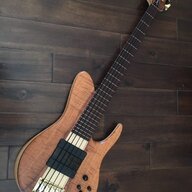
By the time you've got strings, pickups, preamp, pedals, amp, and post-processing involved, the neck wood is really not going to make that much of a difference.
 
I've said it before a number of times here -- even outside of a band context, I don't think "tonewoods" in a solidbody electric bass has nearly the influence on timber that a lot of TBers give it. By the time you hit a preamp, any pedals, amp, speakers, etc., any nuance there is lost. Once in a band mix, even more so. If 500 Euros is meaningful to you, then you could likely save yourself the money if you're approach is purely from a timber/tone angle.

If you "buy into" tone woods, you'll get a ton of opinions on the matter. I've never found any bass so lacking in "presence" or any EQ point that I couldn't find my way there either in post for recording, or with an EQ for live play (notable exception would be when I played a loaner P bass once, with strings that were probably older than me on it).

Now, from a feel and aesthetic angle, wenge can't be beat in my opinion. I just really appreciate how it feels as I'm navigating a neck. Really wish all of my Dingwalls were Wenge.

For what it's worth, hard rock, metal, and especially prog metal are my forte for playing 90%+ of the time. Tons of metal has been put down by folks playing Warwicks, too, which had a long run of wenge necks and fingerboards.
I don’t have much experience with tone woods, but I have with chambered body basses. And I MUCH prefer solid body basses. Since that seems to have something to do with wood density I can only surmise wood density comes into play with tone woods as well. Maybe not, but sure seems to be the case.

also, I’d rather be far closer to the tone I want with everything set flat than having to knob-twiddle on stage and relying on post prod. Wouldn’t you?
 
Last edited:
  • Like
Reactions: TTA
Sheldon is literally the builder of these basses. I’d like to think his opinion carries a bit more weight than your average bass player dude. ;D
Michael Tobias also -heavily- believes that shaking a bass changes it's tone. I'm certainly not going to tell Mr. Tobias he is wrong -- he believes that based on his experience. Sheldon, too, for wood selection. I'll never tell them they're wrong or anything of the sort.

Played acoustically, sure, the wood selection likely will have some impact on what you hear and feel, no doubt. If you're more of a "just bass and amp" player in a setting where your instrument stands out a ton more (think like singer songwriter, three piece blues bands, etc), maaaayb even then you could say "Hey yeah that bass was especially bright. Oh, maple body and neck? Ok that tracks".

Deep in a signal path and especially in a mix, I personally don't believe wood matters. Once you kick on a distortion pedal, it really doesn't matter if you have a solid rosewood or a maple bass. :)

Others think that it does, just as strongly. Hence the ages long debate here and various other places about tone wood.

Again, just my opinion, and as pointed out, I'm just some dude on the internet -- same as the vast majority of folks writing on this board. I'm not gonna convince you one way or the other, and the inarguable expert here would be Sheldon and crew.
 
Played acoustically, sure, the wood selection likely will have some impact on what you hear and feel, no doubt. If you're more of a "just bass and amp" player in a setting where your instrument stands out a ton more (think like singer songwriter, three piece blues bands, etc), maaaayb even then you could say "Hey yeah that bass was especially bright. Oh, maple body and neck? Ok that tracks"…

…Again, just my opinion, and as pointed out, I'm just some dude on the internet -- same as the vast majority of folks writing on this board. I'm not gonna convince you one way or the other, and the inarguable expert here would be Sheldon and crew.
I am planning to compose and record a lot of solo bass work on my own personal projects, fwiw.

I do appreciate your experience and opinion, my friend, as well as you taking your time to share it.
 
  • Like
Reactions: J R Knots
Sheldon is literally the builder of these basses. I’d like to think his opinion carries a bit more weight than your average bass player dude. ;D
Here's the thing... I'm not listening with Sheldon's ears. I'm not playing with his amp, his cable, his pedals, his hands, his picks, in his rooms. Your ears are the most important part of the signal path.
 
Here's the thing... I'm not listening with Sheldon's ears. I'm not playing with his amp, his cable, his pedals, his hands, his picks, in his rooms. Your ears are the most important part of the signal path.
Cool. That’s why I’m asking about how the wood combo may affect the tone and thus what I hear in my ears, all other things being equal.
 
  • Like
Reactions: TheEmptyCell
I recently put in an order for a Z3. Not having first hand experience with the wood combo I chose, I thought I'd run it by you guys. Current order: Northern ash/Swamp ash dual density body with wenge neck/board.

First of all, my tone "home", as it were, is Sadowsky ash/maple JJ. However, they don't make 6-strings nor 37" B strings, so here I am. A Dingwall player now.

I know of I've asked about wenge vs maple here before, but hear me out. For reference, my goal tone is basically Jacob Umansky's tone (from Intervals). Balanced and bright. He has mentioned on several occasions that he wanted a wenge neck, but Sheldon turned him towards maple instead. Specifically, "wenge would not work with the ash body" or something like that. I'm assuming that was meant in the context of metal for more aggressive tone. Got me second guessing...

Then, I found out that Jared Smith (another prog metaller of sorts from Archspire) also recently got a similarly spec'd Z3 with maple neck/wenge board. Hmm. Since I plan to be using this for progressive metal (as well as many other genres from funk to rock to jazz on occasion), there seems to be pattern forming here. I'm now seriously re-thinking the wood combo.

I also know that I like good high mid content in the 2.8k-3k region. I've heard wenge's highs are typically a bit more extended into the higher frequencies than that. I'm a little concerned it may lack some presence in that region, which is why I thought adding the density of the Northern Ash would add a little attack back into the tone. I don't really know though since like I mentioned, I've never had the opportunity to play these wood combos. And most YouTube videos have effects on, like distortion, that covers up the bass's pure tone.

Also, the maple neck/wenge fretboard is about 500 euros cheaper! Would the wenge neck be worth the 500 Euro markup?

What do you guys think? Save myself the 500 bucks and go with the safer bet of maple, or splurge for the arguably better looking and feeling wenge with the added risk of the unknown? Should I care about the Northern ash or simply stay with the standard Swamp ash?
What about ovangkol? Strike a balance. I have a walnut necked Dingwall (wenge fingerboard) which I love.
 
  • Like
Reactions: AB Nate
I recently put in an order for a Z3. Not having first hand experience with the wood combo I chose, I thought I'd run it by you guys. Current order: Northern ash/Swamp ash dual density body with wenge neck/board.

First of all, my tone "home", as it were, is Sadowsky ash/maple JJ. However, they don't make 6-strings nor 37" B strings, so here I am. A Dingwall player now.

I know of I've asked about wenge vs maple here before, but hear me out. For reference, my goal tone is basically Jacob Umansky's tone (from Intervals). Balanced and bright. He has mentioned on several occasions that he wanted a wenge neck, but Sheldon turned him towards maple instead. Specifically, "wenge would not work with the ash body" or something like that. I'm assuming that was meant in the context of metal for more aggressive tone. Got me second guessing...

Then, I found out that Jared Smith (another prog metaller of sorts from Archspire) also recently got a similarly spec'd Z3 with maple neck/wenge board. Hmm. Since I plan to be using this for progressive metal (as well as many other genres from funk to rock to jazz on occasion), there seems to be pattern forming here. I'm now seriously re-thinking the wood combo.

I also know that I like good high mid content in the 2.8k-3k region. I've heard wenge's highs are typically a bit more extended into the higher frequencies than that. I'm a little concerned it may lack some presence in that region, which is why I thought adding the density of the Northern Ash would add a little attack back into the tone. I don't really know though since like I mentioned, I've never had the opportunity to play these wood combos. And most YouTube videos have effects on, like distortion, that covers up the bass's pure tone.

Also, the maple neck/wenge fretboard is about 500 euros cheaper! Would the wenge neck be worth the 500 Euro markup?

What do you guys think? Save myself the 500 bucks and go with the safer bet of maple, or splurge for the arguably better looking and feeling wenge with the added risk of the unknown? Should I care about the Northern ash or simply stay with the standard Swamp ash?
I remember Sheldon saying something very interesting about wood combinations during the Guitar Summit in Mannheim. If I remember correctly he was asked if “tone woods” were a thing or not, to which he answered that he does believe different woods do have different sonic qualities.

However, even if you don’t believe that, you are going to play differently because you enjoy the instrument more if it has a certain combination of wood, thus changing the tone. For example by picking a wenge over a maple neck.
 

Latest posts