
It's very basic, just the Reaper DAW and Plugin Alliance B15N plugin. It has everything you need built in. I've also tried the Plugin Alliance SVT VR but I think I like the B15N more. It has more body to the sound. I know, I know. I can always add more bass or put on the ultra low but it still doesn't sound the same.That amp was used on a few recordings
The beauty of the digital route is you aren’t limited by the whopping 30 watts of power the B 15. All the good stuff with none of the weight or maintenance or volume issues.
What software are you enjoying?

Enjoy the benefits of a premium membership!
Upgrade Account
-
TalkBass has been independent since 1998. Add your voice.
Create a free account to reply to discussions, view embedded media, and browse with fewer display ads.
Join free Log in
Want zero display ads or expanded classifieds tools? Compare plans.
You are using an out of date browser. It may not display this or other websites correctly.
You should upgrade or use an alternative browser.
You should upgrade or use an alternative browser.
Dingwall Owners Club
- Thread starter FroggyOne2
- Start date
More options
Who Replied?


Agreed - the B15 just gets it done as a bass amp.
I got back into digital modeling recently, and I've found a lot of great-sounding options among models of amps that would be unusable for bass at a gig (Fender Deluxe, Supro, Vox AC15, etc).
When you get away from the physical realities of an amp, and just listen to the tone it produces, it can lead you to some unique and creative places.
I got back into digital modeling recently, and I've found a lot of great-sounding options among models of amps that would be unusable for bass at a gig (Fender Deluxe, Supro, Vox AC15, etc).
When you get away from the physical realities of an amp, and just listen to the tone it produces, it can lead you to some unique and creative places.

IvanBassist
Commercial User
- Jun 8, 2008
- 3,744
- 11,127
- Disclosures
- Content Manager at Darkglass Electronics, Dingwall Guitars Artist
My Dingwall sounds great through a wet shoe.

I have a few different amps and I've found that my Dingwall "likes" my Phil Jones Bass BP-200 quite a bit, moreso than my Darkglass MT500v2 which is the 'typical' pairing. Last gig I ran through my Ashdown ABM500 and it sounded pretty great as well, but not as good as the PJB. There is a certain je ne sais quoi about the PJB which just lifts the sound and adds this incredible top end presence and fullness. It must be said this was in my practice room at home, so whether or not this would translate to an actual gig is anyone's guess (not like I could play a proper loud gig with 200w, I'd have to get the 800 to realistically try this and I ain't buying another amp for a good while yet).
IvanBassist
Commercial User
- Jun 8, 2008
- 3,744
- 11,127
- Disclosures
- Content Manager at Darkglass Electronics, Dingwall Guitars Artist
Got to try my friend’s new NG3 in today and now I have major GAS 
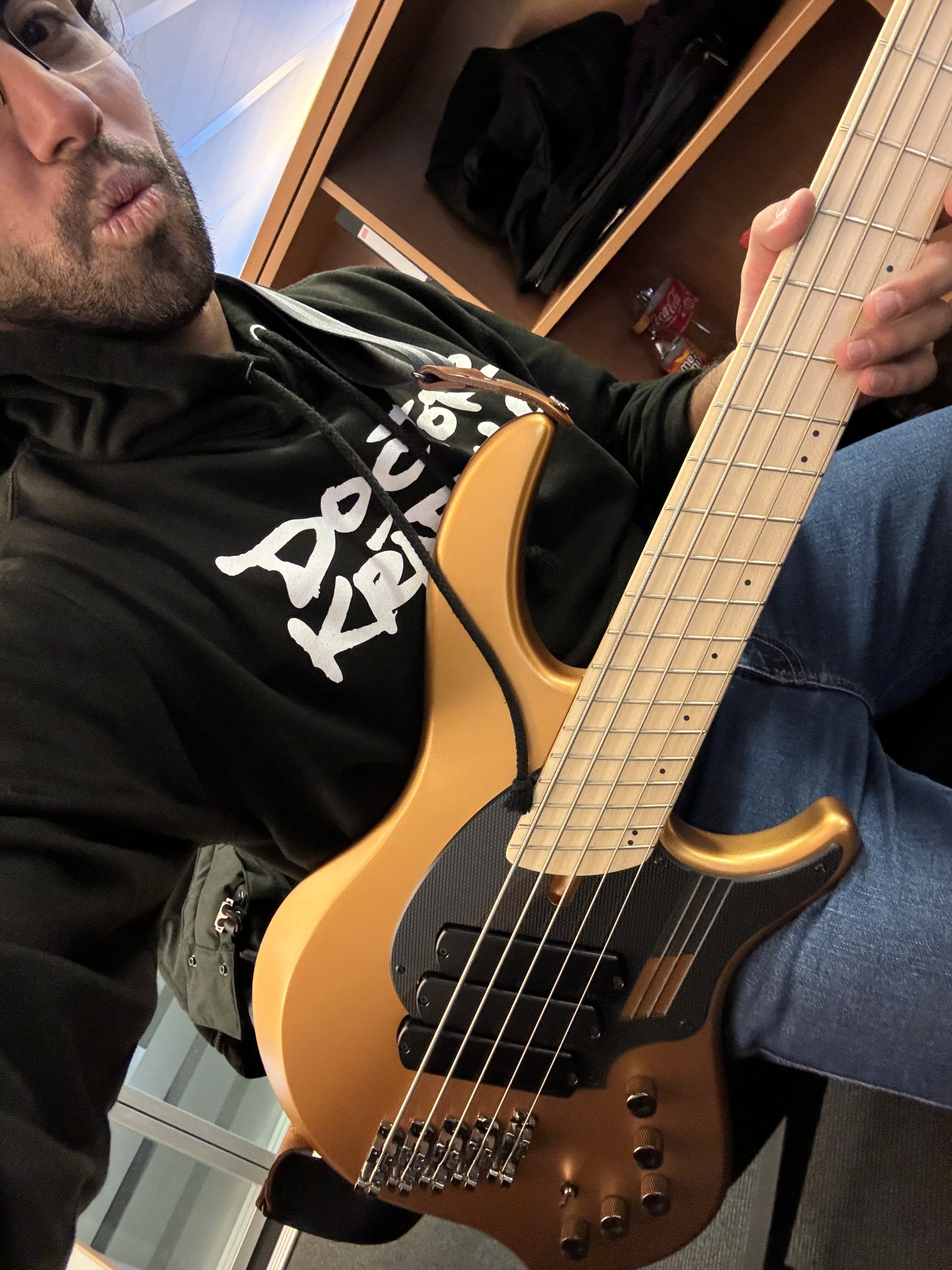

Hey guys, looking for some suggestions. So my situation is as follows. I run my dingwall combustion through a sansamp ged 2112 preamp for my main tone. I'm looking for something to use a boost pedal/add extra dirt and grime for certain heavy sections of songs. Right now I'm looking at the darkglass vintage and dark glass alpha omega. Does anyone here run something similar or have any suggestions?
Thanks.
Thanks.
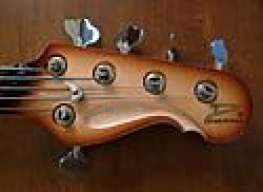
The gold finish is awesome. So are NG-3's.


Geoff St. Germaine
Commercial User
- Aug 31, 2001
- 6,267
- 302
- Disclosures
- Owner - St. Germaine Guitars
Hey all - this is a weird long shot. I'm trying to track down an old Dingwall of mine. Once upon a time in the early 2000s, I owned two Dingwalls, a Z2 5 string and a Prima 6. Due to no longer gigging, I wound up selling both of them over a period of a couple of years. I am interested in trying to buy back one of them. Unfortunately, I don't have records of who the bass was sold to, though it was sold on Talkbass around 2004.
The bass details are:
2000 Dingwall Z2 5 string
Quilted Maple top over dual density ash
Maple neck with Wenge fretboard
22 frets
Bartolini pickups and preamp
Triple Purpleburst finish
Not tons of detail, but I don't think too many Dingwalls like this exist.
Thanks for any help anyone can offer!
The bass details are:
2000 Dingwall Z2 5 string
Quilted Maple top over dual density ash
Maple neck with Wenge fretboard
22 frets
Bartolini pickups and preamp
Triple Purpleburst finish
Not tons of detail, but I don't think too many Dingwalls like this exist.
Thanks for any help anyone can offer!

After some time with my new Payson bridge, I’d like to give my assessment. The main reason is because if I knew these things before buying I may have made a different choice, and you may as well, or maybe not. Who knows! All in the interest of getting information out there to those who may benefit. 
TLDR, I’m mostly happy with it, but it’s not perfect, and I will be replacing it with the DW Minimalist Bridge as soon as it’s available.
It started with me never liking smoked chrome hardware. I always associate it with cheap Ibanez’s from 20 years ago. It needed replacing if for nothing else than aesthetic purposes. With options for drop-in replacements being limited for DW NG/Combustion models, I went with the best looking I could find.
The Payson is definitely an aesthetic upgrade, IMO! But I have some gripes.
When I read “Guaranteed Drop in Fit” with no other listed caveats, I expect a true drop-in replacement with full advertised functionality. This is not the case. It’s only drop-in because the screw holes line up, if I may be honest.
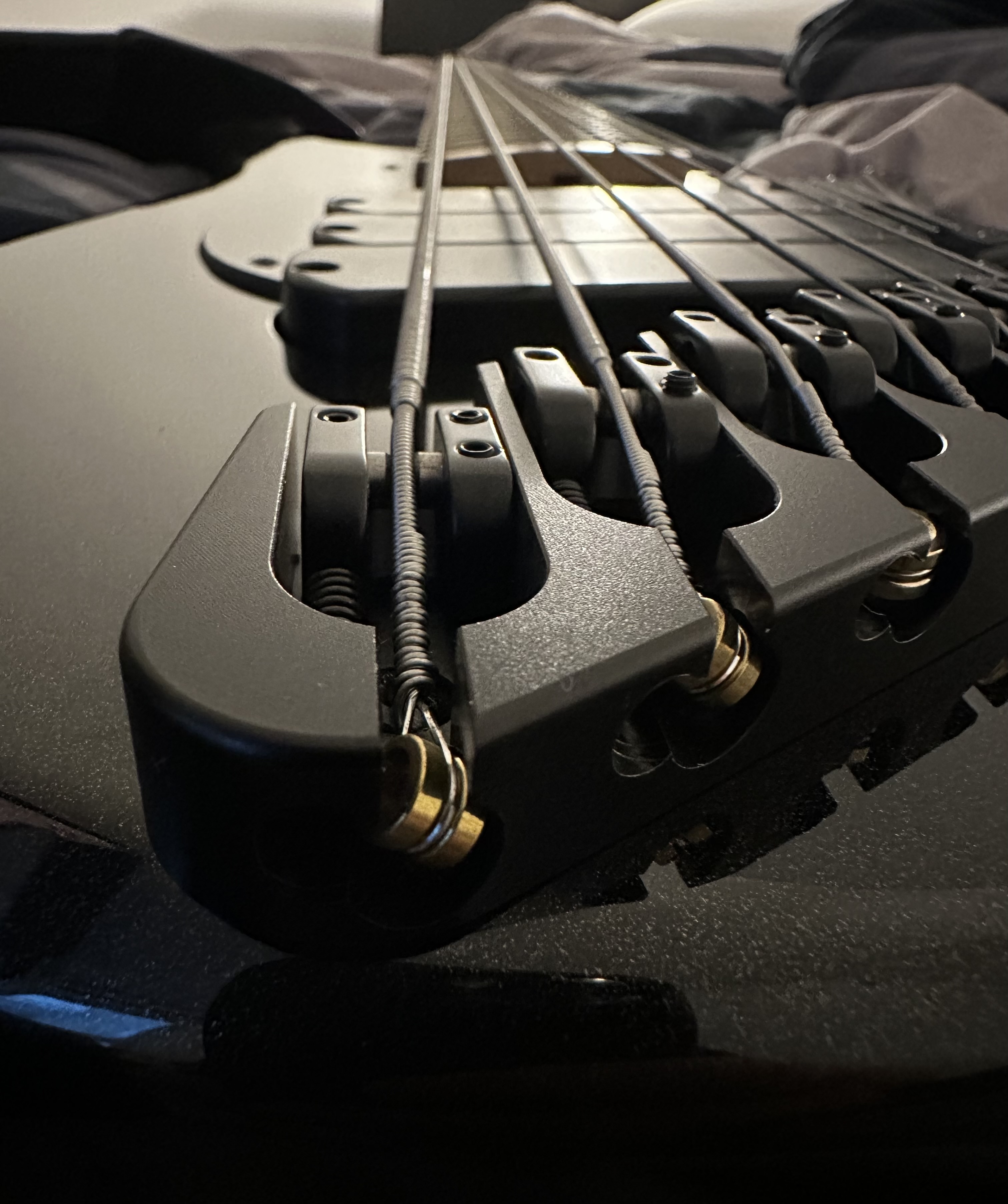
1. The bridge sits at a slight angle to the bass side. This causes a horizontal break angle at the saddles. The result is that the bridge cannot support string width adjustments because the horizontal tension will always force the string to the high side.
Documentation on the website about specifics is sparse, so going on memory of what I’ve read here is that the bridge is adjustable from 18-19mm (I could be wrong). DW 5/6ers are 18mm. With the Payson bridge native limitations I’m guessing this means the string spacing is now 18.5mm, with the bass side B string being perfect and each higher string slightly more and more “off”, or pushed slightly to the high side.
This could be worked around with some type of shims, I suppose, which could be slipped between the high-side saddle and inside of the bridge to achieve OEM specs of 18mm, but to get the appropriately sized shims, we’ll, I don’t exactly know where to start looking. And I don’t care to at this point.
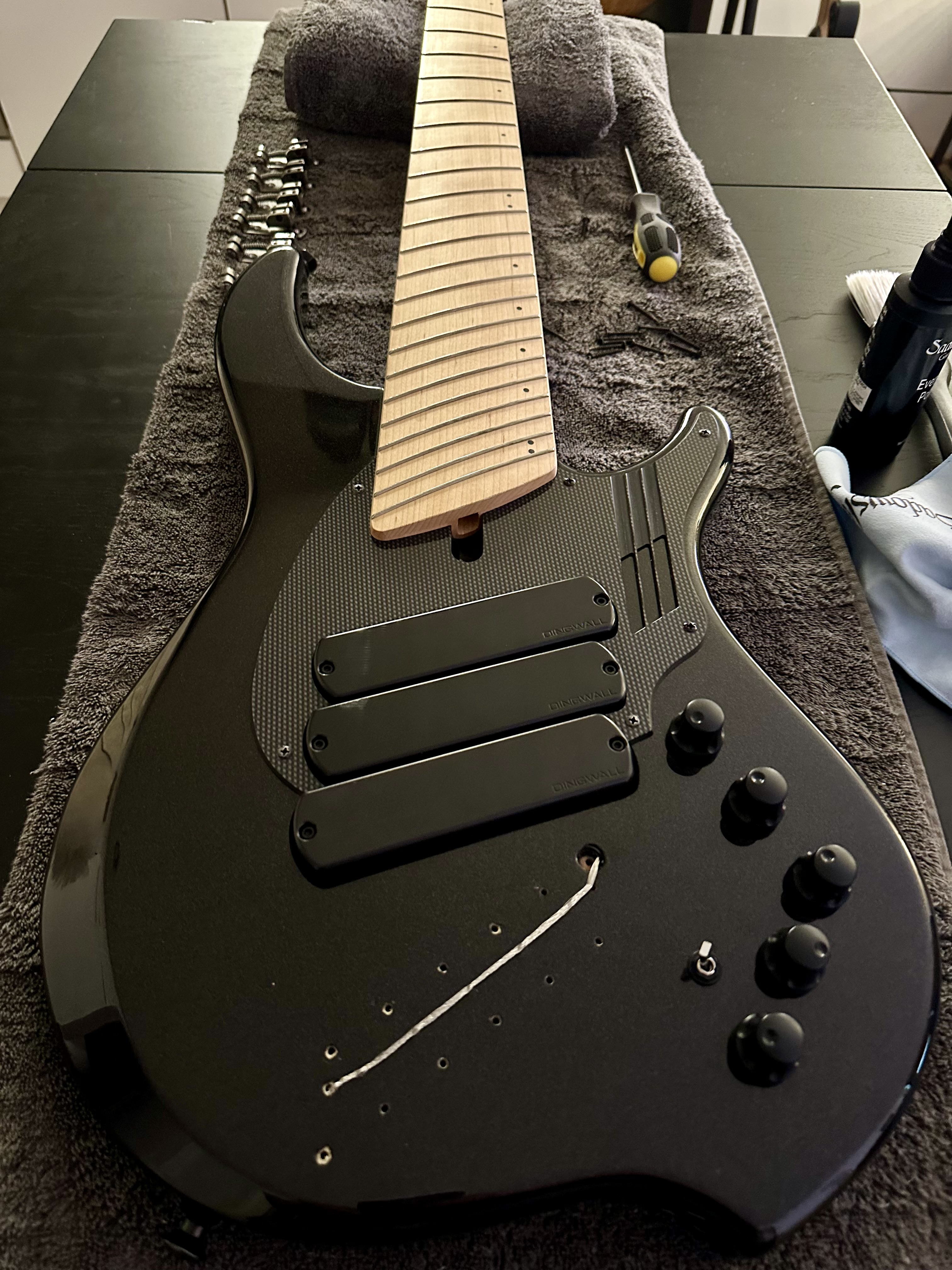
2. As opposed to the OEM single-string saddles with 2 screws, the Payson has 1 row of screw holes. What happens here is that the ground wire that runs the length of the bridge acts as a fulcrum so that the bridge doesn’t have full contact with the bass body. I’m not entirely sure how this affects tone yet but I’m sure it does to some extent. What I do know is that it affects string action quite a bit.
With the ground wire in normal position, the best action I could achieve at the G/C strings was 5/64”. I strongly prefer 3/64” for low action. My end result after 3 install attempts and full setups (over the course of 8-10 hours) got me just above 4/64” (with a straight af board). Workable, but not super optimal.
With the OEM double-screw type bridges, they basically clamp down over the wire creating more contact to get around this issue.
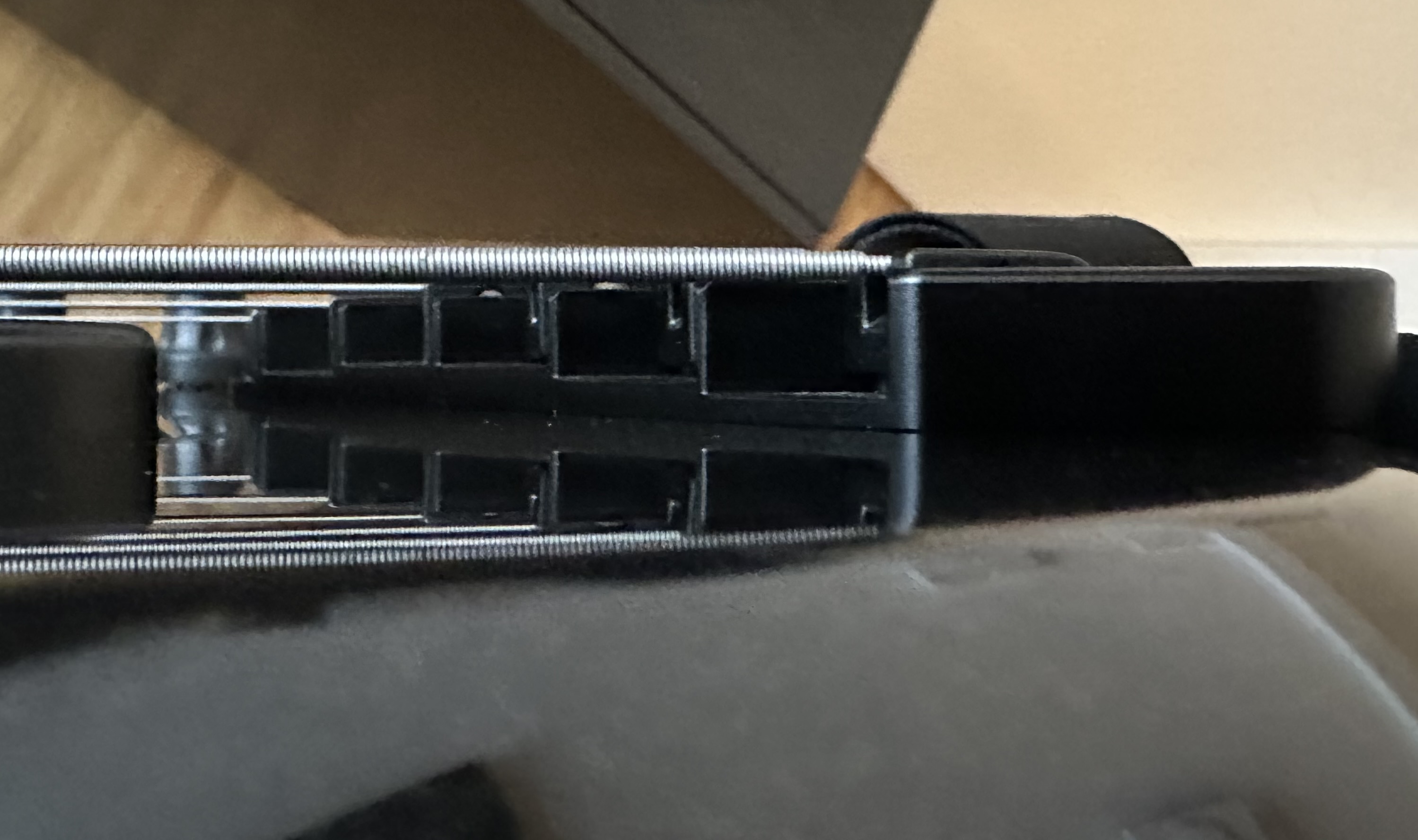
My “drop-in” workaround for this was moving the ground wire behind the screws. This helped tip the bridge forward to achieve the better action I mentioned. However, the bridge still doesn’t sit flush with the body. There is still a paper-thin gap throughout. And this is after I also tried to flatten out the wire quite a bit and press it into the poly finish with very significant torque on the bridge screws.
If you’re looking for a permanent install and don’t mind some work done on your bass, I would personally get a luthier to 1. remount the bridge so the strings are straight in the saddles allowing normal string width adjustment, and 2. cutting the ground wire as close as possible to the hole it comes out of since only that corner of the bridge next to the ground wire hole is bare of paint and can work as the ground, and potentially dremelling out a little notch there so the bridge can sit flush while still maintaining contact.
Pics of horizontal break angle

Pic of ground wire in normal placement. I moved it behind the rear holes where the Payson bridge screws into
Pic of the paper-thin gap with ground wire behind screws
At the end of the day, I could see most people being super happy with the bridge! I, however, am a ridiculous perfectionist. I will “live with” (fairly happily) this great option until the DW Minimalist bridge becomes available as Sheldon has mentioned should be coming in the near future.
Of course, YMMV! Every bass is different! Hope this helps!
TLDR, I’m mostly happy with it, but it’s not perfect, and I will be replacing it with the DW Minimalist Bridge as soon as it’s available.
It started with me never liking smoked chrome hardware. I always associate it with cheap Ibanez’s from 20 years ago. It needed replacing if for nothing else than aesthetic purposes. With options for drop-in replacements being limited for DW NG/Combustion models, I went with the best looking I could find.
The Payson is definitely an aesthetic upgrade, IMO! But I have some gripes.
When I read “Guaranteed Drop in Fit” with no other listed caveats, I expect a true drop-in replacement with full advertised functionality. This is not the case. It’s only drop-in because the screw holes line up, if I may be honest.
1. The bridge sits at a slight angle to the bass side. This causes a horizontal break angle at the saddles. The result is that the bridge cannot support string width adjustments because the horizontal tension will always force the string to the high side.
Documentation on the website about specifics is sparse, so going on memory of what I’ve read here is that the bridge is adjustable from 18-19mm (I could be wrong). DW 5/6ers are 18mm. With the Payson bridge native limitations I’m guessing this means the string spacing is now 18.5mm, with the bass side B string being perfect and each higher string slightly more and more “off”, or pushed slightly to the high side.
This could be worked around with some type of shims, I suppose, which could be slipped between the high-side saddle and inside of the bridge to achieve OEM specs of 18mm, but to get the appropriately sized shims, we’ll, I don’t exactly know where to start looking. And I don’t care to at this point.
2. As opposed to the OEM single-string saddles with 2 screws, the Payson has 1 row of screw holes. What happens here is that the ground wire that runs the length of the bridge acts as a fulcrum so that the bridge doesn’t have full contact with the bass body. I’m not entirely sure how this affects tone yet but I’m sure it does to some extent. What I do know is that it affects string action quite a bit.
With the ground wire in normal position, the best action I could achieve at the G/C strings was 5/64”. I strongly prefer 3/64” for low action. My end result after 3 install attempts and full setups (over the course of 8-10 hours) got me just above 4/64” (with a straight af board). Workable, but not super optimal.
With the OEM double-screw type bridges, they basically clamp down over the wire creating more contact to get around this issue.
My “drop-in” workaround for this was moving the ground wire behind the screws. This helped tip the bridge forward to achieve the better action I mentioned. However, the bridge still doesn’t sit flush with the body. There is still a paper-thin gap throughout. And this is after I also tried to flatten out the wire quite a bit and press it into the poly finish with very significant torque on the bridge screws.
If you’re looking for a permanent install and don’t mind some work done on your bass, I would personally get a luthier to 1. remount the bridge so the strings are straight in the saddles allowing normal string width adjustment, and 2. cutting the ground wire as close as possible to the hole it comes out of since only that corner of the bridge next to the ground wire hole is bare of paint and can work as the ground, and potentially dremelling out a little notch there so the bridge can sit flush while still maintaining contact.
Pics of horizontal break angle
Pic of ground wire in normal placement. I moved it behind the rear holes where the Payson bridge screws into
Pic of the paper-thin gap with ground wire behind screws
At the end of the day, I could see most people being super happy with the bridge! I, however, am a ridiculous perfectionist. I will “live with” (fairly happily) this great option until the DW Minimalist bridge becomes available as Sheldon has mentioned should be coming in the near future.
Of course, YMMV! Every bass is different! Hope this helps!
Last edited:
After some time with my new Payson bridge, I’d like to give my assessment. The main reason is because if I knew these things before buying I may have made a different choice, and you may as well, or maybe not. Who knows! All in the interest of getting information out there to those who may benefit.
TLDR, I’m mostly happy with it, but it’s not perfect, and I will be replacing it with the DW Minimalist Bridge as soon as it’s available.
It started with me never liking smoked chrome hardware. I always associate it with cheap Ibanez’s from 20 years ago. It needed replacing if for nothing else than aesthetic purposes. With options for drop-in replacements being limited for DW NG/Combustion models, I went with the best looking I could find.
The Payson is definitely an aesthetic upgrade, IMO! But I have some gripes.
When I read “Guaranteed Drop in Fit” with no other listed caveats, I expect a true drop-in replacement with full advertised functionality. This is not the case. It’s only drop-in because the screw holes line up, if I may be honest.
1. The bridge sits at a slight angle to the bass side. This causes a horizontal break angle at the saddles. The result is that the bridge cannot support string width adjustments because the horizontal tension will always force the string to the high side.
Documentation on the website about specifics is sparse, so going on memory of what I’ve read here is that the bridge is adjustable from 18-19mm (I could be wrong). DW 5/6ers are 18mm. With the Payson bridge native limitations I’m guessing this means the string spacing is now 18.5mm, with the bass side B string being perfect and each higher string slightly more and more “off”, or pushed slightly to the high side.
This could be worked around with some type of shims, I suppose, which could be slipped between the high-side saddle and inside of the bridge to achieve OEM specs of 18mm, but to get the appropriately sized shims, we’ll, I don’t exactly know where to start looking. And I don’t care to at this point.
2. As opposed to the OEM single-string saddles with 2 screws, the Payson has 1 row of screw holes. What happens here is that the ground wire that runs the length of the bridge acts as a fulcrum so that the bridge doesn’t have full contact with the bass body. I’m not entirely sure how this affects tone yet but I’m sure it does to some extent. What I do know is that it affects string action quite a bit.
With the ground wire in normal position, the best action I could achieve at the G/C strings was 5/64”. I strongly prefer 3/64” for low action. My end result after 3 install attempts and full setups (over the course of 8-10 hours) got me just above 4/64” (with a straight af board). Workable, but not super optimal.
With the OEM double-screw type bridges, they basically clamp down over the wire creating more contact to get around this issue.
My “drop-in” workaround for this was moving the ground wire behind the screws. This helped tip the bridge forward to achieve the better action I mentioned. However, the bridge still doesn’t sit flush with the body. There is still a paper-thin gap throughout. And this is after I also tried to flatten out the wire quite a bit and press it into the poly finish with very significant torque on the bridge screws.
If you’re looking for a permanent install and don’t mind some work done on your bass, I would personally get a luthier to 1. remount the bridge so the strings are straight in the saddles allowing normal string width adjustment, and 2. cutting the ground wire as close as possible to the hole it comes out of since only that corner of the bridge next to the ground wire hole is bare of paint and can work as the ground, and potentially dremelling out a little notch there so the bridge can sit flush while still maintaining contact.
Pics of horizontal break angle
View attachment 5319645 View attachment 5319646
Pic of ground wire in normal placement
View attachment 5319649
At the end of the day, I could see most people being super happy with the bridge! I, however, am a ridiculous perfectionist. I will “live with” (fairly happily) this great option until the DW Minimalist bridge becomes available as Sheldon has mentioned should be coming in the near future.
Hope this helps!
Not sure if this makes any difference or helps, but, with my Payson (on my C5) I am achieving 3/64 on the G but I have my truss rod relief set to .012" at the 7th fret (checking B/E with feeler gauge). Fretboard is not flat like yours. Dunno
Appreciate the feedback! I don’t have a tool that can measure the relief that accurately. Sounds like I should get one.Not sure if this makes any difference or helps, but, with my Payson (on my C5) I am achieving 3/64 on the G but I have my truss rod relief set to .012" at the 7th fret (checking B/E with feeler gauge). Fretboard is not flat like yours. Dunno
What I do know about my relief is that when I capo the 1st fret and highest low-side fret (per DW’s setup videos, fwiw), the relief is barely more than a few slices of paper, certainly less than a credit card or the 0.38” (if I remember right) guitar pick they use. Basically, lower fret string rattle at medium 50% attack, or even just open B. Plays itself on the lower strings. Still great on the high strings but not as good as OEM.

Hey guys, looking for some suggestions. So my situation is as follows. I run my dingwall combustion through a sansamp ged 2112 preamp for my main tone. I'm looking for something to use a boost pedal/add extra dirt and grime for certain heavy sections of songs. Right now I'm looking at the darkglass vintage and dark glass alpha omega. Does anyone here run something similar or have any suggestions?
Thanks.
I have a somewhat similar setup, I use the YYZ (well an MP40) for the main sound. Of your choices the AO would be my preference but I wouldn't personally go with anything darkglass when other options are on the table (full disclosure I really dislike the VMT).
Stuff that I have on my board currently that work nicely with the YYZ: Origin DCX, Lusithand Ground & Pound. I particularly like the later for what you're describing.
If you want a budget friendly suggestion, literally any Rat with a blend would be a great start.
Hi Geoff! I got your bass from a guy on BassGear.com in August of 2004 - I played it until April 2010, but missed having a neck pickup, so I traded it for an AB2. (Wish that I thought to 3x the purple Z2 like I've done to my 4-string Z...)The bass details are:
2000 Dingwall Z2 5 string
Quilted Maple top over dual density ash
Maple neck with Wenge fretboard
22 frets
Bartolini pickups and preamp
Triple Purpleburst finish
I'll PM you with the contact info of the guy who I traded it to...
Attachments


Last edited:

Re: ground wire on Payson bridge- unless you plan on going back to the single string saddles, you only need a small portion of the ground wire to touch the bottom of the bridge plate. Chop that bad boy off just past where the wire meets the top of the body and the bridge will sit flush.
Edit: IIRC, on the one i had, there a small section of the black finish sanded off just where the bridge plate meets the wire coming out of the body. You really only need the GW to touch there.
Edit: IIRC, on the one i had, there a small section of the black finish sanded off just where the bridge plate meets the wire coming out of the body. You really only need the GW to touch there.
Last edited:
Yep. Mentioned in my post as wellRe: ground wire on Payson bridge- unless you plan on going back to the single string saddles, you only need a small portion of the ground wire to touch the bottom of the bridge plate. Chop that bad boy off just past where the wire meets the top of the body and the bridge will sit flush.
Edit: IIRC, on the one i had, there a small section of the black finish sanded off just where the bridge plate meets the wire coming out of the body. You really only need the GW to touch there.

@Scott McArron - one thing you could to is trim the bridge ground wire way short, like just enough to stick out of the hole, and then cut a strip of copper shielding tape to cover the entire underside of the bridge. As long as the wire contacts the copper, the whole bridge will be grounded and the bridge will sit flat.
Yep. Similar to what I mentioned in my OP. But considering the other things (break angle), I’m going to hold out for the Minimalist bridge.@Scott McArron - one thing you could to is trim the bridge ground wire way short, like just enough to stick out of the hole, and then cut a strip of copper shielding tape to cover the entire underside of the bridge. As long as the wire contacts the copper, the whole bridge will be grounded and the bridge will sit flat.
I have a somewhat similar setup, I use the YYZ (well an MP40) for the main sound. Of your choices the AO would be my preference but I wouldn't personally go with anything darkglass when other options are on the table (full disclosure I really dislike the VMT).
Stuff that I have on my board currently that work nicely with the YYZ: Origin DCX, Lusithand Ground & Pound. I particularly like the later for what you're describing.
If you want a budget friendly suggestion, literally any Rat with a blend would be a great start.
Thanks for the response. I was considering getting the mp40 for that boost setting and extra sauce button but I'm not sure how much I would get out of it considering I have the rack 2112 unit. I'll defs take a look at what else you mentioned. I'm not just considering darkglass stuff. I'd love to stick with sansamp if a product of theirs fit what I wanted to do.


