
I’m curious to know if this still works on a more modern combustion.Has anyone found a straightforward solution to making the recessed jack on import models to sit flush with the body?
Please, no suggestions on cables to use, I want a change that makes using different cables a non-issue.
Edit: I'll try this, https://www.talkbass.com/threads/dingwall-owners-club.394482/page-1738#post-23700141

Enjoy the benefits of a premium membership!
Upgrade Account
-
TalkBass has been independent since 1998. Add your voice.
Create a free account to reply to discussions, view embedded media, and browse with fewer display ads.
Join free Log in
Want zero display ads or expanded classifieds tools? Compare plans.
You are using an out of date browser. It may not display this or other websites correctly.
You should upgrade or use an alternative browser.
You should upgrade or use an alternative browser.
Dingwall Owners Club
- Thread starter FroggyOne2
- Start date
More options
Who Replied?

I did exactly this on my former 2019 NG-2 when installing a black switchcraft socket. Worked perfectly for me.Has anyone found a straightforward solution to making the recessed jack on import models to sit flush with the body?
Please, no suggestions on cables to use, I want a change that makes using different cables a non-issue.
Edit: I'll try this, https://www.talkbass.com/threads/dingwall-owners-club.394482/page-1738#post-23700141
Even though you didn’t didn‘t want to hear about cables, I‘ll still let you know I‘m using Neutrik (right angle) plugs exclusively.

I’m curious to know if this still works on a more modern combustion.
If my 2024 Combustion is representative, the old fix won't work unfortunately. I need to measure the existing jack to confirm, but I'm inclined to try a long-bushing switchcraft jack. If anything, it'll be more sturdy as the stock one looks and feels inferiorI did exactly this on my former 2019 NG-2 when installing a black switchcraft socket. Worked perfectly for me.
Even though you didn’t didn‘t want to hear about cables, I‘ll still let you know I‘m using Neutrik (right angle) plugs exclusively.
Do you make your own?I did exactly this on my former 2019 NG-2 when installing a black switchcraft socket. Worked perfectly for me.
Even though you didn’t didn‘t want to hear about cables, I‘ll still let you know I‘m using Neutrik (right angle) plugs exclusively.
That’s what I meant to express: The switchcraft jack should be long enough for this to work.If my 2024 Combustion is representative, the old fix won't work unfortunately. I need to measure the existing jack to confirm, but I'm inclined to try a long-bushing switchcraft jack. If anything, it'll be more sturdy as the stock one looks and feels inferior
Cables? Absolutely. It’s one of the easiest jobs once you have a little practice, saves you money - I see no reason to buy pre-made instrument cables.Do you make your own?
Thanks. I've made patch cables a-plenty, just amking sure we were talking about the same Neutrik right angle jackThat’s what I meant to express: The switchcraft jack should be long enough for this to work.
Cables? Absolutely. It’s one of the easiest jobs once you have a little practice, saves you money - I see no reason to buy pre-made instrument cables.
I‘ve been using Neutrik NP2 RX-B, mostly. These:Thanks. I've made patch cables a-plenty, just amking sure we were talking about the same Neutrik right angle jack
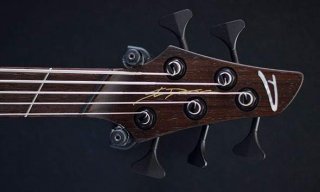
Ok, so that's the name of this thing ..I’m going to guess that stands for Reach Reducing Strap Button, or in other words, the strap lock socket that’s on the back of the body on Canadian models, I’m not exactly sure which models have it, but I’m pretty sure all of the ABs and I know the Z does. Plugging into that rather than using the bottom strap button/strap lock shifts the bass, and therefore its neck, a little bit, and reduces the reach your fretting hand has to make, to get to the farthest frets.

I tried, but did not find it satisfying.I think a lot of my playing is going to be done through studio monitors and that is something that I will be looking to upgrade. I am thinking that I will go with the newest version of Yamaha HS-8s and maybe add the sub. They seem to have a solid frequency range and are well rated. I won’t be needing too much volume. Is anyone else using monitors for practice/jamming at home?
Basically the raw DI tone sucks, you need to dress it up.
So now you enter the rabbit hole which is sound engineering.
There are some plugins which give you an ok sound right away, but the catch is that it will always sound like a record, not like an amp in the room.
Which is to be expected in fact, but it might be acceptable to you or not,
Me, I missed the presence, directness and reactivity of a real amp.
Also if you want your monitors to have the volume and headroom of a bass amp you can multiply its price by an order of magnitude (imho).
Which you might want to do anyway because good monitors are so great, but it's a hefty budget.
Subs are nice but it's hard to integrate them properly into the room, and acoustic treatment to get a good response down low (mine have a -3dB@13hz for instance) is quite the nightmare.
Unless you have a big room and cardboard walls, so if you're stateside you might be lucky. Your neighbors maybe less so
To sum it up I went this way for producing music, it's been quite the adventure and it's far from finished.
So if you decide you want to do this be prepared to spend a lot of time (and money), or to accept big compromises to your sound.
Or just keep a good bass amp around and that's it.
Generally speaking I prefer my IEMs when I’m sitting at the DAW AND playing.I tried, but did not find it satisfying.
Basically the raw DI tone sucks, you need to dress it up.
So now you enter the rabbit hole which is sound engineering.
There are some plugins which give you an ok sound right away, but the catch is that it will always sound like a record, not like an amp in the room.
Which is to be expected in fact, but it might be acceptable to you or not,
Me, I missed the presence, directness and reactivity of a real amp.
Also if you want your monitors to have the volume and headroom of a bass amp you can multiply its price by an order of magnitude (imho).
Which you might want to do anyway because good monitors are so great, but it's a hefty budget.
Subs are nice but it's hard to integrate them properly into the room, and acoustic treatment to get a good response down low (mine have a -3dB@13hz for instance) is quite the nightmare.
Unless you have a big room and cardboard walls, so if you're stateside you might be lucky. Your neighbors maybe less so
To sum it up I went this way for producing music, it's been quite the adventure and it's far from finished.
So if you decide you want to do this be prepared to spend a lot of time (and money), or to accept big compromises to your sound.
Or just keep a good bass amp around and that's it.
Yeah headphones are a good solution for tracking, basically it's just that I find it difficult to end up with a realistic bass sound if I'm starting with a DI signal.
But that's already assuming that you do want a realistic bass sound, meaning like a bass plugged into an amp and a cab
If you're going for paralax or whatever it's the other way around, you have a finished product which sounds like it's been constructed artificially in a DAW anyway, so there's nothing that needs to be done in the DAW, it's all there already.
It's more a problem when you try to get that into an actual cab, for rehearsal for instance.
Then you start with "transparent" cabs, then FRFR, then a PA, then the guitarists and drummer suddenly decide they want to do the same, and now when you rehearse all together it sounds like a CD is playing instead of a live band, and suddenly you're wondering whether it was all worth it in the end
Or maybe I'm just rambling now ..
But that's already assuming that you do want a realistic bass sound, meaning like a bass plugged into an amp and a cab
If you're going for paralax or whatever it's the other way around, you have a finished product which sounds like it's been constructed artificially in a DAW anyway, so there's nothing that needs to be done in the DAW, it's all there already.
It's more a problem when you try to get that into an actual cab, for rehearsal for instance.
Then you start with "transparent" cabs, then FRFR, then a PA, then the guitarists and drummer suddenly decide they want to do the same, and now when you rehearse all together it sounds like a CD is playing instead of a live band, and suddenly you're wondering whether it was all worth it in the end
Or maybe I'm just rambling now ..

I had been calling it the reach around strap until I realized. Wait. That’s not a good thing.I was wondering if this question would arise. I tried to shorten Reach reducing strap button
better than the reach around button.I had been calling it the reach around strap until I realized. Wait. That’s not a good thing.
Maybe?
Last edited:
Heh. But whatever you call it, I love it. I’m 5’8” and it makes a Dingwall comfortably playable.better than the reach around button. maybe?
I'm going to install one on my Combustion 6. I'm 5'6" and have a permanent wrist injury on my fretting hand so I already play it high, but the strap position change would help.Heh. But whatever you call it, I love it. I’m 5’8” and it makes a Dingwall comfortably playable.
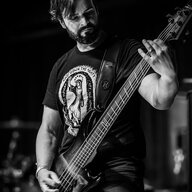
100% recommend the strap reducing setup, it was a game changer when I moved from the NG3 to Z3
Also, it was string change time, so I took it as a chance to try SIT strings from fret nation instead of the Dingwall strings, and I dig them
They sound fatter (not boomy) to me, with a little less nasal sounding high mids
Also, it was string change time, so I took it as a chance to try SIT strings from fret nation instead of the Dingwall strings, and I dig them
They sound fatter (not boomy) to me, with a little less nasal sounding high mids
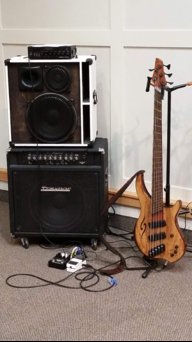
I would be very curious to try the RRSB on my older ABII, too scared to drill the hole though. I found that having my strap position a good bit lower than normal actually helped with reaching the lower frets. It seemed to bring the headstock up and slightly towards me. The bass body is centered on me with the tummy cut perfectly doing its work at my waistline, instead of me having it higher and kinda sitting toward my right hip.

I have an MTD that I frequently consider adding the RRSB to. It's a 35" scale with an upper horn that doesn't extend fully to the 12th fret, and as a result the notes at the low end of the board tend to be a bit of a strain on my shoulder. I injured my shoulder several years ago on a rock climbing trip, and it's always been a persistent issue when I'm playing tunes that hang around the first four frets. I've not summoned the courage to do the installation yet, but I've watched the John Fox video showing his method about a dozen times 
I have an MTD that I frequently consider adding the RRSB to. It's a 35" scale with an upper horn that doesn't extend fully to the 12th fret, and as a result the notes at the low end of the board tend to be a bit of a strain on my shoulder. I injured my shoulder several years ago on a rock climbing trip, and it's always been a persistent issue when I'm playing tunes that hang around the first four frets. I've not summoned the courage to do the installation yet, but I've watched the John Fox video showing his method about a dozen times
I had a guitar tech do one for me on a 34” scale bass, mostly to try it. It plays like a short scale now, with obviously wider fret spacing.
Well, I just ordered the flushmount straplock, a fresh 7/64” bit, a fresh 3/8” forstner bit, and a heavy duty suction cup to try some different strap placements for finding balance. Time to see if this will be a good solution.I had a guitar tech do one for me on a 34” scale bass, mostly to try it. It plays like a short scale now, with obviously wider fret spacing.


