

Enjoy the benefits of a premium membership!
Upgrade Account
-
TalkBass has been independent since 1998. Add your voice.
Create a free account to reply to discussions, view embedded media, and browse with fewer display ads.
Join free Log in
Want zero display ads or expanded classifieds tools? Compare plans.
You are using an out of date browser. It may not display this or other websites correctly.
You should upgrade or use an alternative browser.
You should upgrade or use an alternative browser.
Dingwall Owners Club
- Thread starter FroggyOne2
- Start date
More options
Who Replied?
BurningSkies
CRAZY BALDHEAD
- Feb 20, 2005
- 27,956
- 20,348
- Disclosures
- Endorsing artist: Dingwall Guitars
That makes sense. It was before the FD-3 became the FD3-4L. you can still do the standard 4 way switch, but you can't do parallel/series within the pickup without some modding the leads from the coils. There are some guys who have done this, but it's a bit more 'fine detail' than your average soldering job.

Exactly. It may also be nice to do neck+middle. I will probably spend a month playing with all of the combinations. I kind of wish the series/parallel switches had "off" as well.
I'm guessing Dingwall makes their own rotary switches? If they were second party we could ask if they would do a 5 way. Sheldon did tell me the SJ5XXX doesn't have enough real estate for a 6 way (required to get each PUP solo'd), don't know if the AB is the same.


I was leaning towards the PJ although I have heard good things about the JJ. But then I got to thinking that the 3x would give the most tone variation.
3x will offer more tone variation but I went with a 2x and P-Tone in the neck for my ABHS. Just seemed more authentic that way. Everything else gets 3x, though.

- Sep 3, 2006
- 4,358
- 6,117
- Disclosures
- Authorized dealer for Dingwall, Genzler, Phil Jones Bass, Cort, Traynor, Yorkville Sound
Thank you! VERY nice info!Okay, I'll speak from my own experiences and preferences. I really dig the P/J pickup combination on my four-string Super J. I had a five-string Super J (SJ/P5) with the same pickup combination that was ash/maple/maple. I did not like it as much as my five-string J/J that is ash/maple/morado, which is warmer and woodier. The ash/maple/maple was too clean and sterile for me (especially noticeable on the B and E strings). I haven't tried a 3X SJ. I can 'see' how it would be very versatile tonally, but I don't know if I would like having that pickup in the middle. Once again, I have not tried one, but I think a five-string with a split-coil precision type pickup would sound better with the pickup in the usual precision sweet spot (Super P) vs. 1/4" closer to the neck as it was on my SJ/P5. That quarter-inch makes a big difference IME. My SP4 is ash/maple/maple and to my ears is precision bass perfection. Then again, it is passive, and I ran my SJ/P5 in active mode with no boost or cut on the Glock pre. To state the obvious, they are/were two different basses (no two are the same). So you know where I'm coming from, I like to 'set and forget' to the extent that I can. I set the bass, eq the amp, and use my fingers for the rest. The only thing I did while playing this morning was a slight roll-back of the treble on my amp and moved the mid-emphasis switch one notch. I usually don't even do this. I hope something in my ramble has been useful...
I am still leaning toward PJ or 2/3x but hey, PJ will be more classic. Interesting about the wood tone. Also interesting you feel ash/maple/maple is perfection for the 4-string but was too sterile for the 5-string - if I understood you correctly.
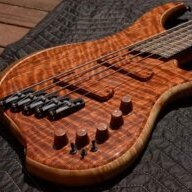
AWESOME bass! This is what I was thinking! Mandolin frets - never considered that, I will have to look more closely at this.As far as J/J vs. P/J, I've owned both and much prefer the P/J. I use the P for a softer tone and then both for my standard. I haven't tried the 3x, but if I got one, I'd probably get a P-Tone on the neck pickup. I mostly play in passive even though I have a preamp.
Something else to consider: mine has mandolin frets and I love them.
View attachment 821448
WEELLLL, THAT is awesome! I will have to decide on 2/3x or PJ setup. THANKS for posting this.Have you seen this one that they just finished? (Posted under Recently Shipped - 3/2016). You might want to check with Afterburner Nate (on the Dingwall Forum) why he went with 2x vs. 3x or P/J.
Invalid Link Removed
I am going to try to talk to Sheldon and order tomorrow; or whenever he is is back from London.
- Sep 3, 2006
- 4,358
- 6,117
- Disclosures
- Authorized dealer for Dingwall, Genzler, Phil Jones Bass, Cort, Traynor, Yorkville Sound
I went 3x in the ABZ but think the Super-J may be better with a PJ.3x will offer more tone variation but I went with a 2x and P-Tone in the neck for my ABHS. Just seemed more authentic that way. Everything else gets 3x, though.
There's plenty of 5 way rotaries out there. I don't know of any that are the solderless connector style of the Dingwall 4 way rotary, though.I'm guessing Dingwall makes their own rotary switches? If they were second party we could ask if they would do a 5 way. Sheldon did tell me the SJ5XXX doesn't have enough real estate for a 6 way (required to get each PUP solo'd), don't know if the AB is the same.

Talk with a local dealer. You have two options, depending on where you are in NY:
NEW JERSEY
New Jersey Guitar and Bass
995 Amboy Ave.
Edison, NJ, 8837
Tel: 732/225-4444
www.newjerseyguitarandbasscenter.com
NEW YORK
Axe Shop
421 Violet Ave.
Poughkeepsie, NY
Tel: 1-845-240-1878
[email protected]
www.axeshop.com
NEW JERSEY
New Jersey Guitar and Bass
995 Amboy Ave.
Edison, NJ, 8837
Tel: 732/225-4444
www.newjerseyguitarandbasscenter.com
NEW YORK
Axe Shop
421 Violet Ave.
Poughkeepsie, NY
Tel: 1-845-240-1878
[email protected]
www.axeshop.com

Of all my Dingwalls (ABZ5 / AB25 and Super P/J5) the Super P/J is the most versatile of all in terms of sounds, I very rarely use the preamp section, unless I need to punish, breaking & entry or just hit you with a wall of lows 
Thank you! VERY nice info!
I am still leaning toward PJ or 2/3x but hey, PJ will be more classic. Interesting about the wood tone. Also interesting you feel ash/maple/maple is perfection for the 4-string but was too sterile for the 5-string - if I understood you correctly.
I was thinking of 'solo playing' when I used this word, sorry for not being more specific. This bass was a monster in a mix! No problem cutting through anything. The only reason I sold it was that I was wanting a Shaw B-150 tube head and one less bass, so I forced myself to make a tough choice. It's not easy to sell a killer Dingwall, but it can be done.
I bought an in-stock Combustion from Jimi at the Axe Shop.Talk with a local dealer. You have two options, depending on where you are in NY
Great guy to talk to and the price was lower than ordering directly from Dingwall.
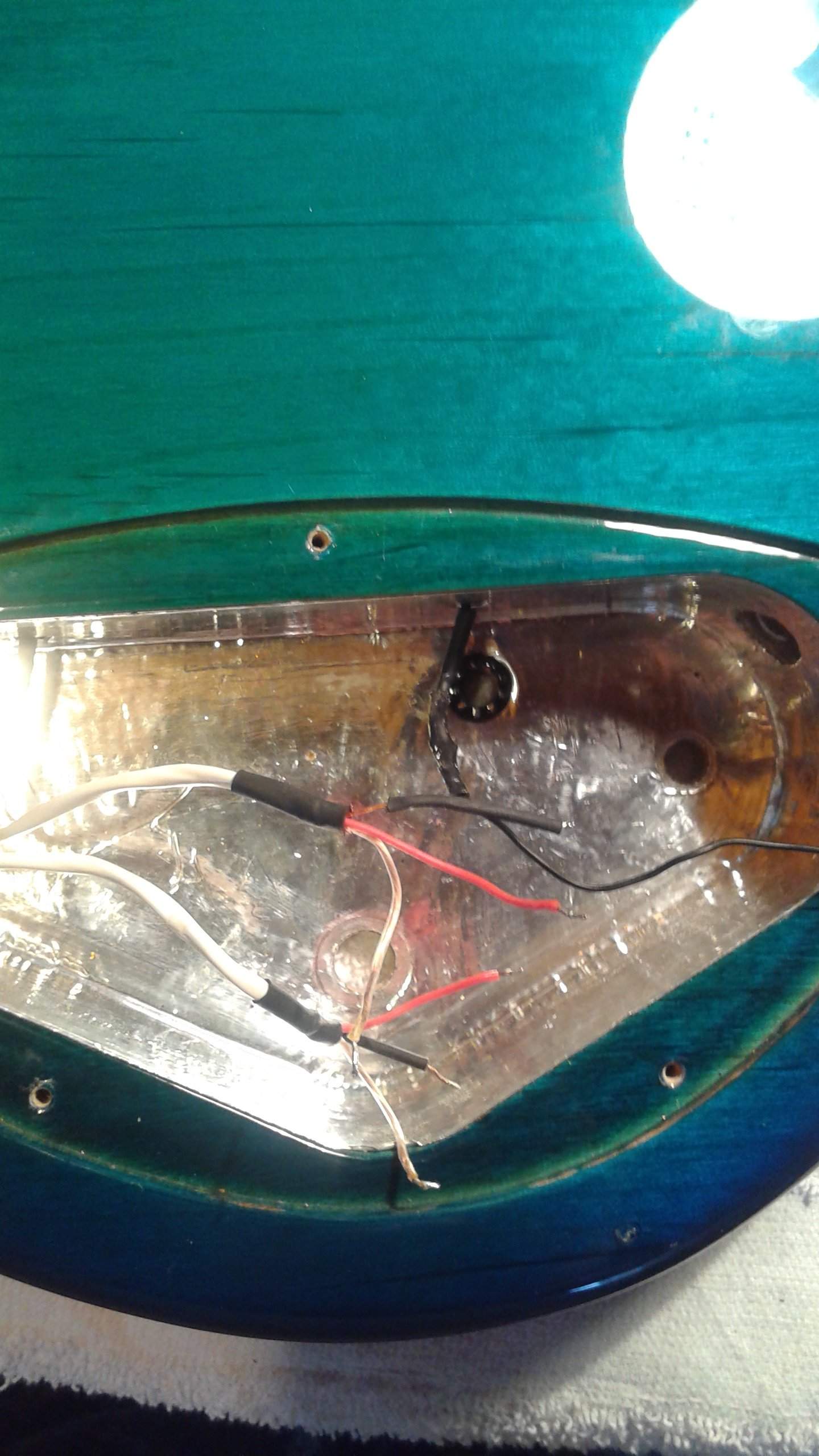
Here is the photo of the wires.. which is which?
That makes sense. It was before the FD-3 became the FD3-4L. you can still do the standard 4 way switch, but you can't do parallel/series within the pickup without some modding the leads from the coils. There are some guys who have done this, but it's a bit more 'fine detail' than your average soldering job.
BurningSkies
CRAZY BALDHEAD
- Feb 20, 2005
- 27,956
- 20,348
- Disclosures
- Endorsing artist: Dingwall Guitars
Off the top of my head, I'd say red (+), black (-), clear (shield).
Modding to get 4 L out of those pickups takes removing the leads from pickup bobbins, while making sure you're not de-soldering the coil windings, as well as the wires that connect the two coils then re-wiring the whole thing. There's one or two guys in this group who have done this or had it done who can give some details.
Modding to get 4 L out of those pickups takes removing the leads from pickup bobbins, while making sure you're not de-soldering the coil windings, as well as the wires that connect the two coils then re-wiring the whole thing. There's one or two guys in this group who have done this or had it done who can give some details.
That would be awesome to read what they have to say!
Off the top of my head, I'd say red (+), black (-), clear (shield).
Modding to get 4 L out of those pickups takes removing the leads from pickup bobbins, while making sure you're not de-soldering the coil windings, as well as the wires that connect the two coils then re-wiring the whole thing. There's one or two guys in this group who have done this or had it done who can give some details.
I'm not familiar with the guts of a Dingwall pickup, but I've added leads to guitar humbuckers.
If you have any doubts about your ability to identify the pertinent leads and your ability to carefully solder, have someone with more knowledge/experience do it for you. It's easy to destroy the pickup.
If you're confident you can do it yourself, post some "gut shot" photos of the bottom of the pickup and I, or someone, might be able to guide you through it.
If you have any doubts about your ability to identify the pertinent leads and your ability to carefully solder, have someone with more knowledge/experience do it for you. It's easy to destroy the pickup.
If you're confident you can do it yourself, post some "gut shot" photos of the bottom of the pickup and I, or someone, might be able to guide you through it.
Appreciate it.. I have no problems with working and soldering.. just wanted to know exactly which is which.. on the leads.. My Aggie DCB passive pups are three lead.. I would gather that I would treat these pups the same way..
I'm not familiar with the guts of a Dingwall pickup, but I've added leads to guitar humbuckers.
If you have any doubts about your ability to identify the pertinent leads and your ability to carefully solder, have someone with more knowledge/experience do it for you. It's easy to destroy the pickup.
If you're confident you can do it yourself, post some "gut shot" photos of the bottom of the pickup and I, or someone, might be able to guide you through it.
Based on the photo you posted above, you currently have two leads and a shield. My guess is that the shield isn't carrying signal. Would need to see the pickup to know for sure.
You'll need to add two more signal leads: one for each end of each coil. I've usually used two separate twin-lead shielded cables for this.
(And I think 'Skies is incorrect: I'm seeing the "black" as a piece of heat shrink on the shield and the other two as the +/- signals.)
You'll need to add two more signal leads: one for each end of each coil. I've usually used two separate twin-lead shielded cables for this.
(And I think 'Skies is incorrect: I'm seeing the "black" as a piece of heat shrink on the shield and the other two as the +/- signals.)
BurningSkies
CRAZY BALDHEAD
- Feb 20, 2005
- 27,956
- 20,348
- Disclosures
- Endorsing artist: Dingwall Guitars
Based on the photo you posted above, you currently have two leads and a shield. My guess is that the shield isn't carrying signal. Would need to see the pickup to know for sure.
You'll need to add two more signal leads: one for each end of each coil. I've usually used two separate twin-lead shielded cables for this.
(And I think 'Skies is incorrect: I'm seeing the "black" as a piece of heat shrink on the shield and the other two as the +/- signals.)
You're probably entirely correct. It's been a while since I've peeked in an AB1.It does look like the black is heat shrink around shielding. It would make sense because then it could be spot soldered to the cavity shield and also soldered at the controls.
Here's the layout on my old AB-1:


