Enjoy the benefits of a premium membership!
Upgrade Account
-
TalkBass has been independent since 1998. Add your voice.
Create a free account to reply to discussions, view embedded media, and browse with fewer display ads.
Join free Log in
Want zero display ads or expanded classifieds tools? Compare plans.
You are using an out of date browser. It may not display this or other websites correctly.
You should upgrade or use an alternative browser.
You should upgrade or use an alternative browser.
Dingwall Owners Club
- Thread starter FroggyOne2
- Start date
More options
Who Replied?


My lord Jeff!!! That Z is friggin unbelievably HOT!!! Can't wait to see it in person tomorrow!
Now back to the original question: I play lots of chordal stuff and chords (even in Pop covers, esp when I play the keyboard parts!!!). Due to the balanced tone between the strings of the Dingwall basses, chords never sound mushy, muddy, indistinct or out of tune. Some people have stated that they have a difficulty to play chords higher than the 17th fret. Personally, I play chords up to the 17th-19th fret without a problem on both 5 and 6str Dingwalls (having slim fingers helps a lot).
My .02
I bet chords sound fantastic on Dingers. For those of us that have grown used to straight fret chordal shapes throughout the neck, how was the transition?
- Apr 3, 2003
- 35,515
- 19,945
- Disclosures
- Editor-in-Chief, Bass Gear Magazine
Here's my new baby, 2009 Z3. I guess I just need one membership number, I'll keep 41.
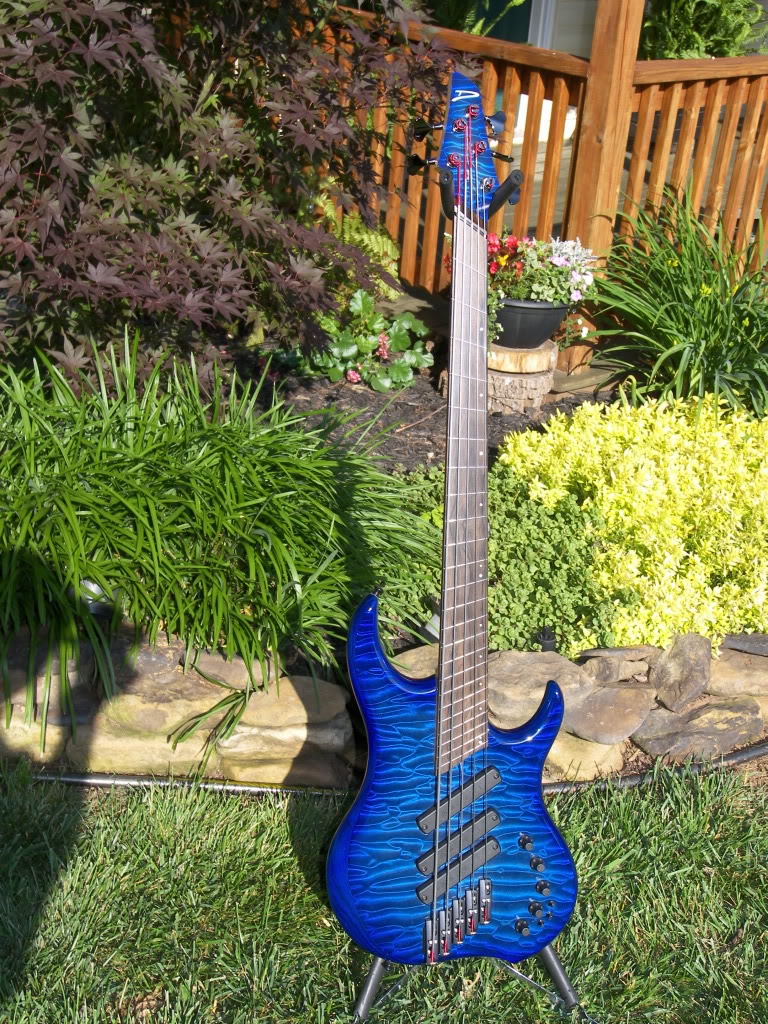
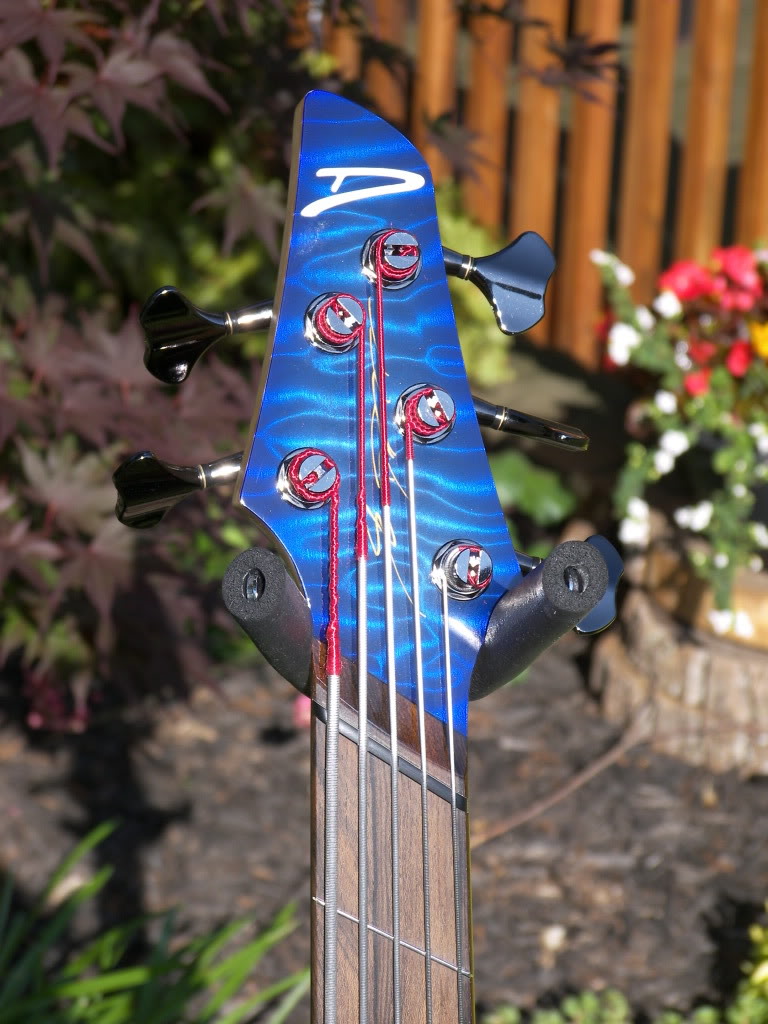
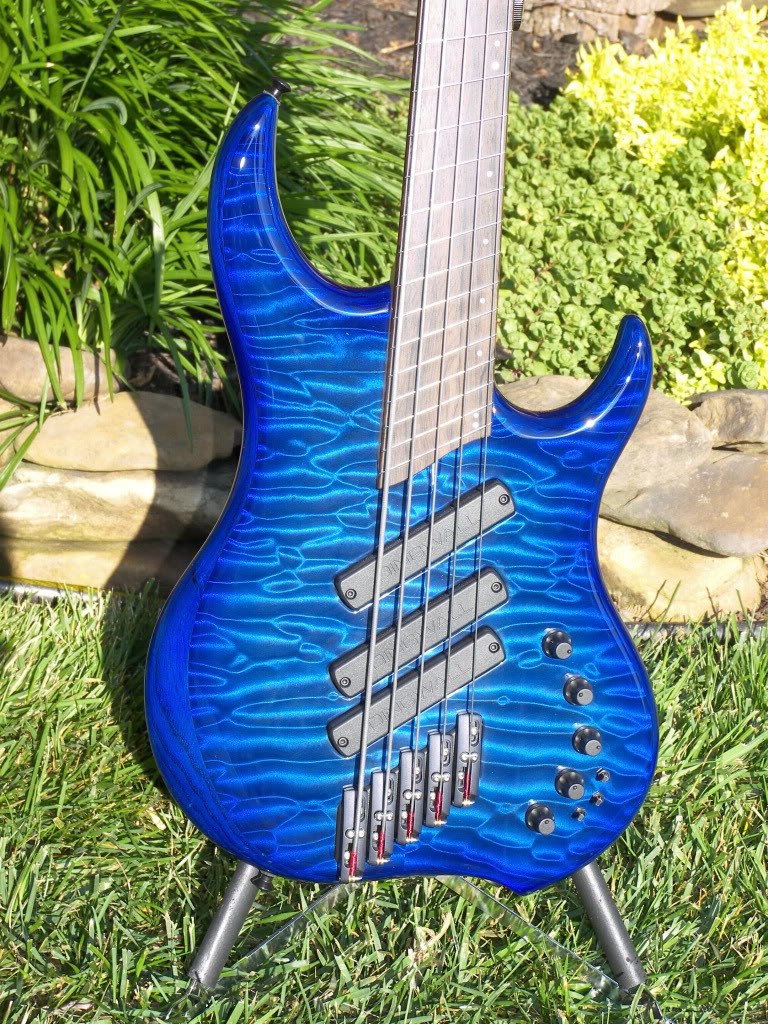
Nice Z3!!! That is beautiful!


- Apr 3, 2003
- 35,515
- 19,945
- Disclosures
- Editor-in-Chief, Bass Gear Magazine
I bet chords sound fantastic on Dingers. For those of us that have grown used to straight fret chordal shapes throughout the neck, how was the transition?
To be honest I find playing chords above the 12th fret to be a bit of a challenge on my Dingwalls (though the lower positions are not a problem). But then, I do switch back and forth (to parallel frets). You would probably get used to it if all you played were fanned fret basses.
Yeah I tried a couple Dings at ATL Bass Gallery a while back. Since I need to have unfettered access to the all chord shapes (up to the 24th fret) and their corresponding basslines that I roll simultaneously... I felt a little odd about getting up there on fanned frets. But, then again I was just trying them out in a store and didn't have tons of shed-time to work on it.
I was just wondering from those that are regular fanned fret players if that was something that they found as a challenge. And what they did to get through it.
Charlie Hunter seems to pull it off on Fanned frets, but then again he's a monster player...
I was just wondering from those that are regular fanned fret players if that was something that they found as a challenge. And what they did to get through it.
Charlie Hunter seems to pull it off on Fanned frets, but then again he's a monster player...
Yeah I tried a couple Dings at ATL Bass Gallery a while back. Since I need to have unfettered access to the all chord shapes (up to the 24th fret) and their corresponding basslines that I roll simultaneously... I felt a little odd about getting up there on fanned frets. But, then again I was just trying them out in a store and didn't have tons of shed-time to work on it.
I was just wondering from those that are regular fanned fret players if that was something that they found as a challenge. And what they did to get through it.
Charlie Hunter seems to pull it off on Fanned frets, but then again he's a monster player...
For some reason, I actually find playing chords in the lower frets is harder for me than the higher frets... I think that is attributed to personal style though more than the fanned frets.
First, some pics of my faithful old AB1. Let me know what you think of the modification. She may be up for sale, I'm fighting against that.
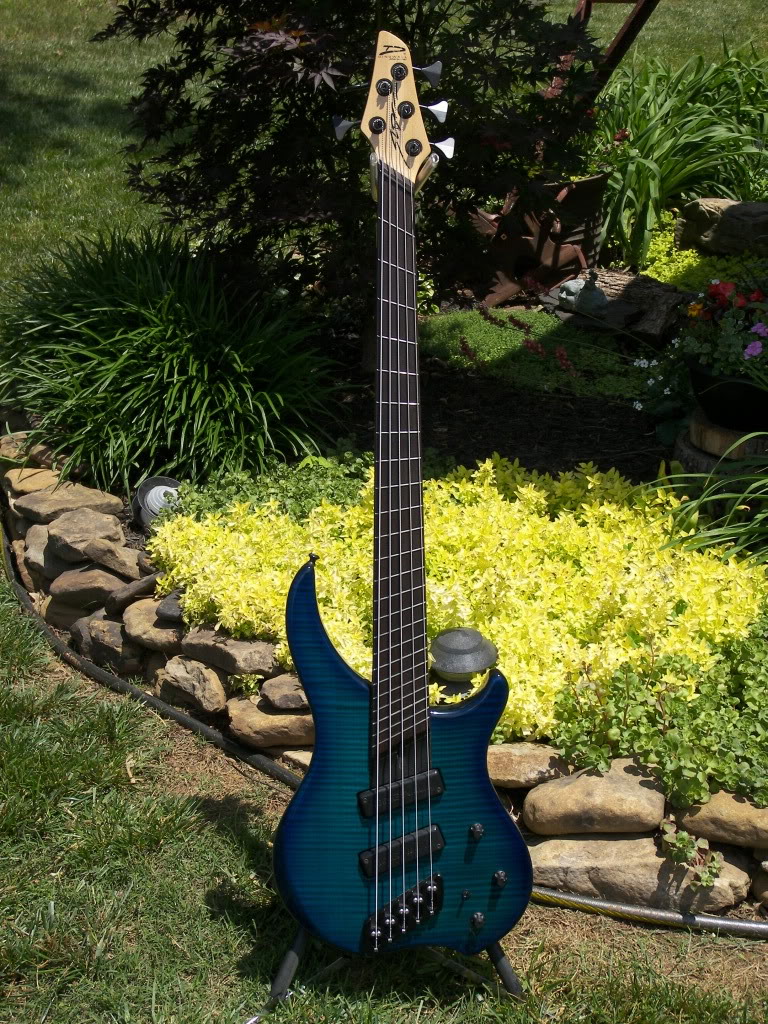
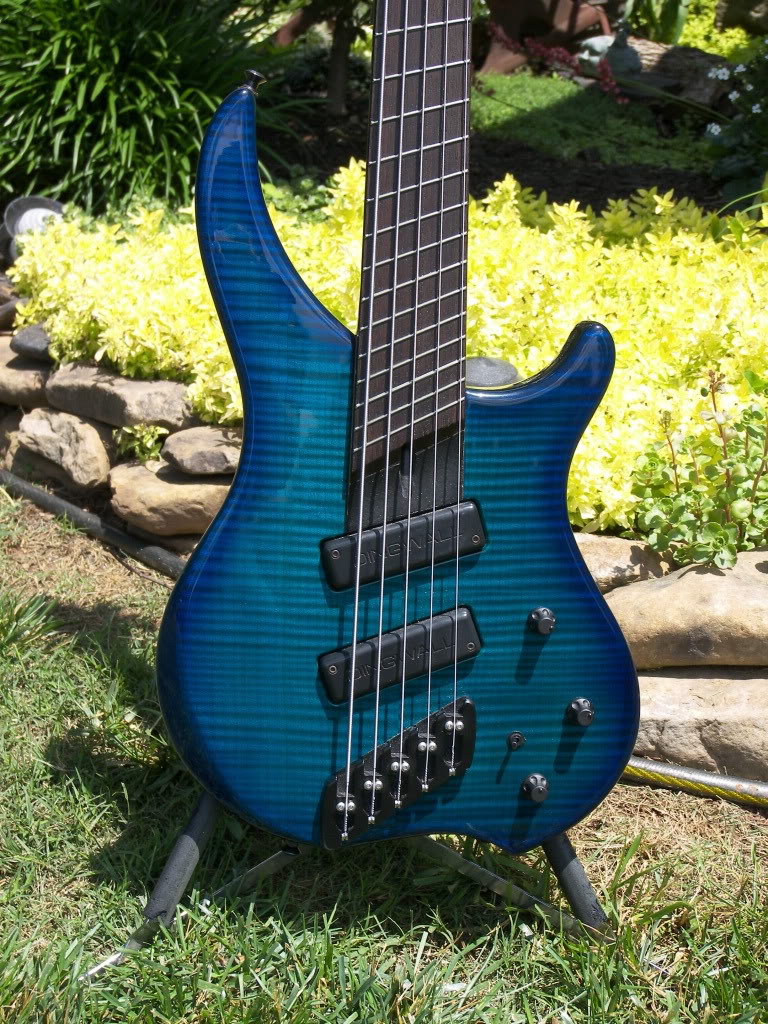
I like the black stain with the blue. Nice job! I have an indigo burst AB-1 that is still completely stock. Here lately I have been pondering removing the blue cube and adding a buffer (a Redeemer).
This is a seriously dangerous thread for those susceptible to DAS.
The Super J-5 is a BEAUT!!!
I bet chords sound fantastic on Dingers. For those of us that have grown used to straight fret chordal shapes throughout the neck, how was the transition?
I used to own a Dingwall and I agree with Fullie. The problem I had with chords on a Dingwall was when tapping chords in the Dingwall with my right hand. Playing chords with the left hand was not much of an adjustment for me, as long as I didn't look down at the fretboard.
Everything about the Dingwall always felt very natural and comfortable with the left hand. The ergonomics of fanned frets really help in this area IMO.
I DID have problems w/ chords up high on my Dingwall 5er and 6er, but think that in time anyone could probably get used to it. I rarely played chords when performing, but wrote a lot of solo pieces that way, some morph'ed into songs for my bands.
Some of the faster lines in the 1st position on the B and E strings were causing pain in my left hand, faster licks requiring index, middle, pinky or i, ring, pinky spreads. Left hand pain was the main factor that caused me to sell my Dingers, I also had trouble w/ the slanted bridge. But, I'd still like to have another someday.
Some of the faster lines in the 1st position on the B and E strings were causing pain in my left hand, faster licks requiring index, middle, pinky or i, ring, pinky spreads. Left hand pain was the main factor that caused me to sell my Dingers, I also had trouble w/ the slanted bridge. But, I'd still like to have another someday.
one question I have for Dingwall and other fanned fret bass owners....
Does playing a fanned fret bass alter chording technique, make it more difficult or do you just stay away from playing 3, 4 and 5 note bass chords?
I tend to play chords a bunch while playing the bass lines simultaneously, due to playing in a bunch of trios, and it helps to fill out the sound w/ only 3 people. I really dig what Charlie Hunter does (another fanned fret player), but some of the voicings just look painful to achieve.
Some voicings are harder, some are easier. What Bocete said about chords in lower ranges sounding better on a Dingwall is startlingly true. I can play double stops and chords down in ranges that would normally sound like an oscillating pig on most other basses.

I notice the left hand more with the AB-1's. Its a longer neck, wider and more of a stretch for the first fret. I'm getting used to it, and the clear tones are worth it.
The super J is super fast and comfortable, plus the scale is not as long. Very zippy after playing the AB-6.
The upper frets take some getting used to. I tend to shove the bass over to the left to get a better angle.
Gigged with the Super P/J last night and it was just perfect.
The super J is super fast and comfortable, plus the scale is not as long. Very zippy after playing the AB-6.
The upper frets take some getting used to. I tend to shove the bass over to the left to get a better angle.
Gigged with the Super P/J last night and it was just perfect.


Thought I would post a couple of pictures of the newest addition to my Dingwall family. An ABII with a maple neck / fretboard combo instead of the usual walnut / wenge? combo.
Ordered it from Gary at Guitar X and was told it is the first ABII with a maple fretboard. Should have it by the end of the week.
Want to thank Sheldon and the crew for doing it for me. Thanks everyone. Peace.
Ordered it from Gary at Guitar X and was told it is the first ABII with a maple fretboard. Should have it by the end of the week.
Want to thank Sheldon and the crew for doing it for me. Thanks everyone. Peace.
Attachments


Thought I would post a couple of pictures of the newest addition to my Dingwall family. An ABII with a maple neck / fretboard combo instead of the usual walnut / wenge? combo.
Ordered it from Gary at Guitar X and was told it is the first ABII with a maple fretboard. Should have it by the end of the week.
Want to thank Sheldon and the crew for doing it for me. Thanks everyone. Peace.
Wow! You're lucky.
Does the maple neck have carbon fiber reinforcement? Walnut necks do, Bubinga necks do not...

BurningSkies
CRAZY BALDHEAD
- Feb 20, 2005
- 27,956
- 20,348
- Disclosures
- Endorsing artist: Dingwall Guitars
Thought I would post a couple of pictures of the newest addition to my Dingwall family. An ABII with a maple neck / fretboard combo instead of the usual walnut / wenge? combo.
Ordered it from Gary at Guitar X and was told it is the first ABII with a maple fretboard. Should have it by the end of the week.
Want to thank Sheldon and the crew for doing it for me. Thanks everyone. Peace.
Great lookin' bass! I really like Sheldon's maple fretboards.
Wow! You're lucky.
Does the maple neck have carbon fiber reinforcement? Walnut necks do, Bubinga necks do not...
You know, this is going to show my true degree of bass construction knowledge but I have to say "Duh, I don't know".
Maybe Sheldon will see the question and he can shed some light on it. I don't have the bass yet so I can't inspect it closer to determine anything (not that I would know what I was looking for, anyway).
My guess though is no with the carbon fiber. I don't think maple would need it but then again what the heck do I know. Interesting question. Thanks. JP